
Chest of Drawers for Walk-In Closet: The Complete Guide
Turn your walk-in closet into a fully organized dressing room with the right chest of drawers. Learn how to match size, drawer count, and materials to your space.
Start With the Key FactorsWhy a closet chest changes everything: A walk-in closet is more than a place to hang clothes. Adding a dedicated chest of drawers keeps folded items, accessories, and seasonal pieces within arm's reach, reduces clutter in the bedroom, and turns an underused corner into a functional dressing station. This guide walks you through sizing, drawer layout, materials, and organization so you can choose with confidence.
Why Add a Chest of Drawers to a Walk-In Closet
Walk-in closets often dedicate most of their wall space to hanging rods and shelving. That works well for shirts and dresses, but folded clothing, workout gear, sleepwear, and accessories still need a home. A chest of drawers fills that gap without pulling storage back into the bedroom.
Beyond sheer capacity, a closet chest delivers several practical benefits:
- Centralized dressing: Everything from socks to sweaters lives in one room, so your morning routine stays in a single zone.
- Freed-up bedroom space: Moving drawer storage into the closet can let you choose a smaller dresser or a cleaner bedroom layout.
- Better use of vertical space: Tall, narrow chests fit where wide dressers cannot, turning awkward corners into working storage.
- Protected clothing: Enclosed drawers keep folded items away from dust, direct sunlight, and closet humidity swings.
If you are still deciding between furniture types, our guide to a chest for closet storage explains how a dedicated closet chest differs from a standard bedroom dresser. For broader planning, the bedroom storage hub covers complementary pieces such as armoires and under-bed storage.
Measure Your Closet Space First
Before browsing any product listings, take three measurements and write them down. This single step prevents the most common walk-in closet mistake: buying a chest that technically fits but leaves no room to open drawers.
- Available width: Measure the free wall section between shelving, hanging rods, or door swings. Subtract at least 2 inches on each side for clearance.
- Available depth: Standard chests run about 16 to 20 inches deep. Confirm you can still walk past an open drawer, ideally with 30 inches of aisle clearance.
- Available height: Measure from floor to the nearest shelf or rod. Leave 6 to 12 inches above the chest so the top drawer opens fully and the surface stays usable.
Pro tip: Tape the chest's footprint on the floor with painter's tape, then mime opening each drawer. This five-minute test reveals whether the aisle feels comfortable or cramped before you commit.
For narrow closets, a 30-inch wide chest of drawers is often the sweet spot. If you have a little more wall length, a 36-inch wide chest of drawers adds meaningful capacity without dominating the room. Closets with a long, open wall can accommodate a 48-inch wide chest of drawers that doubles as a folding surface.
Key Buying Factors for a Closet Chest
Walk-in closets impose constraints that a bedroom does not: tighter aisles, more obstacles, and often less natural light. Evaluate every candidate against these factors.
Footprint and Form Factor
Tall, narrow chests are the workhorses of small walk-in closets because they stack storage upward. Wide, low chests work better in generous closets where the top surface can serve as a folding station or display area. Measure both footprint and height against your shelving layout before choosing.
Drawer Count and Depth
Drawer count matters less than drawer mix. A chest with four to six drawers of varied depths usually outperforms a chest with many identical shallow drawers. Deep bottom drawers swallow bulky knitwear, while shallow top drawers keep accessories visible. Our overview of chests of drawers with deep drawers explains how depth affects usable capacity.
Reach and Accessibility
The top of a tall chest should sit within comfortable reach for everyday items. Reserve the highest drawer for seasonal or occasional items. If multiple people share the closet, choose a chest height that works for the shortest user.
Ventilation and Humidity
Walk-in closets trap moisture more than open bedrooms. Solid wood and quality engineered wood handle humidity swings better than particleboard. Leave a few inches of gap behind the chest so air can circulate.
Style Consistency
The chest should read as part of the closet system, not an afterthought. Match wood tone or finish to shelving and trim, and keep hardware consistent with rods and brackets. A painted finish can unify mismatched built-ins, while natural wood warms up all-white closet systems.
Size and Drawer Count Comparison
Use this comparison to match a chest format to your closet layout. Tiers describe market positioning, not physical size.
| Chest Format | Best For | Typical Drawer Count | Market Tier |
|---|---|---|---|
| Narrow tall chest (around 30 inches wide) | Compact closets, single-user storage, tight corners | 4 to 5 drawers | Entry-level to mid-range |
| Standard tall chest (around 36 inches wide) | Most walk-in closets, shared storage for couples | 5 to 6 drawers | Mid-range |
| Wide chest (around 48 inches wide) | Open closet walls, folding station, display surface | 6 to 8 drawers | Mid-range to premium |
| Extra-tall lingerie-style chest | Accessories, jewelry, small folded items in narrow slots | 6 to 8 shallow drawers | Premium |
| Low wide chest (around 72 inches wide) | Large dressing rooms, statement storage walls | 8 to 9 drawers | Premium to luxury |
Tier descriptors reflect relative market positioning and construction quality, not physical dimensions.
For deeper detail on specific formats, explore the 6-drawer tall chest of drawers for vertical storage, the 8-drawer tall chest of drawers for shared closets, or the 72-inch wide dresser for a full storage wall.
Materials and Finishes
Closet furniture endures daily use in a confined space. Material choice affects durability, drawer smoothness, and how well the piece ages.
Solid Wood
Oak, maple, and pine chests resist wear and can be refinished if the finish dulls. Solid wood also handles minor humidity fluctuations better than composite boards. A brown oak dresser or a 6-drawer oak chest of drawers brings warmth and long-term durability to natural-toned closets.
Engineered Wood
Engineered wood with quality veneers delivers a flat, stable surface and consistent finish at a mid-range tier. It resists warping in climate-controlled homes and is available in a wide range of colors. Our overview of engineered wood dressers explains what separates durable boards from basic ones.
Painted and Lacquered Finishes
Painted finishes hide minor scuffs and unify with built-in shelving. Lacquered surfaces are smoother and easier to wipe clean but show scratches more readily. If your closet is bright and airy, a gray dresser or a light gray dresser keeps the palette calm without reading as sterile.
Veneers and Edge Banding
Inspect edge banding quality on engineered wood chests. Clean, tightly bonded edges resist peeling in humid closets, while rough banding signals lower build quality. Solid drawer boxes with dovetail or dowel joints add structural integrity over the life of the piece.
Drawer Glides and Hardware
A chest is only as pleasant as its drawers are to use. In a walk-in closet, you open drawers dozens of times a week, often while holding clothing, so glide quality matters more than most buyers expect.
- Side-mount glides: Common in entry-level and mid-range chests. Smooth enough for lightweight drawers but can feel stiff when fully loaded.
- Ball-bearing side glides: A step up in smoothness and weight capacity; typical in mid-range closet chests.
- Soft-close undermount slides: The quietest and smoothest option. Drawers close themselves gently, which reduces noise in early-morning routines. Our guide to heavy-duty soft-close drawer slides explains weight ratings and installation.
- Full-extension slides: Allow the entire drawer to pull out, giving access to items at the back. See heavy-duty full-extension dresser slides for what to look for.
Hardware style is largely aesthetic, but it should be comfortable to grip. Slim bar pulls suit modern closets, while knobs fit traditional or transitional built-ins. If your closet system uses gold or brass accents, a chest with gold accents can tie the room together.
Layout Ideas by Closet Shape
Single-Wall Walk-In Closet
With hanging rods on one wall and open floor on the other, place a narrow tall chest at the far end to create a dressing nook. Keep a 30-inch aisle in front of the drawers so you can open them fully. A brown tall narrow chest of drawers fits this layout without blocking circulation.
L-Shaped Walk-In Closet
The inside corner of an L-shaped closet is often dead space. A tall chest placed there captures vertical storage while keeping the two main walls free for hanging and shelving. Choose a footprint that leaves the corner accessible from both sides.
U-Shaped or Large Dressing Room
Generous closets can dedicate one wall to drawer storage. A wide chest doubles as a folding surface and display area. Consider a large dresser with lots of drawers if the room is shared, or an extra-deep chest of drawers if bulky items dominate your wardrobe.
His-and-Hers Shared Closet
Two smaller chests, one per side, usually beat one oversized shared piece. A pair of four-drawer dressers gives each person dedicated storage and keeps the aisle symmetrical. If space allows only one chest, choose a wide chest with plenty of drawers and assign drawers by category rather than by person.
Organization Strategies for Closet Drawers
A well-chosen chest is half the solution. The other half is a drawer system that keeps contents visible and easy to retrieve.
- Assign drawers by category: One drawer for workout wear, one for sleepwear, one for folded tops, one for denim. Categories beat colors for daily usability.
- Use dividers: Drawer dividers keep folded stacks upright and prevent the jumbled pile effect.
- Add a clothes organizer insert: A clothes drawer organizer creates dedicated slots for socks, underwear, and accessories.
- File-fold tops: Folding shirts vertically lets you see every option at a glance and uses the full drawer depth.
- Reserve the top drawer for daily items: The most accessible drawer should hold what you reach for first every morning.
- Rotate seasonally: Move heavy knitwear to bottom drawers in summer and swap it with lighter items in winter to keep the chest efficient.
If the chest still overflows, a dresser with organizer built in adds modular compartments without extra furniture. Pairing the chest with a chest of drawers for the bedroom can also split overflow between rooms.
Safety and Installation
Walk-in closets have hard floors, tight clearances, and frequent foot traffic. A few precautions keep a closet chest safe and stable.
- Anchor to the wall: Use the manufacturer's anti-tip strap or bracket on tall chests, especially in closets with children or pets in the home.
- Load heavy items low: Keep dense items such as denim and blankets in bottom drawers to lower the center of gravity.
- Respect drawer swing: Confirm that open drawers clear doorways, shelving, and light fixtures.
- Keep electrical cords clear: Do not route closet lighting cords behind or under drawers.
- Allow ventilation gaps: Leave space behind and beside the chest so air circulates and moisture does not accumulate.
Final Buying Checklist
Run through this checklist before completing any purchase. It captures the decisions that matter most in a walk-in closet.
- Measured width, depth, and height of the intended spot
- Confirmed at least 30 inches of aisle clearance
- Drawer depth mix suited to your wardrobe
- Drawer glides smooth when fully loaded
- Material suited to closet humidity
- Finish and hardware consistent with closet system
- Anti-tip anchoring hardware included
- Top drawer within comfortable reach for all users
- Space behind the chest for ventilation
- Plan for organizers and dividers
Remember: The best chest for a walk-in closet is the one you can open comfortably every day without squeezing past it. Capacity follows clearance, not the other way around.
Frequently Asked Questions
What size chest of drawers fits best in a walk-in closet?
Measure your available floor space and leave at least 30 inches of clearance for walking and opening drawers. Narrow chests around 30 to 36 inches wide suit tight layouts, while wider 48-inch chests work well on open walls. Height is equally important: tall chests maximize vertical space but must clear shelving and hanging rods.
How many drawers do I need in a closet chest?
Most walk-in closets benefit from four to six drawers. Use shallow top drawers for accessories, mid-depth drawers for folded tops, and deep bottom drawers for jeans, knitwear, or linens. If two people share the closet, consider a six to eight drawer chest so each person gets dedicated storage.
Should I choose a tall or wide chest for a walk-in closet?
Tall chests are ideal when floor space is limited because they use vertical room efficiently. Wide chests offer a generous top surface for folding or display and are easier to reach for shorter users. The right choice depends on your closet footprint, ceiling height, and how much wall space is already occupied by hanging rods.
What materials work best for a closet chest of drawers?
Solid wood chests, such as oak, maple, or pine, offer the most durable construction and can be refinished over time. Engineered wood with quality veneers is a solid mid-range option that resists warping in humidity-controlled closets. Avoid particleboard in damp or unconditioned spaces, as it can swell over time.
A walk-in closet chest is a long-term investment in daily convenience. Once you have measured the space, matched drawer depth to your wardrobe, and chosen a material suited to closet conditions, the selection process becomes straightforward. Use the comparison table and checklist above to narrow your options, then review specific sizes and configurations in the product section below.
Recommended Chests of Drawers for Walk-In Closets
⚠️ AFFILIATE DISCLOSURE: This website contains affiliate links. As an Amazon Associate, we earn from qualifying purchases. If you make a purchase through these links, we may receive a small commission at no additional cost to you. Read our full affiliate policy.

Aheaplus Closet Drawers System, 21.3" Wood Closet Organizer System, White | with 4 Drawers & Shelf, Modular Walk-in Closet System Storage Unit, Small Closets Wardrobe Rack, Tall Storage Cabinet
Check price on Amazon
Karl home White 4 Drawer Dresser, Modern Small Chest of Drawers | Compact Dresser Chest with 4 Storage Drawers, Multipurpose Furniture for Bedroom, Nursery, Living Room, Closet
Check price on Amazon
IRONCK Closet Drawers System, 21.5" Wood Closet Organizer with 4 Drawers | 1.8FT Modular Walk-in Closets Storage Unit, Small Closets Wardrobe with Open Shelves, Tall Storage Cabinet, White
Check price on Amazon
JanflyHome Drawer Dresser with Glass Top, LED Lights, 3 Open Shelves | Bedroom Dresser with Jewelry Display Drawers, Walk-in Closet Island for Bedroom, Cloakroom, White
Check price on Amazon
SONGMICS Dresser for Bedroom, Wide Dresser with 5 Fabric Drawers | Chest of Drawers with Steel Frame, for Closet & Entryway, Ink Black and Ebony Black, BELLAH Collection ULGS322B01S
Check price on Amazon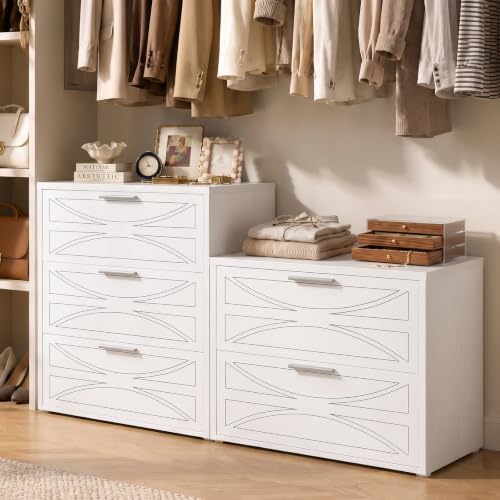
Hyomdeck Stackable 5 Drawer Dresser for Closet, Wood Closet Drawers, White | Small Chest of Drawers for Bedroom Dorm, Modular Design Closet Storage Drawer Unit, Space Saving Freestanding Organizer
Check price on Amazon
BOLUO Stackable Storage Drawers Closet Organizers and Storage Fabric White 2 Drawer Dresser for Bedroom 2 Packs Modern
Check price on AmazonDisclaimer
The information provided on DresserAdvisor is for educational and informational purposes only. We are not furniture professionals, and our content should not replace professional advice from qualified furniture makers, interior designers, or safety experts. Some content may use AI assistance. Always check product safety standards and certifications before purchasing. If you do not agree, please do not use this website. Read the full disclaimer.