
Dresser Stool: The Finishing Touch for Your Bedroom Setup
Complete your dresser or vanity with the right seating. Learn how height, materials, style, and placement turn a simple stool into a daily comfort upgrade.
Why a dresser stool matters: A dresser is more than storage — it often doubles as a grooming station, a spot to get ready, or a quiet corner to sit. The stool you pair with it determines whether that corner feels ergonomic and inviting or awkward and unused. This guide walks you through everything you need to choose with confidence.
What Is a Dresser Stool and Why Should You Have One?
A dresser stool is a compact seat designed to sit beside or slide under a dresser, vanity, or dressing table. Unlike a full chair, it is deliberately small so it can tuck away, keep the floor clear, and stay visually light in the room. Its job is simple: give you a comfortable place to sit while you use the top of your dresser for grooming, dressing, or organizing.
For many bedrooms, the dresser is the natural vanity. If you apply skincare, style your hair, or lay out accessories at the dresser, a stool converts a flat surface into a usable station. It also adds a soft, human element to a room otherwise dominated by hard-edged furniture. If you are still deciding on the dresser itself, our dresser style guide can help you frame the decision before you choose seating.
There is a practical side too. A stool is easier to move than a bench or chair, which means you can shift it between a dresser and a desk, or stash it in a corner when the room needs breathing space. For compact bedrooms, that flexibility is often more useful than a fixed seat.
Dresser Stool vs Other Bedroom Seating Options
Before you commit to a stool, it helps to understand how it compares with the alternatives. Each option serves a slightly different role.
| Option | Best For | Footprint | Trade-Off |
|---|---|---|---|
| Backless stool | Small rooms, vanities, quick seated tasks | Very compact, slides fully under | Less support for long sitting sessions |
| Stool with backrest | Daily grooming routines, reading at the dresser | Moderate | May not tuck completely under the dresser |
| Bedroom bench | End-of-bed seating, shared use, extra storage | Wide | Takes up floor space and is less movable |
| Vanity chair | Full vanity stations with mirrors | Moderate to large | More furniture-like, harder to relocate |
| Pouf or ottoman | Soft, casual seating and style contrast | Compact to moderate | Less structure, may be too low for some dressers |
If your dresser sits in a tight corner and you mostly need a seat for short tasks, a backless stool is usually the best fit. If you sit for longer stretches, a model with a low backrest is worth the extra footprint. For rooms with generous floor space, a bench or a full vanity chair can work — but the stool remains the most versatile compromise.
How to Choose the Right Dresser Stool
Choosing well comes down to five factors: height, stability, material, style, and storage behavior. Work through them in order, because height and stability set the functional baseline before aesthetics come into play.
1. Height and Clearance
Height is the most common mistake. A stool that is too low forces you to lean; one that is too high leaves your legs dangling and your posture awkward. Measure the distance from the floor to the underside of your dresser's top surface, then subtract roughly 10 to 12 inches for legroom. That gives you a comfortable seat height range.
As a reference, most standard dressers stand around 30 to 32 inches tall, which pairs well with a seat height of roughly 18 to 20 inches. Taller vanities call for a correspondingly taller stool. If you are unsure whether your dresser will work as a seated station, check the dimensions and configuration in our dresser overview before shopping for seating.
2. Stability and Weight
A stool carries your full weight and shifts as you move, so a wide base and solid joinery matter more than decorative details. Look for four legs that splay slightly outward, a broad seat, and non-slip feet on hard floors. Avoid narrow pedestal designs that wobble, especially in rooms with carpet where small movements go unnoticed until the stool tips.
Weight is a balancing act. You want the stool heavy enough to stay planted but light enough to move with one hand. Solid wood and metal frames tend to hold up better over years of daily use than thin composite constructions.
3. Materials and Upholstery
Material should reflect both the dresser it sits beside and how you plan to use it. A padded or upholstered seat is more comfortable for daily grooming, while a solid wood seat is easier to wipe clean and resists wear. Woven seats, such as rattan or cane, add texture and breathability and suit warm, natural interiors.
If your dresser has a distinctive finish — say, painted drawers or metallic hardware — use the stool as a quiet echo rather than a second statement piece. A neutral upholstery or a wood tone that matches the dresser's frame keeps the pairing cohesive. For broader guidance on matching finishes across bedroom pieces, see our dresser styles reference.
4. Style Coordination
Style coordination is about proportion as much as color. A slender, leggy stool suits a mid-century or modern dresser, while a chunkier wooden stool fits farmhouse and rustic rooms. Upholstered stools with tapered legs bridge traditional and contemporary settings. If you are building a coordinated set, our guide to dressers with matching nightstands is a useful companion read on keeping bedroom furniture visually aligned.
5. Storage and Mobility
Decide early whether the stool should tuck under the dresser or live beside it. Stools without backrests usually slide fully underneath, keeping the floor clear and making vacuuming easy. If your dresser has drawers that open across the full front, check that the stool does not block them when tucked in. For very tight rooms, a folding or stackable stool can be a smart fallback.
Quick measurement check: Measure your dresser height, subtract 10 to 12 inches for legroom, and confirm the resulting seat height against the stool's listed dimensions. Then check the stool's footprint against the clear floor area in front of your drawers. These two checks prevent most fitting problems.
Dresser Stool Styles to Consider
Style options range from entirely functional to decorative. Here is how the main categories compare.
| Style | Characteristics | Best For | Tier Guidance |
|---|---|---|---|
| Wooden backless stool | Solid seat, four legs, simple joinery | Rustic, farmhouse, and modern rooms | Essential tier to mid-range |
| Upholstered stool | Padded seat, fabric or leather cover | Daily grooming and longer sitting | Mid-range |
| Metal frame stool | Slender legs, industrial or modern look | Contemporary and compact bedrooms | Essential tier |
| Woven or rattan stool | Natural texture, breathable seat | Bohemian and coastal interiors | Mid-range |
| Vanity chair with backrest | Supportive back, often taller seat | Full vanity setups and long routines | Mid-tier to high-end tier |
| Adjustable-height stool | Swivel or lift mechanism, variable seat height | Shared vanities and changing needs | Premium |
Entry-level stools are typically simple wooden or metal frames with basic seats; they are stable and serviceable but offer less comfort. Mid-range options add upholstery, better joinery, and more refined finishes. Premium and luxury stools bring adjustable mechanisms, premium upholstery, and designer frames — worthwhile if the stool will be used daily for years. Within any tier, prioritize stability and seat comfort over ornamentation.
Placement and Room Planning
Where the stool lives affects how often you use it. The ideal position is directly in front of the dresser, with enough clearance to sit down and stand up without shuffling. Leave at least a couple of feet of open floor in front of the seat, and make sure the stool does not obstruct a doorway, closet, or walkway.
If the dresser sits against a wall with a mirror above it, center the stool on the mirror for a balanced composition. In rooms where the dresser doubles as a TV stand or console, a stool can serve as occasional seating — but check that it does not crowd the viewing area. Our guide to dresser TV stand setups covers the spatial trade-offs in more detail.
Lighting matters too. A stool placed near a window or beneath a wall light is more likely to be used for grooming. If your dresser has integrated lighting, position the stool so you sit within the light's reach. For inspiration on building a full grooming corner, browse dressers with lights and mirror.
Safety Considerations
Stools are simple furniture, but they still deserve a safety check, particularly in homes with children.
- Anchor the dresser: Secure the dresser to the wall with anti-tip hardware. Children may use the stool to reach the top, and an unanchored dresser can tip.
- Check the stool's stability: Sit on the stool and shift your weight gently. If it wobbles or lifts a leg, it is not safe for daily use.
- Avoid tall, narrow designs in kids' rooms: A lower, wider stool is harder to tip. Keep it away from windows and climbing routes.
- Watch for sharp edges and pinching joints: Inspect folding or adjustable stools for exposed hinges and gaps that could catch fingers.
- Keep weight limits in mind: Follow the manufacturer's rated capacity, and avoid standing on a stool that is not designed for it.
Caring for Your Dresser Stool
Maintenance is straightforward and extends the stool's life. Wipe wooden and metal surfaces with a soft damp cloth and dry immediately. Vacuum upholstered seats regularly and spot-clean according to the fabric code. Tighten leg bolts every few months, since daily use gradually loosens joints. Felt pads under the feet protect hardwood floors and reduce noise. If the stool wobbles, re-tighten the joints before the movement worsens.
Common Mistakes to Avoid
- Buying before measuring: Seat height and clearance are the two dimensions that decide whether the stool works. Measure first.
- Choosing style over stability: A beautiful stool that wobbles will be avoided. Stability comes first.
- Ignoring drawer clearance: A stool that blocks drawers when tucked in defeats the purpose of a compact seat.
- Overmatching: The stool does not need to match the dresser exactly. Coordinating tone and proportion looks more intentional than a full set.
- Skipping the dresser anchor: In homes with children or pets, anchoring the dresser is a non-negotiable safety step.
Frequently Asked Questions
What is the ideal height for a dresser stool?
Aim for roughly 10 to 12 inches of clearance between the seat and the underside of the dresser top. For a standard dresser around 30 to 32 inches tall, a seat height of about 18 to 20 inches is a comfortable starting point. Measure your own dresser and test the clearance before buying.
Can any stool work as a dresser stool?
Almost any sturdy stool can work, but compact, stable designs are best. Backless stools and small benches slide under a dresser overhang easily, while taller stools suit high vanities. Prioritize a stable base, a comfortable seat, and a footprint that fits your floor space without blocking drawers.
Should a dresser stool have a backrest?
A backrest adds comfort for longer sessions, such as makeup or skincare routines. Backless stools are more versatile because they slide fully under the dresser and take up less visual space. Choose a backrest if you sit for extended periods; choose backless if space is tight or you want a cleaner look.
How do I match a stool to my dresser style?
Match material, finish, and proportion. A wooden dresser pairs naturally with a wood or woven stool in a similar tone. An upholstered or lacquered dresser can take a fabric stool or a metal frame for contrast. Use hardware finishes as a cue for the stool's frame color to create a cohesive look.
Is a dresser stool safe for a child's room?
Yes, with precautions. Choose a stool with a wide, stable base and non-slip feet, and avoid tall or tippy designs. Anchor the dresser to the wall, since children may climb on both the stool and drawers. Keep the stool lightweight enough to move but stable enough that it will not tip when a child sits or stands on it.
Recommended Dresser Stools & Bedroom Seating
⚠️ AFFILIATE DISCLOSURE: This website contains affiliate links. As an Amazon Associate, we earn from qualifying purchases. If you make a purchase through these links, we may receive a small commission at no additional cost to you. Read our full affiliate policy.

Sweetcrispy Vanity Stool Chair for Desk, Storage Faux Fur Ottoman, White | Fluffy Makeup Seat with Hidden Storage, Gold Metal Legs, Small Footrest for Bedroom, Entryway and Vanity Desk
Check price on Amazon
LUE BONA Adjustable Vanity Stool, 360 Swivel Chair for Makeup Room, White Faux Leather Stool for Bathroom & Living Room
Check price on Amazon
LUE BONA Vanity Stool, White Vanity Stools for Makeup Room, Round Ottoman Foot Stool, Velvet Footrest Vanity Chair for Bathroom Vanity, Bedroom, Living Room, Entryway, Offices
Check price on Amazon
KAI-ROAD Small Vanity Stool, Cute Vanity Stools with Cushion, White Makeup Vanity Chair for Small Spaces, Living Room, Bedroom, Bathroom, Entryway, Ottoman Foot Rest for Couch Sillas Modern
Check price on Amazon
DUMOS Vanity Stool Chair, Ottoman with Storage, Makeup Cute Soft Small Footstool, Modern Style Faux Fur Seat with 4 Metal Legs & Adjustable Feet for Dressing, Living Room, Bedroom, Dorm, Pink
Check price on Amazon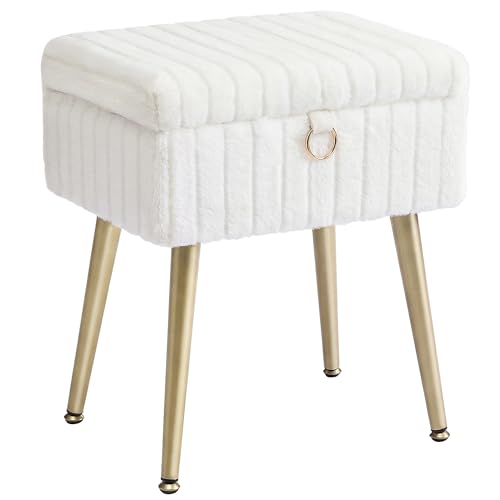
SONGMICS Vanity Stool Chair with Storage, Metal Legs, Max. Load 440 lb | Makeup Stool, Footrest Footstool Ottoman, for Living Room, Bedroom, Makeup Room, Cream White, GLAMOR Collection ULOM505WZ02
Check price on Amazon
BEWISHOME White Vanity Stool, Makeup Chair for Vanity, 280 lb Capacity | 20-Inch Leather Makeup Vanity Chairs with Thick Padded Seat, Sturdy Reinforced Frame for Bathroom KFD01W
Check price on AmazonDisclaimer
The information provided on DresserAdvisor is for educational and informational purposes only. We are not furniture professionals, and our content should not replace professional advice from qualified furniture makers, interior designers, or safety experts. Some content may use AI assistance. Always check product safety standards and certifications before purchasing. If you do not agree, please do not use this website. Read the full disclaimer.