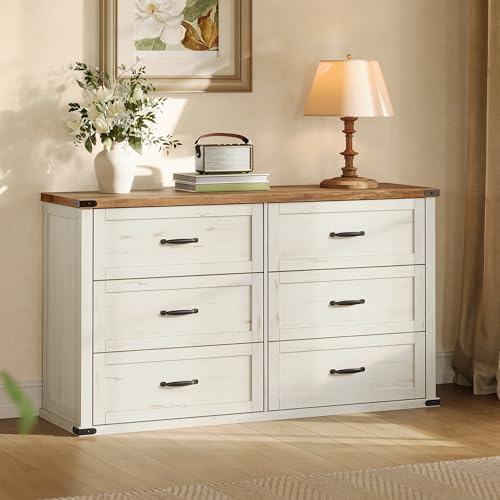
Danish Dresser: Timeless Minimalism Meets Everyday Function
The complete guide to understanding, choosing, and living with a Danish dresser — from design principles and materials to storage planning and room styling.
START EXPLORINGWhat Makes a Dresser Danish?
The term Danish dresser describes a style of bedroom storage furniture rooted in Scandinavian design philosophy — specifically the Danish modern movement that flourished from the 1940s through the 1970s and continues to influence furniture design today. A Danish dresser is not defined by a single manufacturer or a single silhouette. Instead, it is recognized by a set of shared principles: clean lines, honest materials, functional proportion, and craftsmanship that prioritizes joinery over ornamentation.
Where a traditional chest of drawers might rely on carved details, heavy mouldings, or decorative hardware, a Danish dresser strips those elements away. What remains is the geometry of the piece itself — tapered legs, flush drawer fronts, subtle wood grain, and handles that are integrated rather than applied. This restraint is deliberate. Danish designers believed that furniture should serve the room quietly, allowing daily life to take center stage.
For buyers researching this category, the appeal is practical as much as aesthetic. A well-made Danish dresser offers generous storage without overwhelming a bedroom, works across multiple decor styles, and holds its visual relevance for decades. That combination is why Danish dressers remain one of the most requested furniture categories among people furnishing a primary bedroom, a guest room, or even a hallway.
If you are still deciding between furniture categories, it helps to understand how a dresser differs from a chest of drawers. In short: a dresser is typically wider and lower, often used with a mirror or as a surface for accessories, while a chest is taller and narrower, designed for vertical storage in tighter footprints. Danish design produces excellent examples of both forms, and many collectors own one of each.
Design Language & Signature Details
Learning to recognize Danish design details will help you evaluate listings, compare showroom pieces, and avoid reproductions that borrow the look without the substance. The following features appear consistently across authentic Danish dressers.
Tapered Legs and Raised Profiles
Most Danish dressers sit on tapered wooden legs that lift the body of the piece off the floor. This does two things: it creates visual lightness so a large storage piece does not feel heavy in a room, and it improves airflow and cleaning access underneath. Legs are usually round or slightly squared, often in the same wood as the case, and they taper toward the floor in a gentle curve.
Flush, Handle-Free or Minimal-Hardware Drawer Fronts
Danish dressers favor uninterrupted surfaces. Drawer fronts often sit flush with the cabinet frame, and hardware is either recessed, carved into the drawer front as a pull, or reduced to a simple slender bar. Some models use integrated wooden pulls that match the case, reinforcing the seamless look. This is one reason Danish dressers photograph so well in minimalist interiors — there is little visual noise.
Proportions Rooted in Function
Danish design treated proportion as a functional decision, not a decorative one. Drawer heights are planned around what people actually store: shallow top drawers for accessories, deeper lower drawers for folded clothing and linens. Widths are calibrated so drawers open fully without crowding a bedside or doorway. When you compare a Danish dresser to a mass-market chest, the difference often shows up in these small ergonomic choices.
Wood Grain as the Primary Decoration
In place of applied ornament, Danish dressers celebrate the grain of the wood itself. Book-matched veneers, where adjacent panels mirror each other's grain, are common on higher-tier pieces. The finish is typically a low-sheen oil or lacquer that lets the wood feel natural to the touch rather than sealed under a thick glossy coat.
Materials: Teak, Oak, Walnut & Veneer
The material story is central to understanding Danish dressers, because wood choice affects appearance, durability, and how the piece ages. Here is how the main options compare.
| Material | Character | Best For |
|---|---|---|
| Teak | Warm golden-brown tone, naturally oily, excellent weather resistance; the signature wood of mid-century Danish furniture. | Vintage and mid-century pieces; warm-toned bedrooms. |
| Oak | Dense, hard-wearing, prominent grain; lighter and more neutral than teak. | Contemporary Danish designs; high-traffic family homes. |
| Walnut | Rich dark chocolate tones, smooth texture, elegant figure. | Premium and luxury-tier pieces; formal bedrooms. |
| Pine | Light, soft, casual grain; more prone to denting than hardwood. | Entry-level and children's rooms; painted finishes. |
| Veneer over plywood or MDF | Thin slices of real wood over a stable engineered core; allows book-matching and consistent grain. | Mid-range pieces where stability and uniform appearance matter. |
Solid wood is not automatically superior to veneer. High-quality Danish manufacturers used veneer deliberately because it resists warping and allows precise grain matching. The key distinction is construction quality: a well-built veneer dresser with solid wood edges and proper joinery will outlast a poorly built solid wood piece. When evaluating any dresser, ask about the drawer box material, the joinery method, and whether the case is reinforced at stress points.
If you are exploring specific wood tones, our guides to dark oak dressers and dark walnut dressers with mirror cover how those finishes read in different lighting. For a lighter Scandinavian palette, oak is usually the safer starting point.
Types of Danish Dressers
Danish design spans several dresser formats. Identifying which format suits your room is the first step toward a purchase you will not regret.
Low, Wide Dressers (Six to Nine Drawers)
The classic Danish dresser silhouette: a long, low body with six to nine drawers arranged in two or three columns. This format works well beneath a window or along a long bedroom wall, and its top surface is generous enough for a mirror, lighting, and decorative objects. If you want a piece that doubles as a display surface, start here.
Tallboy and Bachelor Chests
For smaller bedrooms, a tall Danish chest compresses storage into a narrow footprint. These pieces suit closets, guest rooms, and apartments where floor space is limited. The trade-off is a smaller top surface, so they work best as pure storage rather than styling pieces.
Corner and Compact Dressers
Danish designers also produced compact and corner-friendly storage. If your room has an awkward nook, a corner dresser with drawers can reclaim floor space that would otherwise go unused. For very tight rooms, a compact dresser maintains the minimalist look without demanding a full wall.
Dressers with Mirrors
Many Danish dressers were designed to pair with a floating mirror or a mirror that attaches to the back rail. A mirror transforms the dresser into a grooming station and adds perceived depth to the room. If this configuration appeals to you, our guide to dressers with mirror explains mounting options and how to avoid visual clutter on the top surface.
Sideboards and Credenzas in the Danish Style
The Danish dresser's design language crosses over into living and dining spaces through sideboards and credenzas. If you love the aesthetic but need storage outside the bedroom, a credenza dresser or a classic dresser adapted for a hallway can carry the same visual weight and functionality.
Sizing & Drawer Planning
Before comparing finishes and handles, measure your room and plan your storage. A Danish dresser that is beautifully made but the wrong size for your space will never feel right.
Measure the Room, Not Just the Wall
Account for drawer pull-out clearance — typically 45 to 60 centimeters in front of the dresser — and for walkways. A wide dresser placed too close to a bed or doorway creates a pinch point that you will notice every day. If your bedroom is tight, prioritize depth over width: a shallower dresser with fewer centimeters of projection can make the difference between comfortable and cramped.
Plan Drawer Assignment by Category
Danish dressers reward thoughtful drawer planning because their drawer heights are often graduated. Assign categories deliberately:
- Top shallow drawers: socks, underwear, accessories, jewelry trays.
- Middle drawers: folded shirts, knitwear, t-shirts.
- Deep lower drawers: jeans, linens, bulky sweaters, seasonal items.
If you share the dresser with a partner, a wide six-drawer model with two columns gives each person their own stack. For solo use, a three-column nine-drawer layout offers more granular organization. Our guide to drawer organization ideas covers folding methods and divider systems that fit Danish drawer dimensions particularly well.
Height and Comfort
The ideal dresser height depends on how you use the top surface. If you plan to stand and use a mirror, a surface around waist height is comfortable. If the dresser sits beside a bed, keep it within reach of the mattress top so it functions like a nightstand. For a low platform bed, a lower Danish dresser can serve as a combined nightstand and storage unit.
Quality Tiers & What to Inspect
Danish dressers span the full quality spectrum, from entry-level reproductions to professional-grade vintage pieces. Rather than thinking in terms of specific figures, it helps to classify pieces by tier and know what each tier should deliver.
Entry-Level Tier
Expect particleboard or thin veneer over engineered core, stapled or cam-lock assembly, and basic drawer runners. These pieces can look convincing from a distance and work for light use, but they are not designed for decades of daily opening and closing. Check that drawer bottoms are secured and that the back panel is rigid.
Mid-Range Tier
This is the sweet spot for most buyers. Expect real wood veneer with solid wood edges, dovetail or reinforced box joints on drawers, metal or high-quality wooden runners, and a stable case construction. Mid-range Danish dressers should feel solid when you shake them gently and should have drawers that glide without wobble.
Premium and Luxury Tiers
At the high end, expect solid hardwood construction, hand-fitted joinery, book-matched veneers, and a finish applied in multiple thin coats. Vintage pieces from established Danish workshops fall here when in good condition. These are long-term investments — a professional-grade piece should outlive several rounds of interior trends.
Inspection Checklist
- Drawer action: open and close every drawer. They should glide evenly, close flush, and not rack or bind.
- Joinery: look for dovetails, dowels, or mortise-and-tenon joints. Visible staples and excess glue are warning signs.
- Case rigidity: press gently on opposite corners. A well-built case should not flex noticeably.
- Finish: check for even coverage, no overspray on hardware, and a natural feel rather than a plastic coating.
- Smell: a strong chemical odor can indicate low-grade finishes or adhesives that off-gas.
- Legs and feet: ensure tapered legs are securely attached and the piece stands level.
If you are buying vintage, our guide to vintage dressers covers how to assess age-related wear and what can be restored versus what should be left alone.
Room-by-Room Placement
A Danish dresser's clean lines make it adaptable, but placement still matters. Here is how the piece performs in different rooms.
Primary Bedroom
In a main bedroom, a low wide Danish dresser usually anchors the wall opposite the bed. Keep the top surface edited: a mirror, one or two lamps, and a single decorative object are enough. If you want a more layered look, our bedroom dresser ideas guide shows how to style without clutter. Pair the dresser with a matching nightstand for a cohesive suite, or deliberately contrast it with a dresser and nightstand set in a different material to add depth.
Guest Room and Small Bedroom
For guest rooms, a small dresser or tallboy provides storage without consuming floor space. A narrow dresser can slot between a door and a bed, and a corner chest of drawers uses dead space efficiently. Keep the style consistent with the Danish theme: tapered legs, flush fronts, and a low-sheen finish.
Nursery and Children's Rooms
Danish-style dressers work well in nurseries when properly anchored to the wall. A nursery dresser should be paired with anti-tip hardware regardless of style, and drawer stops prevent accidental pull-out. For older children, a children's dresser in a lighter oak or painted finish fits the Scandinavian palette and grows with the child.
Beyond the Bedroom
Because Danish dressers are visually light, they also work in hallways, entryways, and even dining rooms as sideboard storage. A dining room dresser can hold table linens and serveware, while a console dresser in an entryway manages shoes, mail, and keys. The key is to choose a format whose height suits the task: low and wide for surfaces, tall and narrow for pure storage.
Care, Maintenance & Longevity
A Danish dresser is built to last, but it still needs basic care to stay in good condition.
Routine Cleaning
Dust with a soft, dry cloth. For deeper cleaning, use a slightly damp cloth and dry immediately. Avoid silicone-based polishes, which can build up and dull the finish, and avoid harsh household cleaners that strip oils from the wood.
Managing Humidity and Sunlight
Wood moves with humidity. Keep the dresser away from direct heat sources and out of prolonged direct sunlight, which can fade and dry the finish unevenly. In very dry climates, a room humidifier in winter helps prevent drawer binding and hairline cracks.
Drawer Care
Do not overload drawers beyond their design. If wooden runners begin to stick, a small amount of paraffin wax on the runner surfaces restores smooth action. Avoid forcing a swollen drawer; instead, reduce humidity and let the wood settle.
Refinishing and Repair
If the finish is worn, light sanding and re-oiling can restore a Danish dresser's appearance. For veneer pieces, avoid aggressive sanding that could cut through the veneer layer. If you are considering a restoration project, our guide to refinishing a dresser walks through the process safely.
Buying Checklist
Use this checklist before committing to a Danish dresser, whether you are shopping new or vintage.
- Measure your space including drawer clearance and walkways.
- Confirm the material and ask specifically about veneer versus solid wood.
- Test every drawer for smooth action and flush closure.
- Check case rigidity and leg attachment.
- Review hardware for quality and integration with the drawer front.
- Inspect the finish for evenness and natural feel.
- Ask about origin if buying vintage — workshop and era affect long-term relevance.
- Plan anchoring if the dresser will be in a home with children.
- Confirm delivery and assembly requirements, especially for wide pieces.
For a broader framework that applies to all dresser purchases, our complete dresser buying guide and dresser size guide provide additional detail on proportions and storage planning.
Ready to Explore Danish Dressers?
Browse our curated selection of Danish and Scandinavian-style dressers, or continue reading our related guides to refine your choice.
Frequently Asked Questions
Continue Exploring
Danish dressers sit within a wider world of bedroom storage. If you are still comparing formats, these guides can help: