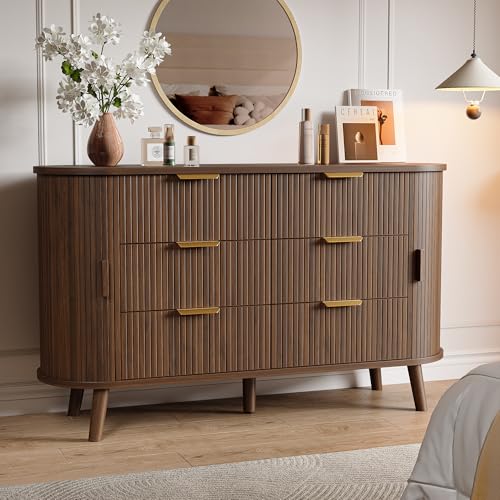
Credenza Dresser: The Complete Buying Guide
Discover how a credenza dresser blends low-profile elegance with practical drawer storage. Learn which styles, sizes, and materials suit your space before you decide.
Start Your ResearchDresserAdvisor Insight: A credenza dresser is not just a piece of furniture — it is a spatial decision. Its wide, low silhouette changes how a room feels, how traffic flows, and how much storage you can access without visual clutter. This guide walks you through every consideration so you can choose with confidence.
What Is a Credenza Dresser?
A credenza dresser is a hybrid storage piece that borrows the horizontal proportions of a traditional credenza or sideboard and pairs them with the drawer-based storage of a dresser. Unlike a tall chest of drawers, a credenza dresser sits low — typically between 28 and 36 inches — and stretches wide, often 48 to 72 inches across. This shape makes it exceptionally versatile. In a living room, it functions as a media console or display surface. In a dining room, it serves as a buffet alternative. In a bedroom, it provides clothing storage without blocking sightlines or natural light.
The term itself reflects this dual identity. Furniture makers and retailers use "credenza dresser" to describe pieces that have the clean, architectural lines of mid-century modern sideboards but are built with bedroom-grade drawer depth and interior organization. If you are comparing storage options, our dresser buying guide explains how credenza dressers differ from conventional vertical dressers and when each format makes more sense.
For buyers in the research phase, the key question is not simply "which credenza dresser looks best" but "which credenza dresser fits my room, my storage habits, and my long-term needs." The sections below address each of those dimensions in turn.
Why Choose a Credenza Dresser?
Low Visual Profile
A credenza dresser keeps the upper half of your wall clear, which makes rooms feel taller and more open. This is especially valuable in apartments, rooms with sloped ceilings, and spaces where you want artwork or a mirror to take center stage.
Generous Top Surface
The wide top of a credenza dresser doubles as a display area for lamps, plants, books, and decorative objects. In a bedroom, it can serve as a vanity or a staging surface. In a living room, it anchors a media setup or a gallery wall arrangement.
Flexible Room Placement
Because it is low and horizontal, a credenza dresser can float in the middle of a room, sit against a long wall, or slide beneath a window. This flexibility is difficult to achieve with a tall dresser or a deep armoire.
Drawer-Based Organization
Unlike open shelving, a credenza dresser hides clutter behind closed drawers. Many models include felt-lined top drawers for jewelry or delicate items, and some offer adjustable interior dividers for clothing, linens, or media accessories.
Popular Credenza Dresser Styles
Style is where a credenza dresser becomes personal. The same storage footprint can read as minimalist, rustic, glamorous, or traditional depending on materials, hardware, and leg design. Below are the most common style families you will encounter during your research.
| Style | Defining Features | Best For |
|---|---|---|
| Mid-Century Modern | Tapered legs, clean lines, walnut or teak veneers, minimal hardware | Living rooms, open-plan spaces, retro-inspired bedrooms |
| Modern Minimalist | Handleless drawers, matte finishes, flush fronts, low plinth bases | Contemporary apartments, compact bedrooms, pared-back interiors |
| Farmhouse & Rustic | Reclaimed wood tones, distressed finishes, cup pulls, bracket feet | Country-style homes, casual bedrooms, family living rooms |
| Glam & Mirrored | Mirrored drawer fronts, metallic accents, high-gloss finishes | Dressing areas, elegant bedrooms, boutique-style interiors |
| Traditional & Transitional | Moulded edges, bracket feet, antique-style pulls, warm wood tones | Classic bedrooms, formal dining rooms, heritage homes |
If your taste leans toward warm wood grain and tapered legs, explore walnut dressers for a natural mid-century feel. For a lighter, more airy look, light oak dressers offer a Scandinavian-adjacent palette that works well in small bedrooms. And if you prefer a statement piece with reflective surfaces, mirrored chests of drawers can bring a glamorous dimension to the same low-profile format.
How to Choose the Right Size
Size is the single most common source of buyer regret with credenza dressers. Because these pieces are wide, they can overwhelm a narrow wall or leave awkward gaps in an open-plan layout. Use the following framework before you commit.
- Measure the wall first. A credenza dresser should occupy roughly two-thirds of the wall width it sits against, leaving 6 to 12 inches of breathing room on each side.
- Check the height in context. Standard credenza dresser heights fall between 28 and 36 inches. Lower heights suit living rooms and media setups; slightly taller models work better in bedrooms where you want a more substantial presence.
- Confirm drawer depth. Bedroom-oriented credenza dressers typically have deeper drawers (16 to 18 inches) than living-room sideboards (12 to 14 inches). If clothing storage is the priority, check the interior depth.
- Plan for clearance. Allow at least 30 inches of walking space in front of the drawers so they can open fully without obstruction.
- Consider the visual weight. A wide credenza dresser in a dark finish will feel heavier than the same dimensions in a light finish. Balance dark pieces with lighter walls and floors.
For rooms with tighter footprints, a 48-inch wide dresser offers the credenza proportions without consuming an entire wall. If you have a longer wall to fill, a 70-inch dresser delivers the full horizontal look while still keeping the top surface usable.
Materials and Construction Quality
The material story behind a credenza dresser determines how it ages, how much it weighs, and how well it resists everyday wear. Understanding the tier of construction helps you set realistic expectations — not in terms of currency, but in terms of longevity and refinement.
| Tier | Typical Construction | What to Expect |
|---|---|---|
| Entry-Level | Engineered wood with printed or thin veneer finishes, stapled or cam-lock joinery | Lightweight, suitable for low-traffic rooms, may show wear at edges over time |
| Mid-Range | Engineered wood core with quality wood veneer, dowel and screw joinery, metal drawer glides | Better grain consistency, smoother drawer operation, suitable for daily bedroom use |
| Premium | Solid wood frames with veneered panels, dovetail or dowel joinery, soft-close glides | Durable construction, repairable surfaces, strong grain character, long-term investment |
| Luxury | Solid hardwood throughout, hand-finished surfaces, dovetail drawers, premium hardware | Heirloom potential, exceptional tactile quality, designed to be refinished over decades |
Solid wood remains the benchmark for durability. A solid walnut dresser combines density, warm color, and grain complexity that engineered alternatives cannot fully replicate. If you prefer a painted or natural finish, solid wood six-drawer dressers show how credenza-style proportions can be adapted to practical bedroom storage. For tighter budgets, engineered wood with a quality veneer is a reasonable entry point, but check the drawer glides and interior lining — these are the first components to show wear.
Hardware is another quality signal. Drawer pulls that feel solid and operate smoothly usually indicate a higher tier of construction. If you plan to customize the look later, bureau drawer knobs are an easy upgrade that can transform the personality of a credenza dresser without structural changes.
Where to Place a Credenza Dresser
A credenza dresser is not limited to the bedroom. Its low, wide format adapts to several rooms, and understanding those placement options helps you justify the purchase as a long-term, multi-purpose investment.
Living Room
Use a credenza dresser as a media console beneath a wall-mounted television, or as a display surface behind a sofa. The drawers hide remotes, cables, games, and seasonal decor. For living-room-oriented storage, browse storage dressers for living rooms to see how the format is adapted for common-area use.
Bedroom
In a bedroom, a credenza dresser replaces a tall chest without dominating the wall. Place it opposite the bed or beside a window, and add a mirror above for a functional dressing zone. Our guide to tall bedroom dressers is useful for comparison if you are weighing vertical versus horizontal storage.
Dining Room
A credenza dresser can serve as a buffet or serving station. Felt-lined drawers hold flatware and linens, while the top surface accommodates serving dishes during gatherings. This dual-use approach makes it a practical choice for homes without a dedicated sideboard.
Entryway
In an entryway, a narrow credenza dresser works as a console for keys, mail, and bags. Keep the depth in check — 14 to 16 inches is usually enough for an entryway without blocking traffic flow.
If your space is genuinely tight, a small cabinet with doors and drawers can deliver similar closed storage in a more compact footprint. For open-plan homes, a tall sideboard cabinet with drawers offers an alternative vertical interpretation of the credenza concept.
Drawer Organization and Interior Layout
The exterior of a credenza dresser gets the attention, but the interior determines whether it actually solves your storage problem. Before buying, think about what you plan to store and whether the drawer layout supports it.
- Top drawers: Shallow drawers (4 to 6 inches deep) are ideal for jewelry, accessories, socks, and small folded items. Felt lining is a plus.
- Middle drawers: Medium-depth drawers (6 to 8 inches) suit folded shirts, sweaters, and linens.
- Bottom drawers: Deeper drawers (8 to 10 inches) accommodate bulkier items such as jeans, blankets, or off-season clothing.
- Dividers: Adjustable dividers help separate categories and prevent drawer contents from sliding around during opening and closing.
- Glide quality: Soft-close metal glides reduce noise and wear. Avoid stapled-on plastic glides on pieces intended for daily use.
If jewelry storage is a priority, look for models with a dedicated jewelry drawer or consider a tall dresser with a jewelry drawer as a complementary piece. For bedrooms where under-bed space is limited, under-bed storage solutions can work alongside a credenza dresser to expand total capacity without adding visual clutter.
Final Buying Checklist
Before you finalize your choice, run through this checklist. It captures the decisions that matter most and helps you avoid the most common mistakes buyers make with credenza dressers.
- I have measured the wall and confirmed the credenza dresser width leaves adequate breathing room.
- I have verified the height works with my room's sightlines and any planned wall decor.
- I have checked the drawer interior depth and confirmed it matches what I plan to store.
- I have reviewed the construction tier and understand the expected longevity.
- I have confirmed the drawer glides are metal and operate smoothly.
- I have considered the finish and how it will age in my space.
- I have planned for clearance in front of the drawers.
- I have compared at least two style directions before committing.
If you want to explore alternative formats before deciding, our dresser reviews section covers individual models in detail, and our best budget dressers guide highlights entry-level options that still meet basic quality expectations. For a broader comparison of storage categories, the dresser shelf combo guide shows how open shelving can complement closed drawer storage.
Frequently Asked Questions
What is a credenza dresser?
A credenza dresser is a low, wide storage piece that combines the drawer-based storage of a dresser with the sideboard proportions of a credenza. It typically sits lower to the ground, making it ideal for living rooms, dining areas, entryways, and bedrooms where a traditional tall dresser would feel visually heavy.
Where should I place a credenza dresser?
A credenza dresser works well in living rooms as a media console, in dining rooms as a buffet alternative, in entryways as a console, and in bedrooms as a low-profile clothing storage piece. Its horizontal orientation suits long walls and open-plan spaces.
What materials are best for a credenza dresser?
Solid wood credenza dressers offer the best durability and longevity. Walnut, oak, and teak are popular for their grain character. Engineered wood with quality veneers provides a more accessible entry point. Rattan and cane accents suit relaxed, coastal, and bohemian interiors.
How do I choose the right size credenza dresser?
Measure your wall space and leave at least 6 to 12 inches on either side for breathing room. A credenza dresser should be roughly two-thirds the width of the wall or furniture it anchors. Standard heights range from 28 to 36 inches, keeping sightlines open in living areas.
Can a credenza dresser be used in a bedroom?
Yes. A credenza dresser is an excellent bedroom storage option for compact rooms or rooms with sloped ceilings, because its low profile preserves wall space and natural light. Pair it with a mirror above to create a functional dressing area.
Ready to Choose Your Credenza Dresser?
You now have the framework to evaluate credenza dressers with confidence. Compare styles, verify dimensions, and check construction quality — then make a decision that fits your room and your storage habits for years to come.
Explore All Dresser Types