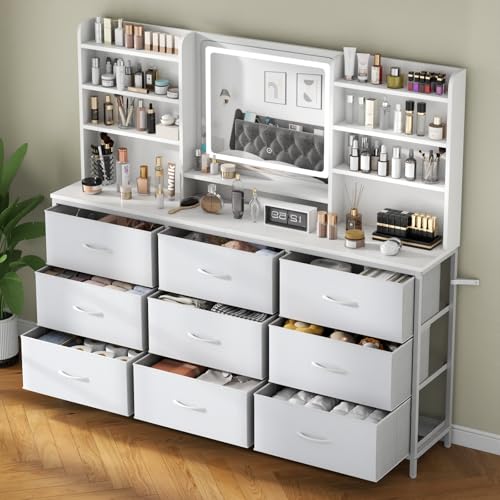
Children's White Dresser with Mirror: The Complete Guide
A white dresser with a mirror is one of the most practical and charming additions to a child's bedroom. It brightens the room, provides organized storage, and gives kids a dedicated spot to get ready. This guide walks you through everything you need to know before choosing one.
START THE BUYING GUIDEWhy this guide matters: Parents researching a children's white dresser with mirror usually need help balancing safety, durability, and style. The right piece should grow with your child, hold up to daily use, and fit comfortably in the room. Below we cover the key factors, tier comparisons, and room-by-room tips so you can decide with confidence.
Why Choose a White Dresser with Mirror?
A white dresser with a mirror offers several advantages over darker or mirror-less options. White finishes reflect light, which makes smaller bedrooms feel larger and brighter. The mirror adds a functional surface for dressing and grooming, and it doubles as a decorative focal point that suits nursery, toddler, and school-age rooms alike.
From a practical standpoint, a single combined piece saves floor space compared with a separate dresser and vanity. That matters in compact bedrooms, shared kids' rooms, and nurseries. White is also a forgiving color that pairs easily with changing decor as your child grows, so the furniture can stay through multiple room makeovers.
Parents often pair a white dresser with a coordinated crib and changing table in the early years, then keep the dresser as the child transitions to a bigger bed. For more background on the broader category, see our guide to children's dressers and the full range of children's dressers available.
Safety First: Anchoring and Mirror Basics
Safety is the most important consideration for any children's furniture, and a dresser with a mirror adds two specific points to watch: tip-over risk and mirror fragility.
Anti-tip anchoring is non-negotiable
Every dresser in a child's room should be secured to the wall using anti-tip straps, brackets, or a wall-anchoring kit. Children may pull on open drawers or climb on the furniture, and anchoring prevents the unit from tipping forward. Check that the anchoring hardware is included or sold as a compatible accessory, and re-check the straps as your child grows heavier and more active.
Mirror attachment and glass type
Look for a mirror that is firmly attached to the dresser frame, not resting loosely on top. A securely mounted mirror reduces the chance of it falling if the dresser is bumped. Prefer shatter-resistant or safety-backed glass where available, especially in nursery and toddler rooms. If the mirror is a separate hanging piece, install it with appropriate wall hardware at a height that stays out of reach of very young children.
For nursery-specific considerations, our nursery dressers guide covers changing-table safety and height recommendations in more detail.
Choosing the Right Size
Size affects both usability and room flow. A dresser that is too tall can be hard for a young child to use independently; one that is too small may not hold enough clothing as the child grows.
Height and reach
For toddlers and young children, the top surface should sit at a comfortable height so they can reach the top drawers and see into the mirror without climbing. As a rule of thumb, measure your child's shoulder height and compare it with the dresser's top drawer position. A mirror mounted at eye level for the child encourages independent dressing.
Width and drawer count
- Compact models (3 drawers): Best for small bedrooms, nurseries, or as a secondary storage piece. Narrow footprints fit beside a bed or in a corner.
- Mid-size models (4–5 drawers): A balanced choice for most children's rooms, offering enough capacity for folded clothes, pajamas, and bedding.
- Wide models (6+ drawers): Suited to shared rooms or children with larger wardrobes. These need more wall space and should be anchored firmly.
If space is tight, explore compact dressers or corner dressers that make better use of awkward layouts. For rooms where storage needs to flex over time, a convertible crib and dresser set can keep the design coordinated as your child grows.
Materials and Finishes
The material determines durability, weight, and how well the white finish holds up to daily wear. Children's furniture takes more knocks than adult furniture, so this choice matters.
Solid wood
Solid wood dressers are the most durable option and can be refinished if the surface gets scratched. They are heavier, which is generally good for stability when anchored. Painted or lacquered solid wood keeps the white finish crisp and is easy to wipe clean.
Engineered wood and MDF
Engineered wood and MDF are common in children's furniture and can offer a smooth, uniform white surface. Quality varies widely: denser boards with sealed edges resist moisture and wear better than lightweight particleboard. Check that drawer runners and joints feel solid, since these are the parts that fail first.
Finish and maintenance
A lacquered, painted, or foil-wrapped white finish is easier to clean than raw or lightly sealed wood. Use a soft damp cloth for routine cleaning and avoid abrasive pads that dull the surface. For deeper guidance on comparing materials, see our materials and finishes section.
Quality Tiers Compared
Children's white dressers with mirrors fall into a few broad quality tiers. Instead of focusing on numbers, compare construction, hardware, and finish quality within each tier. The table below summarizes what to expect.
| Tier | Typical Construction | Best For |
|---|---|---|
| Entry-level | Lightweight engineered wood, basic drawer runners, simple painted finish | Short-term nursery use, guest rooms, or temporary setups |
| Mid-range | Denser engineered wood or mixed construction, smoother metal runners, sealed white finish | Most family homes where the dresser will be used daily for years |
| Premium | Solid wood frames, dovetail or reinforced joints, high-grade hardware, durable lacquer | Long-term use, shared rooms, and families planning to pass furniture down |
| Luxury / top-tier | Hardwood construction, premium fittings, hand-finished surfaces, coordinated collections | Design-focused rooms and buyers seeking a long-term investment piece |
Mid-range models usually offer the best balance for a child's room: smoother drawer action than entry-level pieces and better durability without the weight and investment of premium construction. If you want a coordinated look, a crib and dresser set or a convertible crib with matching dresser can simplify the buying decision.
Storage and Organization Tips
A dresser only works well if it is organized for the child using it. Here are practical ways to get more from a white dresser with mirror in a kids' room.
Assign drawers by purpose
- Top drawer: Socks, underwear, and small accessories that benefit from dividers.
- Middle drawers: Everyday clothes such as t-shirts, leggings, and pajamas.
- Bottom drawers: Bulkier items like jeans, sweaters, and spare bedding.
Use dividers and labels
Drawer dividers keep small items from mixing and make it easier for children to put clothes away themselves. Simple picture labels on the front of drawers help pre-readers find the right spot. Our guides on clothes drawer dividers and clothing drawer organizers explain options in more detail.
Keep the top surface functional
The area around the mirror can hold a small tray for hair accessories, a night light, or a few books. Avoid overcrowding the top so the mirror remains usable. For more ideas, see our closet organization ideas and dresser organization guide.
Style and Room Pairing
White is a versatile base, but the dresser's silhouette and mirror shape still shape the room's character.
Matching the room's style
- Classic and traditional: A white dresser with a framed, arched, or beveled mirror suits cottage and classic bedrooms. Pair with soft pastels and wood accents.
- Modern and minimalist: A clean-lined white dresser with a simple rectangular mirror keeps the room uncluttered. Choose flat-front drawers and minimal hardware.
- Scandinavian: Light white finishes, tapered legs, and a slim round mirror create an airy feel.
For more inspiration, browse our classic dressers and modern dressers collections. If you are furnishing a nursery, the nursery dresser ideas page has room-level styling suggestions.
Coordinating with other furniture
If the room already has a crib or bed in a similar white finish, match the tone (warm white versus bright white) to keep the space cohesive. Sets such as a crib, dresser, and changing table combo make coordination straightforward.
Buying Checklist
Before you commit to a children's white dresser with mirror, run through this checklist:
- Safety: Confirm anti-tip hardware is included or available, and check that the mirror is securely attached with safety-backed glass where possible.
- Dimensions: Measure the wall space, doorway clearance, and your child's reach height. Compare these with the dresser's published dimensions.
- Drawer action: Look for smooth metal runners and stops that prevent drawers from pulling all the way out.
- Finish quality: Check that edges are sealed and the white finish is consistent, especially on high-touch areas.
- Assembly: Review whether assembly is required and whether the instructions include wall anchoring steps.
- Growth potential: Consider whether the dresser's style and capacity will suit the room as your child gets older.
Frequently Asked Questions
Is a white dresser with mirror safe for a child's bedroom?
Yes, when properly anchored to the wall. Always use anti-tip straps or brackets, and check that the mirror is securely attached and made from shatter-resistant glass where available.
What size dresser is best for a children's room?
A three to five drawer dresser with a height that lets your child reach the top drawers is ideal. Compact models suit small rooms, while wide models offer more shared storage for siblings.
How do I keep a white dresser looking clean in a kids' room?
Choose a durable lacquered or painted finish, wipe spills promptly with a soft damp cloth, and avoid abrasive cleaners that can dull the surface.
Should the mirror be attached to the dresser or hung separately?
An attached mirror is convenient and saves wall space, but it must be firmly fixed to the frame. A separately hung mirror gives more flexibility in placement but requires its own secure wall mounting.
Can a children's white dresser be used beyond childhood?
Yes. White finishes and classic silhouettes often suit teen and guest rooms, especially when paired with neutral bedding and updated hardware.