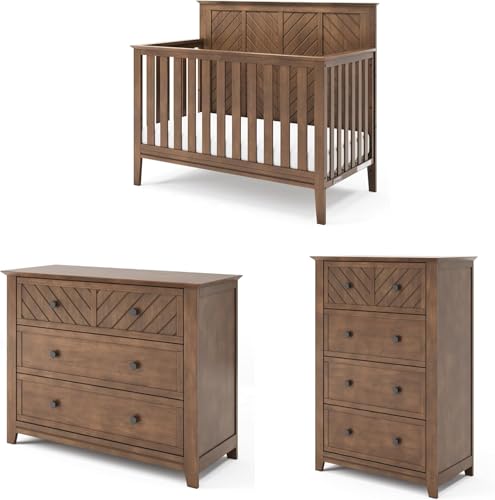
Convertible Crib and Dresser Set: The Complete Buying Guide
A convertible crib and dresser set is the backbone of a nursery that grows with your child. Instead of replacing furniture every two or three years, a well-chosen set starts as a safe sleeping space and a place for tiny clothes, then converts into a toddler bed, daybed, and eventually a full-size bed alongside a dresser that stays useful for a decade or more. This guide walks you through everything that matters before you buy: crib conversion stages, dresser sizing, safety standards, materials, finish coordination, and room layout.
If you are in the research stage, you likely know you want a matching nursery furniture set but are unsure which configurations are worth paying for and which are marketing extras. We break down each decision point so you can compare sets with confidence and pick the one that fits your room, your timeline, and your child's needs.
What Exactly Is a Convertible Crib and Dresser Set?
A convertible crib and dresser set pairs two core nursery pieces that share a finish, hardware style, and construction quality. The crib is the "convertible" part: it is engineered to be reconfigured as your child outgrows the infant stage. The dresser is the storage anchor, and in many sets it doubles as a changing station when paired with a contoured changing pad and safety accessories.
The key distinction from a standard crib is the conversion kit. Most convertible cribs support four stages: infant crib, toddler bed (with a guardrail), daybed (with one side removed), and full-size bed (with a conversion rail and standard mattress). Some sets bundle the toddler rail and full-size conversion kit; others sell them separately, sometimes years later when the parts are harder to find. This is one of the most important details to check before purchasing, because an unbundled kit can make the total package more than it first appears.
Dressers in these sets range from compact three-drawer chests suited to small rooms to wide six-drawer dressers that hold a full wardrobe. Some sets add a third piece, such as a changing table or a crib dresser changing table combo, which consolidates storage and diapering into one footprint. For a broader look at how these configurations differ, see our guide to crib and dresser sets.
Why a Convertible Set Makes Sense for Growing Families
The financial logic of a convertible set is straightforward: you buy one crib and one dresser that serve from birth through elementary school and beyond, rather than a crib, a toddler bed, a twin bed, and a dresser across separate purchases. The practical logic matters just as much. A matched set eliminates the guesswork of coordinating finishes, and the dresser stays in the room long after the crib has been converted, so the nursery does not need a full redesign when your child becomes a toddler.
Convertible sets are also a good fit for families planning more than one child. A solidly built set can move from nursery to nursery, with only the mattress and bedding changing between children. The conversion stages mean the same frame keeps working as each child grows. The trade-off is that conversion kits and replacement parts need to be sourced from the original manufacturer, so choosing a brand with a long track record and accessible spare-parts support is a worthwhile investment in the set's long-term usability.
The Four Crib Conversion Stages Explained
Understanding the conversion stages helps you evaluate what a set actually offers versus what sounds impressive on a product page.
| Stage | What It Is | When Families Typically Use It | What You Need |
|---|---|---|---|
| Infant crib | Full four-sided crib with adjustable mattress height | Birth to roughly 18–24 months | Crib mattress (standard size) |
| Toddler bed | One side removed, toddler guardrail installed | Around 18 months to 3 years | Toddler guardrail (often included) |
| Daybed | One side removed, no guardrail; low profile | Preschool years | Same crib mattress |
| Full-size bed | Both crib sides removed, conversion rails added | School age through teens | Full-size conversion kit and full mattress |
A set that includes both the toddler rail and the full-size conversion kit is the most complete package and the easiest to plan around. If the full-size kit is sold separately, note that availability can vary by finish and model year, so confirm it is currently in stock before committing. Sets that skip the daybed stage are less flexible but still cover the most-used configurations.
What to Look For in the Dresser Half of the Set
The dresser is the piece your family will use longest, so it deserves as much scrutiny as the crib. Start with drawer capacity: a three-drawer chest can handle an infant's wardrobe but will strain once clothes, bedding, and toys accumulate. A four- to six-drawer dresser is the more versatile choice for a room that will serve a child for years. Drawer glides matter too. Metal ball-bearing glides with a soft-close or self-close mechanism feel more solid and hold up better than basic side-mounted rollers.
Anti-tip hardware is non-negotiable. Any dresser in a child's room should be anchored to the wall with the included strap or bracket, and the manufacturer should supply this hardware in the box. Check that drawers have stops to prevent full pull-out, and that the unit has a stable, wide base. If the set includes a changing topper, verify it has raised edges and a safety strap, and that it is removable so the dresser converts to standard use later.
If wall space is tight, a convertible crib with matching dresser in a compact or narrow configuration can fit smaller rooms without sacrificing the matched look. Families who want to add a changing station without a third piece may prefer a crib with changing table and dresser configuration. For sets that include additional storage, our overview of crib and dresser pairings covers the common combinations.
Materials and Finishes: Matching Quality Across Both Pieces
Because the crib and dresser are used very differently, matching the finish is easy while matching the construction quality takes attention. Solid wood, especially maple, oak, or birch, is the most durable choice for both pieces and holds up to the daily wear a child's room generates. Engineered wood with a quality veneer is a solid mid-tier option, provided the edges are properly sealed and the finish is water-resistant. Particleboard cores with thin laminates sit at the entry-level and are best suited to short-term or secondary use.
Finish safety is especially important in nurseries, which are small and often have limited airflow. Look for low-VOC or GREENGUARD Gold certified finishes, and be wary of sets that arrive with a strong chemical odor. A natural wood finish, such as a crib and dresser set in natural wood, is a popular choice because it shows fewer wear marks and works across multiple decor styles. Painted sets in white or soft neutrals are equally common and pair easily with changing bedding and wall colors.
Safety Standards You Should Verify Before Buying
Crib safety in the United States is governed by mandatory CPSC rules and ASTM standards, and any crib sold new must comply. Confirm that the crib is fixed-side, since drop-side cribs are prohibited. Slat spacing should not exceed 2 3/8 inches, and the mattress should fit snugly with no more than two fingers of gap at the edges. Adjustable mattress heights make it easier to lift a newborn in and out and lower the mattress as your child learns to sit and stand.
For the dresser, wall anchoring is the single most important safety step, and it should be completed on day one, not postponed. Drawer stops, stable bases, and rounded corners reduce injury risk. If the set includes a changing table or topper, check for a safety strap, a contoured surface, and raised side edges. Finally, keep the crib clear of cords, curtains, and wall decor, and place it away from windows and heating sources regardless of how well the set is built.
How to Plan Your Nursery Layout Around the Set
Measure the room before you buy, not after. The crib needs roughly 30 inches of clearance on the sides you use for access, and the dresser needs about 30 inches of open floor in front of the drawers. Place the crib on the longest uninterrupted wall, away from windows, outlets with loose cords, and heat sources. Position the dresser opposite or perpendicular to the crib so both pieces can be used without moving furniture.
In a compact nursery, a narrow dresser paired with a crib in a corner arrangement preserves floor space for a glider or play area. In larger rooms, a wide dresser can double as a changing station and storage hub, with the crib placed along a side wall to leave a central play zone. Walk through the layout mentally with drawers open and a diaper-changing stance in mind; this catches clearance problems that a floor plan misses.
For a coordinated look that carries into the toddler years, choose bedding and decor that work with the set's finish rather than committing to a single theme. Neutrals, soft greens, and warm wood tones tend to age well. If you plan to add a nightstand later, confirm the manufacturer offers one in the same finish, since matching an older collection can be difficult.
Comparing Sets Across Quality Tiers
Convertible crib and dresser sets fall into recognizable tiers, and understanding them helps you calibrate expectations without relying on retail figures.
| Tier | Typical Construction | Best For | Considerations |
|---|---|---|---|
| Entry-level | Engineered wood with laminate finish; basic drawer glides | Short-term nursery use, secondary rooms, renters | Check anchoring hardware and finish odor; expect limited conversion kit support |
| Mid-range | Engineered wood with veneer or mixed solid/engineered construction; metal glides | Families planning to use the set through the toddler years | Confirm whether conversion kits are bundled or sold separately |
| Premium | Solid wood frames, dovetailed or reinforced drawers, soft-close glides | Long-term use across multiple children | Verify low-VOC finishes and spare-parts availability |
| Luxury / heirloom | Hardwood with hand-finished details, premium hardware, full conversion kits included | Families treating the set as a long-term investment | Confirm delivery, assembly, and touch-up service terms |
In practice, the mid-range and premium tiers offer the best balance for most families. The jump from entry-level to mid-range usually brings noticeably smoother drawer action, better edge sealing, and sturdier conversion hardware, which matters because those are the parts that wear first. Moving from premium to luxury is largely about finish detail and included accessories rather than structural differences.
Buying Checklist Before You Commit
- Confirm which conversion kits are included: toddler rail, daybed rail, and full-size bed rails.
- Measure the room and verify drawer clearance and crib access space.
- Check that the crib is fixed-side and meets current CPSC and ASTM standards.
- Verify that anti-tip hardware is included and plan to install it immediately.
- Confirm the dresser has drawer stops and metal glides for daily use.
- Look for low-VOC or GREENGUARD Gold certified finishes.
- Check whether the manufacturer offers matching nightstands or additional pieces later.
- Read assembly instructions or reviews to gauge setup complexity and required tools.
Working through this list takes about fifteen minutes and prevents the most common post-purchase frustrations, particularly missing conversion parts and dressers that do not fit the intended wall.
Frequently Asked Questions
What is a convertible crib and dresser set?
A convertible crib and dresser set is a coordinated nursery furniture package that pairs a crib designed to transition through multiple stages (crib, toddler bed, daybed, and full-size bed) with a matching dresser. These sets are matched in finish, style, and material so the nursery looks cohesive from day one and continues to work as your child grows.
How long does a convertible crib last?
A convertible crib typically lasts from infancy through the toddler years and often into the teenage years when converted to a full-size bed. Most convertible cribs offer four configurations. The full-size conversion usually requires a separate conversion kit, which some sets include and others sell separately, so always confirm what is bundled.
Should I buy a crib and dresser set or purchase pieces separately?
Buying a set saves time, ensures a matching finish and style, and often bundles the conversion kit. Buying separately gives you more flexibility to mix finishes, choose a dresser that fits your exact wall space, and upgrade individual pieces over time. Sets are the better choice when you want a cohesive nursery quickly; separate pieces work better when the room has unusual dimensions or you plan to keep only the dresser long-term.
What safety features should I look for in a convertible crib and dresser set?
Look for cribs that meet current CPSC and ASTM safety standards, including fixed-side construction, adjustable mattress heights, and no more than 2 3/8 inches of space between slats. For the dresser, an anti-tip kit is essential, and drawers should have stops that prevent them from pulling completely out. Check that any included changing table has a safety strap and raised edges.
What materials are best for a convertible crib and dresser set?
Solid wood sets, particularly those in maple, oak, or birch, offer the most durability and longevity. Engineered wood with a quality veneer is a solid mid-tier option that resists warping when properly sealed. Look for finishes that are GREENGUARD Gold certified or otherwise low-VOC, since nurseries are small, enclosed spaces. Avoid sets with strong chemical odors, which can indicate high formaldehyde emissions.
How do I arrange a crib and dresser set in a small nursery?
Place the crib on the longest uninterrupted wall, away from windows, cords, and heating vents. Position the dresser opposite the crib or perpendicular to it so the drawer fronts open freely without blocking walkways. Keep at least 30 inches of clearance in front of the dresser. If the room is very compact, a narrow dresser or a dresser with a changing station on top can replace both a standalone changing table and a storage piece.