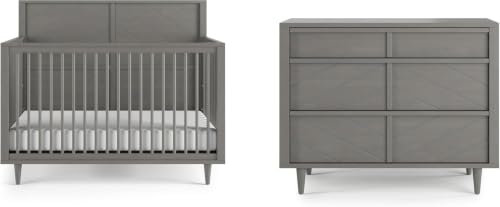
Convertible Crib with Matching Dresser: The Complete Buyer's Guide
Everything you need to know about coordinated nursery furniture sets that grow with your child, from crib conversion stages to dresser safety and room layout.
Why a matching set makes sense: A convertible crib with matching dresser brings visual harmony to the nursery and simplifies long-term planning. The crib adapts through multiple sleep stages while the dresser provides coordinated storage that carries well beyond the baby years. This guide walks you through conversion options, safety standards, sizing, and layout decisions so you can choose a set with confidence.
What Is a Convertible Crib with Matching Dresser?
A convertible crib with matching dresser is a coordinated nursery furniture pairing in which both pieces share the same finish, hardware style, and design language. The crib is engineered to transition through several sleep configurations, while the dresser provides drawer storage sized for baby clothes, bedding, and care essentials. Buying the two together removes the guesswork of matching wood tones and hardware finishes, and it often means one delivery, one assembly session, and a consistent warranty.
The real advantage appears over time. A standard crib becomes obsolete once a toddler learns to climb, but a convertible model extends its usefulness through a toddler bed stage, a daybed stage, and often a full-size bed stage. The dresser, meanwhile, typically outlasts every sleep configuration because its storage capacity remains relevant from infancy through the school years. If you are still comparing furniture categories, our overview of convertible crib and dresser set options can help you frame the decision.
The Four Conversion Stages Explained
Most convertible cribs follow a similar progression. Understanding each stage helps you confirm what the set includes and what may need to be purchased later.
Stage 1: Standard Crib
The crib stage uses a fixed or adjustable mattress support with four height positions. Start with the highest setting for easy access to a newborn, then lower the mattress as your baby learns to sit and stand. This is the stage where crib safety standards matter most, so confirm the model meets current mandatory crib regulations.
Stage 2: Toddler Bed
Removing one side rail and adding a toddler guardrail converts the crib into a low toddler bed. This stage supports the transition out of the crib while keeping the familiar frame and mattress. Some sets include the toddler rail in the box; others require it as a separate accessory.
Stage 3: Daybed
With the front rail removed entirely, the frame becomes a daybed suitable for a small child's room or a reading nook. This stage is often skipped, but it adds flexibility for families who want a low-profile seating and resting spot before moving to a full bed.
Stage 4: Full-Size Bed
The final conversion uses a full-size bed rail kit and a standard full mattress. This is where the long-term value of a convertible crib becomes clear: the same frame can serve a child through the teenage years, provided the conversion kit is available and the frame's weight rating supports an older child.
Planning tip: Before purchasing, confirm exactly which conversion kits ship with the crib. A set that includes toddler and full-size rails reduces future hassle, while a set that sells them separately requires you to budget time and effort for a second purchase.
The Matching Dresser: More Than a Visual Match
The dresser in a nursery set does real work. It holds diapers, wipes, bodysuits, sleep sacks, blankets, and the rotating wardrobe of a fast-growing child. A well-designed nursery dresser typically includes full-extension drawers, soft-close glides, and a top surface deep enough for a changing pad. As your child grows, the same dresser can shift to holding everyday clothing and eventually serve as a general bedroom storage piece.
Matching matters for more than aesthetics. Coordinated finishes and hardware create a calm, cohesive room, and they make it easier to add pieces later, such as a nightstand from the same collection. If you are also weighing storage configurations, our guide to nursery dressers covers drawer counts and height options in more detail.
Dresser Features Worth Prioritizing
- Anti-tip hardware included and easy to install
- Full-extension drawer glides with a smooth, quiet close
- Drawer stops that prevent accidental pull-out
- Recessed or rounded hardware without sharp edges
- A top surface wide enough for a changing pad with raised sides
- Interior drawer depth suitable for folded baby clothes and bedding
Safety Standards You Should Verify
Safety is the single most important filter when choosing nursery furniture. Two categories matter most: crib safety and dresser tip-over prevention.
For the crib, confirm compliance with current mandatory crib regulations, including slat spacing, mattress support strength, and hardware integrity. Avoid older or secondhand cribs with missing parts or outdated designs. For the dresser, verify that an anti-tip kit is included and install it. Children climb, and an unanchored dresser with open drawers is a known hazard. Current tip-over safety standards require dressers to remain stable under specified testing conditions, but anchoring remains the strongest protection.
Also check for non-toxic finishes and low-emission materials, especially in a room where a baby sleeps. If you are comparing individual pieces rather than sets, our article on crib and dresser pairings discusses how to evaluate both pieces independently.
Sizing and Room Layout
Nursery furniture sizing is predictable, which makes planning easier. A standard crib occupies roughly 30 by 54 inches, and a full-size conversion bed grows to about 54 by 75 inches. Nursery dressers commonly range from 30 to 60 inches wide, with depths between 16 and 20 inches.
| Furniture Piece | Typical Footprint | Clearance Needed | Best For |
|---|---|---|---|
| Convertible crib (crib stage) | About 30 × 54 in | 30 in around the crib | Newborn through toddler |
| Convertible crib (full bed stage) | About 54 × 75 in | 24 in at the foot and sides | School-age years |
| Compact nursery dresser | About 30–40 in wide | 24 in in front of drawers | Small nurseries and apartments |
| Standard nursery dresser | About 45–60 in wide | 24–30 in in front of drawers | Full changing station plus storage |
Place the crib away from windows, blinds, and cords, and keep the dresser within arm's reach of the changing area if you plan to use the top as a changing station. Leave enough space for drawers to open fully without hitting the crib or a wall. A room of roughly 10 by 10 feet accommodates a standard set comfortably, while compact sets fit smaller spaces. For tight rooms, explore compact dresser options that pair well with a standard crib footprint.
Understanding Quality Tiers
Nursery furniture sets fall into recognizable tiers based on materials, joinery, and hardware. Rather than focusing on numbers, use these descriptors to compare sets on relative quality and expected lifespan.
Entry-Level Tier
Engineered wood panels with laminate or painted finishes, basic drawer glides, and a simpler conversion kit package. A solid choice for a first nursery where needs may change quickly.
Mid-Range Tier
Solid wood fronts, reinforced joinery, smoother soft-close glides, and more consistent finishes. This tier typically offers the best balance of durability and long-term flexibility.
Premium Tier
Solid hardwood construction, dovetail or mortise-and-tenon joinery, premium hardware, and full conversion kits included. Built to serve through multiple children and full bed conversion.
Luxury Tier
Hand-finished hardwoods, designer hardware, custom finishes, and white-glove delivery options. Chosen for heirloom intent and design-forward nurseries.
Across tiers, prioritize the pieces you touch and move daily: drawer glides, crib mattress support, and anti-tip hardware. A mid-range set with excellent hardware often outperforms a higher-tier set with weaker components. If you are expanding beyond the nursery, our guide to children's dressers covers storage that grows with the child's room.
Choosing a Finish That Lasts
Nursery finishes should be durable, easy to clean, and safe for a child's environment. Painted finishes in white, cream, or soft gray remain popular because they hide minor wear and pair easily with changing decor. Natural wood finishes in oak, walnut, and maple offer warmth and show grain character, but they can be less forgiving of scratches.
Whatever finish you choose, check that it is low-emission and free of harsh solvents. If you plan to repaint or refinish a dresser later, our overview of painted dressers explains which finishes are easiest to refresh. Matching the crib and dresser finish at purchase avoids the frustration of trying to match a new piece to an existing one months later.
Assembly, Delivery, and Setup
Nursery furniture sets usually arrive flat-packed or partially assembled. Plan for a few hours of assembly for a crib and dresser, and have a second person available for the crib frame, which is awkward to handle alone. Check the hardware bag against the parts list before starting, and keep the instructions and spare hardware for future conversions.
Assemble the crib first so you can confirm the mattress support height and conversion rail fit before the room is full of other items. Anchor the dresser to a wall stud immediately after assembly, before loading it with clothes. If delivery service is offered, confirm whether it includes room-of-choice placement and packaging removal, as these details vary by retailer and tier.
When Your Child Outgrows the Crib Stage
The transition from crib to toddler bed usually happens when a child begins to climb out or reaches about 35 inches in height, though readiness varies. Keep the toddler rail installed until the child sleeps consistently without rolling out. When you move to the full-size bed stage, confirm the mattress size required and whether the frame needs a box spring.
The matching dresser rarely needs replacing. Its drawers continue to serve clothing storage, and its top surface can shift from a changing station to a display area for books and decor. If you are considering a different configuration for the next stage, our guide to children's dresser options explores transition-friendly designs, and our article on child's vanity table with mirror covers another option for older children's rooms.
Final Buying Checklist
- Confirm which conversion kits are included: toddler rail, full-size rails, or both
- Verify current crib safety compliance and dresser anti-tip hardware
- Measure the room and confirm drawer clearance before ordering
- Check that the dresser top can accommodate a changing pad if needed
- Review drawer glide type and interior depth for your storage needs
- Confirm the finish matches your planned room palette and is low-emission
- Ask about delivery, assembly service, and warranty coverage
- Keep instructions and spare hardware for future conversions
Frequently Asked Questions
What is a convertible crib with matching dresser?
A convertible crib with matching dresser is a coordinated nursery furniture set in which the crib transitions through multiple stages (crib, toddler bed, daybed, and full-size bed) and the dresser shares the same finish, hardware, and design language. Buying them as a set ensures visual harmony and often simpler assembly.
How long can a convertible crib be used?
A well-built convertible crib can serve a child from infancy through the teenage years when all conversion kits are included. The crib stage typically lasts until the child can climb out, the toddler bed stage follows, and the full-size bed stage can carry through adolescence depending on the frame's weight rating.
Should the dresser be anchored to the wall?
Yes. Any dresser in a nursery or child's room should be anchored to the wall with the anti-tip kit provided by the manufacturer. Children may climb on open drawers, and anchoring prevents tip-over accidents. Check that the dresser meets current tip-over safety standards.
Do I need to buy the conversion kit separately?
It depends on the set. Some convertible cribs include toddler rails and full-size bed rails in the box, while others sell them as separate accessories. Confirm what is included before purchasing so you are not caught off guard later when your child outgrows the crib stage.
How much space does a crib and dresser set need?
Plan for at least 30 inches of clearance around the crib for safe access and a minimum of 24 inches in front of dresser drawers so they can open fully. A typical nursery set fits comfortably in a room of roughly 10 by 10 feet, though compact sets work well in smaller spaces.