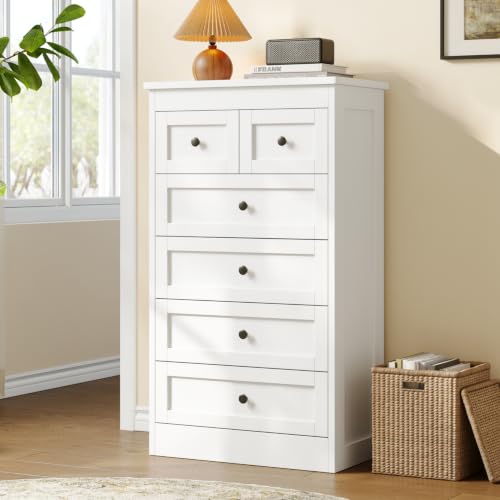
What Defines a White Chest of Drawers with a Wooden Top?
A white chest of drawers with a wooden top is a two-tone storage piece: the carcass and drawer fronts are finished in white (painted, lacquered, or whitewashed), while the top surface is left as exposed timber — oak, walnut, pine, acacia, or mango. The result is a piece that reads clean and bright from the front, but warm and tactile where you actually place your hands, lamps, and decor.
This is not a single product category but a design language. You will find it across nursery chests, bedroom tallboys, wide six-drawer dressers, and even narrow accent chests. That flexibility is exactly why it works in so many rooms — and why it pays to understand the trade-offs before you choose.
Why Choose a Two-Tone White and Wood Chest?
Homeowners gravitate to this style for practical and aesthetic reasons. Here is what makes it stand out:
- Visual lightness: White drawer fronts bounce light around small bedrooms and closets, making tight spaces feel larger. If floor area is limited, pairing white with timber on top keeps the room from feeling boxy.
- Warmth without heaviness: All-white furniture can feel clinical. A natural wood top adds organic texture and a grounding element without darkening the room.
- Practical durability: The top is the most-touched surface. Solid timber resists heat rings, scratches, and moisture far better than a painted white top, which can chip and scuff.
- Design flexibility: Match the wood tone to your bed frame, flooring, or nightstands. Oak reads light and Scandinavian; walnut reads rich and mid-century; pine reads rustic and farmhouse.
- Resale and longevity: Two-tone pieces tend to age well stylistically. A white base with a timber top is far less likely to feel dated than a heavily trend-driven finish.
Editor's note: If you are outfitting a compact bedroom, a small white dresser in a two-tone finish is often the smartest compromise — you get the bright look without crowding the walking path. For tighter closets, consider a white small dresser for closet placement.
Wood Top Options: Oak, Walnut, Pine, and More
The timber top is the defining feature, so it deserves careful attention. Each species behaves differently in terms of grain, tone, and maintenance:
| Wood Type | Character | Best For | Tier Positioning |
|---|---|---|---|
| Oak | Open grain, light honey tone, very hard | Scandinavian and modern bedrooms | Mid-range to premium |
| Walnut | Dark chocolate tone, smooth grain, dense | Mid-century and luxury interiors | Premium to luxury |
| Pine | Pale, knotty, softer surface | Farmhouse and cottage styles | Entry-level to mid-range |
| Acacia / Mango | Warm varied grain, medium hardness | Eclectic and rustic rooms | Mid-range |
| Engineered wood veneer | Consistent grain, uniform tone | Contemporary and commercial settings | Essential tier |
Solid timber tops are the more durable long-term investment. Veneered tops are stable and uniform but can delaminate if exposed to standing water. If you want to understand how these compare in depth, our guide on solid wood vs engineered construction breaks down the trade-offs.
Sizing: Match the Chest to Your Room and Storage Needs
Before you fall for a finish, measure your space. The most common regret buyers report is a chest that is either too deep for the doorway swing or too shallow for their folded clothing volume.
- Height: Standard bedroom chests run roughly 30–40 inches tall; tallboys reach 50–60 inches. A taller chest suits narrow footprints, while a lower chest doubles as a surface for a mirror or lamp.
- Width: Narrow chests sit around 24–30 inches, wide dressers 50–70 inches. A white wide dresser is ideal for shared bedrooms with two occupants.
- Depth: Most chests are 16–20 inches deep. If you have a tight hallway or closet, a 12-inch deep chest of drawers can be a space-saving alternative.
- Drawer count: Three to four drawers suit a single adult; five to six suit couples; eight or nine suit families or linen storage. A white 6 drawer chest is the most popular all-rounder.
Drawer Mechanics and Build Quality
A chest is only as good as its drawers. When comparing models, focus on these construction details rather than surface styling:
- Glides: Entry-level chests use nylon or roller glides; mid-range and premium pieces use metal ball-bearing side-mount or under-mount slides. Under-mount soft-close slides are the smoothest and quietest.
- Joinery: Dovetail joints at drawer corners signal a durable build. Stapled or nailed boxes are common at the essential tier but are less resistant to heavy loads.
- Drawer bottoms: Look for a minimum 3mm plywood or solid wood bottom set into a groove, not stapled to the underside.
- Weight capacity: Heavy-duty drawers rated for 50 lbs or more per drawer handle denim, linens, and winter knitwear without sagging.
- Stability: A well-built chest includes anti-tip hardware. This is non-negotiable in a nursery or any home with young children.
White Finish Variations: Painted, Lacquered, and Whitewashed
Not all whites are equal. The finish affects both appearance and maintenance:
- Painted white: The most common and the easiest to touch up. Satin or semi-gloss paint wipes clean; matte paint shows fingerprints more readily.
- Lacquered white: A smooth, factory-applied coating that resists yellowing and moisture. Often found on mid-range and premium pieces.
- Whitewashed wood: A translucent white stain that lets grain show through. Best for farmhouse and coastal styles, but less forgiving of stains.
- Foil or laminate white: Found at the essential tier. Uniform and wipe-clean, but edges can peel over time with heavy use.
If you prefer a softer, warmer look, a white dresser with light wood top keeps the contrast subtle. For a bolder statement, pair white with darker walnut or a vintage white and gold dresser palette.
Styling a White and Wood Chest
Because the piece is already a two-tone design, styling should be restrained. A few guidelines:
- Keep the wood top visible: Avoid full-coverage runners. A small tray, a lamp, and one decorative object is often enough.
- Echo the wood tone: Repeat the timber tone in a mirror frame, picture frame, or woven basket to tie the room together.
- Layer texture, not color: White ceramics, linen, and rattan add warmth without competing with the chest.
- Consider a mirror: A small dresser with mirror setup can turn a compact chest into a vanity-ready station.
- Add storage beyond the drawers: A stackable dresser drawer organizer keeps socks and accessories tidy inside each drawer.
Room-by-Room Recommendations
Bedroom
The bedroom is the natural home for this style. A mid-height chest with a solid oak top pairs well with a light wood bed frame. If you share the room, a wide model with six or more drawers is more practical than two narrow chests.
Nursery
White is a classic nursery choice because it reads calm and clean. A white chest of drawers nursery unit should always be anchored with anti-tip straps, and the wooden top is a practical surface for a changing mat. If you need a dedicated station, a solid wood changing table dresser combines both functions.
Living Room and Hallway
A chest is not only a bedroom piece. A low, wide chest with a timber top works as a console or media unit. For smaller living areas, a small chest of drawers for living room placement keeps clutter out of sight.
Closet
If your closet is your primary storage zone, a narrow chest with deep drawers is the efficient choice. A small chest of drawers for closet footprint often fits where a full dresser cannot.
Care and Maintenance
A white and wood chest needs only light upkeep to stay looking sharp:
- Dust the white surfaces weekly with a microfiber cloth; avoid abrasive cleaners that dull the finish.
- Wipe the timber top with a slightly damp cloth and dry immediately. Use a coaster under drinks and a felt pad under lamps.
- Re-oil or re-wax solid wood tops every 6–12 months depending on humidity and use.
- Check drawer glides annually and apply a silicone lubricant if they begin to stick.
- Keep the chest out of direct sunlight to prevent white finishes from yellowing unevenly.
Common Mistakes to Avoid
- Buying before measuring. Confirm door widths, hallway turns, and the clearance needed for drawer extension.
- Ignoring the top material. A painted top will show wear faster than solid timber. If the top is your main surface, invest in solid wood.
- Overlooking anti-tip hardware. Especially in nurseries and family homes, anchoring is essential.
- Choosing drawer count by look alone. Count your actual folded clothing volume before deciding between four and six drawers.
- Skipping the swatch. White finishes vary from cool blue-white to warm cream. Compare against your wall paint and bedding.
Frequently Asked Questions
Is a white chest of drawers with a wooden top suitable for a small bedroom?
Yes. White drawer fronts reflect light and make compact rooms feel larger, while the timber top adds warmth without visual weight. A narrow or mid-height model works best in tight footprints.
Which wood is best for the top?
Oak is the most popular all-rounder for its hardness and neutral tone. Walnut suits richer, mid-century rooms. Pine is softer and better suited to low-traffic surfaces. Solid timber outperforms veneer for longevity.
How many drawers do I need?
Three to four drawers suit a single adult, five to six suit couples, and eight or more suit families or linen storage. Measure your folded clothing volume before deciding.
Can I use this chest in a nursery?
Yes, provided it includes anti-tip hardware and is anchored to the wall. A changing mat can sit on the timber top, but always use a safety strap and never leave a child unattended.
How do I keep the white finish looking new?
Dust weekly with a microfiber cloth, wipe spills immediately, and avoid abrasive cleaners. Keep the piece out of direct sunlight to prevent uneven yellowing over time.
Does the wood top need special care?
Solid timber tops benefit from a light re-oil or re-wax every 6–12 months. Use coasters under drinks and felt pads under lamps to prevent rings and scratches.
Final Checklist Before You Buy
- Measured the room, doorway, and drawer extension clearance
- Confirmed the drawer count matches your storage volume
- Checked whether the top is solid wood or veneer
- Verified drawer glide type and weight rating
- Confirmed anti-tip hardware is included
- Compared the white tone against your wall paint
- Planned how you will style the timber top
With those boxes ticked, a white chest of drawers with a wooden top becomes one of the most versatile storage investments you can make for a bedroom, nursery, or living space.