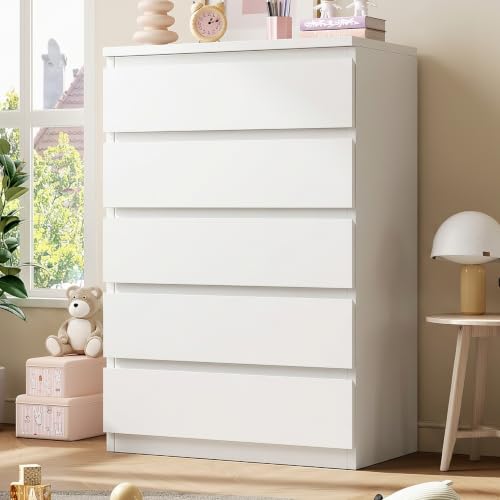
White Chest of Drawers for Nursery: The Complete Guide
Everything you need to know before choosing a white nursery chest of drawers — from safety anchoring and drawer configuration to finishes that wipe clean and styles that grow with your child.
Start the GuideWhy a White Chest of Drawers Works So Well in a Nursery
A white chest of drawers is one of the most practical and enduring choices for a nursery. White reflects light, which helps small rooms feel open and airy, and it pairs easily with almost any wall color, bedding, or decor theme. More importantly, a white finish makes it simple to spot dust, spills, and scuffs so you can wipe surfaces clean quickly during busy days with a baby.
Beyond aesthetics, a nursery chest of drawers is a workhorse. It stores bodysuits, sleep sacks, blankets, burp cloths, and diapers within arm's reach of the changing area. Many parents choose a white chest that can later transition into a child's bedroom dresser, making it a long-term piece rather than a short-lived purchase. If you are still deciding between furniture categories, our guide on white chest of drawers explains the core differences between chests, dressers, and tallboys.
This guide focuses on the specific needs of a nursery: safety anchoring, drawer glide quality, surface height for changing, finish durability, and storage layout. It is written for parents and caregivers who already know they want a white chest and need clear, trustworthy information before making a purchase decision.
What to Look For in a Nursery Chest of Drawers
1. Safety First: Anti-Tip Anchoring and Stable Construction
Safety is the single most important factor in nursery furniture. A chest of drawers must be anchored to the wall using an anti-tip strap or bracket. Look for models that include a furniture safety kit in the box, and confirm the strap is rated for the unit's weight. Even a lightweight chest can tip if a toddler pulls on an open drawer, so anchoring is not optional.
Check that the chest has a wide, stable base and that drawer glides include stops so drawers cannot be pulled completely out. Rounded edges and corners reduce the risk of bumps during diaper changes. If the chest doubles as a changing surface, add a contoured changing pad with a safety strap and non-slip backing. For parents comparing options, our article on white chest of drawers with a wooden top discusses how a solid top surface can support a changing pad more securely than a painted or veneered top.
2. Size and Height: Match the Room and Your Reach
Nursery chests generally fall into three size groups. Compact models around 30 inches wide suit small rooms and closets. Mid-range models between 32 and 40 inches wide offer the most balanced storage for a typical nursery. Wide models above 40 inches provide generous drawer space but require more floor area and wall clearance.
Height matters for daily use. A changing surface should sit around 36 to 40 inches from the floor so you can stand comfortably while caring for your baby. If you plan to use the chest primarily for clothing storage, a slightly taller model reduces bending. For narrow rooms, a tall narrow chest of drawers in solid wood maximizes vertical storage without consuming much floor space.
| Size Category | Typical Width | Best For | Considerations |
|---|---|---|---|
| Compact | Under 30 in | Small nurseries, closet storage | Fewer drawers; check drawer depth for blankets |
| Mid-range | 32–40 in | Standard nurseries, changing table use | Best balance of storage and floor space |
| Wide | Over 40 in | Large rooms, shared nursery | Requires wall clearance; heavier to anchor |
| Tall narrow | 20–30 in wide, 45+ in tall | Tight floor plans, vertical storage | Anchor securely; avoid top-heavy loading |
3. Drawer Configuration and Glide Quality
Nursery storage needs change quickly. Newborns need many small compartments for bodysuits and socks, while older babies need deeper drawers for sleep sacks and blankets. A mix of shallow top drawers and deeper lower drawers is the most flexible layout. Three to five drawers is typical for a nursery chest; six or more suits parents who plan to store bedding and out-of-season clothing.
Drawer glides deserve close attention. Metal ball-bearing glides with soft-close mechanisms operate smoothly and quietly, which matters during naps. Entry-level models often use simple nylon rollers that work fine but feel less refined. Mid-range and premium nursery chests typically include full-extension glides so you can see and reach the back of each drawer. Our overview of white chest of drawers configurations compares common drawer layouts in more detail.
4. Finish and Material: Durability Meets Easy Cleaning
White finishes vary widely in durability. Painted solid wood offers a classic look and can be touched up or repainted later. High-grade engineered wood with a laminated or painted finish is stable, resists warping, and wipes clean easily. For a nursery, choose a finish labeled low-emission or water-based to reduce indoor air concerns, and confirm the surface is smooth with no rough edges or peeling areas.
Solid wood construction generally provides the most durable long-term investment. If you are comparing construction types, our guide on solid wood versus engineered wood breaks down the trade-offs in stability, weight, and refinishing potential. For a white nursery chest, a solid wood frame with a quality white finish is a top-tier choice that can serve through the toddler years and beyond.
5. Style That Grows With Your Child
Nursery furniture does not need to be overtly baby-themed. A clean white chest with simple lines, subtle shaker panels, or mid-century tapered legs can transition into a child's room and even a guest bedroom. Hardware is an easy way to shift the style later: soft gold or brass pulls feel warm and classic, while matte black handles read modern. Our article on white chest of drawers with gold hardware shows how hardware changes the character of the same silhouette.
If you prefer a softer, more textured look, a white finish paired with rattan or cane panels adds warmth without introducing bold colors. The key is to choose a shape and finish that feels calm and adaptable rather than strictly infant-focused.
Changing Table Dresser vs. Standard White Chest
Parents often debate whether to buy a dedicated changing table dresser or a standard white chest of drawers. A changing table dresser combines a flat changing surface with drawer storage, which saves floor space and keeps diapers, wipes, and creams within reach. Many models include safety rails or a contoured top that holds a changing pad in place.
A standard chest is more flexible in the long run. Once diapering ends, the top surface becomes a display area or a place for a lamp and books. If you choose a standard chest for changing, add a contoured changing pad with a safety strap and non-slip backing, and never leave the baby unattended on the surface. For a closer comparison, read our guide on solid wood changing table dressers to see how dedicated units are built and anchored.
Another option is to convert a standard chest into a changing station with a removable topper. This approach works well if you want the long-term flexibility of a plain chest but need a secure changing surface during the baby years. Our article on turning a dresser into a changing table covers the safety steps and topper options.
How to Organize a White Nursery Chest of Drawers
A well-organized chest reduces middle-of-the-night fumbling. Start by grouping items by frequency of use: the top drawer should hold the most-used items such as diapers, wipes, and bodysuits. Middle drawers work well for sleep sacks, swaddles, and daily outfits. Lower drawers can hold blankets, bedding, and out-of-season clothing.
Drawer dividers and stackable organizers keep tiny items from sliding around. Adjustable dividers are especially useful in shallow top drawers, while fabric bins work well in deeper drawers. Labeling bins with simple text or icons helps other caregivers find items quickly. For more layout ideas, see our guide on stackable dresser drawer organizers.
Keep the top surface minimal. A small basket for ointments, a night light, and a noise machine is usually enough. Avoid stacking heavy items on top of the chest, and never place a television or monitor there. If the chest sits near the crib, leave clearance so you can move safely during night feedings.
Nursery organization rule of thumb: Keep the top drawer for diapering essentials, the middle drawers for daily clothing, and the bottom drawers for bulky bedding. Anchor the chest to the wall before loading it with anything.
Care and Maintenance for a White Nursery Chest
White furniture shows marks, but it is also easy to maintain. Wipe spills promptly with a soft, damp cloth and mild soap. Avoid abrasive cleaners, bleach, or scouring pads, which can dull the finish or remove paint. For painted surfaces, touch-up paint matched to the original finish can handle small scuffs. For laminated finishes, a damp microfiber cloth is usually sufficient.
Check the anti-tip strap periodically to ensure it remains tight and anchored. Inspect drawer glides every few months and tighten any loose screws. If a drawer begins to stick, a small amount of silicone-based lubricant on metal glides can restore smooth operation. Keep the chest away from direct sunlight to reduce yellowing or fading over time, especially on painted white finishes.
As your child grows, re-evaluate the chest's contents. Once the baby becomes a toddler, remove any small items from reachable drawers and keep the top surface clear of heavy objects. The same white chest can serve as a child's dresser for years with only minor adjustments to organization.
Frequently Asked Questions
What size white chest of drawers is best for a nursery?
A mid-range nursery chest typically measures 30 to 36 inches wide and 30 to 40 inches tall. Choose a height that lets you comfortably reach the top surface for diaper changes and daily care. Tall narrow chests work well in compact rooms, while wider models offer more storage for clothing and bedding.
How do I secure a white chest of drawers to the nursery wall?
Always use the anti-tip kit supplied with the chest or purchase a furniture safety strap rated for the unit's weight. Anchor the strap into a wall stud or use appropriate drywall anchors. Never place a television, monitor, or heavy decor on top of a nursery chest, and keep the top drawers locked or empty of tempting items.
Should I choose a changing table dresser or a standard white chest?
A changing table dresser combines storage with a dedicated changing surface, which saves floor space in a smaller nursery. A standard chest offers more flexible long-term use once the baby grows. If you choose a standard chest, add a contoured changing pad with safety straps and non-slip backing to the top surface.
What material is best for a white nursery chest of drawers?
Solid wood and high-grade engineered wood with a durable white finish are the most practical choices. Solid wood offers long-term durability and can be refinished. Engineered wood with a quality laminate or painted finish is stable and easy to wipe clean. Look for low-emission finishes and smooth, rounded edges for nursery safety.
Ready to Compare White Nursery Chests?
Explore recommended white chest of drawers options selected for nursery safety, drawer quality, and long-term durability.
View Recommendations