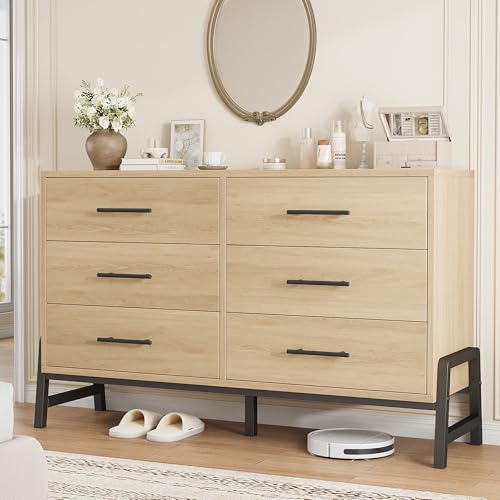
White Oak Dresser: The Complete Buying & Styling Guide
White oak has become one of the most sought-after hardwoods in bedroom furniture — and for good reason. Its tight, linear grain, natural durability, and quiet elegance make a white oak dresser a piece you can live with for decades. This guide breaks down everything you need to know before you choose one.
Jump to Buying ChecklistWhy White Oak Deserves a Place in Your Bedroom
A white oak dresser is more than a storage box. White oak (Quercus alba) is a dense, closed-grain hardwood with a distinctive straight, linear figure and a subtle olive-brown undertone that reads as warm and modern at the same time. Compared with red oak, white oak has a tighter grain that resists moisture penetration far better — one of the reasons it has historically been used in boat building and barrel making.
For a dresser, that means a piece that handles humidity swings, holds its shape, and ages gracefully. The tight grain also means smoother drawer fronts and easier finishing. If you have been comparing painted options, our guide to the white wood dresser is a useful counterpart, and if you are weighing finishes overall, the white wash dresser finish offers a lighter, coastal alternative.
Quick takeaway: Choose white oak when you want visible, natural grain with real hardness and long-term structural stability. Choose painted or whitewashed finishes when you want a cleaner, more uniform look.
Understanding White Oak Grain and Appearance
White oak's grain runs in long, straight lines with occasional rays or flecks that catch the light. This is what gives the wood its signature "quiet" look — it reads as calm rather than busy, which is why designers pair it with neutral palettes and simple hardware.
Finishes change the character dramatically:
- Natural or clear finish: Shows the full grain with a light honey-brown tone. Best for Scandinavian and Japandi rooms.
- Smoked or fumed oak: Darkens the wood through a reaction process rather than stain, producing a deep, rich tone with grain still visible.
- Whitewashed or cerused: Pushes pigment into the grain pores to brighten the surface while keeping the grain legible — a bridge between white furniture and natural wood.
- Oiled finish: Softer sheen, easier to spot-repair, and develops a patina over time.
If you are drawn to a lighter, brighter grain contrast, the white dresser with natural wood top layout is a common pairing that works well beside oak pieces.
White Oak Dresser Buying Checklist
When you evaluate a white oak dresser — whether in a showroom or from a product listing — check the following criteria in order. These are the factors that separate an entry-level piece from a top-tier one.
| Criterion | What to Look For | Tier Signal |
|---|---|---|
| Wood grading | Clear, consistent grain with few knots on drawer fronts | Top-tier uses select-grade oak; entry-level may mix grades |
| Drawer boxes | Dovetail joints, solid wood sides, thick bottoms | Mid-range and above use dovetails; starter tier often stapled boxes |
| Drawer glides | Soft-close, full-extension, metal runners | Soft-close is a hallmark of premium tier |
| Joinery | Mortise-and-tenon or doweled frame joints | High-end tier uses traditional joinery; entry-level relies on cam locks |
| Finish | Even sheen, no drips, grain visible and sealed | Professional-grade spray or hand-rubbed oil |
| Stability | Anti-tip hardware, level feet, no wobble | Non-negotiable at every tier |
| Dimensions | Height, depth, and drawer count matched to room | See sizing section below |
A well-specified white oak dresser in the mid-range tier will typically give you dovetailed drawers and soft-close glides; premium and luxury tiers add select-grade lumber, traditional joinery, and hand-finished surfaces. For broader context on quality signals, see our dresser quality guide.
Choosing the Right Size and Configuration
White oak dressers come in three main footprint families, and each suits a different room:
- Double / wide dresser (6–9 drawers): The classic bedroom anchor. Best for primary bedrooms with wall space of at least 60 inches. Pairs naturally with a white double dresser if you prefer a painted finish elsewhere in the room.
- Tall chest (5–6 drawers, vertical): Ideal for small rooms where wall width is limited but height is available. A white tall dresser serves the same footprint logic in a different finish.
- Small / narrow dresser (3–4 drawers): Suited to guest rooms, closets, and secondary bedrooms.
As a rule of thumb, leave at least 30 inches of clearance in front of the dresser for drawer pull-out, and check that the dresser height sits comfortably below window sills or wall art. If your room is tight, our white small dresser for bedroom guide covers space-planning in detail.
Solid White Oak vs. Oak Veneer
Not every "oak dresser" is solid oak. Many mid-tier pieces use oak veneer over a plywood or MDF core, which is a legitimate construction method — veneer is dimensionally stable and can look excellent. The key is honesty in the listing and quality of the core.
- Solid white oak: Heavy, repairable, and ages with character. Expect it in premium and luxury tiers. It moves with humidity, so joinery quality matters.
- Oak veneer over plywood: Stable and flat, common in mid-range tiers. Good veneer should show continuous grain across drawer fronts.
- Oak veneer over MDF: Common in entry-level pieces. Perfectly serviceable if the drawer hardware is solid, but not repairable if chipped.
Check drawer bottoms and the back panel — solid wood here is a strong indicator of a serious build. If you are comparing against a painted alternative, the white wood chest of drawers article explains how painted solid wood differs in upkeep.
Styling a White Oak Dresser
White oak's neutral, linear grain is a styling advantage. It accepts both warm and cool palettes without fighting them. A few approaches that consistently work:
- Warm minimal: Natural oak dresser, white walls, linen bedding, one ceramic vase, and a single framed print.
- Modern contrast: Oak dresser with black metal hardware and a charcoal accent wall. The white dresser with black accents guide shows how contrast styling works in practice.
- Soft farmhouse: Oak dresser paired with a white farmhouse dresser elsewhere in the room, balanced with woven baskets and a mirror.
- Brass and oak: Warm brass pulls against cool oak grain is one of the most reliable combinations — see white dresser with brass hardware for hardware selection notes.
Keep the dresser top uncluttered. Two or three objects with varying heights — a lamp, a small tray, a plant — is enough. Mirror placement above the dresser can visually double the room's light; the white dresser with mirror article covers proportion rules.
Care and Maintenance
White oak is forgiving, but it is not maintenance-free. A few habits extend its life considerably:
- Dust with a dry microfiber cloth weekly; avoid silicone-based polishes that build up.
- Wipe spills immediately — even sealed oak can stain if liquid sits.
- Keep the dresser out of direct sunlight to prevent uneven fading.
- Re-oil oiled finishes every 12–18 months with a furniture-grade oil.
- Use felt pads under objects on the top surface to prevent scratches.
For a full cleaning routine, see our how to clean a dresser guide. If the finish needs refreshing, the refinishing guide walks through the process step by step.
White Oak vs. Other Common Dresser Woods
| Wood | Grain Character | Durability | Best For |
|---|---|---|---|
| White oak | Tight, linear, subtle rays | Very high; moisture-resistant | Modern, Japandi, transitional bedrooms |
| Red oak | Open, pronounced grain | High | Traditional and rustic rooms |
| Walnut | Rich, swirling, dark | High | Luxury and mid-century settings |
| Pine | Knotty, soft | Moderate; dents easily | Entry-level and cottage styles |
| Maple | Fine, uniform, closed | Very high | Painted and contemporary pieces |
If you want a darker hardwood alternative, our walnut dressers guide is the natural comparison point. For a full material overview, see materials and finishes.
Frequently Asked Questions
Is white oak a good material for a dresser?
Yes. White oak is dense, hard, and naturally resistant to moisture and wear, making it one of the most durable hardwood choices for a dresser that will see daily use for decades.
What is the difference between white oak and red oak?
White oak has a tighter, more linear grain with a cooler, greenish-brown undertone and is denser and more water-resistant. Red oak has a more open grain with a warmer, pinkish-red tone and slightly less hardness.
Do white oak dressers match other bedroom furniture?
White oak pairs well with many materials and finishes, including white painted wood, brass and black metal hardware, linen upholstery, and walnut accents. Its neutral grain makes it a flexible anchor piece for a bedroom.
How many drawers should a white oak dresser have?
For a primary bedroom, six to nine drawers across a double dresser is the most versatile configuration. For small rooms, a five- or six-drawer tall chest uses vertical space efficiently.
Does white oak dresser furniture need special care?
No special care beyond standard hardwood maintenance: dust regularly, wipe spills promptly, avoid direct sunlight, and re-oil oiled finishes periodically. Sealed and lacquered finishes need only occasional damp wiping.