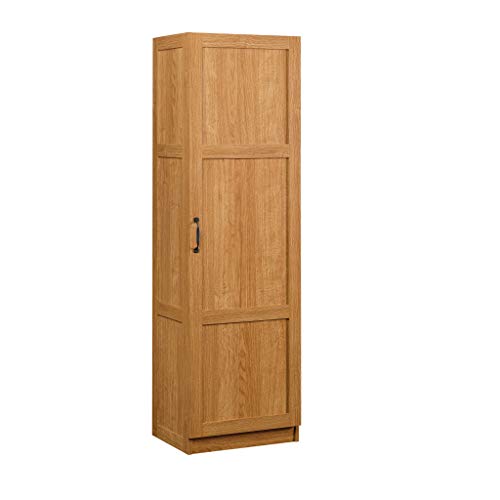
Unfinished Kitchen Cabinets with Drawers: A Complete Buyer's Guide
Unfinished kitchen cabinets with drawers give you full control over color, sheen, and finish while delivering the storage and organization a working kitchen demands. This guide explains wood species, drawer construction, sizing, and finishing so you can choose with confidence.
Jump to Buying ChecklistWhy unfinished cabinets with drawers are worth considering: They skip factory-applied finish, which means you can match a specific paint color, stain tone, or wood grain direction. For kitchens that need generous drawer storage—pots, pans, utensils, and pantry goods—unfinished units let you build a cohesive look across base cabinets, drawer stacks, and pantry runs.
What Are Unfinished Kitchen Cabinets with Drawers?
Unfinished kitchen cabinets with drawers are cabinet units shipped without a factory-applied stain, paint, or clear topcoat. They typically include the cabinet box (carcass), a face frame, drawer boxes, drawer fronts, and sometimes a toe kick. The drawer configuration can range from a single wide drawer to a stacked bank of three, four, or five drawers, and many buyers combine drawer stacks with door cabinets for a balanced kitchen layout.
Because no finish is applied at the factory, you can choose a stain or paint that matches your home's trim, flooring, or countertop. This flexibility is the main reason homeowners, renovators, and DIYers choose unfinished cabinets over pre-finished options. It also means drawer fronts and cabinet faces can be finished together for a uniform look across an entire kitchen run.
Wood Species for Unfinished Cabinets with Drawers
The species you choose affects grain appearance, paint adhesion, durability, and how the finished kitchen will age. The table below compares common options without referencing any specific currency or numeric rating.
| Wood Species | Grain Character | Best For | Finishing Notes |
|---|---|---|---|
| Maple | Tight, smooth, subtle | Painted kitchens, clean modern looks | Takes paint well; use a primer to prevent grain raise |
| Birch | Fine, even, slightly wavy | Mid-range painted or stained kitchens | Good paint adhesion; sand lightly before finishing |
| Oak | Pronounced, open grain | Stained rustic or traditional kitchens | Grain shows through stain; consider grain filler for a smoother look |
| Hickory | Bold, varied, dramatic | Rustic and farmhouse styles | Color variation is natural; test stain on a sample |
| Pine | Knotty, soft, warm | Cottage, coastal, and rustic kitchens | Dents more easily; use a durable topcoat |
If your kitchen will be painted, maple and birch are reliable choices because their grain is subtle and paint covers evenly. If you plan to stain, oak and hickory reward you with visible grain character. Pine is a solid choice for relaxed, cottage-style kitchens where a little wear adds charm. For a deeper comparison of solid wood versus engineered options, our solid wood construction guide offers useful context on durability expectations.
Drawer Construction: What to Look For
Drawers take the most daily abuse in a kitchen. The difference between a drawer bank that glides smoothly for years and one that sticks or sags comes down to construction details. Focus on these elements when comparing unfinished kitchen cabinets with drawers:
- Drawer box joinery: Dovetail joints are a hallmark of durable construction. Doweled or reinforced butt joints are acceptable at the mid-range tier.
- Drawer sides: Solid wood sides resist warping better than thin composite panels. Look for a consistent thickness and smooth interior finish.
- Glide mechanism: Undermount soft-close slides are standard in premium and high-end tier cabinets. Side-mount slides appear more often at the entry-level and starter tier.
- Drawer bottom: A reinforced bottom panel prevents sagging under heavy loads like cast iron or stacked dishware.
- Drawer front alignment: Check that fronts sit flush and gaps are even. On unfinished cabinets you can fine-tune alignment before finishing.
Construction Tiers at a Glance
Entry-level and starter tier: Basic box construction, side-mount slides, and simpler joinery. Suitable for light-use kitchens or rentals.
Mid-range: Solid wood drawer sides, doweled or dovetail joints, and smoother glides. A balanced choice for family kitchens.
Premium and high-end tier: Full dovetail drawers, undermount soft-close slides, reinforced bottoms, and tighter tolerances. Built for daily heavy use.
Professional-grade and commercial-grade: Heavy-duty slides rated for frequent cycling and thicker drawer boxes. Designed for intensive use.
Drawer construction quality matters most in the base cabinet bank you use daily—typically the drawer stack beside the range or sink. If you are also considering drawer storage outside the kitchen, our guide to dressers with large deep drawers covers similar construction principles in bedroom furniture.
Common Drawer Configurations for Kitchen Cabinets
Unfinished kitchen cabinets with drawers are available in several layouts. The right configuration depends on what you store and where the cabinet sits in the kitchen workflow.
Three-Drawer Base Cabinet
A shallow top drawer for utensils and two deeper drawers below for pots, pans, or small appliances. A versatile layout for primary prep zones.
Four-Drawer Stack
Adds an extra mid-depth drawer, useful for separating cookware from lids or bakeware. Common beside ranges and in pantry runs.
Pot and Pan Drawers
Wide, deep drawers that pull out fully, making heavy cookware easy to reach. Pair with dividers to keep items from shifting.
Drawer-and-Door Combination
A top drawer above a door cabinet combines quick-access storage with taller space for bins or small appliances. Our kitchen cabinet doors and drawers guide explains how to balance the two.
Pantry Drawer Banks
Full-height drawer stacks for dry goods, snacks, and bulk items. Deep drawers with sturdy slides keep heavy bags and jars accessible.
Corner Drawer Units
Specially shaped drawers that use corner space efficiently. Confirm the opening and slide clearance before ordering.
For kitchens with limited floor space, a narrow drawer bank can replace bulky cabinetry. The principles in our narrow drawer storage guide translate well to tight kitchen layouts where every inch counts.
Sizing and Layout Considerations
Unfinished cabinets are ordered by width, height, and depth, just like finished cabinets, but you must account for finishing thickness when planning clearances. A few practical points:
- Standard base depth: Most base cabinets share a common depth, so drawer banks align with door cabinets along a run. Verify that drawer fronts will clear countertop overhangs and appliance handles.
- Drawer front reveal: Unfinished fronts need consistent gaps. Plan for the finish thickness—paint and clear coat add a small but measurable layer—so drawers do not rub after finishing.
- Slide clearance: Confirm the cabinet box depth matches the slide length. Full-extension slides need more depth than three-quarter extension slides.
- Toe kick and base: Check whether the toe kick is included or finished separately, and confirm that the cabinet base sits level on your floor.
- Appliance gaps: Leave the manufacturer's recommended clearance around ranges, dishwashers, and refrigerators. Finish work should not reduce those gaps.
Measure twice and order once. If you are comparing layouts for a smaller home, our shallow-depth storage guide explains how depth choices affect usable space—a useful mindset for compact kitchens too.
Finishing Unfinished Cabinets with Drawers
Finishing is where unfinished cabinets reward you with a custom result. The process is straightforward but requires patience and proper sequencing. Here is a practical workflow:
- Acclimate and inspect: Let cabinets sit in the room for a few days. Sand lightly and fill any minor imperfections.
- Remove hardware and separate fronts: Finish drawer fronts and cabinet faces separately for even coverage.
- Prime for paint: Use a stain-blocking primer on maple, birch, or pine to prevent tannin bleed and grain raise.
- Stain if desired: Test on a hidden area or sample board. Apply evenly and wipe back to control tone.
- Topcoat for durability: A clear topcoat protects against moisture and daily wear. Kitchen drawers especially benefit from a durable finish.
- Reassemble and adjust: Reinstall slides and fronts, then fine-tune alignment and soft-close tension.
If you are refreshing existing cabinetry rather than installing new units, replacing fronts is an alternative worth exploring. Our guides to replacement kitchen cabinet doors and drawers and replacement kitchen drawer fronts explain how to update a kitchen without a full tear-out.
Advantages and Trade-Offs
Advantages
Custom color and sheen, ability to match existing trim, control over grain direction, and the option to finish drawer fronts and cabinet faces at the same time for a uniform result. Unfinished units can also shorten lead times compared with factory-finished custom orders.
Trade-Offs
You or your contractor must handle sanding, priming, staining, and topcoating. Finish work adds time and requires a dust-controlled space. Inconsistent finishing can show on large flat drawer fronts, so prep quality matters.
If your project also includes cabinetry updates elsewhere in the home, our guides to replacing bathroom cabinet doors and drawers and unfinished base cabinets with drawers cover related decisions.
Buying Checklist for Unfinished Kitchen Cabinets with Drawers
Use this checklist before you order to avoid surprises during installation and finishing:
- Measure the space: Record width, height, and depth for every cabinet position, including appliance gaps and door swing clearance.
- Choose a species for your finish plan: Painted finishes favor maple and birch; stained finishes favor oak, hickory, or pine.
- Confirm drawer construction: Ask about joint type, drawer side material, slide type, and weight capacity.
- Plan the drawer configuration: Match drawer depth and count to what you store in each zone.
- Check finishing logistics: Confirm you have space, ventilation, and time for sanding and topcoating.
- Verify hardware compatibility: Drawer pulls and knobs should match the hole spacing and front thickness.
- Review the delivery and assembly terms: Confirm whether cabinets ship assembled or ready-to-assemble.
Tier-Based Buying Guidance
Essential tier: Focus on accurate sizing and a workable finish plan. Entry-level construction can serve light-use kitchens well.
Balanced tier: Prioritize solid drawer boxes and smooth glides in the cabinets you open most often.
Top-tier: Invest in full dovetail drawers and undermount soft-close slides for the primary prep zone and pantry.
Professional-grade: Consider heavy-duty slides and thicker drawer boxes for busy households or rental properties with frequent turnover.
Related Reading
Explore more guides to plan a cohesive storage upgrade across your home:
Frequently Asked Questions
What are unfinished kitchen cabinets with drawers?
Unfinished kitchen cabinets with drawers are cabinet units that ship without a factory-applied stain, paint, or clear coat. They typically include a cabinet box, drawer boxes, drawer fronts, and a face frame, allowing you to apply your own finish for a custom look.
Which wood species is best for unfinished kitchen cabinets with drawers?
The best species depends on your goals. Maple and birch offer smooth, tight grain that takes paint well. Oak and hickory are durable and show grain beautifully under stain. Pine is softer and suits rustic or cottage styles. Choose a species that matches your finishing plan and expected wear.
Do unfinished cabinets save time compared to finished cabinets?
Unfinished cabinets can reduce lead time because they skip factory finishing, but they add on-site finishing work. If you plan to paint or stain yourself, unfinished cabinets give you control over color and sheen. If you prefer a turnkey installation, pre-finished cabinets may be more efficient.
What drawer construction features should I look for?
Look for dovetail or doweled drawer joints, solid wood drawer sides, undermount soft-close slides, and a drawer box that matches the cabinet's construction quality. Reinforced drawer bottoms and a smooth glide mechanism are signs of durable construction.
Recommended Unfinished Kitchen Cabinets with Drawers
⚠️ AFFILIATE DISCLOSURE: This website contains affiliate links. As an Amazon Associate, we earn from qualifying purchases. If you make a purchase through these links, we may receive a small commission at no additional cost to you. Read our full affiliate policy.

Design House Kitchen Base Cabinet, 18", Unfinished Birch | Adjustable Shelves, Floor Mount, Contemporary, Birch, Kitchen, 561464-NAT
Check price on Amazon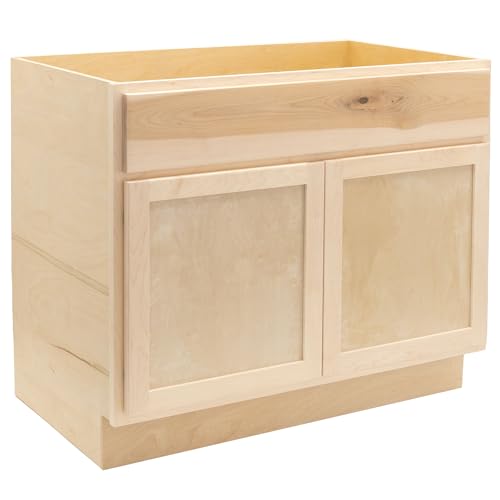
Quicklock RTA (Ready-to-Assemble) | Base Kitchen Cabinets - Shaker Style | Made in America (Raw Maple, 36" Wx34.5 Hx24 D Sink Base)
Check price on Amazon
Design House Kitchen Base Cabinet, 12", Unfinished Birch | Adjustable Shelves, Floor Mount, Contemporary, Birch, Kitchen, 561449-NAT
Check price on Amazon
From the Tree Furniture 44" Pine Shaker Buffet with Drawer, Unfinished | Solid Pine Sideboard, 2 Doors, Adjustable Shelves, 1 Drawer, Anti-Tip Kit, 44"W x 34"H x 18"D, Stain-Ready
Check price on Amazon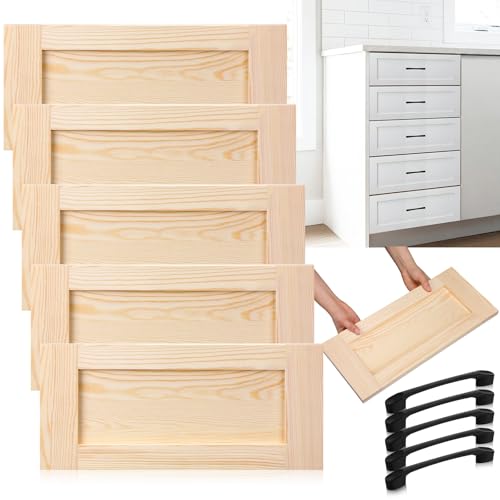
Sintuff 5 Pcs Unfinished Wood Cabinet Drawer Front Replacement, Solid Wood Drawer Front for Kitchen Cabinets, Bathroom Vanities, Closets, Ready to Paint or Stain(18 x 8 Inches)
Check price on Amazon
Design House Kitchen Base Cabinet, 15", Unfinished Birch | Adjustable Shelves, Floor Mount, Contemporary, Birch, Kitchen, 561456-NAT
Check price on Amazon
Cinnvoice 2 Pcs 17.5'' Wx6'' H Unfinished Kitchen Drawer Front Replacement | Pine, Solid Wood Cabinet Drawer Front Replacement to Paint or Stain, for Closets Kitchen Cabinets Bathroom Vanities
Check price on Amazon