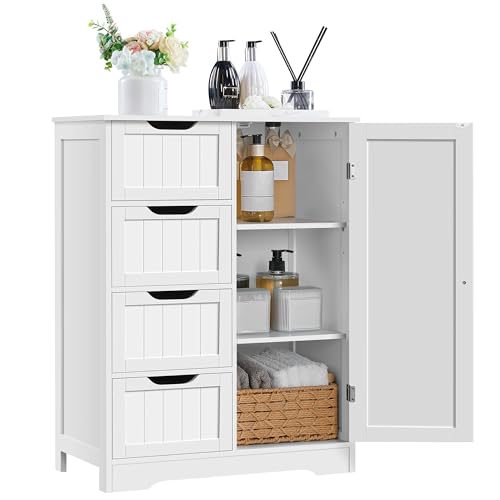
Replacing Bathroom Cabinet Doors and Drawers
A complete guide to refreshing your bathroom vanity with new doors and drawer fronts. Compare materials, styles, hardware, and installation methods to make a confident upgrade decision.
START READINGWhy this guide matters: Replacing bathroom cabinet doors and drawers is one of the most effective ways to modernize a vanity without a full remodel. This guide covers everything from measuring and material selection to hardware pairing and installation, so you can choose the right replacement set with confidence.
Why Replace Bathroom Cabinet Doors and Drawers?
Bathroom vanities endure humidity, splashes, and daily use. Over time, doors may warp, drawer fronts can delaminate, and outdated styles make the entire room feel tired. Replacing just the doors and drawer fronts—while keeping the cabinet box—is a practical middle path between a cosmetic refresh and a full renovation.
This approach delivers several benefits:
- Visual transformation: New doors and drawer fronts instantly update the style, color, and texture of the vanity.
- Targeted repair: Only the damaged or outdated components are replaced, preserving the structurally sound cabinet box.
- Efficient project scope: Fewer steps than a full cabinet replacement, with less disruption to the bathroom.
- Design flexibility: Choose from shaker, flat-panel, raised-panel, and glass-front styles to match your bathroom's aesthetic.
- Hardware refresh: Pair new fronts with updated pulls or knobs for a cohesive look.
If your project extends beyond the bathroom, similar principles apply to kitchen cabinet doors and drawers and replacement kitchen cabinet doors and drawers. For a broader vanity refresh, explore cupboard replacement doors as well.
Assess Your Existing Cabinet Box First
Before ordering replacement doors and drawer fronts, confirm that the cabinet box is worth keeping. Check the following:
- Structural integrity: Look for soft or crumbling wood, especially near the sink and floor. Soft spots suggest moisture damage that may require box repair.
- Square and level: Use a square to verify that the face frame is true. Out-of-square boxes make new doors difficult to align.
- Hinge and glide condition: Inspect hinge plates and drawer glides. Worn hardware should be replaced alongside the fronts.
- Face frame condition: Check for cracks, loose joints, or peeling finish on the face frame.
Measuring for Replacement Doors and Drawer Fronts
Accurate measurements are the foundation of a successful replacement. Follow this process for each door and drawer front:
- Measure the opening: Record the width and height of each cabinet opening (the clear space inside the face frame).
- Determine overlay: Measure how much the existing door overlaps the face frame. Standard overlays are full (covering most of the frame), half, or inset.
- Account for clearance: Full-overlay doors need a small gap between adjacent doors and drawers to prevent rubbing.
- Record hinge type: Note whether hinges are concealed (European-style), exposed, or specialty. This determines the drilling pattern on new doors.
- Label each piece: Assign a number to every door and drawer front and map it to a diagram of the vanity.
Choosing Materials for Bathroom Doors and Drawer Fronts
Bathrooms are humid environments, so material choice matters more here than in drier rooms. The table below compares common options using neutral tier descriptors.
| Material | Tier Positioning | Best For | Moisture Behavior |
|---|---|---|---|
| Painted MDF | Entry-level to mid-range | Smooth painted finishes; shaker profiles | Sealed edges are essential; avoid prolonged water contact |
| Plywood core with veneer | Mid-range | Wood-grain looks with stable cores | Good dimensional stability when edge-banded properly |
| Solid wood | Premium to luxury | Traditional and transitional styles | Requires quality finish; can expand and contract |
| Thermofoil over MDF | Mid-range | Uniform color, easy-clean surfaces | Resists surface moisture; seams must stay intact |
| Glass-front frames | Premium to high-end tier | Display storage and lighter visual weight | Frame material determines moisture resistance |
For vanities in frequent-use bathrooms, mid-range thermofoil or properly sealed painted MDF often provides a strong balance of durability and design flexibility. Solid wood remains a long-term investment for traditional spaces.
Popular Door and Drawer Front Styles
Style choice shapes the final look as much as color. Common options include:
- Shaker: A recessed center panel with a simple frame. Versatile and widely compatible with transitional and farmhouse bathrooms.
- Flat panel (slab): Clean and modern; pairs well with minimalist fixtures and sleek hardware.
- Raised panel: Traditional profile with a central raised section; suits classic and formal bathrooms.
- Beadboard: Vertical grooves add texture; often used in cottage and coastal themes.
- Glass-front: Opens up the visual space; best for neatly arranged storage.
If you are also refreshing other storage furniture, style consistency can carry through the home. For example, shaker-style dresser pieces pair naturally with shaker vanity doors.
Hardware and Hinge Considerations
Hardware completes the upgrade and affects daily function. Keep these points in mind:
- Hinge compatibility: Confirm that new doors are pre-drilled for your hinge type, or plan to drill them yourself with a proper jig.
- Pull placement: Decide on centered, edge, or corner placement before drilling. Consistency across doors and drawers matters.
- Finish coordination: Match or intentionally contrast hardware with faucets and lighting. Popular finishes include brushed nickel, matte black, and warm brass.
- Drawer glide upgrades: If existing glides are worn, upgrading to soft-close models improves the feel of the entire vanity.
For hardware inspiration, see how pulls transform other pieces in guides such as pull handles for dresser drawers and mid-century cabinet pulls.
Step-by-Step Installation Overview
The installation process follows a predictable sequence. Exact steps vary by hinge type and door style, but the general flow is:
- Remove old fronts: Take off doors and drawer fronts, labeling hinges and screws as you go.
- Prep the face frame: Clean, sand, and repair any rough spots.
- Install hinges on new doors: Use the hinge manufacturer's template for accurate cup placement.
- Mount doors: Attach doors to the face frame, leaving adjustment screws loose initially.
- Install drawer fronts: Attach fronts to drawer boxes, checking alignment with adjacent doors.
- Adjust and align: Fine-tune hinges and drawer fronts for even gaps and smooth operation.
- Attach hardware: Drill pull or knob holes using a consistent template, then mount hardware.
Common Mistakes to Avoid
- Ordering before measuring overlay: Incorrect overlay leads to doors that rub or leave visible gaps.
- Ignoring hinge drill patterns: Mismatched hinge cup positions make installation frustrating.
- Skipping moisture protection: Unsealed edges on MDF or wood are vulnerable in humid bathrooms.
- Inconsistent hardware templates: Slightly different pull heights create a visibly uneven look.
- Overlooking drawer glide condition: New fronts on worn glides can feel misaligned even when installed correctly.
When to Consider Related Upgrades
Replacing doors and drawers is often part of a broader storage refresh. Related projects include replacement kitchen doors and drawers for the kitchen, replacement kitchen drawer fronts for drawer-only updates, and unfinished cabinet doors and drawer fronts for a custom paint or stain finish. If you are planning a matching look across rooms, entryway cabinets with doors and drawers and white cabinets with sliding doors offer additional inspiration.
Frequently Asked Questions
Can I replace only the doors and drawer fronts without changing the cabinet box?
Yes. If the box is structurally sound, square, and free of significant moisture damage, replacing just the doors and drawer fronts is a practical and common approach.
How do I know if my hinges will work with new doors?
Check the hinge type on your existing doors. Concealed European hinges require specific cup drilling patterns. Most replacement door suppliers can pre-drill to match your hinge specification if you provide the details.
What is the best material for bathroom vanity doors?
Mid-range thermofoil and properly sealed painted MDF offer solid moisture resistance, while solid wood suits traditional styles and long-term investment. The best choice depends on style preference, humidity exposure, and maintenance expectations.
Do I need to replace drawer boxes when replacing drawer fronts?
Not necessarily. If drawer boxes and glides are in good condition, new fronts can be attached directly. If glides are worn or the boxes are damaged, upgrading them alongside the fronts improves the final result.
How long does a door and drawer front replacement take?
Most single-vanity projects can be completed over a weekend, including removal, hinge installation, alignment, and hardware mounting. Larger vanities or custom drilling may extend the timeline.
Ready to Upgrade Your Bathroom Vanity?
Explore recommended cabinet doors, drawer fronts, and hardware options selected for bathroom environments.
VIEW RECOMMENDATIONS