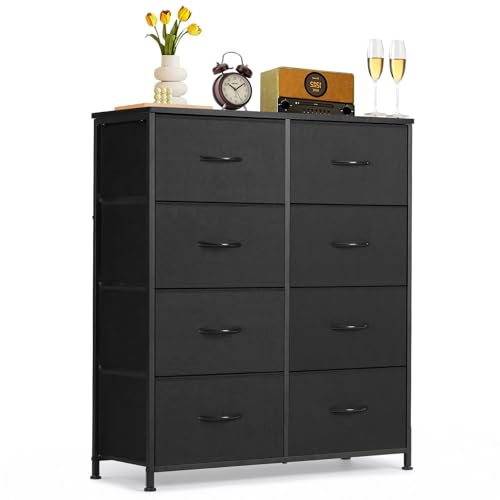
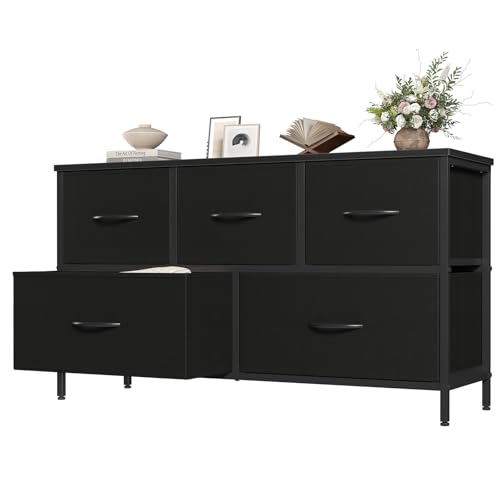
Small Black Dresser: The Complete Buying Guide
A small black dresser brings sleek contrast and space-smart storage to compact bedrooms, dorms, and apartments. This guide walks you through sizing, drawer configurations, materials, finishes, and placement so you can choose a piece that fits your room and your routine.
START READINGWhy Choose a Small Black Dresser
A small black dresser is one of the most versatile compact storage pieces you can add to a bedroom. Black is a grounded, high-contrast finish that works across decor styles — from modern and industrial to farmhouse and Scandinavian. Unlike lighter finishes, a black dresser visually anchors a room and pairs easily with wood tones, white walls, and bold accents.
The real advantage, though, is footprint efficiency. A compact black dresser typically measures under 40 inches wide, which means it can slide into narrow walls, sit between windows, or serve as a bedside storage unit in tight layouts. If you are working with a modest bedroom, a piece like this delivers visual weight without consuming floor space.
Many shoppers begin their research by comparing compact options across finishes — for example, exploring a small black dresser for bedroom alongside a shallow dresser for small bedroom to see which silhouette leaves more walking room. Both approaches are valid; the right answer depends on your wall width and door swing.
Sizing and Footprint: What Counts as "Small"
"Small" is relative, so it helps to anchor the term with real measurements. In bedroom furniture, a dresser is generally considered compact when its width falls between 28 and 40 inches. Height varies widely: low-profile models sit around 28 to 32 inches, while tall narrow designs can reach 48 inches or more.
Typical dimensions for a small black dresser
- Width: 28–40 inches (compact enough for narrow walls and alcoves)
- Depth: 15–18 inches (shallow depth preserves walking clearance)
- Height: 28–48 inches depending on drawer stack
- Clearance needed: 24–30 inches in front for fully extended drawers
Depth is the dimension buyers overlook most often. A 15-inch shallow dresser can fit against a wall where an 18-inch model would block a doorway. If your room is especially tight, compare a shallow dresser or a slim dresser for small bedroom against standard-depth options before committing.
For very narrow footprints, a skinny dresser for small spaces or a narrow dresser may be a better match than a wide-but-shallow design. Measure the wall, the door swing, and the walking path before you shop.
Drawer Count and Layout
Drawer count is where small black dressers differ most. A compact piece may offer three deep drawers, four medium drawers, or a tall stack of five to six drawers. The right configuration depends on what you store and how often you access it.
Common configurations
- 3 drawers: Best for folded clothing, linens, or a mix of apparel and accessories. Deep drawers suit bulky items like sweaters.
- 4 drawers: A balanced layout — often two smaller top drawers for accessories and two larger lower drawers for clothing.
- 5–6 drawers: Better for separating categories: socks and undergarments in small drawers, folded shirts in larger ones. Tall stacks save floor space but add height.
Compare configurations directly when sizing your purchase. A small 3 drawer dresser is a good fit for a guest room or a child's room, while a small 4 drawer dresser often suits a primary bedroom better. If you need more separation, a small 6 drawer dresser can replace a larger, wider unit in a tight room.
Materials and Finishes
Black dressers are made from solid wood, engineered wood (MDF or particleboard with veneer), or metal. Each material affects durability, weight, and the quality of the black finish itself.
Solid wood
Oak, pine, and walnut can all be finished in black. Solid wood is heavy, repairable, and typically a long-term investment. Painted or stained black solid wood can be refinished later if tastes change. These models generally sit in the premium and luxury tiers.
Engineered wood
MDF and particleboard with a black laminate or veneer are common in mid-range and entry-level pieces. They are lighter and more consistent in color, but edges can chip if bumped hard. Well-made engineered wood with reinforced joints performs well for everyday bedroom use.
Metal
Black metal dressers with wood or metal drawer fronts suit industrial and modern interiors. They tend to be sturdy, easy to wipe clean, and relatively light. Look for powder-coated finishes that resist scratching.
Finish matters as much as material. Matte black hides dust well; satin black reflects a little light and looks more polished; high-gloss black shows fingerprints and requires frequent wiping. Textured and wood-grain black finishes are the most forgiving. If you are comparing other dark finishes, a black dresser guide can help you weigh matte versus satin against your room's lighting.
Style Options for a Small Black Dresser
Black is a neutral backdrop, so the style of the piece drives the look. Here are the most common directions for compact black dressers:
- Modern and minimalist: Clean slab fronts, no visible hardware, straight legs. These read as sleek and keep small rooms from feeling cluttered.
- Mid-century modern: Tapered legs, inset drawer pulls, and a low profile. Black finishes on mid-century silhouettes look particularly sharp.
- Industrial: Black metal frames with wood or metal drawer fronts, exposed rivets, and a utilitarian feel.
- Farmhouse and rustic: Distressed black finishes, beadboard drawer fronts, and cup pulls. A rustic dresser in black can soften a modern room.
- Scandinavian: Simple lines, light wood interiors, and black exteriors for contrast. A Scandinavian dresser often pairs black with pale wood knobs or legs.
- Retro and vintage-inspired: Curved edges, decorative hardware, and a retro dresser feel. Black makes retro shapes look more contemporary.
If you are drawn to texture, a ribbed dresser with black fluted drawer fronts adds visual interest without extra pattern. For softer, curved silhouettes, a scalloped dresser in black creates a nice contrast between ornate shape and bold color.
Placement and Room Fit
A small black dresser works best when it is placed intentionally. In a compact bedroom, the most common positions are:
- Against a short wall: Ideal for a 28–36 inch wide dresser. Keep at least 24 inches of clearance in front for drawer extension.
- Between windows: Measure the gap carefully; a slim dresser can fill the space without covering trim.
- As a bedside unit: A narrow black dresser can double as a nightstand with extra storage. A side dresser for bedroom placement is especially useful in small primary bedrooms.
- Inside a closet: A short, shallow black dresser can organize folded clothing in a walk-in closet. See short dresser for closet options if overhead clearance is limited.
Balance matters visually. A black dresser is visually heavier than a white or natural wood piece, so give it breathing room. Leave at least 12 inches between the dresser and adjacent furniture where possible. If the room is very tight, a small bedroom dresser ideas roundup can help you plan the layout before you buy.
Comparison: Small Black Dresser Configurations
| Configuration | Typical Footprint | Best For | Tier Guidance |
|---|---|---|---|
| 3-drawer compact | 28–34 in wide, 15–16 in deep | Guest rooms, dorms, children's rooms | Entry-level to mid-range |
| 4-drawer standard compact | 32–40 in wide, 16–18 in deep | Primary bedrooms with moderate wardrobes | Mid-range |
| 5–6 drawer tall narrow | 28–36 in wide, 15–17 in deep | Small bedrooms needing maximum vertical storage | Mid-range to premium |
| Shallow-depth dresser | 30–38 in wide, 12–15 in deep | Hallways, tight walkways, narrow bedrooms | Entry-level to mid-range |
| Solid wood black dresser | Varies, often 34–40 in wide | Long-term use, heirloom intent | Premium to luxury |
Use the tier column as a relative marker, not an absolute rating. A mid-range dresser with well-reinforced drawers and smooth slides often outperforms a premium model with poor hardware.
Buying Checklist Before You Order
- Measure the wall and walking path: Width, height, and depth — plus 24–30 inches of drawer clearance.
- Check door and stair access: Confirm the assembled or boxed dimensions will fit through doorways and hallways.
- Decide on drawer count: Match drawer size to what you store. Small top drawers for accessories; deep lower drawers for clothing.
- Verify drawer slides: Ball-bearing metal slides are smoother and more durable than basic wooden guides.
- Inspect finish type: Matte and textured black finishes are easier to maintain than high-gloss.
- Confirm assembly requirements: Some compact dressers ship fully assembled; others require tools and two people.
- Plan the anchor: Freestanding dressers, especially tall narrow ones, should be wall-anchored for safety.
Frequently Asked Questions
What size counts as a small black dresser?
Most compact black dressers are 28–40 inches wide and 15–18 inches deep. Anything under 32 inches wide is generally considered very compact; a shallow depth under 16 inches helps preserve walking space in tight bedrooms.
Does a black dresser make a small bedroom feel smaller?
Not necessarily. Black is visually heavy, so it can make a room feel smaller if it is oversized or crowded against other furniture. A compact black dresser placed with breathing room and paired with light walls actually adds contrast and definition without shrinking the room.
Is a black dresser hard to keep clean?
High-gloss black finishes show dust and fingerprints most. Matte, satin, wood-grain, and textured black finishes are far more forgiving. A dry microfiber cloth weekly is usually enough; avoid abrasive cleaners that dull the finish.
How many drawers do I need in a compact black dresser?
Three or four drawers suit most single-person bedrooms. If you fold most of your clothing rather than hanging it, five or six drawers help separate categories. Match drawer depth to what you store — deep for sweaters, shallow for accessories.
Can a small black dresser be used outside the bedroom?
Yes. Compact black dressers work well in hallways, entryways, and closets. A shallow model can serve as a console with concealed storage. Check load ratings and drawer depth before storing heavy items like books or tools.
Should I anchor a small black dresser to the wall?
Yes, especially if it is taller than 30 inches or if there are children or pets in the home. Anti-tip straps are inexpensive and straightforward to install. Confirm whether the hardware is included with the dresser.
Ready to Choose Your Small Black Dresser?
Use the recommended products below to compare configurations, drawer counts, and finishes. Each listing links to current product details so you can check availability and dimensions before deciding.
VIEW RECOMMENDED OPTIONS