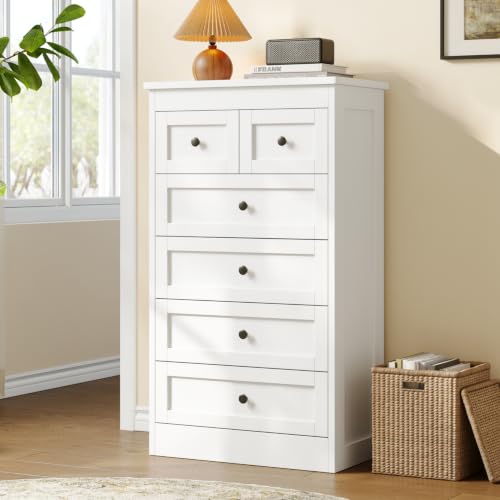
Narrow Dresser for Bedroom: The Complete Guide to Slim Storage
Maximize every inch of your bedroom with a narrow dresser. Learn how to choose the right width, drawer configuration, and style for tight spaces — without compromising on storage capacity or design.
Explore Recommended Narrow DressersWhy a narrow dresser makes sense: Bedrooms are shrinking, but clothing collections are not. A narrow dresser for bedroom use delivers the storage you need in a footprint that respects walking clearance, door swings, and window access. This guide breaks down the widths, drawer counts, materials, and organizational strategies that turn a slim dresser into the hardest-working piece in your room.
What Counts as a Narrow Dresser for a Bedroom?
Before comparing models, it helps to understand the width ranges that define the category — and how each tier affects storage and room flow.
"Narrow" is a relative term in furniture, but for bedroom dressers, the industry generally agrees on a practical range. A dresser is considered narrow when its width falls between 24 and 40 inches. Below 30 inches, you are in ultra-narrow territory; above 40 inches, the piece starts behaving like a standard double dresser and may crowd small rooms.
| Width Category | Typical Width Range | Best For | Drawer Reality |
|---|---|---|---|
| Ultra-narrow | Under 30 inches | Tiny bedrooms, alcoves, beside doors | 2–3 drawers, often shallow |
| Standard narrow | 30–36 inches | Small to mid-size bedrooms, guest rooms | 3–4 drawers, mixed depth |
| Wide narrow | 36–40 inches | Couples needing shared storage | 4–5 drawers, deeper bottom drawers |
For most bedrooms, the sweet spot is 30 to 36 inches wide. This range accommodates a meaningful drawer stack while still leaving room for a bed, nightstand, and walking path. If your room is genuinely tight, look at the narrow dresser for small bedroom options, which prioritize depth and vertical storage over width.
Width alone does not tell the whole story. A narrow dresser that is 18 inches deep provides more usable drawer volume than a shallow 14-inch model. Similarly, a tall narrow chest can hold as much as a wider low dresser by stacking vertically. The next section covers these trade-offs in detail.
Why Choose a Narrow Dresser for Your Bedroom?
Slim dressers solve real spatial problems — here are the four benefits that matter most to bedroom owners.
Preserves Walking Clearance
A standard double dresser can consume 60 inches of wall space. A narrow model frees up 20 to 30 inches — enough to keep nightstands, doors, and closet access unobstructed.
Fits Awkward Walls
Narrow dressers slide into alcoves, between windows, and beside entry doors where a full-width piece simply will not fit. They are the go-to solution for irregular floor plans.
Keeps Small Rooms Calm
A slim silhouette reduces visual weight. In compact bedrooms, a narrow dresser reads as furniture rather than an obstacle, making the room feel larger than its dimensions.
Encourages Editing
Limited width forces intentional organization. A narrow dresser naturally caps how much you keep at arm's reach, which supports a decluttered bedroom routine.
Beyond these practical benefits, narrow dressers are increasingly available in the same styles, materials, and hardware finishes as full-size models. You are no longer limited to utilitarian designs. A narrow white dresser can anchor a bright Scandinavian bedroom, while a narrow wooden chest of drawers brings warmth to a rustic or farmhouse scheme.
Key Features to Evaluate in a Narrow Dresser
Slim dimensions amplify the importance of every construction detail. Here is what separates a durable narrow dresser from a flimsy one.
Drawer Depth and Configuration
In a narrow dresser, drawer depth becomes the primary storage lever. Shallow drawers (4–6 inches) suit folded shirts, accessories, and socks. Deep drawers (8–10 inches) accommodate sweaters, jeans, and bedding. The most efficient narrow dressers combine both: shallow drawers up top, deep drawers below. Look for a narrow dresser with deep drawers if you store bulky clothing.
Drawer Glides and Hardware
Narrow drawers have less lateral stability than wide ones, so glide quality matters more. Entry-level models often use nylon roller glides that function but feel loose over time. Mid-range dressers typically upgrade to side-mounted steel ball-bearing glides, while premium and luxury tiers feature under-mount soft-close glides with full-extension travel. If smooth operation is a priority, look at a modern dresser with soft-close drawers.
Material and Construction
Solid wood frames and drawer boxes resist the racking forces that narrow dressers experience. Engineered wood with quality veneers is a reasonable mid-tier option if the frame is reinforced. Avoid particleboard-only construction in narrow formats — the reduced width concentrates stress on the joints. For a natural look with proven durability, a natural wood dresser is a long-term investment.
Anti-Tip Safety
Narrow dressers are taller relative to their width, which raises the center of gravity. Every narrow dresser should be anchored to the wall with the included anti-tip kit. This is non-negotiable in bedrooms and especially critical in children's rooms — see our nursery dresser ideas for safe configurations.
Surface and Top Area
A narrow dresser sacrifices top surface area. If you need a landing zone for lamps, books, or decor, consider a model with a slightly deeper top or pair it with a wall-mounted shelf. Taller narrow chests often provide more vertical display space than low, wide alternatives.
Narrow Dresser vs. Narrow Chest of Drawers: Which Fits Your Room?
The two terms overlap, but their proportions lead to different bedroom layouts.
A narrow dresser is typically wider than it is tall — a low, horizontal piece that spreads storage across the wall. A narrow chest of drawers is taller than it is wide — a vertical stack that concentrates storage in a small footprint. Both can be narrow, but they solve different problems.
| Factor | Narrow Dresser | Narrow Chest of Drawers |
|---|---|---|
| Orientation | Low and horizontal | Tall and vertical |
| Wall space used | More width, less height | Less width, more height |
| Top surface | Usable for decor and lamps | Small, often decorative only |
| Best for | Under windows, beside beds | Corners, narrow wall segments |
| Drawer depth | Often shallower overall | Can be deeper per drawer |
If your bedroom has a long, empty wall but limited floor depth, a narrow dresser is the natural choice. If you are working with a tight corner or a sliver of wall between a door and a closet, a narrow chest of drawers — such as those covered in our narrow chest of drawers guide — will extract more storage from the same floor area.
Many bedroom owners combine both: a low narrow dresser for folded clothing and a tall narrow chest for accessories, linens, or overflow. This pairing is especially effective in shared bedrooms where two people need separate storage zones.
Styles and Finishes for Narrow Bedroom Dressers
Slim dimensions do not mean limited design. These are the styles that work best in narrow formats.
Modern and Minimalist
Clean lines, handleless fronts, and matte finishes suit narrow dressers because they reduce visual clutter. A modern dresser for bedroom in a narrow width can read as an architectural element rather than furniture. Floating or recessed plinths add to the lightweight impression.
Mid-Century and Retro
Tapered legs and warm wood tones give narrow dressers a furniture-like presence. Mid-century silhouettes work well in slim formats because the legs lift the body off the floor, making the piece feel less heavy in tight rooms.
Farmhouse and Rustic
Painted finishes, plank detailing, and simple hardware translate well to narrow dressers. A modern farmhouse bedroom dresser in a slim profile brings texture without dominating a small room.
White and Neutral Finishes
White and light neutral dressers visually recede, which is valuable in compact bedrooms. A narrow white dresser pairs with almost any color scheme and reflects light to make the room feel airier.
Wood Tones
Natural wood narrow dressers add warmth and hide minor wear better than painted finishes. Oak, walnut, and pine are the most common choices. An natural oak dresser in a narrow width is a versatile, long-lasting option.
Whatever the style, check that the hardware and finish are consistent across the piece. Narrow dressers draw the eye to detail because there is less surface area — a mismatched knob or a poorly aligned drawer front is more noticeable than on a wide dresser.
How to Organize a Narrow Dresser Efficiently
A slim dresser demands a smarter system. These strategies extract maximum utility from every drawer.
Fold Vertically, Not Horizontally
Vertical folding — often called the file-fold method — lets you see every item at a glance and removes the need to stack. In narrow drawers, this is the single highest-impact change you can make. It also prevents the drawer from becoming a pile that jams against the sides.
Use Drawer Dividers and Inserts
Narrow drawers benefit disproportionately from dividers because there is less room for items to slide. Adjustable dividers let you create compartments for socks, underwear, accessories, and folded tops. For a full breakdown of organizer options, see our guide to narrow dressers for small spaces.
Assign Drawers by Frequency of Use
Place the items you use daily in the top two drawers, which are easiest to reach. Reserve lower drawers for seasonal clothing, spare linens, or bulky items. In a narrow chest of drawers, this top-to-bottom logic becomes even more important.
Rotate Seasonal Clothing
A narrow dresser cannot hold everything at once. Store off-season clothing in under-bed bins or a closet, and keep only the current season in the dresser. This rotation keeps drawers functional instead of compressed.
Maximize the Top Surface
If your narrow dresser has a usable top, add a small tray for daily items, a compact lamp, and one decorative object. Avoid overcrowding — the point of a narrow dresser is visual calm. For styling ideas, see our dresser styling tips.
Narrow Dresser Buying Checklist
Run through these questions before you commit to a slim dresser for your bedroom.
- Measure the wall segment twice. Account for baseboards, outlets, and door swings. Leave at least 2 inches of clearance on each side for comfortable access.
- Confirm the depth. A narrow dresser that is too deep will block walking paths even if the width is correct. Standard depths range from 15 to 20 inches.
- Count your drawer needs. Estimate how many folded items, accessories, and bulky pieces you store. Match the count to 3, 4, or 5 drawer configurations.
- Check the glide type. Side-mounted ball-bearing glides are the mid-tier minimum; under-mount soft-close glides are the premium standard.
- Verify anti-tip hardware. Every narrow dresser should include a wall-anchoring kit. If it does not, budget for one separately.
- Inspect the drawer box. Dovetail joints and solid wood sides indicate durable construction. Stapled or glued boxes are a red flag in narrow formats.
- Plan the finish. Match the dresser to your existing bed and nightstands, or choose a neutral tone that will not clash with future changes.
Quick Takeaway
- Narrow dressers range from 24 to 40 inches wide; 30–36 inches is the practical sweet spot.
- Drawer depth matters more than width in slim formats — mix shallow and deep drawers.
- Anti-tip anchoring is mandatory for tall narrow dressers.
- Vertical folding and drawer dividers are the core organizational tactics.
- Choose a style that visually recedes: white, neutral, or minimalist lines.
Frequently Asked Questions
What width qualifies as a narrow dresser for a bedroom?
A narrow dresser for a bedroom typically measures between 24 and 40 inches in width. Models under 30 inches are considered ultra-narrow and work well in tight spaces, while 30 to 40 inches offers a balance between slim footprint and usable drawer capacity.
How many drawers should a narrow bedroom dresser have?
Most narrow dressers for bedrooms feature 3 to 5 drawers. Three-drawer models suit single users or guest rooms, while 4 to 5 drawer configurations with deeper drawers work better for couples who need to maximize vertical storage in a slim footprint.
Can a narrow dresser be used in a small bedroom?
Yes, a narrow dresser is an excellent choice for small bedrooms. Its slim profile preserves walking clearance, fits between windows or doors, and can sit flush against a wall without dominating the room. Pair it with vertical storage like floating shelves or a tall chest to compensate for the reduced surface area.
What is the difference between a narrow dresser and a narrow chest of drawers?
The terms overlap, but a narrow dresser usually refers to a low, wide piece with a smaller width-to-height ratio, while a narrow chest of drawers tends to be taller and more vertical. For bedroom use, the choice depends on available wall space and whether you prefer a surface for decor or maximum drawer depth.
How do I organize a narrow dresser efficiently?
Use drawer dividers to separate categories, fold clothes vertically in shallow drawers, and reserve deeper bottom drawers for bulkier items. For narrow dressers, vertical folding maximizes visibility, and slim organizer trays keep small items from shifting in the reduced width.