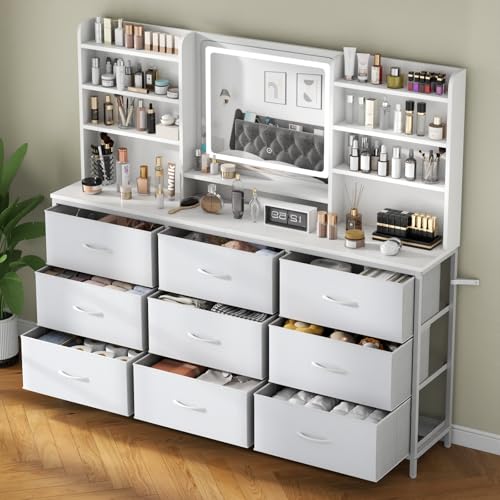
Mirror Dresser Set: The Complete Buying Guide
Everything you need to know before choosing a mirror dresser set — from style and size to materials, safety, and room setup. Make a confident, well-informed decision for your bedroom.
START THE GUIDEWhy a mirror dresser set? A dresser paired with a mirror combines storage and grooming in one cohesive piece. It visually expands the room, adds a focal point, and often comes with a matching nightstand so your bedroom feels pulled together from day one. This guide walks you through every factor that matters so you can choose with confidence.
What Is a Mirror Dresser Set?
A mirror dresser set is a coordinated bedroom furniture package that pairs a dresser with a mirror — and often includes a matching nightstand or a second storage piece. The mirror may be attached directly to the dresser back, mounted on a frame, or designed as a separate leaning piece. The defining feature is the combination: you get drawer storage plus a reflective surface in one intentional design.
These sets are popular because they solve two needs at once. You gain organized clothing storage and a functional grooming station, while the mirror makes the room feel brighter and more spacious. Many buyers also appreciate the visual harmony of a matching set — especially those who want a finished-looking bedroom without hunting for individual pieces.
What typically comes in the set
- Dresser with mirror — the core piece, usually 6 to 8 drawers, with a mirror attached or included.
- Matching nightstand — a smaller companion piece with one or two drawers, placed beside the bed.
- Optional additions — some sets include a matching chest of drawers, a bed frame, or a bench, sold as a coordinated collection.
If you want a fully matched bedroom, explore mirror dresser and nightstand sets that bundle the essentials. If you already have a bed and need only the storage pieces, a standalone set is the better fit. For a broader look at coordinated options, see our matching dresser and nightstand set guide.
Choosing the Right Size and Proportion
Size is the first decision that affects how your set fits — and how the room feels. Measure your wall space, walkway clearance, and ceiling height before you shop. A mirror adds vertical presence, so proportion matters as much as the dresser footprint.
Width: dresser vs. wall
A common guideline is to leave at least 24 to 36 inches of clear walkway in front of the dresser. For the piece itself, a 6-drawer dresser often runs 50 to 60 inches wide, while a double dresser can exceed 60 inches. In smaller rooms, consider a medium dresser or a narrow model to preserve floor space. If your room is tight, our small dressers category is a useful starting point.
Height and mirror orientation
The mirror's top edge should sit at or slightly above eye level when you stand in front of the dresser. Attached mirrors in a vertical orientation suit tall dressers, while wide horizontal mirrors pair well with long, low dressers. For low-ceiling rooms, a horizontal mirror keeps visual weight down. If you prefer a lower footprint overall, look at a lowboy dresser paired with a wide mirror.
Depth and drawer layout
Standard dresser depth is 18 to 20 inches; shallower models around 15 inches work in narrow rooms but reduce drawer volume. Think about what you store: deep drawers suit bulky items like sweaters, while shallow drawers organize folded shirts and accessories. A low-profile dresser can be a smart choice under a window or in a sloped-ceiling room.
Quick sizing rule: Leave at least 24–36 inches of walkway in front of the dresser. Keep the mirror top near or just above standing eye level. Match mirror orientation to dresser proportions — vertical for tall, horizontal for wide.
Styles and Finishes That Fit Your Bedroom
Mirror dresser sets span a wide stylistic range. The right choice depends on your existing decor, your bed frame, and how much visual contrast you want. Below are the most common directions and who they suit best.
Modern and minimalist
Clean lines, flush fronts, and frameless mirrors define the modern look. These sets feel airy and work well in compact rooms. A minimalist dresser with a simple rectangular mirror keeps the focus on function. Pair with a neutral bed frame for a calm, uncluttered bedroom.
Mid-century modern
Warm wood tones, tapered legs, and angled or rounded mirror frames are hallmarks of mid-century style. These sets bring retro character without feeling dated. Explore mid-century dresser with mirror options if you want a design-forward focal point. For a full coordinated bedroom, a mid-century modern dresser set offers matching pieces.
Glam and reflective
Fully mirrored fronts, beveled edges, and metallic accents create a glamorous, boutique-hotel feel. These sets reflect light and make small rooms feel larger, but they need careful maintenance to stay smudge-free. A mirrored chest of drawers can extend the same look to additional storage.
Classic and traditional
Molded edges, bracket feet, and framed mirrors in wood or painted finishes define traditional sets. Mahogany and cherry tones add warmth. If you love this direction, see our mahogany dresser guide and mahogany dressers collection for rich, classic finishes.
Marble-top elegance
A marble top paired with a mirror creates a refined, furniture-boutique look. These sets work especially well in primary bedrooms where you want a statement piece. Browse marble top dresser with mirror options for a sophisticated finish.
Materials and Construction Quality
The mirror dresser set market spans several quality tiers. Understanding construction helps you choose a piece that stays solid and aligned over years of daily use — especially important because a mirror adds weight and leverage to the frame.
Wood and engineered materials
Solid wood frames — oak, maple, walnut, mahogany — offer the most durability and can be refinished. Engineered wood with wood veneer is a common mid-tier choice; it looks convincing and holds up well when joinery is solid. Particle board with laminate sits at the entry level; it is lighter and more sensitive to moisture.
Mirror glass quality
Higher-tier sets use thicker, beveled glass with quality silvering that resists edge corrosion. Entry-level sets often use standard glass with simple polished edges. Check that the mirror backing is sealed and that mounting hardware is included and rated for the mirror's weight.
Drawer mechanics and hardware
Drawer slides make a daily difference. Entry-level sets typically use basic side-mounted roller slides; mid-range sets move to ball-bearing slides for smoother, quieter motion. Top-tier sets often use under-mount soft-close slides with metal or reinforced side panels. For heavy drawers, heavy-duty drawer slides are worth prioritizing.
| Tier | Frame & Materials | Drawer Mechanics | Best For |
|---|---|---|---|
| Entry-level | Particle board with laminate; standard mirror glass | Side-mounted roller slides | Guest rooms, starter apartments, light use |
| Mid-range | Engineered wood with veneer; thicker mirror glass | Ball-bearing slides | Primary bedrooms, daily use, family homes |
| Premium | Solid wood frame; beveled sealed mirror | Under-mount soft-close slides | Long-term ownership, refined interiors |
| Luxury | Hardwood joinery; premium beveled glass; designer hardware | Soft-close with reinforced boxes | Statement bedrooms, heirloom-quality investment |
For a deeper comparison of frame construction and finish options, see our materials and finishes guide. If you are weighing solid wood against engineered alternatives, that guide also covers trade-offs in stability and refinishability.
Safety, Setup, and Anti-Tip Precautions
A mirror adds weight high on the dresser, which raises the center of gravity. Proper installation is not optional — it protects both the furniture and the people in the room.
Mounting the mirror
Use the manufacturer's brackets and hardware. If the mirror is detached, secure it to the dresser back with the supplied clips rather than leaning it. For wall-leaning styles, use a safety strap or French cleat rated for the mirror's weight.
Anti-tip anchoring
Anchor the dresser to wall studs with the included anti-tip kit. Keep heavy items in lower drawers and avoid overloading top drawers. Never let children climb on open drawers — anchoring is the single most effective safeguard.
Placement and clearances
Keep the dresser away from radiators and direct moisture sources, which can warp frames and damage mirror backing. Leave a small gap behind the dresser for air circulation. In rooms with hardwood floors, use felt pads to protect the finish.
Safety checklist: Anchor to studs • secure the mirror with rated hardware • load heavy items low • keep the top clear of climbable objects • check connections twice a year.
Using a Mirror Dresser Set as a Vanity
One of the most practical advantages of a mirror dresser set is dual function. With a stool and a few organizers, the dresser becomes a comfortable grooming station — no separate vanity required.
Choose a set with a generous top surface and a mirror positioned at seated eye level. A tilting mirror adds flexibility. Add a makeup organizer for the dresser top to keep brushes and bottles corralled, and consider a makeup dresser with mirror if you want a purpose-built layout with divided compartments. If you prefer a hybrid approach, a makeup vanity and dresser combo blends both functions in one footprint.
Lighting matters more than most buyers expect. Place the set near a window or add a soft, diffused lamp at eye level on each side. Avoid harsh overhead light directly above the mirror, which casts shadows on the face.
Integrating the Set Into Your Bedroom
A mirror dresser set anchors one wall, so plan the rest of the room around it. In a primary bedroom, the set often works best opposite or adjacent to the bed, where it doubles as a dressing station. For layout inspiration, browse master bedroom dresser with mirror ideas and the broader master bedroom dresser ideas collection.
Coordinating with the bed
Matching wood tones and hardware creates a unified look, but contrast can be equally effective — a dark dresser against a light bed frame, for example. If you want a fully coordinated room, a matching dresser and bed frame pairing keeps proportions and finishes consistent. A matching bedside tables and chest of drawers setup extends the theme.
Color and finish direction
White and light finishes keep small rooms bright and pair well with almost any bedding. Dark finishes add drama and suit larger rooms with good natural light. A low white dresser is a versatile choice for compact spaces, while a matte black dresser brings a modern, grounded feel. If you love wood grain, a mango wood dresser or maple wood dresser offers warmth and character.
Small-space strategies
In compact bedrooms, choose a narrow set with a vertical mirror and skip the second nightstand in favor of a single matching piece. A mini dresser or mini dressers option can fit where a full-size set cannot. Keep the top surface minimal — a tray, a lamp, and one decorative object — to preserve visual calm.
Everyday Care and Long-Term Maintenance
Mirror dresser sets are easy to maintain with a simple routine. Dust the frame weekly with a soft, dry cloth. Clean mirror glass with a non-ammonia glass cleaner and a microfiber cloth to avoid streaks and protect the silvering. Avoid spraying cleaner directly onto the mirror; apply it to the cloth first so liquid does not seep behind the glass.
Check drawer slides every few months and tighten screws that loosen with use. Lubricate metal slides sparingly with a silicone-based product — avoid oil-based lubricants that attract dust. For wood finishes, use a furniture polish suited to the finish type and keep the piece out of direct sunlight to prevent uneven fading. If doors or small compartments are part of the set, a magnetic cabinet door catch is an easy upgrade for a cleaner close.