Maple Wood Dresser: The Complete Guide to Durability, Style & Smart Buying
Everything you need to know about maple dressers — from grain characteristics and finish options to drawer construction and how to match maple furniture with your bedroom decor.
If you have been searching for a bedroom storage piece that balances strength, clean aesthetics, and long-term reliability, a maple wood dresser deserves a top spot on your shortlist. Maple has been a favored furniture hardwood in North America for generations, prized by cabinetmakers for its dense grain and by homeowners for its smooth, uniform appearance. Unlike oak with its bold cathedral patterns or walnut with its dramatic color variation, maple offers a quieter, more contemporary look that adapts to nearly any interior style — from Scandinavian minimalism to transitional bedrooms and even modern farmhouse spaces.
This guide walks you through the practical details that matter when you are in the research phase: what makes maple different from other hardwoods, the distinction between hard maple and soft maple, how to evaluate drawer construction, which finishes hold up best, and how to decide between solid maple and maple-veneer construction. By the end, you should have a clear picture of whether a maple dresser fits your storage needs and what to look for when comparing options.
Quick Facts About Maple Wood Dressers
- Wood type: Hard maple (sugar maple) is dense and extremely durable; soft maple is slightly lighter and easier to work.
- Grain appearance: Fine, closed grain with subtle figure — ideal for painted and natural finishes alike.
- Color range: Pale cream to light reddish-brown heartwood; takes stains and paints exceptionally well.
- Best for: Bedrooms seeking clean lines, long-lasting construction, and versatile styling.
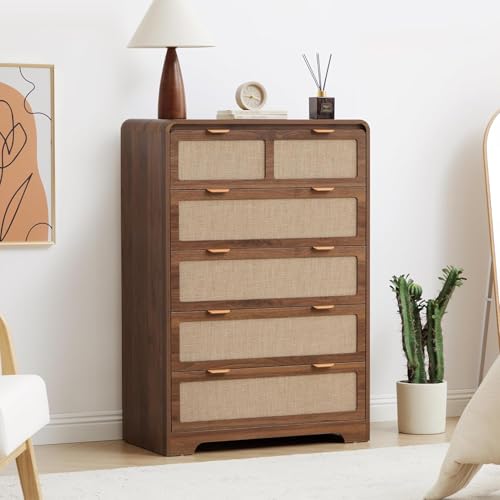
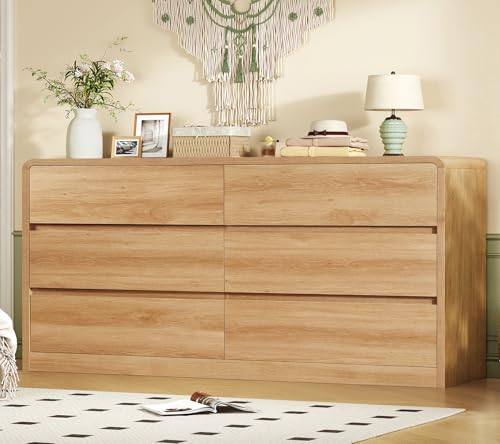
- Common configurations: 6-drawer double dressers, tall 5-drawer chests, and 3-drawer accent pieces.
Why Choose a Maple Wood Dresser?
Maple occupies a sweet spot in the furniture world. It is harder than pine, cherry, and most softwoods, which means it resists dents and surface wear remarkably well — a real advantage for a piece of furniture that opens and closes dozens of times a day. At the same time, its tight grain structure gives it a smoother, more refined surface than open-grained species like oak or ash. That combination of toughness and visual calm is why maple is frequently specified for high-use furniture, including kitchen cabinetry, butcher blocks, and — of course — bedroom dressers.
Beyond durability, maple is a forgiving material for design flexibility. Because the grain is subtle, maple dressers look equally at home with a natural clear finish, a whitewashed look, a deep espresso stain, or a fully painted finish. If you are drawn to a clean, modern silhouette, browse our collection of maple dressers to see how the wood performs across different drawer counts and configurations. For those comparing wood species more broadly, the materials and finishes hub breaks down how maple stacks up against oak, walnut, and engineered alternatives.
Hard Maple vs. Soft Maple: What Buyers Should Know
The term "maple" actually covers two distinct groups, and understanding the difference helps you evaluate quality claims in product listings.
Hard Maple (Sugar Maple)
Hard maple — also called rock maple or sugar maple — is the denser, heavier option. It is significantly harder than most other common furniture woods, which translates to superior resistance to scratches and impact. Furniture made from solid hard maple is typically positioned in the premium to luxury tier because the material is harder to mill and more demanding to source in wide, clear boards. If you want a dresser that can handle decades of daily use and still look sharp, hard maple is the benchmark.
Soft Maple
Soft maple (red maple and silver maple) is lighter in weight and slightly less dense, though it is still a durable hardwood — noticeably tougher than pine or poplar. Soft maple is easier to machine and takes finishes beautifully, making it common in mid-range and balanced-tier dressers. For a bedroom piece that is not subjected to heavy abuse, soft maple offers an excellent combination of appearance and practical durability.
| Feature | Hard Maple | Soft Maple |
|---|---|---|
| Density & hardness | Very high; excellent dent resistance | Moderate-high; good for bedroom use |
| Typical market tier | Premium / luxury | Mid-range / balanced tier |
| Grain & figure | Fine, closed grain; occasional subtle curl | Similar fine grain; slightly softer appearance |
| Best use in a dresser | Drawer fronts, tops, structural frames | Cabinet body, sides, painted finishes |
| Finishing behavior | Excellent; accepts stain and paint evenly | Excellent; very receptive to painted looks |
What to Look for in a Maple Dresser
Not every dresser marketed as "maple" is built the same way. Manufacturers use the term in several different contexts — solid maple lumber, maple veneer over engineered wood, or maple-finished surfaces. Here is how to read the details intelligently.
1. Solid Maple vs. Maple Veneer
Solid maple construction means the visible surfaces are cut from actual maple lumber. This is the most durable and repairable option, and it is typical of high-end tier and professional-grade pieces. Maple veneer, by contrast, is a thin layer of real maple bonded over a stable engineered core (often plywood or MDF). High-quality veneer construction is not inherently inferior — it can be more dimensionally stable than solid wood in humid climates and is common in mid-tier furniture. What matters is the quality of the core and the bonding, not the presence of veneer itself. Avoid pieces where "maple" refers only to a printed paper laminate; those belong to the entry-level tier and will not deliver the durability or refinishability of real wood.
2. Drawer Construction
The drawer is where a dresser earns or loses its reputation. Look for these signals:
- Dovetail joinery — interlocking dovetail joints at drawer corners are the gold standard for strength and are typical of premium-tier construction.
- Drawer glides — metal ball-bearing slides with a smooth, full-extension travel are far superior to simple wood-on-wood runners. If you value smooth daily operation, compare drawer systems carefully; the difference between entry-level friction slides and mid-range ball-bearing slides is immediately noticeable.
- Drawer bottoms — a sturdy bottom panel set into a groove (rather than stapled) prevents sagging over time.
- Box material — maple fronts paired with solid wood or high-grade plywood sides indicate thoughtful construction; particleboard drawer boxes with thin bottoms suggest a starter-tier build.
3. Finish Quality
Maple takes finishes exceptionally well, which means the finish quality is often a design decision rather than a material limitation. A well-applied catalyzed lacquer or water-based polyurethane will protect the surface and keep the grain visible. If you prefer a painted look, maple is arguably the best hardwood for painting because its tight grain does not telegraph through the paint film. For a sleek modern look, a minimalist dresser in painted maple is a strong choice; if you want a bolder statement, explore how maple works with a matte black dresser finish.
Popular Styles and Configurations
Maple's clean grain makes it a natural fit for several design directions:
Mid-Century Modern
Maple's uniform tone suits the tapered legs and clean drawer lines of mid-century design. A mid-century modern dresser in maple blends warm wood tones with geometric simplicity — an enduring look for contemporary bedrooms.
Transitional & Traditional
With modest molding and classic hardware, maple dressers fit traditional bedrooms without the visual heaviness of darker woods. Pair a maple dresser with a matching dresser and nightstand set for a cohesive, pulled-together look.
Tall Chest & Double Dresser Formats
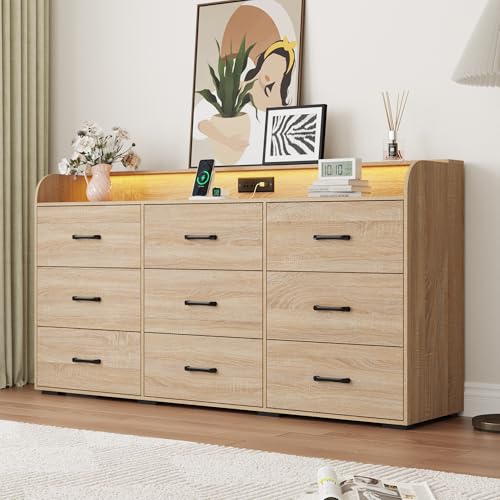
Maple is commonly used for tall 5-drawer chests and wide 6- to 8-drawer double dressers. If floor space is limited, a tall dresser in maple offers generous storage with a smaller footprint; for larger rooms, a wide double dresser creates a strong anchor wall.
Matching a Maple Dresser With Your Bedroom
Because maple has a light-to-medium neutral tone, it is one of the easiest woods to coordinate. A few practical guidelines:
- With darker woods: Maple pairs well with walnut or mahogany accents, creating a comfortable contrast without clashing. If you are mixing species, keep the proportions deliberate — one dominant wood and one accent wood works best.
- With painted furniture: Maple's neutral grain tolerates white, gray, and even bold painted pieces nearby. A white dresser alongside a natural maple chest can read as intentionally collected rather than mismatched.
- With metal and glass: Maple's warmth balances cooler metal frames and mirrored accents, which is why it works in both rustic and modern spaces.
- Hardware choices: Brass and bronze hardware warm up maple's pale tone; matte black hardware gives it a sharper, more contemporary edge. Replacing knobs is one of the simplest ways to shift a maple dresser's personality.
Maple vs. Other Dresser Woods: A Practical Comparison
When you compare maple against other common dresser materials, the trade-offs become clearer:
- Maple vs. oak: Oak is harder and more open-grained with dramatic figure; maple is smoother and quieter. Oak suits rustic and farmhouse schemes, while maple leans modern and transitional.
- Maple vs. pine: Pine is softer, lighter, and more prone to dents, but it lends a relaxed cottage feel. Maple is the more durable long-term investment.
- Maple vs. walnut: Walnut is darker, richer, and typically positioned at a higher market tier. Maple offers comparable durability in a lighter, more versatile palette.
- Maple vs. engineered wood: Entry-level engineered dressers are lighter and less expensive to produce, but they cannot match the refinishability and structural longevity of real maple.
Care and Maintenance for Maple Dressers
Maple is low-maintenance, but a few habits extend its life considerably:
- Dust regularly with a soft, slightly damp cloth — maple's closed grain does not trap dust the way open-grained woods do.
- Avoid harsh solvents; a mild wood-safe cleaner is sufficient for most marks.
- Keep the dresser out of direct sunlight to prevent uneven color shift over time.
- Use coasters or felt pads under decorative objects to prevent scratches on the top surface.
- Periodically check drawer glides and tighten hardware to keep operation smooth.
Who Should Buy a Maple Wood Dresser?
A maple dresser is an excellent match if you want a storage piece that will hold up to years of daily use, prefer a clean and adaptable aesthetic, and value the option to refinish or repaint down the road. It suits families, renters planning long-term furniture investments, and anyone designing a bedroom around neutral, light-to-medium wood tones. If your priority is dramatic grain or a very dark, moody look, walnut or oak may appeal more — but for versatility, durability, and long-term value within its tier, maple is hard to beat.
Ready to explore maple dressers? Browse the full maple dressers collection or compare styles in our dresser types guide to find the configuration that fits your bedroom.
Frequently Asked Questions
Is a maple wood dresser durable enough for daily use?
Yes. Hard maple in particular is one of the hardest common furniture hardwoods, with excellent resistance to dents and surface wear. With reasonable care, a solid maple dresser can last for decades. Soft maple is slightly less dense but still comfortably durable for bedroom use.
Can a maple dresser be painted or refinished?
Absolutely — maple is one of the best hardwoods for painting because its tight grain does not show through the paint film. It also accepts stains and clear finishes evenly. This refinishability is a major advantage over laminate or veneer-only surfaces.
What is the difference between solid maple and maple veneer?
Solid maple uses actual maple lumber for the visible surfaces, offering maximum durability and repairability. Maple veneer applies a thin layer of real maple over a stable engineered core. Quality veneer construction can be very durable and stable, but paper laminates labeled "maple" are a different, lower-durability category.
How do I match a maple dresser with other bedroom furniture?
Maple's neutral, light-to-medium tone pairs easily with darker woods as an accent, painted pieces, and metal or glass elements. If mixing wood species, keep one dominant wood and use the second as an accent for a balanced look.
Does maple wood change color over time?
Maple tends to develop a slightly warmer, golden patina with age and light exposure, especially with clear finishes. Keeping the dresser out of direct sunlight helps ensure the color shift remains even across the surface.