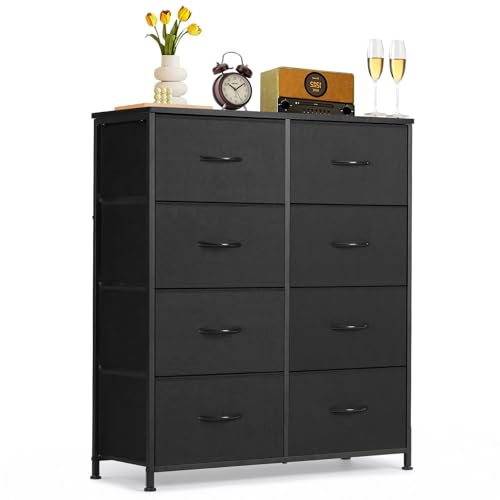
Large Capacity Dresser: Your Complete Guide to Maximum Storage
If your wardrobe has outgrown your current furniture, a large capacity dresser is the solution you've been searching for. This guide breaks down everything you need to know — from drawer dimensions and material choices to organization strategies — so you can choose the right high-capacity storage piece for your bedroom with confidence.
Explore Buying CriteriaWhy a Large Capacity Dresser Matters: A spacious dresser isn't just about fitting more clothes — it's about creating a calmer, more organized bedroom. When every item has its place, mornings become smoother and your space feels more intentional. This guide will help you understand what separates a truly high-capacity dresser from one that merely looks big.
What Makes a Dresser "Large Capacity"?
A large capacity dresser is defined by more than its exterior footprint. True capacity comes from the combination of drawer depth, width, height, and internal usable space. A wide dresser with shallow drawers may hold less than a narrower model with deep, well-proportioned drawers. When evaluating capacity, consider these dimensions:
- Drawer depth: Deeper drawers (typically 15–18 inches) accommodate folded sweaters, denim, and bulky items without stacking them so high that contents become inaccessible.
- Drawer width: Wider drawers let you organize clothing in a single layer, which improves visibility and reduces digging.
- Total drawer volume: Multiply usable drawer dimensions to compare true storage volume across models rather than relying on exterior measurements alone.
- Drawer count and configuration: A mix of deep lower drawers and shallower upper drawers often provides more practical capacity than uniform drawer sizes.
For a deeper comparison of drawer configurations, explore our guide to large capacity chest of drawers, which covers how chests differ from dressers in storage efficiency.
Why Choose a Large Capacity Dresser?
Households with multiple occupants, seasonal wardrobes, or limited closet space benefit most from high-capacity dressers. Here's what a spacious dresser delivers:
Consolidated Storage
Keep all your folded clothing, linens, and accessories in one place instead of scattering items across multiple smaller pieces.
Seasonal Flexibility
Rotate winter and summer clothing without needing overflow bins or off-site storage. A large dresser absorbs seasonal transitions effortlessly.
Shared Use
Couples can each claim dedicated drawers, reducing clutter and simplifying shared bedroom organization.
Reduced Visual Clutter
Concealed storage keeps your bedroom looking tidy. Everything has a home behind closed drawers.
Types of Large Capacity Dressers
Not all high-capacity dressers are designed alike. Understanding the main configurations helps you match the piece to your room layout and storage habits:
- Wide dressers: Typically six to nine drawers across a broad frame. Ideal for long walls and for users who prefer side-by-side organization. Explore options in our large dressers collection.
- Tall chests: Vertical configurations with five to seven stacked drawers. Perfect for rooms with limited floor space but ample wall height. See our large tall dresser for bedroom guide.
- Combo dressers: Combine wide and tall proportions with a mix of drawer sizes and sometimes a cabinet section. These offer the most versatile capacity.
- Dressers with mirrors: Add a functional vanity element while maintaining generous drawer space. Browse large bedroom dresser with mirror options.
- Walk-in closet dressers: Designed for closet integration, these maximize storage in dedicated dressing rooms. See large walk-in closet dresser ideas.
Key Buying Criteria for a Large Capacity Dresser
Before committing to a purchase, evaluate these factors to ensure the dresser meets both your storage needs and your room's practical constraints:
1. Measure Your Space First
Exterior dimensions matter as much as internal capacity. Measure the intended wall, account for door swing clearance, and confirm that drawers can extend fully without obstruction. A dresser that fits the wall but blocks a doorway or closet will quickly become a frustration.
2. Material and Construction Quality
Large dressers carry more weight and endure more use. Solid wood construction with dovetail joints and reinforced drawer bottoms will outlast particleboard alternatives. For a closer look at durable options, see our large solid wood chest of drawers guide. Drawer slides also matter — heavy-duty slides rated for frequent use prevent sagging over time. Learn more in our large heavy-duty drawer slides overview.
3. Drawer Configuration and Usability
Look for a mix of drawer heights: deep drawers at the bottom for bulky items and shallower drawers at the top for smaller garments and accessories. Soft-close mechanisms and full-extension slides improve day-to-day usability, especially in high-capacity models where drawers carry more weight.
4. Style and Finish Compatibility
Your large dresser will be a visual anchor in the bedroom. Choose a finish that complements existing furniture and flooring. Popular directions include large white dressers for bright, airy rooms and large black dressers for bold, contemporary spaces. Wood tones like large wood dressers offer timeless warmth.
Large Capacity Dresser Tiers: Entry-Level to Luxury
Large capacity dressers span a wide range of construction quality and design sophistication. Use the table below to understand what each tier typically delivers, so you can align your expectations with the category you're shopping in:
| Tier | Construction & Materials | Best For |
|---|---|---|
| Entry-Level Tier | Engineered wood with laminate finishes; basic drawer slides; straightforward assembly | Guest rooms, first apartments, and short-term storage needs |
| Mid-Range Tier | Solid wood or high-quality engineered wood; metal slides; soft-close features on select drawers | Primary bedrooms, couples, and everyday long-term use |
| Premium Tier | Solid hardwood construction; dovetail joinery; full-extension soft-close slides; premium hardware | Design-focused bedrooms and users prioritizing longevity |
| Luxury Tier | Hardwood with hand-finished details; custom hardware; heirloom-grade joinery; exceptional drawer feel | High-end interiors, statement pieces, and long-term investment |
Mid-range models often deliver the most practical balance for most households, while premium and luxury tiers justify their positioning through superior materials and craftsmanship. If you're comparing specific configurations, our large dresser for bedroom guide provides additional context on matching tier to use case.
How to Organize a Large Capacity Dresser
A spacious dresser only delivers its full value when organized intentionally. These strategies help you make the most of every drawer:
- Assign zones by category: Dedicate specific drawers to tops, bottoms, loungewear, and accessories. Consistency makes it easy to find items and maintain order.
- Use drawer dividers: Dividers prevent small items from migrating and keep folded stacks upright. Explore large dressers with lots of drawers for models that benefit most from compartmentalization.
- Fold vertically where possible: Vertical folding (sometimes called file folding) lets you see every item at a glance, which is especially valuable in deep drawers.
- Reserve the top drawer for daily essentials: Items you reach for every morning belong in the most accessible drawer.
- Rotate seasonally: Store off-season clothing in lower or less accessible drawers and keep current-season items within easy reach.
For more detailed guidance, visit our large dresser resource hub, which links to organization and styling articles.
Styling Your Large Dresser
A high-capacity dresser occupies significant visual space, so its styling deserves attention. Consider these approaches:
- Balance visual weight: A large dresser on one wall benefits from complementary elements — a mirror above, artwork, or a plant — to avoid a heavy, one-sided feel.
- Keep the top surface intentional: A few curated items (a lamp, a small tray, a framed print) look more polished than a cluttered surface.
- Match hardware to the room's palette: Swapping knobs or pulls is an easy way to shift the dresser's style without replacing the piece.
- Consider lighting: A lamp or wall sconce near the dresser improves both function and ambiance. See our large dresser for bedroom page for layout inspiration.
Related Guides & Resources
- Large Capacity Chest of Drawers
- Large Chest of Drawers
- Large Chest of Drawers for Bedroom
- Large Dresser
- Large Dressers
- Large Dresser for Bedroom
- Large Dressers for Sale
- Large Bedroom Dresser for Sale
- Large Bedroom Dresser with Mirror
- Large Black Dresser
- Large White Dresser
- Large White Dresser with Mirror
- Large Wood Dresser
- Large Wood Dresser with Mirror
- Large Solid Wood Chest of Drawers
- Large Tall Dresser for Bedroom
- Large Tall Chest of Drawers for Bedroom
- Large Walk-in Closet Dresser
- Large Heavy-Duty Drawer Slides
- Long Dresser with Deep Drawers
- Long Dresser with Lots of Drawers
- Long Chest of Drawers for Bedroom
- Large Mid-Century Modern Dresser
- Large Antique Chest of Drawers
Frequently Asked Questions
How much storage does a large capacity dresser actually provide?
It depends on drawer dimensions, but a well-designed large dresser with six to nine drawers can typically hold several weeks' worth of clothing for one to two people. The key is total drawer volume, not exterior size — deeper and wider drawers with efficient internal layout matter more than the number of drawers alone.
What is the difference between a large dresser and a large chest of drawers?
Dressers are typically wider and lower, often with drawers arranged in two or three columns, making them suitable beneath windows or as console-style pieces. Chests are taller and narrower, with drawers stacked vertically. Both can offer large capacity; the choice depends on your room's wall space and how you prefer to access items. Our large chest of drawers guide covers the chest format in detail.
Should I choose solid wood or engineered wood for a large dresser?
Solid wood offers superior durability and longevity, especially for large dressers that carry more weight per drawer. Engineered wood can be a reasonable choice in entry-level and mid-range tiers, particularly when reinforced with quality hardware. For long-term use in a primary bedroom, solid wood is generally the more reliable investment.
How do I know if a dresser will fit my room?
Measure the wall space, account for drawer extension clearance (add roughly the drawer depth to the dresser's depth), and check that doorways and adjacent furniture won't obstruct access. Taping the dresser's footprint on the floor is a simple way to visualize how it will occupy the space before purchasing.
Can a large capacity dresser work in a small bedroom?
Yes — a tall, narrow chest-style dresser can deliver substantial capacity in a compact footprint. Focus on vertical storage and choose a model with drawers that extend fully so you can access items without needing extra floor space around the piece.