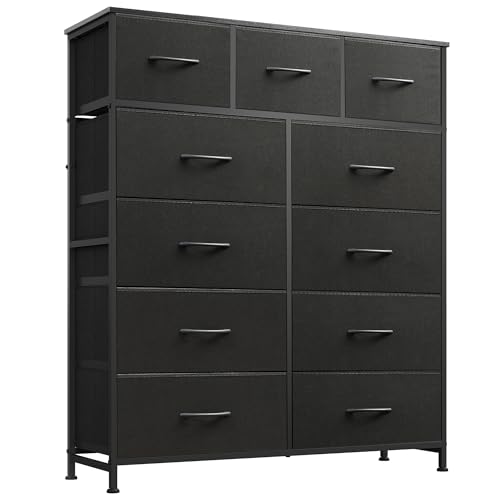
Large Dresser for Bedroom: The Complete Buying Guide
Discover how to choose a large bedroom dresser that maximizes storage, fits your floor plan, and elevates your bedroom design. Compare drawer counts, materials, sizes, and configurations with confidence.
Explore Top PicksQuick Summary: A large dresser for a bedroom generally measures 60 to 80 inches wide and offers six to twelve drawers. Solid wood frames, reinforced drawer slides, and a layout that matches your folding habits matter more than any single feature. Use the sections below to narrow your options before comparing specific models.
Why Choose a Large Dresser for Your Bedroom
A large dresser is the workhorse of bedroom storage. Where a standard four-drawer unit handles a single person's folded clothing, a large bedroom dresser absorbs the wardrobe of a couple, seasonal linens, and overflow from nearby closets. If you are tired of stacking sweaters on shelves or rotating clothes between rooms, upsizing your dresser is one of the most practical furniture decisions you can make.
Beyond raw capacity, a large dresser anchors the bedroom visually. A wide, low profile creates a calm horizontal line beneath a window or opposite the bed, while a tall, narrow silhouette suits rooms with limited floor space. The right piece doubles as a display surface for lamps, books, and decor, reducing the need for extra side tables.
The key is matching the dresser to your actual storage habits. Couples who fold most of their clothing need wide drawers with generous depth. Anyone who stores bedding and bulky knitwear benefits from deep bottom drawers. Collectors of smaller items, from accessories to paperwork, do better with a mix of drawer heights. The sections below break down each decision point so you can buy once and buy well.
Large Dresser Sizes and Dimensions
What counts as "large" depends on the room, but most furniture makers classify bedroom dressers into three broad size bands. Understanding these bands helps you filter listings quickly and avoid a piece that overwhelms your floor plan.
| Size Band | Typical Width | Typical Height | Best For |
|---|---|---|---|
| Standard dresser | 50–60 inches | 30–36 inches | Single adults, guest rooms, smaller bedrooms |
| Large dresser | 60–80 inches | 30–40 inches | Couples, primary bedrooms, generous storage needs |
| Extra-large dresser | 80+ inches | 32–42 inches | Spacious primary suites, family storage, dressing rooms |
Height matters as much as width. A large dresser between 30 and 36 inches tall places the top surface at a comfortable standing height for most adults, making it easy to use as a folding station or display area. Taller models above 40 inches, sometimes called tallboy configurations, trade surface area for vertical drawer stacks and suit narrow walls.
Depth is the most overlooked dimension. Standard dresser depth runs 18 to 20 inches, which fits most bedrooms without blocking walkways. Deeper drawers, around 22 inches, hold bulky items more easily but project further into the room. If your bedroom is tight, a long low dresser keeps the footprint shallow while preserving width. For rooms with abundant floor space, a large tall dresser for bedroom use adds vertical capacity without eating into walking clearance.
Always measure the intended wall, the distance to the bed, and the swing path of closet and room doors before ordering. Leave at least 30 inches of clearance in front of drawers so they can open fully.
Drawer Counts and Layouts That Work
Drawer count is the clearest indicator of a large dresser's storage capacity, but layout matters just as much. Two dressers with the same number of drawers can serve very different needs depending on how those drawers are sized.
Six to Eight Drawers: The Couples' Standard
A six-drawer large dresser typically pairs two wide top drawers with four full-width drawers below, or arranges three columns of two. This configuration suits two adults sharing a bedroom, with each person claiming a column or a set of drawers. Eight-drawer models add a split top row for accessories, socks, and small items. If you want a proven all-rounder, this is the band to target.
Nine to Twelve Drawers: Family and Collector Capacity
Nine-drawer and twelve-drawer dressers divide the face into three or four columns, each stacked with drawers of varying heights. The result is a highly organized surface where every category of clothing has its own slot. These models suit families, anyone storing children's clothing alongside adult wardrobes, or people who simply prefer granular organization. A large capacity dresser in this range often becomes the primary clothing storage in the home.
Mixed-Depth Layouts
The most practical large dressers combine shallow top drawers for delicates with deep bottom drawers for knitwear and bedding. When comparing listings, look at the internal drawer height rather than just the count. Deep bottom drawers are essential if you store winter layers, while shallow drawers prevent small items from getting lost.
- Measure the internal drawer height, not just the exterior dimensions.
- Check whether drawer slides are full-extension so you can reach the back corners.
- Confirm weight ratings for drawer slides, especially on wide drawers.
- Look for drawer stops or soft-close mechanisms on premium and luxury models.
Materials and Construction Quality
A large dresser carries more weight than a compact one, so construction quality matters more, not less. The frame must support wide drawer spans, and the drawer slides must handle repeated daily use without sagging.
Solid Wood Frames
Solid oak, maple, walnut, and cherry are the top-tier choices for large dressers. These hardwoods resist warping across wide spans and hold joinery tightly for decades. A large solid wood chest of drawers is a long-term investment that can be refinished rather than replaced. The trade-off is weight; solid wood large dressers are heavy and may require two people to move.
Engineered and Composite Construction
High-grade engineered wood with reinforced joinery occupies the mid-tier. Quality plywood cores and dense particleboard with proper bracing can perform well in a large dresser, particularly when the drawer boxes are solid wood or sturdy metal. Entry-level composite frames are adequate for guest rooms and light use but are less suited to daily heavy loading across wide drawers.
Drawer Slides and Hardware
The drawer slides are where a large dresser lives or dies. Side-mounted roller slides are common at the entry level and in starter-tier furniture. Ball-bearing slides offer smoother operation in the mid-range. Premium and luxury dressers use heavy-duty, full-extension, undermount slides with soft-close action. For wide drawers holding heavy clothing, look for slide ratings that comfortably exceed the expected load.
Construction tip: Ask whether the drawer boxes are dovetailed or stapled. Dovetail joinery signals a higher tier of craftsmanship and resists separation far better under the stress of a wide, heavily loaded drawer.
Styles and Finishes for Large Bedroom Dressers
A large dresser occupies significant visual space, so its style sets the tone for the room. Match the piece to your existing bed frame and nightstands where possible, and use the dresser's finish to either blend in or create contrast.
Wood tones remain the most versatile choice. A large wood dresser in a medium oak or walnut finish bridges traditional and contemporary décor, while pale finishes brighten smaller rooms. A large white dresser adds a crisp, airy feel and pairs easily with almost any color palette. Darker finishes, such as a large black dresser, create a grounded, dramatic anchor that works well in spacious primary bedrooms.
Mid-century modern silhouettes, with tapered legs and clean horizontal lines, remain popular for large dressers because the low profile keeps the room feeling open. A large mid-century modern dresser pairs well with platform beds and minimal décor. Farmhouse and rustic styles favor painted finishes and visible hardware, while lacquered and laminate surfaces offer a sleek, modern look with easy maintenance.
Hardware is the easiest style lever. Brass pulls read classic, matte black reads contemporary, and integrated finger pulls read minimalist. If you want a mirror above your dresser, plan the mirror height alongside the dresser top before purchase; a large white dresser with mirror setup creates a coordinated focal point.
Placement and Room Planning
Placement decisions determine whether a large dresser feels integrated or intrusive. The most common arrangement places the dresser opposite the foot of the bed, creating a balanced visual weight and an easy folding surface. This works best when the walkway between bed and dresser is at least 30 inches.
An alternative is the long wall flanking the bed, where a wide dresser mirrors the headboard's width. This layout suits rooms with generous side walls and keeps the center of the room open. Corner placement is rarely ideal for large dressers because drawer clearance becomes awkward, but a long, shallow unit can work along a short wall.
If your bedroom doubles as a dressing area, consider a large walk-in closet dresser arrangement inside the closet itself, keeping the sleeping area uncluttered. For rooms where the dresser must serve multiple functions, a large dresser with a sturdy top can act as a vanity or display console.
- Confirm at least 30 inches of clearance in front of drawers.
- Anchor the dresser to the wall if it stands taller than 40 inches.
- Keep the top surface clear of heavy items that could tip the unit.
- Check that electrical outlets remain accessible for lamps and devices.
Buying Checklist Before You Order
Before finalizing a large dresser purchase, run through the following checks. They prevent the most common sources of returns and disappointment.
- Measure twice: wall length, room clearance, and door swing path.
- Check the weight: large solid wood dressers can be very heavy; confirm delivery and assembly requirements.
- Inspect slide quality: prefer ball-bearing or undermount slides over basic roller slides for daily use.
- Verify drawer depth: deep bottom drawers for bedding and knitwear, shallow top drawers for accessories.
- Confirm safety features: tip-restraint hardware should be included or available.
- Review the finish: matte finishes hide fingerprints, gloss finishes show dust more readily.
- Plan the delivery route: confirm the dresser fits through doorways and stairwells.
Ready to Compare Large Bedroom Dressers?
Browse our curated selection of large dressers and chests of drawers, filtered for bedroom storage capacity, construction quality, and style.
View Recommended ModelsRelated Guides for Bedroom Storage
Planning a full bedroom refresh? These guides cover the adjacent decisions that pair with a large dresser purchase.
Frequently Asked Questions
A large bedroom dresser typically measures between 60 and 80 inches in width. This size provides generous drawer capacity while still fitting comfortably against most bedroom walls, leaving room for walking clearance and adjacent furniture.
Most large dressers offer between six and twelve drawers. A six to eight drawer configuration suits couples sharing a bedroom, while nine to twelve drawers work well for families or anyone with extensive clothing and linen collections.
Yes, with careful planning. A long, low-profile large dresser can fit under a window or along a narrow wall, providing substantial storage without consuming vertical space. Measure your wall and walking clearance before choosing a model.
Solid wood, particularly oak, maple, and walnut, offers the best durability for a large dresser because the frame must support significant weight across wide drawers. High-grade engineered wood with reinforced joinery is a solid mid-tier alternative.
Yes. Any dresser taller than 40 inches, and especially large dressers with heavy drawers, should be secured to the wall with tip-restraint hardware. This is a standard safety practice recommended for all bedroom furniture over a certain height.