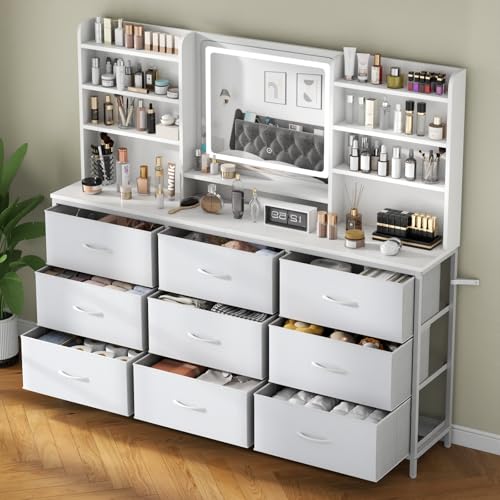
Large White Dresser with Mirror: The Complete Buying & Styling Guide
A large white dresser with mirror is one of the most versatile storage pieces you can add to a bedroom. It brightens the room, doubles as a dressing station, and offers generous drawer space. This guide walks you through sizing, finishes, mirror types, drawer construction, and styling so you can choose with confidence.
Explore Buying CriteriaWhy this piece works so well: White finishes reflect natural light and make bedrooms feel larger, while a mirrored top gives you a functional vanity area without taking up extra floor space. For anyone researching bedroom storage before buying, a large white dresser with mirror sits at the intersection of style and practicality.
What Defines a Large White Dresser with Mirror?
Before comparing models, it helps to understand what "large" actually means in dresser terminology. A large white dresser generally measures between 60 and 80 inches wide, with six to nine drawers and a depth of 18 to 22 inches. When a mirror is included, the total height of the piece typically reaches 70 to 80 inches from the floor, depending on whether the mirror is attached or sold separately.
The white finish is more than a color choice. Painted, lacquered, and laminate white finishes each behave differently in terms of durability, cleaning, and light reflection. Meanwhile, the mirror configuration — flat, beveled, arched, or tri-fold — changes both the visual footprint and the practical use of the dresser.
If you are weighing a mirrored option against a plain one, the companion guide on a large white dresser covers non-mirrored configurations in more depth. For a side-by-side look at how mirror placement affects room layout, the article on a large bedroom dresser with mirror is a useful next read.
Key Buying Criteria to Evaluate
1. Dimensions and Room Proportion
Measure your available wall space, then subtract at least 30 inches of clearance in front of the dresser for drawers to open fully. A large white dresser with mirror works best on a wall where the top of the mirror sits at least 12 to 18 inches below the ceiling. In rooms with sloped ceilings or low windows, a lower-profile dresser with a smaller mirror is usually the better fit.
Consider the relationship between dresser width and bed width. A dresser that is roughly the same width as the bed, or slightly narrower, tends to look balanced. For narrow bedrooms, a long white dresser with mirror can spread storage along one wall without eating into walking space.
2. White Finish Type
- Painted white: A classic look with a soft, matte surface. Painted finishes can chip at drawer edges over time, so look for a factory-applied, multi-coat paint system.
- Lacquered white: A smooth, slightly glossy surface that resists moisture and wipes clean easily. Lacquer can show fingerprints on high-touch areas, but it holds up well in humid climates.
- Laminate white: A budget-friendly engineered surface that is easy to clean and resistant to scratches. The trade-off is that edges can lift if exposed to prolonged moisture.
- Whitewashed or distressed white: A textured finish that hides minor wear well. It pairs naturally with farmhouse and coastal interiors.
Whichever finish you choose, confirm that the drawer interiors are finished or lined. Unfinished drawer boxes can snag clothing and are harder to keep clean.
3. Mirror Type and Attachment
Mirror choice affects both safety and style. Common configurations include:
- Attached flat mirror: Mounted directly to the dresser back. This is the most stable option and the easiest to anchor to the wall.
- Beveled mirror: A polished edge that adds a subtle frame-like effect. Beveled glass is common in mid-range and premium models.
- Arched or shaped mirror: Softens the rectangular silhouette of a large dresser and works well in traditional and transitional bedrooms.
- Tri-fold mirror: Provides multiple viewing angles and is often found on vanity-style dressers.
- Detached mirror: Sold separately or hung on the wall above the dresser. This gives flexibility but requires careful alignment and separate wall anchoring.
Safety matters here. Any mirror taller than 30 inches should be secured with brackets, and the dresser itself should be anchored to the wall with a tip-over restraint. This is especially important in households with young children.
4. Drawer Construction and Capacity
A large dresser is only as good as its drawers. Look for these construction details:
- Dovetail or doweled drawer joints rather than stapled corners
- Metal ball-bearing or undermount glides rated for the drawer size
- Drawer boxes at least 14 inches deep for folded clothing
- Integrated drawer stops to prevent accidental pull-out
- Felt-lined top drawers for jewelry and delicate items
Drawer count should match your storage load. Six drawers suit a couple sharing a bedroom; eight or nine drawers suit individuals with extensive wardrobes or seasonal clothing rotation. If you need maximum capacity in a single piece, compare the options in the guide to a large capacity dresser.
5. Material and Frame Stability
Solid wood frames — maple, oak, birch, or poplar — offer the most stability for a wide dresser. Engineered wood with a solid wood veneer is a common mid-range choice and performs well when the core is dense and the edges are sealed. Particleboard cores are lighter but more vulnerable to moisture and screw loosening over time.
For a piece this size, check the back panel and corner bracing. A rigid back panel prevents racking, the side-to-side wobble that develops in poorly braced wide dressers. If you are comparing construction approaches across categories, the large solid wood chest of drawers guide explains how solid wood frames differ from veneered alternatives.
Quality Tiers: A Practical Comparison
Rather than focusing on specific figures, it helps to understand how large white dressers with mirrors are positioned across the market. The table below uses universal tier descriptors so you can match expectations to construction quality.
| Tier | Typical Construction | Best For |
|---|---|---|
| Entry-level | Engineered wood core, stapled or doweled drawer boxes, basic side-mount glides, flat mirror | Guest rooms, first apartments, short-term staging |
| Mid-range | Dense engineered core with veneer, dovetail drawer fronts, ball-bearing glides, beveled mirror | Primary bedrooms, daily-use family homes |
| Premium | Solid wood frame, dovetail drawer boxes, undermount soft-close glides, shaped or beveled mirror, felt-lined top drawers | Long-term primary suites, buyers who prioritize drawer feel |
| Luxury / professional-grade | Hardwood frame, hand-finished lacquer, custom hardware, full-extension glides, hand-cut mirror | Design-led interiors, collectors, high-traffic luxury homes |
As a rule, mid-range models offer the smoothest balance of drawer feel and finish durability for most households. Entry-level pieces are fine when the dresser is not used daily, while premium and luxury tiers make sense when the piece is a focal point you plan to keep for many years.
Style Pairings for a Large White Dresser with Mirror
White and mirror is a flexible combination, but the surrounding style determines how the piece reads in a room.
Modern and Minimalist Bedrooms
Choose a dresser with flat-front drawers, slim metal pulls, and a frameless rectangular mirror. Keep the dresser top nearly clear — one lamp, one small tray, and a single decorative object is enough. The white finish and mirror will do the visual work without clutter.
Farmhouse and Coastal Bedrooms
Look for shaker-style drawer fronts, cup pulls or bin pulls, and a slightly distressed white finish. An arched or wood-framed mirror softens the look. Layer in woven baskets on the dresser top and a textured rug beneath to complete the scene.
Traditional and Transitional Bedrooms
Beveled mirrors, framed edges, and shaped drawer fronts suit traditional rooms. White works especially well when paired with warm wood tones elsewhere in the room, such as a wooden bed frame or nightstands. If you want to coordinate storage across the room, the guide to a light wood dresser and nightstand set explains how to balance white and wood finishes.
Small or Multi-Use Bedrooms
In a compact bedroom, a large white dresser with mirror can double as a vanity and a storage hub. Choose a model with a lower mirror or a long, low profile so the piece does not dominate the wall. The article on a large dresser for bedroom layouts covers space-planning considerations in more detail.
Strengths
- Brightens the room and reflects natural light
- Combines clothing storage with a dressing station
- Works across modern, farmhouse, and traditional styles
- Generous drawer capacity for couples or seasonal wardrobes
Trade-offs to Plan For
- Requires wall anchoring for mirror and tip-over safety
- White finishes show scuffs on high-touch drawer edges
- Large footprint needs at least 30 inches of clearance in front
- Mirror height can conflict with low ceilings or sloped walls
Placement and Room-Planning Tips
Where you place the dresser matters as much as which one you choose. A few practical guidelines:
- Anchor to the wall: Always use the supplied tip-over restraint, especially with a mirror attached.
- Respect drawer swing: Leave 30 inches of open floor in front so drawers and doors clear the bed or doorway.
- Mind the mirror reflection: Position the mirror so it reflects a window or artwork rather than a cluttered corner. This is a simple trick that makes the whole room feel calmer.
- Light the dressing area: A mirror is only useful with good light. Add a table lamp on the dresser or a wall sconce on either side.
- Coordinate with adjacent storage: If the dresser sits near a closet, keep the palette consistent. The guide to a large walk-in closet dresser covers how dressers integrate into closet systems.
Care and Maintenance
White finishes and mirrored surfaces each need slightly different care.
- Dust painted or lacquered surfaces with a soft microfiber cloth. Avoid abrasive pads, which dull the finish.
- Wipe spills promptly. White finishes can absorb pigments from spilled liquids if left standing.
- Clean mirrors with a streak-free glass cleaner applied to a cloth, not sprayed directly on the glass. This prevents liquid from seeping behind the mirror frame.
- Check drawer glides and tighten screws every few months, especially on wide drawers that carry heavy clothing.
- Keep the dresser away from direct radiator heat, which can cause painted finishes to crack over time.
Common Questions About Large White Dressers with Mirrors
What size is considered a large white dresser with mirror?
A large white dresser with mirror typically measures 60 to 80 inches wide and 30 to 40 inches tall, with six to nine drawers. The mirror usually adds 30 to 40 inches of height above the dresser top.
How much clearance should I leave between the dresser mirror and the ceiling?
Leave at least 12 to 18 inches of clearance between the top of the mirror and the ceiling. This keeps the room feeling open and allows for proper air circulation and lighting.
Are white dressers with mirrors suitable for small bedrooms?
Yes. White finishes reflect light and make a room feel more spacious. Choose a large white dresser with mirror in a slim profile or a long, low silhouette to keep sightlines open in a smaller bedroom.
How do I attach a mirror to a dresser safely?
Use the manufacturer-supplied mirror brackets or mounting hardware. Secure the mirror to the dresser back panel and anchor the dresser to the wall with a tip-over restraint kit, especially in homes with children.
What is the best way to clean a white dresser with mirror?
Dust the white finish with a soft microfiber cloth. Clean the mirror with a streak-free glass cleaner applied to the cloth, not directly on the glass. Avoid abrasive cleaners that can dull painted or lacquered finishes.
Ready to Compare Large White Dressers with Mirrors?
Use the curated selection below to explore models across entry-level, mid-range, and premium tiers. Each listing includes construction details and mirror configuration so you can narrow your shortlist quickly.
View Recommended Models