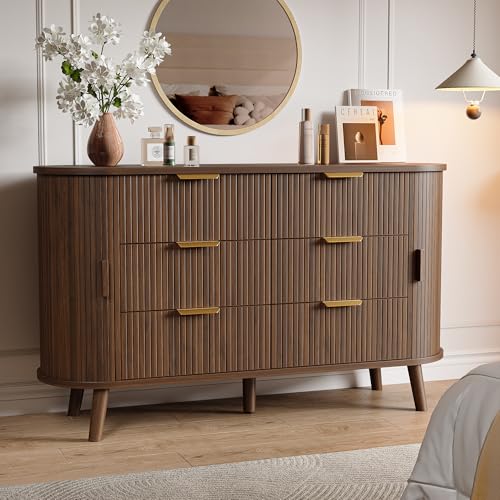
Large Mid Century Modern Dresser: The Complete Buying Guide
Everything you need to know about choosing a spacious, design-forward mid century modern dresser — sizing, materials, drawer layouts, quality tiers, and styling.
What Defines a Large Mid Century Modern Dresser?
A large mid century modern dresser combines the clean, functional lines of mid century design with generous storage capacity. The style emerged in the mid-20th century and is defined by honest materials, balanced proportions, and a rejection of ornamentation in favor of usefulness. When scaled up, these design principles produce a statement piece that anchors a bedroom while staying visually light.
Several hallmarks separate a genuine mid century modern piece from a generic retro imitation. Understanding these traits helps you evaluate listings and showroom pieces with confidence.
- Low, horizontal profile: Most large MCM dressers emphasize width over height, creating a long, low silhouette that keeps sightlines open.
- Tapered legs: Splayed or gently tapered legs lift the body off the floor, giving the piece a floating quality and making the room feel larger.
- Clean drawer fronts: Flat or subtly beveled fronts without heavy carving, often with recessed pulls or slim metal hardware.
- Expressed wood grain: Walnut, teak, oak, and similar species are typically finished to highlight natural grain patterns.
- Asymmetry and offset details: Some designs use offset drawer banks or angled pulls to add visual interest without clutter.
A large mid century modern dresser is not simply a bigger version of a small unit. Proportions matter: the drawer banks should remain balanced, the legs should scale with the body, and the hardware should feel proportionate rather than oversized. These details separate a well-designed piece from one that merely borrows the aesthetic.
Why Choose a Large Mid Century Modern Dresser?
Upgrading to a larger dresser solves several practical problems at once. For households with growing wardrobes, a wide unit consolidates clothing that might otherwise spill into closets, under-bed bins, or secondary storage furniture. The horizontal footprint also doubles as a display surface for lamps, plants, and decorative objects, which is especially useful in bedrooms without room for additional accent furniture.
The style itself offers long-term versatility. Mid century modern design has remained relevant for decades because it prioritizes function and restraint. A large MCM dresser can sit comfortably in a minimalist bedroom, a warm contemporary space, or a room with vintage accents. It rarely looks dated because it avoids trends that cycle in and out.
For shoppers comparing storage categories, a large unit often makes more sense than combining several smaller pieces. A single wide dresser reduces visual clutter and uses wall space more efficiently. If you are weighing options across the category, our guide to large dressers covers broader size and configuration considerations beyond the MCM style.
Key Takeaways
- Large MCM dressers prioritize width, low profiles, and tapered legs.
- They consolidate storage and double as a display surface.
- Timeless design reduces the risk of style fatigue over time.
- Proportion and hardware scale are the clearest signs of quality design.
Size & Dimension Guide
“Large” is a relative term, so it helps to anchor expectations with realistic dimensions. Most dressers marketed as large fall within a recognizable range. Width is the defining dimension for this category, since mid century modern design favors horizontal expansion over vertical stacking.
Typical large mid century modern dressers measure roughly 60 to 80 inches wide, 18 to 20 inches deep, and 30 to 36 inches tall. Height variations depend on leg length and drawer count. A six-drawer unit in two rows will generally sit taller than a nine-drawer unit arranged in three rows of three.
| Configuration | Typical Width | Typical Height | Best For |
|---|---|---|---|
| Wide six-drawer (2 rows) | 60–68 in | 30–33 in | Primary bedrooms, low-profile styling |
| Extra-wide six-drawer | 68–80 in | 30–34 in | Large bedrooms, shared wardrobes |
| Nine-drawer (3 rows) | 60–72 in | 34–38 in | Higher capacity, taller rooms |
| Long low dresser (console style) | 70–84 in | 26–30 in | End-of-bed placement, open sightlines |
Depth deserves equal attention. Standard depth of 18 to 20 inches accommodates folded clothing comfortably while leaving walking clearance in most bedrooms. Deeper units provide more storage per drawer but may crowd narrow walkways. If your room is tight, explore long narrow dresser options that preserve width while reducing depth.
Measure your available wall space, door swing clearance, and walkway width before committing. A large dresser that blocks circulation or prevents a closet door from opening will quickly become a source of frustration rather than a design asset.
Drawer Layouts That Work
Drawer organization is where a large MCM dresser earns its keep. The most practical layouts combine shallow drawers for folded tops and accessories with deeper drawers for bulkier items. A common and highly functional arrangement uses a row of smaller top drawers above wider lower drawers.
- Six-drawer, two-row layout: Balanced and easy to organize. Top row handles smaller items, bottom row accommodates bulkier clothing.
- Nine-drawer, three-row layout: Maximizes separation between categories. Useful for couples sharing a dresser.
- Asymmetric layouts: Offset drawer banks create visual interest and often include a mix of drawer sizes for varied storage needs.
- Console-style long low layouts: Fewer, wider drawers that suit linens and larger folded items.
Check drawer extension type before buying. Full-extension slides allow access to the entire drawer interior, while three-quarter extension slides leave the rear portion difficult to reach. Soft-close mechanisms reduce wear and noise over time. For wide drawers, heavy-duty slides are essential to prevent sagging under load. Our resource on large heavy-duty drawer slides explains what to look for in wide-drawer hardware.
Interior drawer height matters as much as exterior dimensions. Deep drawers swallow small items and create clutter, while shallow drawers keep categories visible. A mix of both is ideal. Consider adding drawer dividers after purchase to maintain order, particularly in wide drawers that tend to become disorganized.
Materials & Wood Species
Material choice affects durability, appearance, and long-term maintenance. Mid century modern dressers historically favored solid wood, and that remains the gold standard for longevity. Understanding the differences between species and construction methods helps you judge quality accurately.
Solid Wood Species
- Walnut: The signature MCM species. Rich, warm brown tones with striking grain. Dense and durable, it takes a beautiful finish and ages gracefully.
- Teak: Golden-brown with a naturally oily character that resists moisture. A hallmark of Scandinavian-influenced mid century design.
- Oak: Hard and durable with prominent grain. Lighter tones work well in bright rooms, and the wood responds well to both natural and stained finishes.
- Cherry: Warm reddish-brown that deepens with age. Softer than walnut but still suitable for bedroom furniture.
- Maple: Light-colored and fine-grained. A good choice for airy, minimalist bedrooms.
Engineered and Composite Construction
Many mid-tier and entry-level pieces use engineered wood cores with real wood veneers. Veneered construction can be perfectly durable when the substrate is dense and the veneer is applied correctly. The key is inspecting edge banding, drawer box construction, and joinery. A veneered dresser with solid wood drawers and sturdy joinery will outlast a solid-wood piece assembled with weak fasteners.
If solid wood is a priority, our overview of large solid wood chest of drawers discusses what to verify in listings and showroom pieces. Similarly, the large wood dresser guide covers construction details that signal longevity.
Quality Tiers Explained
Large MCM dressers span a wide range of construction quality. Rather than focusing on numeric comparisons, it helps to classify pieces by tier. This framework lets you evaluate what you are getting relative to the category as a whole.
| Tier | Construction Signals | Best For |
|---|---|---|
| Entry-level tier | Engineered wood core, basic veneer, stapled or cam-lock joinery, three-quarter extension slides | Guest rooms, first apartments, short-term placements |
| Mid-tier | Dense engineered core or mixed solid/engineered, dovetail drawer boxes, full-extension slides, soft-close | Primary bedrooms, daily use, long-term ownership |
| Premium tier | Solid wood cases and drawer fronts, dovetail joinery, heavy-duty slides, hand-finished surfaces | High-use bedrooms, design-focused spaces, heirloom intent |
| Luxury / professional-grade | Select hardwood, traditional joinery, custom hardware, artisan finishing, limited production | Statement pieces, collectors, custom interiors |
Mid-tier construction typically offers the most balanced combination of durability and design fidelity. Entry-level pieces can serve well in low-traffic rooms, while premium and luxury tiers justify their positioning through materials and craftsmanship that remain sound for decades. The goal is to match the tier to how hard the piece will work in your home.
For a broader comparison across large formats, our large dressers overview and the large capacity dresser guide provide additional context on how capacity and construction interact.
Hardware & Leg Styles
Hardware and legs are small details that carry outsized design weight. Mid century modern dressers use several recognizable hardware conventions, and the leg style determines how the piece sits in the room.
Hardware Options
- Recessed pulls: Integrated into the drawer front for a seamless look. Common on minimalist Scandinavian-influenced designs.
- Slim bar pulls: Metal bars in brass, black, or brushed finishes. Versatile and easy to grip.
- Round knobs: Smaller knobs in wood or metal, often used on upper drawers in mixed layouts.
- Angled or sculptural pulls: A signature mid century detail that adds personality without ornamentation.
Leg Styles
- Tapered round legs: The classic MCM silhouette. They lift the piece and create visual lightness.
- Splayed legs: Angled outward for stability and a dynamic profile.
- Frame or plinth bases: A more grounded look that suits rooms where a floating aesthetic feels too airy.
- Metal hairpin legs: A lighter, more industrial mid century variant.
Leg height affects usability as well as appearance. A dresser with taller legs sits higher, which can be more comfortable for taller users, while lower legs create a grounded look. If you are replacing legs on an existing piece, our guide to legs for dresser covers compatibility and style matching.
Room Fit & Placement
Placement determines whether a large dresser feels like an anchor or an obstruction. The two most common positions are against the primary wall opposite the bed and at the end of the bed in a console-style arrangement.
Against the wall, a large MCM dresser reads as a focal point. Centering it on the wall and hanging artwork or a mirror above creates a cohesive composition. At the foot of the bed, a long low dresser adds storage without blocking sightlines. Our guide to low dresser for end of bed placement explores clearance and proportion considerations for this layout.
For bedrooms with limited wall space, consider a large walk-in closet dresser that moves storage into the closet and frees the bedroom for other furniture. This approach works especially well in primary suites with dedicated dressing areas.
Leave at least 30 inches of clearance in walkways and ensure drawers can open fully without hitting bed frames, doors, or other furniture. Measure the drawer extension distance, not just the closed footprint, when planning placement.
Placement Checklist
- Measure wall width, walkway clearance, and drawer extension distance.
- Confirm doors and closet access remain unobstructed.
- Consider anchoring the piece to the wall for safety, especially in homes with children.
Styling Your Large Mid Century Modern Dresser
A large dresser top is a generous display surface, but it is easy to overcrowd. The mid century modern approach favors restraint: a few well-chosen objects spaced with breathing room rather than a dense arrangement.
- Anchor with a mirror or artwork: A round mirror or abstract print above the dresser reinforces the horizontal composition.
- Use a tray for small items: A shallow tray corrals jewelry, keys, and everyday objects without visual clutter.
- Add one sculptural object: A ceramic vessel or wood carving introduces personality without competing with the dresser's lines.
- Include a plant: A trailing plant softens the horizontal edges and adds color.
- Keep lighting simple: A slim table lamp or a wall sconce above the dresser provides function and warmth.
Color palettes that suit mid century modern dressers include warm neutrals, mustard, olive, and muted teal. These tones complement walnut and teak without overpowering them. Avoid heavy textiles and ornate accessories that fight the clean lines of the furniture.
If you are refreshing an existing piece rather than buying new, our guide to large wood dresser with mirror arrangements offers ideas for coordinating mirrors and wood tones. For darker spaces, a large black dresser can add contrast and drama while maintaining the MCM silhouette.
Buying Checklist
Before finalizing a purchase, run through this checklist to confirm the piece meets your practical and design requirements.
- Measure the space: Wall width, depth clearance, walkway width, and drawer extension distance.
- Confirm drawer count and layout: Match the configuration to your clothing categories.
- Inspect drawer slides: Full-extension and soft-close mechanisms are worth prioritizing.
- Check joinery: Dovetail or box joints on drawer boxes; corner blocks or dowels at the frame.
- Verify materials: Solid wood or dense engineered core with quality veneer; avoid thin particleboard.
- Assess hardware and legs: Proportion, finish quality, and stability.
- Plan for safety: Anti-tip anchoring is essential for tall or wide units.
- Review delivery and assembly: Confirm whether assembly is required and what tools are needed.
For a deeper comparison of large-format dressers beyond the MCM style, the large dresser for bedroom guide covers additional configurations. Shoppers evaluating multiple aesthetics may also find the large antique chest of drawers overview useful for contrasting vintage construction with modern mid century pieces.
Frequently Asked Questions
What is the ideal width for a large mid century modern dresser?
Most large MCM dressers fall between 60 and 80 inches wide. The right width depends on your wall space, walkway clearance, and how much storage you need. Measure the wall and drawer extension distance before choosing.
Are mid century modern dressers durable for daily use?
Yes, when constructed well. Solid wood or dense engineered cores with dovetail drawer boxes and full-extension slides hold up to daily use. The tier of construction matters more than the style label.
Which wood species is most common for MCM dressers?
Walnut and teak are the most iconic species, though oak, cherry, and maple are also common. Each offers a different tone and grain character, so choose based on your room's palette.
Can a large MCM dresser work in a small bedroom?
It can if the room has adequate wall space and walkway clearance. A long, low profile helps preserve sightlines. In tighter rooms, a long narrow dresser may be a better fit.
How do I prevent a wide dresser from tipping?
Use the anti-tip anchoring kit supplied by the manufacturer or purchase one separately. Secure the dresser to a wall stud. Wide drawers should be opened one at a time, and children should never be allowed to climb on drawers.
Should I choose a six-drawer or nine-drawer layout?
Six drawers in two rows suit most individuals and couples. Nine drawers in three rows provide more separation between categories, which helps when multiple people share the dresser.
Final Thoughts
A large mid century modern dresser is a practical investment in both storage and design. By prioritizing proportion, construction quality, and drawer layout, you can choose a piece that serves your household for years while remaining visually relevant. Use the tier framework to match construction to your intended use, measure carefully before committing, and plan placement so the dresser anchors the room rather than crowding it.
When you are ready to explore specific pieces, compare listings against the checklist above. The most compelling options balance honest materials with functional details — exactly the principles that made mid century modern design enduring in the first place.