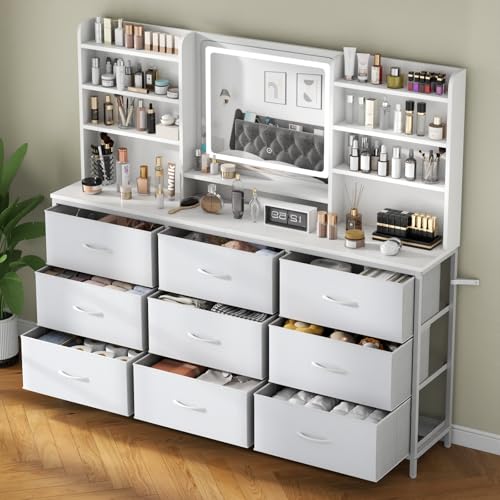
Dresser with Mirror and Chair: The Complete Guide to Choosing Your Perfect Vanity Setup
A dresser with mirror and chair transforms a simple storage piece into a complete grooming station. Learn how to choose the right combination for your bedroom, what features matter most, and how to style this multifunctional furniture piece for both beauty and practicality.
Explore Buying FactorsWhat Is a Dresser with Mirror and Chair?
A dresser with mirror and chair is a coordinated furniture set that combines three essential bedroom functions into one cohesive arrangement: drawer storage for clothing and personal items, a mirror for grooming and dressing, and a chair for comfortable seated use. Unlike a standalone dresser, this combination creates a dedicated vanity or dressing station within the bedroom.
This setup is particularly valuable in bedrooms where floor space is limited but the need for a functional grooming area remains high. The dresser provides the storage capacity of a traditional chest of drawers, while the attached or paired mirror adds vertical utility without consuming additional floor area. The chair completes the trio by offering a comfortable place to sit while applying makeup, styling hair, or putting on accessories.
Many homeowners discover that a dresser with mirror and chair serves as a practical alternative to a dedicated vanity table, especially in smaller bedrooms or guest rooms. The combination is versatile enough to work in master bedrooms, dressing areas, and even spacious walk-in closets. When shopping for a complete setup, it helps to understand the distinctions between a solid oak dresser with mirror and a more decorative antique white dresser with mirror, as each brings a distinct character to the room.
If you are still deciding between a traditional dresser and a more specialized vanity configuration, exploring the broader category of dresser types can clarify which format best matches your daily routine and spatial constraints.
Key Benefits of a Dresser with Mirror and Chair Setup
Investing in a coordinated dresser, mirror, and chair arrangement offers several practical advantages that go beyond basic storage. Understanding these benefits can help you determine whether this configuration suits your lifestyle and bedroom layout.
- Multifunctional efficiency: One furniture arrangement serves as storage, grooming station, and seating area. This consolidation is especially useful in smaller bedrooms where every square foot matters.
- Improved morning routine: Having a dedicated seated grooming space with proper mirror height and lighting reduces the friction of getting ready each day. Everything needed is within arm's reach.
- Design cohesion: When the dresser, mirror, and chair are purchased as a coordinated set or styled together intentionally, the bedroom gains a polished, unified look that individual pieces often cannot achieve.
- Vertical space utilization: The mirror draws the eye upward and adds a sense of height to the room, making compact bedrooms feel more spacious without additional floor footprint.
- Accessibility: For individuals who find standing for extended periods uncomfortable, a seated grooming station provides a practical solution while maintaining full access to drawer storage.
Designer tip: Position your dresser and mirror combination near natural light sources when possible. A vanity setup placed beside a window benefits from daylight during morning routines, while an adjustable chair allows you to find the optimal angle for mirror use.
For those considering a dedicated nursery setup, a nursery dresser paired with a mirror and chair can serve double duty as a changing station and a parent's grooming area during early months.
Types of Dresser and Mirror Combinations
Not all dresser-with-mirror arrangements are configured the same way. The three main configurations differ in how the mirror attaches, how the chair integrates, and how much flexibility each offers for future rearrangement.
1. Attached Mirror Dresser
The mirror is permanently or semi-permanently mounted to the back of the dresser using brackets or a wooden frame. This classic configuration is common in traditional and antique furniture styles. Attached mirrors move with the dresser when rearranging, which simplifies room changes. However, the mirror height is fixed relative to the dresser, which may not suit every user's seated eye level.
2. Wall-Mounted Mirror with Dresser
The dresser and mirror are separate pieces, with the mirror installed directly on the wall above or beside the dresser. This configuration offers maximum flexibility: the mirror can be positioned at the ideal height for the primary user, and the dresser can be moved independently. Wall-mounted mirrors also tend to feel more integrated with the room's architecture rather than sitting on top of the furniture.
3. Freestanding Vanity Dresser
Some dressers are purpose-built as vanity units with a recessed seating area, integrated mirror, and a chair that tucks underneath. These units are typically wider than standard dressers and require more floor space, but they deliver the most cohesive appearance and ergonomic layout. They are best suited to dedicated dressing areas or spacious master bedrooms.
| Configuration | Best For | Flexibility | Space Requirement |
|---|---|---|---|
| Attached Mirror Dresser | Traditional bedrooms, guest rooms | Moderate | Standard |
| Wall-Mounted Mirror + Dresser | Renters, adjustable setups | High | Standard |
| Freestanding Vanity Dresser | Dedicated dressing areas, master suites | Low | Larger footprint |
Each configuration is available across entry-level, mid-range, and premium construction tiers. The tier you choose affects joinery quality, mirror clarity, and hardware durability rather than the fundamental layout.
Essential Buying Factors for a Dresser with Mirror and Chair
Before committing to a purchase, evaluate these key factors to ensure the arrangement fits your room, your routine, and your long-term needs. This checklist covers the practical considerations that matter most.
Measure Your Space Carefully
Start by measuring the available wall width and floor depth where the dresser will sit. Account for drawer pull-out clearance (typically 18 to 24 inches in front of the dresser) and chair placement. If you are working with a compact bedroom, a small bedroom dresser paired with a backless stool may be the most space-efficient choice. For rooms with generous wall space, a 72-inch wide dresser provides ample drawer capacity and a broad mirror surface.
Determine the Ideal Mirror Height
Sit in the chair you plan to use and measure from the floor to your eye level. The center of the mirror should align roughly with your seated eye line for comfortable grooming. If the mirror is fixed to the dresser, confirm the total dresser-plus-mirror height works for your seated position before purchasing. This is especially important for taller or shorter users who may need an adjustable wall-mounted mirror instead.
Evaluate Drawer Configuration and Depth
The dresser portion should offer drawer sizes that match what you plan to store. Shallow drawers work well for accessories, jewelry, and folded undergarments, while chest of drawers with deep drawers accommodate bulkier clothing items. A solid wood 6 drawer dresser typically provides a balanced mix of drawer sizes suitable for a vanity setup.
Consider the Chair's Role and Storage
Will the chair remain stationary or be tucked away when not in use? A backless stool conserves floor space and visually opens up the room, while a chair with a back offers more comfort for extended grooming sessions. Some vanity chairs include built-in storage or a lift-up seat, which can be useful for keeping accessories organized. For setups where the chair is shared or frequently moved, a lightweight but sturdy design is preferable.
Check Construction Quality and Safety
Look for dovetail or doweled drawer joints, smooth-gliding slides, and a stable base. Dressers with mirrors are top-heavy by nature, so anti-tip hardware is essential, particularly in households with children. Review our solid wood dresser buying guide for detailed guidance on evaluating construction quality across different tiers.
Choosing the Right Mirror for Your Dresser
The mirror is often the focal point of a dresser with mirror and chair arrangement. Its size, shape, and frame style influence both the visual weight of the furniture and the practical usability of the grooming station.
Size and Proportion
A general guideline is that the mirror width should be between one-half and two-thirds of the dresser width. A mirror that is too narrow looks underscaled, while one that exceeds the dresser width can feel overwhelming. For a seventy-two inch wide dresser, a mirror in the 36-to-48-inch width range is proportionate.
Frame Style and Finish
Mirror frames should complement the dresser's material and finish. A mission style dresser with mirror typically pairs with a simple, straight-lined frame, while a vintage French provincial dresser may feature an ornate, curved frame. For a more contemporary look, frameless or thin-metal-framed mirrors work well with modern dressers. Matching the hardware finish between the dresser and mirror frame creates visual continuity.
Mirror Clarity and Safety
High-quality mirrors use thicker glass with a consistent silver backing that resists distortion and clouding over time. If purchasing an antique or vintage piece, inspect the mirror for desilvering, which appears as dark or cloudy patches along the edges. For new purchases, look for mirrors that are shatter-resistant or backed with a safety film, especially in households with children or pets.
Attached vs. Separate Mirror Considerations
An attached mirror adds visual weight and a traditional silhouette but limits repositioning. A separate wall-mounted mirror frees the dresser top for other uses and allows the mirror to be swapped or updated without replacing the dresser. Both approaches are valid; the right choice depends on whether you prioritize a unified furniture piece or long-term flexibility.
Selecting the Perfect Chair for Your Vanity Dresser
The chair is the component that transforms a dresser from a storage piece into a usable grooming station. Choosing the right chair involves balancing comfort, style, and spatial fit.
Seat Height and Comfort
The chair seat should be high enough that you can see comfortably into the mirror while seated, but low enough that your feet rest flat on the floor. Standard vanity stools sit at roughly 18 to 20 inches seat height, while standard dining-style chairs sit at 18 to 19 inches. If the dresser is taller than average, a counter-height stool may provide a better viewing angle. Test the chair and mirror together whenever possible before committing.
Style Coordination
Upholstered stools and chairs bring softness to a room dominated by wooden furniture. A fabric or leather upholstered seat complements both painted and natural wood dressers. Metal-frame stools pair well with industrial or modern dressers, while cane or woven seats suit coastal, boho, and farmhouse aesthetics. If your dresser has a distinctive finish, such as an emerald green dresser, choose a chair with a neutral upholstery to avoid visual competition.
Footprint and Storage
Backless stools require the least floor space and can tuck fully under a dresser with a knee-hole recess. Chairs with backs provide more support but project further into the room. If floor space is tight, consider a stool that nests under the dresser or a folding chair that can be stored in a closet when not in use. Some vanity chairs offer a small storage compartment under the seat, useful for keeping brushes or accessories close at hand.
Durability and Maintenance
Upholstered seats in light colors show wear and stains quickly; performance fabrics and wipeable leather are practical choices for daily use. Wooden stools are simple to wipe down and tend to age gracefully. Whichever material you select, check that the chair's weight capacity and leg construction suit the primary users.
Materials and Quality Tiers
Dresser with mirror and chair sets span a wide range of construction quality. To compare products without referencing numerical figures, this guide uses universal tier descriptors that reflect relative market positioning.
| Tier | Typical Construction | Best For | Longevity Outlook |
|---|---|---|---|
| Entry-level | Engineered wood with laminate or veneer, basic drawer slides | Guest rooms, first apartments, temporary setups | Moderate; suitable for light use |
| Mid-range | Solid wood or high-quality engineered wood, metal drawer slides, dovetail joints on key drawers | Primary bedrooms, daily grooming routines | Good; a solid choice for the tier |
| Premium | Solid hardwood throughout, soft-close slides, full dovetail joinery, high-clarity mirror glass | Master suites, long-term installations | Excellent; a long-term investment |
| Luxury / flagship tier | Hand-selected hardwoods, custom hardware, bespoke mirror framing, artisanal chair upholstery | Statement bedrooms, designer interiors | Exceptional; heirloom potential |
Within each tier, the difference between individual products often comes down to hardware quality and finish consistency. A mid-range dresser with premium drawer slides and a well-made mirror can outperform a premium-tier piece with poor quality control. For readers exploring natural wood options, our guide to wood dressers explains how species choice affects appearance, weight, and maintenance.
Mirror Glass Quality
Entry-level mirrors may use thinner glass with a standard silver backing, while premium and luxury mirrors typically use thicker glass with improved backing that resists desilvering. Frameless mirrors require higher-quality glass because there is no frame to hide edge imperfections.
Chair Materials
Chairs in the entry-level tier often use basic foam and synthetic upholstery. Mid-range chairs improve seat density and use performance fabrics. Premium and luxury chairs may use high-resilience foam, genuine leather, or custom upholstery with hardwood frames. These material differences affect comfort during extended use and the chair's ability to maintain its shape over time.
Styling and Organization Tips for Your Vanity Dresser
Once the dresser, mirror, and chair are in place, thoughtful styling and organization maximize both the aesthetic appeal and the daily functionality of the setup.
Organize Drawers by Grooming Function
Reserve the top drawer or drawers for items used while seated at the mirror: cosmetics, brushes, jewelry, and accessories. Lower drawers can hold folded clothing. Using a clothes drawer organizer or drawer dividers keeps small items from shifting and makes the grooming routine more efficient. For a vanity-specific dresser, consider dedicating one shallow drawer entirely to jewelry and one to skincare or makeup.
Add Task Lighting
Overhead bedroom lighting often casts shadows on the face when seated at a mirror. Supplement the room's ambient light with a small table lamp on the dresser or wall sconces flanking the mirror. Lighting positioned at eye level and aimed toward the face provides the most flattering and functional illumination for grooming.
Keep the Dresser Top Curated
A cluttered dresser top undermines the calm of a bedroom. Limit surface items to a few functional pieces: a small tray for daily jewelry, a compact mirror for close-up work, and perhaps a decorative object. Rotate seasonal accessories and store rarely used items in drawers or nearby storage.
Coordinate with the Wider Bedroom
The vanity area should feel integrated with the rest of the bedroom. If the dresser has a painted finish, such as a dresser with painted finish, echo that color in the chair upholstery or a nearby accent. If the dresser is part of a larger furniture collection, consider whether a matching two nightstands and dresser set would strengthen the room's cohesion.
Consider Safety and Placement
Anchor the dresser to the wall using anti-tip hardware, especially if the mirror adds top weight. Position the chair so it does not block walking paths when in use. If the bedroom is small, a small chest dresser with a narrow stool may fit more comfortably than a full-size vanity setup.
Ready to Create Your Ideal Vanity Station?
Explore our curated selection of dressers, mirrors, and chairs to find the combination that fits your space, style, and daily routine. Each recommendation is evaluated for construction quality and long-term usability.
View Recommended OptionsFrequently Asked Questions
What is a dresser with mirror and chair used for?
A dresser with mirror and chair creates a multifunctional vanity station. It provides drawer storage for clothing and accessories, a mirror for grooming and makeup application, and a chair for comfortable seated use. This combination is ideal for bedrooms where space is limited but a dedicated dressing area is desired.
How do I choose the right size dresser with mirror and chair?
Measure your available wall space and ensure the dresser width fits comfortably with clearance for the chair and drawer pull-out. Consider the mirror height relative to your seated eye level. For small bedrooms, a narrow dresser with a compact stool works well; larger rooms can accommodate a wide dresser with a full-size chair.
Should the mirror be attached to the dresser or wall-mounted?
Attached mirrors are convenient because they move with the dresser and require no wall drilling. Wall-mounted mirrors offer more flexibility in positioning and can be adjusted to the ideal height for the user. Both options work well; choose based on your room layout and whether you plan to rearrange furniture.
What chair style works best with a vanity dresser?
The chair should complement the dresser's style while providing comfort for seated grooming. Upholstered stools or chairs with back support are ideal for extended use. Consider a chair with a seat height that allows comfortable access to the mirror and drawer fronts. Compact backless stools work well in tight spaces.
How can I make a dresser with mirror and chair work in a small bedroom?
Choose a narrow dresser with a shallow depth and pair it with a backless stool that tucks underneath. A wall-mounted mirror saves dresser-top space and can be positioned at the ideal height. Maximize vertical storage with a tall, narrow dresser and keep the surrounding area uncluttered to maintain an open feel.