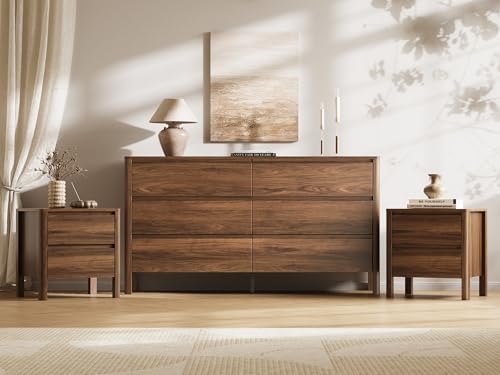
Two Nightstands and Dresser Set: The Complete Buying Guide
Everything you need to know before choosing a coordinated bedroom furniture set that fits your space, style, and storage needs.
A two nightstands and dresser set is one of the smartest ways to furnish a bedroom with a cohesive look. Instead of hunting for individual pieces that may not match in finish, scale, or hardware, a coordinated set gives you a balanced foundation for the entire room. This guide walks you through the practical details — from measuring your space to understanding material tiers — so you can choose a set with confidence.
Why Choose a Coordinated Two Nightstands and Dresser Set?
Bedroom furniture sets solve a problem that individual shopping often creates: visual inconsistency. When a dresser, nightstand, and bed frame come from different collections, subtle differences in wood tone, drawer proportions, and hardware can make a room feel assembled rather than designed. A matching set eliminates that friction and offers several practical benefits:
- Visual cohesion: Matching finishes and hardware create a calm, intentional look that photographs well and feels restful in person.
- Proportional harmony: Manufacturers design set pieces to relate to one another in height and depth, so nightstands sit comfortably beside the dresser rather than competing with it.
- Simplified shopping: One decision replaces three, reducing the risk of ordering pieces that arrive in mismatched stain lots.
- Consistent hardware and build quality: Drawer slides, handles, and joinery are typically shared across a set, so quality is uniform throughout the room.
That said, a set is not automatically the right answer for every bedroom. If your room is unusually shaped or you already own a statement bed frame, mixing pieces may serve you better. The rest of this guide helps you decide.
What Typically Comes in a Two Nightstands and Dresser Set?
Set configurations vary by manufacturer, but most bundles described as a two nightstands and dresser set include the following core pieces:
| Component | Typical Role | What to Check |
|---|---|---|
| Dresser | Primary clothing storage; often the visual anchor of the room | Drawer count, depth, and whether a mirror is included |
| Nightstand 1 | Bedside surface for lighting, books, and essentials | Height relative to mattress top; drawer or shelf configuration |
| Nightstand 2 | Symmetric partner on the opposite side of the bed | Identical dimensions and finish to nightstand 1 |
| Optional mirror | Adds function and vertical visual interest above the dresser | Attachment method and whether it is sold separately |
Some sets also bundle a bed frame or chest, but the three-piece configuration is the most common and the most versatile. If you are furnishing a guest room or a primary bedroom from scratch, a three-piece set covers the essentials without overcommitting to a full suite.
How to Measure Your Bedroom Before Buying a Set
Fit is the single most common reason furniture returns happen. Before you fall in love with a finish or a drawer configuration, confirm that the set will actually work in your room. Follow these steps:
1. Map the Dresser Wall
Measure the wall where the dresser will sit, then subtract at least 24 inches of clearance in front of it for drawer extension and foot traffic. A dresser that fits the wall but blocks the walking path is a daily annoyance. If your room is tight, consider a small bedroom dresser or a shallow dresser for small spaces that preserves floor space.
2. Check Nightstand Height Against the Mattress
A nightstand top should sit level with, or within a few inches of, the top of your mattress. Too low and you will reach awkwardly for a glass of water at night; too high and the piece looks out of scale. Measure from the floor to your mattress top, then compare that figure to the nightstand height in the product specifications.
3. Account for Bed Width and Symmetry
For a queen or king bed, you need roughly 18 to 24 inches of space on each side for a nightstand to feel comfortable. If your bed is against a wall on one side, a symmetric two-nightstand setup may not be realistic — in that case, a single nightstand plus a taller storage piece may work better. Our guide to twin narrow dressers for small spaces covers asymmetric layouts in more detail.
4. Verify Doorway and Stairwell Clearance
Measure your doorways, hallways, and stairwell turns. A wide dresser that cannot navigate the delivery path is a problem no amount of styling can fix. If your access is tight, look for sets with removable legs or consider a vertical dresser that trades width for height.
Materials and Build Quality: Understanding Furniture Tiers
Two sets can look identical in a product photo but differ enormously in how they age. Rather than focusing on labels, evaluate construction tier. The furniture market generally falls into three broad quality bands:
| Tier | Typical Construction | Best For |
|---|---|---|
| Entry-level | Engineered wood with veneer, basic drawer slides, cam-lock assembly | Guest rooms, first apartments, short-term placements |
| Mid-range | Solid wood frames with veneered panels, smooth ball-bearing slides, dowel-and-screw joinery | Primary bedrooms and long-term daily use |
| Premium | Solid hardwood throughout, dovetail drawer boxes, soft-close slides, hand-finished surfaces | Heirloom-quality rooms and buyers prioritizing longevity |
Within the mid-range tier, look for sets that specify solid wood on load-bearing parts — legs, drawer fronts, and bed rails — even if side panels are engineered. This hybrid approach is common and offers good value for its tier. If you want to go deeper, our solid wood dresser buying guide explains how to read construction details.
Drawer Slides and Hardware
Drawer slides are the most-touched component in any dresser, yet they are often overlooked. Ball-bearing slides with a full-extension travel make a noticeable difference in daily use, especially on deep drawers. If smooth operation matters to you, prioritize sets that specify the slide mechanism rather than leaving it unmentioned. For heavy loads, heavy-duty drawer slides are worth seeking out.
Finish Durability
Painted finishes hide wear differently than stained wood. A painted finish can be touched up more easily in solid colors, while stained wood shows scratches less but requires matching stain for repairs. Either is fine — the key is knowing which maintenance routine you are signing up for.
Matching the Set to Your Bedroom Style
A two nightstands and dresser set should feel like it belongs in the room, not dropped into it. Consider these style directions:
Modern and Minimalist
Clean lines, flat fronts, and integrated handles suit contemporary bedrooms. A white dresser with a wooden top bridges modern and warm styles and pairs well with neutral bedding.
Farmhouse and Rustic
Planked fronts, distressed edges, and warm wood tones define the farmhouse look. A solid wood farmhouse dresser anchors the set, and a matching rustic dresser and nightstand combination keeps the theme consistent.
Classic and Traditional
Curved fronts, bracket feet, and brass or antique-finish hardware signal traditional styling. Sets in this category often include a mirror; see our notes on solid oak dresser with mirror for what to look for in mirror attachment and frame construction.
Natural and Organic
Rattan, bamboo, and light woods bring texture without visual weight. A rattan dresser and nightstand set works especially well in airy, sunlit rooms. If you prefer solid hardwood, our overview of teak dressers covers a material that ages gracefully in humid climates.
Pre-Purchase Checklist for a Two Nightstands and Dresser Set
- Measure the dresser wall and confirm 24 inches of clearance in front
- Check nightstand height against your mattress top
- Verify doorway and stairwell clearance for delivery
- Confirm drawer slide type and extension travel
- Identify which parts are solid wood versus engineered
- Decide whether a mirror is included or sold separately
- Review the return policy and assembly requirements
- Check whether the set ships as one bundle or separate boxes
Assembly, Placement, and Long-Term Care
Most mid-range sets ship flat-packed with cam-lock and dowel assembly. Set aside a few hours and assemble on a soft surface to avoid scratching the finish. Once assembled, anchor tall dressers to the wall — this is especially important in homes with children or pets. Place the dresser away from direct sunlight to slow finish fading, and dust with a microfiber cloth rather than abrasive cleaners.
If you are furnishing a nursery, safety standards deserve extra attention. Sets intended for children's rooms should meet tip-over resistance requirements and avoid sharp hardware edges. Our guide to nursery dressers covers the specific safety features to look for.
Frequently Asked Questions
Is a two nightstands and dresser set worth it compared to buying separately?
For most buyers, yes. A set guarantees matching finish and proportional scale, which is difficult to replicate when buying individual pieces. The main exception is when you already own a statement bed frame or have an irregular room layout that calls for asymmetric furniture.
What size dresser fits a standard bedroom?
A dresser between 48 and 60 inches wide suits most standard bedrooms. Smaller rooms benefit from 36- to 48-inch widths, while primary bedrooms can accommodate 60- to 72-inch dressers. Always measure the wall and walking clearance before committing.
Should both nightstands be identical?
In a symmetric layout, yes — identical nightstands reinforce visual balance. If one side of the bed is against a wall or a window, a single nightstand plus a taller storage piece may be more practical. Our guide to dresser and nightstand sets explores both approaches.
How do I know if the set's drawers will hold up over time?
Look for ball-bearing or soft-close slides, dovetail or dowel-joined drawer boxes, and a specified weight capacity. Sets that name their slide mechanism are generally more transparent about build quality than those that leave it unmentioned.
Can I mix a set with furniture I already own?
Yes, with care. Keep the new set's finish and hardware consistent, and treat your existing pieces as accents rather than equals. A wood-tone set can coexist with a painted bed frame if the undertones do not clash.
Ready to compare coordinated bedroom sets? Browse curated options and check availability for matching dressers and nightstands.
Explore Recommended Sets