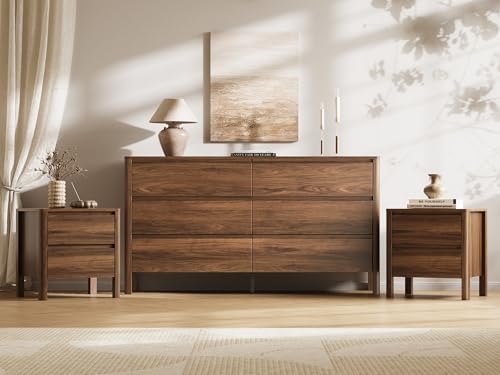
What Defines a Quality Dark Dresser and Nightstand Set
Shoppers researching this category usually already know they want a dark-toned bedroom set. The real decision is about construction quality, finish durability, and how well the two pieces work together functionally. A dark finish can be applied to many materials, and that material choice is what separates an entry-level set from a premium one.
Pay attention to three things above all: the drawer box construction, the finish system, and the scale relationship between the dresser and nightstand. A nightstand that is dramatically shorter or wider than its paired dresser can make a well-made set feel mismatched in the room.
Materials and Finishes to Compare
- Solid wood (oak, walnut, mahogany, maple): The most durable option. Dark stains on solid wood hold up to refinishing and typically use dovetail drawer joints. These sets sit in the premium and luxury tiers and are a strong long-term investment.
- Wood veneer over engineered core: Common in mid-range sets. Quality veneers look convincing and stay stable, but they cannot be sanded or refinished aggressively. Verify the veneer thickness and edge banding quality.
- Manufactured wood with laminate or painted finish: Typical of entry-level and essential-tier sets. These are lightweight and moisture-sensitive at seams, but modern laminate finishes are notably more scratch-resistant than earlier generations.
- Metal and mixed-material accents: Dark metal frames with wood tops appear in industrial and modern sets. Check the gauge of the steel and whether the finish is powder-coated rather than painted.
Dark finishes range from matte charcoal and espresso to satin walnut and high-gloss lacquer. Matte and satin finishes hide fingerprints and dust better; gloss finishes show every smudge but reflect light and can make a small room feel larger. If you are comparing tonal options, our guides to a dark brown dresser and nightstand and a dark gray dresser and nightstand set break down how each tone reads in a room.
Drawer Construction: The Detail That Decides Longevity
Drawers are the most-used moving parts on any dresser, and they are where quality differences are most visible. When evaluating a set, look for:
- Joinery: Dovetail joints at the drawer corners signal mid-range to premium construction. Stapled or nailed boxes are typical of entry-level sets and loosen over time.
- Glides: Metal ball-bearing slides with full extension are the benchmark in mid-range and high-end tiers. Wood-on-wood runners are traditional and can work well, but they require waxing and offer limited extension.
- Drawer stops and soft-close: These are increasingly standard above the entry-level tier and prevent drawers from slamming or pulling free.
- Interior finish: Sanded, sealed drawer interiors protect clothing from snags and moisture. Unfinished interiors are a common sign of a starter-tier piece.
Size and Proportion: Matching the Set to Your Room
A nightstand should generally sit within a few inches of the mattress top height, while the dresser should be proportionate to the wall it occupies. A wide dresser can anchor a large wall, but a compact or narrow footprint is usually the better choice in smaller rooms. Sets with legs or a floating base visually lighten a dark finish, which helps in tighter spaces.
Before ordering, measure the wall span, the clearance to the bed, and the width of your doorway and stairwell. Dark sets are often heavier than they look, and a wide dresser that cannot fit through the door is a problem no return policy resolves quickly. If your layout is tight, browse compact dresser options and corner dressers to find pieces that still pair with a standard nightstand.
Tier Comparison for Dark Dresser and Nightstand Sets
Because this category spans a wide range of construction quality, it helps to classify sets by tier rather than by any other metric. The table below summarizes what you can realistically expect at each level.
| Tier | Best For | Typical Construction | Finish Durability |
|---|---|---|---|
| Entry-level / starter tier | Guest rooms, first apartments, short-term needs | Engineered wood, stapled or nailed drawer boxes, basic metal glides | Laminate or painted finish; moderate scratch resistance |
| Mid-range / balanced tier | Primary bedrooms, long-term use | Veneer over engineered core or mixed solid construction, dovetail or reinforced boxes, ball-bearing glides | Satin lacquer or quality laminate; good resistance to wear |
| Premium / high-end tier | Design-led bedrooms, frequent daily use | Solid hardwood frames, full dovetail drawers, full-extension soft-close slides | Catalyzed lacquer or conversion varnish; excellent durability |
| Luxury / flagship tier | Statement bedrooms, heirloom intent | Kiln-dried solid hardwood throughout, hand-finished joinery, premium hardware | Multi-coat hand-rubbed or high-gloss finishes; refinishable |
A mid-range set is usually the sweet spot for a primary bedroom: it delivers noticeably smoother drawer action and a more convincing dark finish than entry-level pieces without moving into flagship territory. If you want a set that can be refinished years from now to refresh the look, prioritize solid wood frames regardless of tier.
Styling a Dark Dresser and Nightstand Set
Dark furniture is often described as heavy or formal, but that depends almost entirely on how it is styled. The goal is contrast and balance, not matching everything in the room to the set.
- Lighten the surrounding palette: Cream walls, white bedding, and a pale rug keep the dark pieces from dominating the room.
- Use hardware as an accent: Brass or gold pulls against a dark finish create a warm, high-contrast look. Our guide to a dark brown dresser with gold hardware shows how much this single choice changes the mood of a set.
- Layer lighting: Table lamps on the nightstand and a mirror above the dresser bounce light back into the room and reduce the visual weight of dark wood.
- Keep the dresser top edited: Two or three objects with varied heights and one textured element is enough. A cluttered dark surface reads as visually heavy.
- Add a mirror: A framed mirror above the dresser is the single highest-impact addition for a dark set — it expands the room and breaks up the mass of the furniture.
For more room-level inspiration, our closet organization ideas and clothes drawer dividers guides pair well with a new set by helping you plan what goes where before the furniture arrives.
Pre-Purchase Checklist for a Dark Dresser and Nightstand Set
- Confirm both pieces share the same finish name, sheen, and hardware color.
- Check drawer joinery — dovetail joints indicate mid-range or better construction.
- Verify drawer glides are metal and, ideally, full-extension with soft-close.
- Measure your wall space, bed clearance, doorway width, and stairwell.
- Confirm anti-tip hardware is included and plan to install it.
- Review the return policy and shipping damage terms before ordering.
- Ask whether the finish is refinishable if you plan to keep the set long term.
Frequently Asked Questions
What wood finishes work best for a dark dresser and nightstand set?
Espresso, walnut, charcoal-stained oak, and dark mahogany are the most durable and popular dark finishes. Solid wood with a catalyzed lacquer or conversion varnish topcoat resists scratches and moisture better than stained veneer, making it a strong long-term investment.
How do I match a dark dresser and nightstand set to my bedroom decor?
Anchor a dark set with lighter walls and bedding to keep the room from feeling heavy. Add brass or gold hardware accents, layered lighting, and a light-toned rug. Dark sets pair especially well with modern, industrial, and transitional interiors.
Are dark dresser and nightstand sets suitable for small bedrooms?
Yes, when scaled correctly. Choose a compact or narrow dresser with a matching slim nightstand, and favor sets with legs or open bases that let light pass underneath. A dark finish on a modest footprint reads as intentional rather than cramped.
What should I check before buying a dark dresser and nightstand set online?
Verify drawer construction (dovetail joints, metal glides, drawer stops), confirm the finish name and sheen, check tip-over safety hardware, and read the return policy. Request the exact dimensions of both pieces so you can measure your room and doorway clearances beforehand.