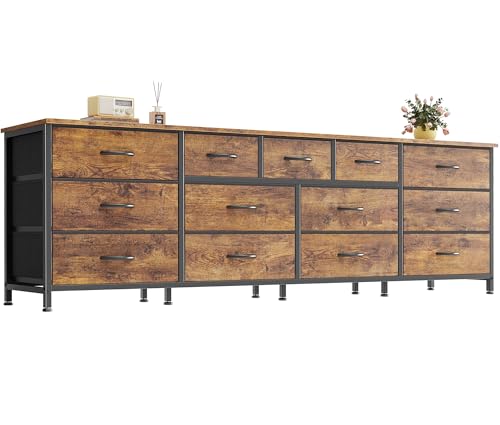
70 Inch Dresser: The Complete Guide to Wide Bedroom Storage
Everything you need to know about size, drawer layout, materials, and placement before choosing a 70 inch dresser for your home.
A 70 inch dresser is one of the widest standard storage pieces you can place in a bedroom. It sits in the space between large-scale furniture and truly oversized custom builds, which makes it a practical option for primary bedrooms, guest rooms, and even living areas that need concealed storage. If you are researching this size, you likely already know you want a wide surface and generous drawer capacity, and you now need to confirm that it will fit your room, hold what you own, and match the way you live.
This guide walks through the dimensions, drawer configurations, materials, and placement considerations for a 70 inch dresser. It also explains how a wide dresser differs from related pieces such as an XL dresser or a wide chest of drawers, so you can decide which format best serves your space. By the end, you should feel confident about the type, tier, and layout that fits your needs.
What Is a 70 Inch Dresser?
A 70 inch dresser measures roughly 70 inches across its widest point, which is the width from side to side. Depth usually falls between 18 and 20 inches, and height varies widely depending on the drawer stack. Because width is the defining feature, this piece is often described as a wide dresser or a long dresser. It provides a broad top surface and typically accommodates four to eight drawers arranged in a single wide row or a combination of wide and narrow stacks.
The term is sometimes used loosely in product listings, so it helps to distinguish it from nearby categories. A 70 inch dresser is generally wider than a standard double dresser, which usually sits around 55 to 60 inches. It is also wider than a 48 wide dresser, which suits smaller rooms and narrower walls. If your priority is height rather than width, a tall bedroom dresser may be a better match for your floor plan.
Who Should Choose a 70 Inch Dresser?
A wide dresser is a strong fit for several specific situations. Consider it if any of the following describe your needs:
- You have a long, empty wall. A wide dresser fills a broad wall without leaving awkward gaps, and it anchors the room visually.
- You need shared storage. Couples often prefer wide dressers because each partner can claim a side, which keeps organization intuitive.
- You want a multi-purpose surface. The broad top works as a landing spot for a lamp, mirror, decor, or a small television.
- You are furnishing a primary bedroom. Wide dressers scale well in larger bedrooms where a compact chest would look undersized.
- You want concealed storage in a living area. A wide dresser can double as a credenza-style piece in a multipurpose room.
On the other hand, a 70 inch dresser may be too wide for a small bedroom, a narrow hallway, or a wall broken up by doors and windows. In those cases, a narrower option such as a 45 inch wide dresser or a tall, space-saving design may serve you better.
Dimensions and Room Fit
Width alone does not tell the whole story. Before you commit, measure the full footprint and account for clearance. The table below summarizes typical ranges for a 70 inch dresser.
| Dimension | Typical Range | Why It Matters |
|---|---|---|
| Width | About 68–72 inches | Defines wall space needed and visual weight in the room |
| Depth | About 18–20 inches | Affects walkway clearance and door swing |
| Height | About 30–40 inches | Influences top-surface usability and mirror placement |
| Drawer interior depth | About 14–17 inches | Determines how much clothing folds flat |
Plan for at least 30 inches of open floor space in front of the dresser so drawers can extend fully without blocking traffic. Also confirm that the wall can accommodate the piece without covering outlets, vents, or light switches. If you plan to place a mirror above it, leave room for the mirror frame and mounting height.
Drawer Layouts and Capacity
A 70 inch dresser usually offers more drawer volume than a standard double dresser, but the layout matters as much as the count. Common configurations include:
Single wide rows
Some designs use two or three very wide drawers across the full width. These suit bulky items such as sweaters, bedding, or jeans. Wide drawers can be heavy when fully loaded, so look for sturdy glides or metal slides.
Mixed stacks
Other designs combine a wide top drawer with narrower stacks below. This is a flexible layout for folded clothing, accessories, and smaller items. A solid wood 6 drawer dresser often follows this pattern and provides a balanced mix of storage types.
Drawer count considerations
More drawers do not automatically mean better organization. A dresser with four large drawers can hold more than one with eight shallow drawers, depending on what you store. Think about your wardrobe: if you fold most items, deeper drawers are useful. If you organize accessories and small garments, shallow drawers with dividers work better.
For specialized storage needs, a tall dresser with a jewelry drawer demonstrates how a single dedicated compartment can improve daily use. The same principle applies to wide dressers: a felt-lined top drawer or a divided accessory drawer adds practical value.
Materials and Construction Tiers
Construction quality separates a dresser that lasts a decade from one that loosens within a few years. Materials fall into recognizable tiers, and understanding them helps you judge a piece on its merits rather than on marketing language.
Entry-level tier
Entry-level dressers typically use engineered wood with a veneer or laminate finish. They can be perfectly serviceable for guest rooms or temporary setups, but they are less resistant to moisture and heavy loads. Look for reinforced corners and solid back panels if you choose this tier.
Mid-range tier
Mid-range dressers often combine solid wood frames with engineered panels or use solid wood in key stress areas. Drawer boxes are usually stapled or screwed, and glides are smoother than in the starter tier. This tier tends to offer good value for its class and suits most primary bedrooms.
High-end and premium tiers
Premium dressers use solid hardwood throughout, dovetail drawer joints, and metal glides or soft-close mechanisms. These pieces are a long-term investment and often come with better finishing on interior surfaces. If you want a dresser that can be refinished or passed down, this tier is worth considering.
Wood species also matter. A solid walnut dresser offers a rich, dark grain and excellent durability, while a light oak dresser provides a brighter, more casual look. Both are strong choices for a wide dresser where the surface is highly visible.
| Tier | Typical Construction | Best For |
|---|---|---|
| Entry-level | Engineered wood, veneer or laminate | Guest rooms, starter apartments, light use |
| Mid-range | Solid frame with engineered panels, improved glides | Primary bedrooms, everyday family use |
| Premium | Solid hardwood, dovetail joints, soft-close glides | Long-term use, heirloom pieces, frequent daily use |
Styles That Suit a Wide Dresser
Because a 70 inch dresser dominates a wall, its style has a large influence on the room's overall look. A few directions work especially well:
- Mid-century modern. Clean lines, tapered legs, and warm wood tones suit a wide profile. A walnut mid-century dresser is a classic example.
- Modern minimalist. Flat fronts, integrated handles, and neutral finishes keep a large piece from feeling heavy. A fluted wood dresser adds subtle texture without visual clutter.
- Farmhouse and rustic. Painted finishes and simple hardware pair well with wide dressers in casual bedrooms. A white chest dresser can brighten a room while keeping the layout clean.
- Shaker-inspired. Recessed panels and straightforward proportions make a wide dresser feel traditional without being ornate. Shaker dressers are a reliable reference point.
Finish choice matters too. A gray dresser for the bedroom reads as calm and versatile, while a black velvet dresser makes a stronger statement. If you prefer a lighter palette, a white high gloss dresser reflects light and helps a wide piece feel less imposing.
Placement and Safety Tips
Wide dressers are stable when properly built, but their width makes anti-tip precautions especially important. Follow these guidelines:
- Anchor to the wall. Use the anti-tip strap or bracket supplied with the dresser. If none is included, install a wall anchor rated for the dresser's weight.
- Distribute weight evenly. Avoid loading the top drawers with heavy items while leaving lower drawers empty. Heavy items belong in lower drawers.
- Keep the top surface light. A mirror, lamp, and a few decor pieces are fine. Avoid stacking heavy objects that could fall.
- Check floor level. Wide pieces are more sensitive to uneven floors. Use adjustable feet or shims to prevent wobble.
- Mind the doors and walkways. Confirm that open drawers do not block a doorway or pinch a walkway.
If you have children or pets, prioritize models with sturdy drawer stops and secure anchoring. The same safety principles apply to any large storage piece, including a sturdy dresser designed for high-traffic rooms.
How It Compares to Other Sizes
Understanding where a 70 inch dresser sits in the wider market helps you choose with confidence. The comparison below uses relative tiers and categories rather than specific figures.
| Category | Approximate Width | Best For |
|---|---|---|
| Narrow dresser | Around 30–40 inches | Small bedrooms, hallways, tight walls |
| Standard double dresser | Around 50–60 inches | Most primary bedrooms |
| 70 inch dresser | About 68–72 inches | Large bedrooms, shared storage, long walls |
| XL or extra-wide dresser | Often above 72 inches | Very large rooms, custom layouts |
A 70 inch dresser offers a noticeable increase in surface area and drawer volume over a standard double dresser without crossing into custom or oversized territory. It pairs naturally with a bedroom dresser and side table set when you want a coordinated room, and it can replace a storage dresser for living room use in open-plan homes.
What to Check Before Buying
When you are comparing options, use a consistent checklist. These are the factors that most often separate a satisfying purchase from a regretful one:
- Measured fit. Confirm width, depth, and height against your wall and walkway. Account for baseboards and trim.
- Drawer action. Look for smooth glides, drawer stops, and a solid feel. Dovetail joints are a strong sign of quality.
- Material consistency. Check that the frame, drawer fronts, and drawer boxes use materials appropriate to the tier.
- Assembly requirements. Some wide dressers ship fully assembled, while others require significant setup. A pre-assembled dresser saves time but may limit delivery options.
- Safety hardware. Confirm that an anti-tip kit is included or available.
- Finish durability. Matte and satin finishes hide wear better than high gloss in busy rooms.
Frequently Asked Questions
Is a 70 inch dresser the same as a double dresser?
Not exactly. A double dresser typically measures around 50 to 60 inches wide, while a 70 inch dresser is wider. Both use a side-by-side drawer layout, but the 70 inch version offers more surface area and drawer volume.
How much floor space does a 70 inch dresser need?
Plan for the dresser footprint plus at least 30 inches of clearance in front so drawers can open fully. Also leave a few inches on each side for easy cleaning and to avoid a cramped look.
Can a 70 inch dresser be used outside the bedroom?
Yes. Wide dressers work well as credenza-style storage in living rooms, home offices, and dining areas. Choose a finish and style that matches the room rather than the bedroom.
What is the best drawer layout for a wide dresser?
It depends on what you store. Mixed stacks with a wide top drawer and narrower lower drawers offer flexibility. If you fold bulky items, prioritize deeper drawers. If you organize accessories, look for divided or felt-lined drawers.
How do I keep a wide dresser stable?
Anchor it to the wall using the included anti-tip kit or a suitable wall anchor. Distribute weight evenly, keep heavy items in lower drawers, and adjust the feet to eliminate wobble on uneven floors.