White Chest Dresser: A Complete Guide to Choosing the Right One
A white chest dresser brings light, order, and a calm visual rhythm to a bedroom. This guide walks you through drawer counts, finishes, materials, and styling so you can decide with confidence before you buy.
Jump to Buying ChecklistWhat Exactly Is a White Chest Dresser?
A white chest dresser is a tall, vertically oriented storage piece with stacked drawers, finished in white paint, lacquer, or a whitewashed wood tone. In practice, the terms “white chest dresser” and “white chest of drawers” describe the same furniture form. The distinction is mostly linguistic: some retailers use “chest” for taller, narrower silhouettes and “dresser” for wider, lower pieces, while others use the words interchangeably.
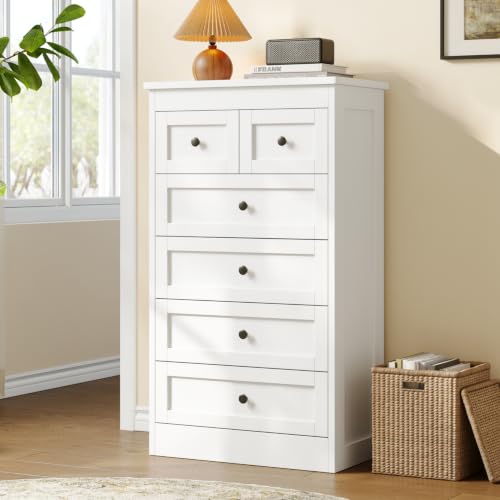
What matters for your purchase is the footprint and drawer layout. A typical white chest dresser stands roughly 40 to 60 inches tall and 30 to 40 inches wide, with four to six drawers. Taller models — often called tallboys or highboys — can reach 60 inches or more and may include eight to ten drawers. If you are comparing form factors, our tall chest of drawers guide breaks down vertical storage options in more detail.
Because the piece is tall and narrow, it fits well into small bedrooms, beside a bed, or along a short wall where a wide dresser would not work. The white finish adds a second layer of flexibility: it reads as neutral, pairs easily with wood tones and textiles, and keeps a compact room from feeling crowded.
Why Choose a White Chest Dresser?
White furniture is not just a stylistic preference — it has practical advantages in a bedroom:
- Visual lightness: White reflects ambient light, which helps a tall piece feel less dominant in a small room.
- Palette flexibility: White works with warm wood floors, cool gray walls, pastel nurseries, and bold accent colors alike.
- Easy restyling: Changing bedding, artwork, or hardware is enough to refresh the look without replacing the furniture.
- Clean readability: Drawer fronts and hardware stand out clearly against white, making organization and labeling easier.
- Broad availability: White is one of the most common finishes, so you can compare styles across white dressers for sale without narrowing your options too early.
If you are specifically looking for a taller silhouette, our guide to tall white dressers for the bedroom covers proportions and placement in more depth.
White Chest Dresser Styles to Consider
The finish may be white, but the style language varies widely. Here are the main directions you will encounter:
Modern and Minimalist
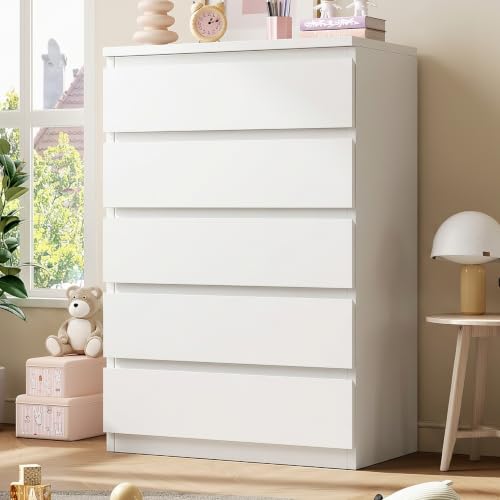
Clean lines, handleless drawers, and flat fronts. These designs suit contemporary bedrooms and small spaces because they reduce visual noise. A white high-gloss dresser pushes the modern look further with a reflective surface.
Farmhouse and Cottage
Beadboard details, turned legs, and soft white or off-white finishes. These pieces feel warm and approachable, and they pair naturally with natural wood beds and woven textiles. If you like this direction, our white French provincial dresser guide explores ornate silhouettes.
Mid-Century and Retro
Tapered legs, angled drawer pulls, and a lower, wider profile. White mid-century pieces often use walnut or oak accents, which keeps the white from feeling sterile. For related silhouettes, see our walnut mid-century dresser overview.
Textured and Natural
Rattan, cane, or fluted fronts add tactile interest to a white frame. These designs work well in boho and coastal bedrooms. Our white dresser with rattan drawers article covers this style in detail.
Legged vs. Plinth Base
A white chest of drawers with legs feels airier and is easier to clean underneath; a plinth base looks more grounded and traditional. If you prefer the legged look, our white chest of drawers with legs page focuses on that form.
Quality Tiers: How White Chest Dressers Compare
Instead of focusing on numbers, it helps to think in quality tiers. The tier reflects construction, hardware, finish durability, and overall longevity. Use this framework when you compare models:
Entry-Level Tier
Engineered wood panels, basic drawer glides, and a painted or laminated white finish. Suitable for guest rooms, temporary setups, or light daily use. Expect a straightforward, functional piece.
Mid-Range Tier
Thicker panels, smoother metal glides, and a more durable white coating. Often includes anti-tip hardware and better drawer alignment. A balanced tier for most bedrooms.
Premium Tier
Solid wood or high-grade engineered cores, soft-close or undermount glides, and a refined painted or lacquered finish. Designed for long-term daily use and easier refinishing later.
Luxury Tier
Dovetail joinery, premium hardware, hand-finished surfaces, and heavier solid-wood construction. A long-term investment piece with the smoothest operation and the most refined detailing.
These tiers are relative, not absolute. A well-specified mid-range white chest dresser can outperform a poorly built premium piece, so check drawer action, joinery, and finish consistency rather than relying on the label alone. Our complete dresser buying guide expands on these checks.
Drawer Count and Layout: Matching Storage to Your Needs
Drawer count is one of the most practical decisions you will make. The right number depends on who uses the piece and what you plan to store:
| Drawer Count | Best For | Typical Layout |
|---|---|---|
| 3 drawers | Guest rooms, nurseries, compact bedrooms | One shallow top drawer, two deeper lower drawers |
| 4–5 drawers | Single adults, couples with modest wardrobes | Stacked drawers with one or two divided top drawers |
| 6 drawers | Shared bedrooms, year-round clothing storage | Two columns of three, or a single tall stack |
| 8–10 drawers | Households needing maximum vertical storage | Double-column tallboy or highboy configuration |
Pay attention to drawer depth as well as count. Deep lower drawers suit folded clothing and linens, while shallow top drawers work better for accessories and smaller items. If you need a narrow footprint, our tall skinny dressers for the bedroom guide shows how vertical layouts solve tight spaces. For a more generous storage footprint, compare options in our 8-drawer tall dresser overview.
Materials and White Finishes
Not all white finishes are the same. The material underneath and the coating on top both affect durability, appearance, and how the piece ages:
- Solid wood with painted finish: Durable and refinishable. Pine and poplar are common; maple and oak offer a denser core. Paint can chip over time, but touch-ups are straightforward.
- Engineered wood with laminate or melamine: Stable and uniform, resistant to everyday wear. Edges and seams are the main areas to inspect for quality.
- Lacquered or high-gloss white: Reflective and easy to wipe clean, but more prone to visible scratches. Best for low-traffic or adult bedrooms.
- Whitewashed or distressed white: A softer, textured look that hides minor marks well. Common in farmhouse and coastal styles.
- Two-tone with white frame and wood top: Adds warmth and visual contrast. A practical choice if you want white without an all-white look.
If you are weighing solid wood against engineered options, our solid wood 6-drawer dresser guide explains the trade-offs in more detail.
Hardware and Small Details That Matter
Hardware is where a white chest dresser gains personality — and where quality differences show. Consider these elements:
- Knobs vs. pulls: Knobs suit traditional and cottage styles; bar pulls and recessed handles lean modern. For a refresh, our bureau drawer knobs guide covers replacement options.
- Metal finish: Gold and brass warm up white; black and matte nickel create contrast. See our white dresser with silver hardware overview for pairing ideas.
- Drawer glides: Basic side-mounted glides are common at entry level; undermount and soft-close glides appear at mid-range and above. Test the action if you can.
- Anti-tip hardware: Essential for tall pieces, especially in nurseries and homes with children. Confirm it is included or available.
- Drawer liners: A small addition that protects the white interior and makes cleaning easier — see our bureau drawer liners guide.
Sizing and Placement: Getting the Fit Right
Before you commit, measure the intended wall and the walking path around the piece. A white chest dresser should leave at least 24 to 30 inches of clearance in front of the drawers so they can open fully. Height matters too: the top drawer should sit at a comfortable reach, and the top surface should be usable without stretching.
Common placements include:
- Beside the bed as a taller alternative to a nightstand, especially in rooms where floor space is limited.
- Along a short wall where a wide dresser would block a door or window.
- Inside a closet as a dedicated clothing storage column — see our dressers for closet guidance.
- In a nursery as a combined storage and changing station; our nursery dresser with changing top overview covers safety considerations.
If you are working with a very small room, our small dressers collection and under-bed storage guide can help you balance storage across the room.
Styling a White Chest Dresser
A white chest dresser is a neutral anchor, which makes styling forgiving. A few approaches that work well:
- Layer warm textures: Wood tones, linen, jute, and woven baskets soften the crispness of white.
- Add a mirror or artwork above: A vertical piece benefits from something above it to complete the wall composition. Our dresser mirror ideas guide has layout suggestions.
- Keep the top edited: A lamp, a small tray, and one or two objects are usually enough. Too many items make a narrow top feel cluttered.
- Use hardware as an accent: Swapping knobs or pulls is a low-effort way to shift the style from modern to traditional or vice versa.
- Consider lighting: A small table lamp or a wall sconce above the piece adds function and warmth — see our dresser lighting ideas.
White Chest Dresser Buying Checklist
Use this checklist to evaluate any white chest dresser you are considering:
- Measure the space: Confirm width, depth, and height, plus clearance for drawer opening and walking.
- Match drawer count to use: Three to five drawers for light use; six or more for full wardrobes and shared rooms.
- Check the material and finish: Solid wood or high-grade engineered wood with a durable white coating; inspect edges and seams.
- Test the drawer action: Smooth glides, consistent alignment, and a firm stop at full extension.
- Confirm safety features: Anti-tip hardware included or available, especially for tall models and nurseries.
- Review hardware quality: Sturdy knobs or pulls that are comfortable to grip and firmly attached.
- Consider long-term care: Painted solid wood can be touched up or refinished; laminate surfaces are easy to wipe but harder to repair.
- Check delivery and assembly: Some models ship pre-assembled; others require full assembly. See our pre-assembled dressers guide if you want to skip the build.
For a broader comparison framework, our dresser reviews section and best entry-level dressers roundup can help you shortlist models within a tier.
Ready to Compare White Chest Dresser Options?
Browse recommended models below, or revisit our white chest of drawers overview for related styles and configurations.
View Recommended ModelsFrequently Asked Questions
What is the difference between a white chest dresser and a white chest of drawers?
In everyday use, the terms are interchangeable. A white chest dresser typically refers to a taller, narrower piece with stacked drawers, while a white chest of drawers can describe the same form. Both serve as vertical bedroom storage, and the naming usually depends on regional habits and retailer terminology rather than structural differences.
How many drawers should a white chest dresser have?
Most white chest dressers have between four and six drawers, which suits a single adult or a couple. Taller models with eight to ten drawers work well for shared rooms or households that need extra clothing storage. Smaller three-drawer versions are a good fit for guest rooms, nurseries, or compact spaces.
Is a white chest dresser suitable for a nursery?
Yes, white chest dressers are a popular nursery choice because the light finish blends easily with soft palettes. Look for models with anti-tip hardware, rounded edges, and drawers that open smoothly. Some nursery-specific designs include a changing top, which adds practical function in the early years.
What materials are best for a white chest dresser?
Solid wood and high-grade engineered wood with a durable painted or lacquered finish are the most reliable options. Solid wood offers long-term durability and can be refinished later, while engineered wood with a quality white coating provides a stable, uniform surface that resists warping in most bedroom conditions.
How do I style a white chest dresser in a bedroom?
A white chest dresser works as a neutral anchor. Pair it with warm wood tones, textured textiles, and a mirror or artwork above. Keep the top surface edited with a lamp, a small tray, and one or two decorative objects. In smaller rooms, a white finish helps the piece recede visually and makes the space feel lighter.