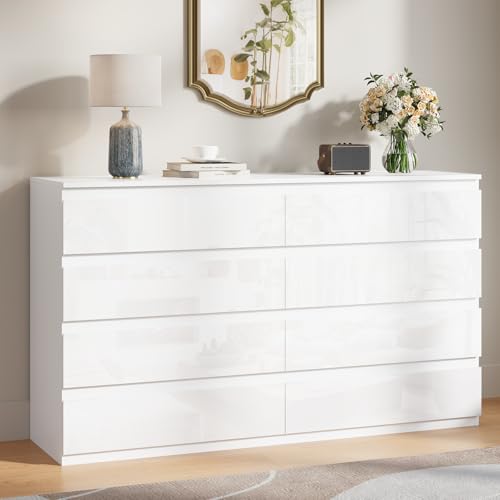
What Exactly Makes a Dresser "High Gloss"?
The term "high gloss" refers to a finish with a very high reflective value — typically measured on a gloss scale where high gloss sits near the top. When you look at a white high gloss dresser, you should see clear reflections of windows, lamps, and objects in the room. That mirror-like surface is achieved through multiple layers of lacquer, polyurethane, or specially formulated acrylic coatings, each sanded and polished between applications.
This is different from a satin or matte white dresser, which absorbs light and shows a softer, more muted appearance. High gloss finishes are popular in contemporary and Scandinavian-inspired bedrooms because they create visual depth and a sense of cleanliness. If you are exploring broader storage options for your space, our dresser buying guide covers foundational decisions that apply to every style.
One important distinction: "high gloss" is not the same as "lacquered." A lacquered dresser can have any sheen level. What matters is the final topcoat and how it is polished. Always confirm the finish type in the product specifications rather than relying on the marketing name alone.
Understanding the Gloss Finish: Lacquer, Polyurethane, and Acrylic
Not all glossy finishes are created equal. The three most common coating systems you will encounter are:
- Lacquer-based finishes: Traditional and prized for their depth and clarity. High-quality lacquer produces a rich, glass-like sheen. It requires careful application and can be sensitive to harsh chemicals, but a well-made lacquer finish is among the most beautiful available.
- Polyurethane coatings: Highly durable and resistant to moisture and everyday wear. Polyurethane can be formulated to a high gloss level and is a common choice for mid-range and premium dressers. It tends to be more forgiving than lacquer in humid climates.
- Acrylic and UV-cured finishes: Increasingly common in modern furniture. UV-cured coatings are cured instantly under ultraviolet light, producing a hard, consistent, and highly scratch-resistant surface. These finishes are often found on top-tier and designer pieces.
When comparing options, ask about the number of coating layers and whether the finish is hand-polished. A quality high gloss surface typically involves at least three to five coats, with sanding between each layer. Fewer coats may look glossy initially but are more prone to dulling and peeling over time.
Buying tip: A high gloss white dresser shows smudges and dust more readily than matte finishes. If the dresser will sit in a high-traffic area or a child's room, consider whether you are comfortable with regular wiping — or look for finishes marketed as anti-fingerprint or easy-clean.
Materials and Construction: What Lies Beneath the Gloss
The glossy topcoat is only as good as the substrate beneath it. Most white high gloss dressers fall into one of three construction categories:
- Solid wood core: The most durable option. Solid wood resists warping and holds screws and glides securely. A solid wood dresser with a high gloss finish represents a long-term investment, though it is typically found in premium and luxury tiers.
- Engineered wood (MDF or particleboard): Common in mid-range furniture. MDF is denser and smoother than particleboard, making it an excellent substrate for high gloss coatings because it does not telegraph grain. Quality engineered wood with reinforced joinery can perform well for many years.
- Plywood core: A strong middle ground. Plywood is lighter than MDF and more resistant to moisture, making it a solid choice for bedroom furniture in humid environments.
Examine the drawer boxes as carefully as the exterior. Dovetail joinery signals higher craftsmanship than stapled or glued joints. Drawer bottoms should be at least 5mm thick and set into grooves rather than stapled to the sides. These details determine how the dresser feels and functions after years of daily use.
If you are also considering a matching bedside piece, a white bedside table with drawer can complete a cohesive glossy bedroom set. And for rooms where you need a taller storage profile, a tall white dresser for bedroom offers vertical storage without expanding the footprint.
Drawer Configuration and Glide Mechanisms
The drawer layout you choose should reflect what you actually store. A white high gloss dresser with a mix of drawer depths is often the most practical choice:
- Shallow drawers (10–15 cm): Ideal for folded shirts, accessories, and delicates.
- Medium drawers (15–20 cm): The workhorse size for most clothing.
- Deep drawers (20 cm+): Best for bulky items like sweaters, linens, or jeans.
Drawer glides matter just as much as drawer size. Three common types are:
- Wood-on-wood glides: Traditional and quiet, but they can stick over time and offer no soft-close feature. Usually found on entry-level pieces.
- Ball-bearing metal glides: Smooth and durable, with a satisfying full-extension travel. Mid-range and premium dressers frequently use these.
- Soft-close undermount glides: The gold standard. Drawers glide shut silently and cannot slam. Typically found on top-tier and luxury dressers.
If the dresser will hold heavy items, check the weight rating of the glides. A well-specified drawer should support at least 25–35 kg without sagging. For a comprehensive look at drawer counts and room-by-room sizing, see our complete dresser buying guide.
Sizing a White High Gloss Dresser for Your Bedroom
Glossy white finishes can make a piece feel visually lighter, but the physical dimensions still matter. Measure your available wall space, account for door swing and walkway clearance, and leave at least 60 cm of clear floor space in front of the dresser for comfortable use.
Common width categories include:
- Compact (under 100 cm): Suits small bedrooms and apartments.
- Standard (100–150 cm): The most versatile size for typical primary bedrooms.
- Wide (150 cm+): Provides generous storage and visual presence in larger rooms.
Height is equally important. A dresser top used for display or as a changing surface should sit around 80–90 cm from the floor. Taller chest-style pieces, often 120 cm and above, maximize storage but can make small rooms feel enclosed. If you need a tall, narrow footprint, a tall skinny dresser for bedroom is a smart alternative to a wide unit.
Styling a Glossy White Dresser
The reflective surface of a high gloss dresser is a natural focal point. Keep the top uncluttered: a single sculptural lamp, a small tray for everyday items, and one piece of art or a mirror above the dresser can be enough. Because the finish is already visually active, avoid piling on busy patterns or excessive accessories.
Hardware choice also shapes the look. Sleek silver or chrome pulls reinforce a modern aesthetic, while matte black handles create dramatic contrast. If your dresser has exposed hardware, consider whether the finish will stay in style — or choose a model with a clean, handle-free push-to-open design for the most minimalist appearance.
Pair the dresser with warm textures — a woven basket, a linen runner, or a soft rug — to balance the cool, polished surface. This contrast is what makes glossy furniture feel inviting rather than clinical.
Care and Maintenance for High Gloss Finishes
Maintaining the shine of a white high gloss dresser requires a gentle approach:
- Dust weekly with a microfiber cloth. Avoid paper towels, which can leave micro-scratches.
- Clean with a damp microfiber cloth and a mild dish soap solution. Dry immediately with a soft cloth.
- Avoid abrasive cleaners, ammonia-based products, and scouring pads.
- Do not place hot objects directly on the surface; use coasters or felt pads.
- Keep the dresser out of direct, prolonged sunlight to prevent yellowing or finish degradation.
For scratches, consult the manufacturer before attempting repairs — high gloss finishes are difficult to touch up invisibly. Prevention is far easier than restoration.
Quality Tiers Explained: Finding the Right Level for You
To help you compare white high gloss dressers without relying on numeric pricing, here is a tier-based framework used consistently throughout this guide:
| Tier | Typical Construction | Finish Quality | Drawer Hardware | Best For |
|---|---|---|---|---|
| Entry-Level | Particleboard with laminate or thin coating | Glossy appearance with fewer coats; may dull over time | Basic metal or wood-on-wood glides | Guest rooms, temporary setups, light use |
| Mid-Range | MDF or plywood with reinforced joinery | Multi-layer polyurethane or lacquer; good clarity | Ball-bearing glides, partial or full extension | Primary bedrooms, daily use |
| Premium | Solid wood core or high-density engineered wood | Hand-polished lacquer or UV-cured acrylic | Soft-close undermount glides | Long-term use, design-focused interiors |
| Luxury | Solid hardwood, dovetail drawers, premium joinery | Multi-coat hand-finished lacquer with exceptional depth | Soft-close undermount with heavy-duty rating | High-end bedrooms, investment furniture |
As you move up the tiers, the differences show up in the details: smoother drawer travel, tighter joinery, a finish that resists fingerprints and scratches, and a surface that reflects light with greater clarity. A mid-range dresser is usually the sweet spot for most households — it offers durable construction and a convincing gloss without the lead time and craft premium of luxury pieces.
Practical advice: If the dresser will be used daily by multiple people, prioritize the drawer hardware and finish durability over decorative extras. A solid build with soft-close glides will outlast a fancier-looking piece with fragile mechanisms.