White Dressers for Sale: A Complete Buying Guide
White dressers bring brightness, versatility, and timeless appeal to any bedroom. Whether you are furnishing a serene primary suite, a compact guest room, or a nursery, a white dresser can anchor the space while offering generous storage. This guide walks you through styles, sizes, finishes, and construction details so you can choose with confidence.
In-depth research guide for thoughtful buyersWhy choose a white dresser? White is the most adaptable finish in bedroom furniture. It pairs effortlessly with natural wood tones, bold accent walls, and virtually any bedding palette. Beyond aesthetics, white finishes reflect light and make rooms feel larger and airier, which is especially valuable in smaller bedrooms or spaces with limited natural light.
If you are still mapping out your bedroom storage strategy, our complete dresser buying guide provides a broader framework covering drawer counts, room layouts, and ergonomics. This page focuses specifically on white dressers for sale, so you can evaluate the options available today with a clear, practical checklist.
Popular White Dresser Styles
White dressers come in a wide range of design languages. The right style depends on your existing decor, the architectural character of your home, and the mood you want to create. Below are the most common styles you will encounter when shopping for white dressers for sale.
Modern & Minimalist
Clean lines, handle-free fronts, and a smooth matte or high-gloss finish. Modern white dressers emphasize negative space and often feature integrated drawer pulls or subtle recessed grooves. Ideal for contemporary bedrooms and compact layouts.
Farmhouse & Coastal
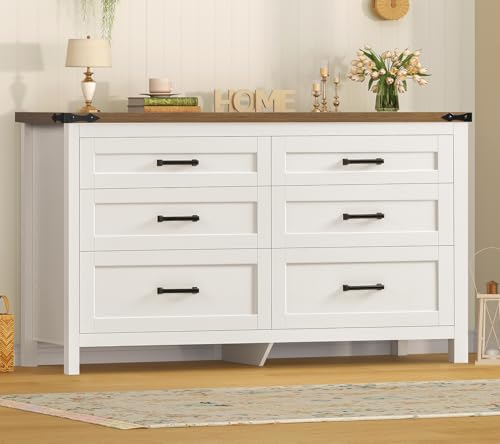
Beadboard detailing, weathered edges, and sometimes a two-tone treatment with a natural wood top. Farmhouse white dressers add warmth and texture, making them a natural fit for relaxed, light-filled interiors. Explore related styles in our farmhouse dressers collection.
French Provincial
Curved silhouettes, cabriole legs, and ornate hardware. A white French provincial dresser brings a touch of classic elegance and works beautifully in traditional or transitional bedrooms.
Mid-Century Modern
Tapered legs, angled drawer fronts, and understated hardware. White mid-century dressers offer a retro-meets-modern aesthetic that pairs well with both vintage and contemporary decor. See our mid-century dressers guide for more inspiration.
Transitional & Shaker
Simple, balanced proportions with framed drawer fronts and classic round knobs. Shaker-inspired white dressers are enduringly popular because they blend into almost any interior. Browse Shaker dressers for a deeper look.
Glam & High-Gloss
Reflective surfaces, metallic accents, and mirrored details. A white high-gloss dresser makes a statement in a primary bedroom and pairs well with luxe textiles and statement lighting.
Choosing the Right Size White Dresser
Size is the most practical decision you will make. A dresser that is too large will crowd the room and block circulation; one that is too small will leave you short on storage. Start by measuring the available wall space, then account for door swings, walking clearance (ideally 30 inches or more), and the height of adjacent furniture.
| Size Category | Typical Width | Best For | Tier Positioning |
|---|---|---|---|
| Compact / Narrow | 30–45 inches | Small bedrooms, guest rooms, apartments, and tight wall segments between doors or windows. | Entry-Level to Mid-Range |
| Standard | 48–60 inches | Most primary and secondary bedrooms; a balanced footprint with generous drawer capacity. | Mid-Range |
| Wide | 60–70 inches | Larger bedrooms, shared closets, and spaces where the dresser doubles as a styling surface. | Mid-Range to Premium |
| Extra-Wide / XL | 72 inches and above | Spacious primary suites, dressing rooms, and rooms where storage is the top priority. | Premium to Luxury |
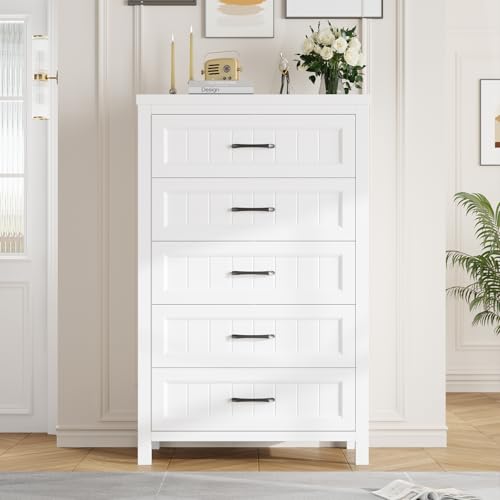
If floor space is limited but you still need substantial storage, consider a taller silhouette. A tall white dresser for the bedroom uses vertical space efficiently, while a white chest of drawers with legs adds a lighter visual footprint and makes the floor easier to clean underneath. For very tight layouts, our guide to small dressers covers narrower options in detail.
White Finishes: Matte, Satin, and High-Gloss
Not all whites are the same. The sheen of the finish affects how the dresser looks in different lighting, how easy it is to maintain, and how formal the piece feels in the room.
- Matte finish: Soft, understated, and forgiving of minor scuffs. Matte white dressers suit modern, farmhouse, and Scandinavian interiors. They show fewer fingerprints than glossy surfaces but can be slightly harder to wipe clean if a spill sets.
- Satin finish: A subtle sheen that sits between matte and gloss. Satin white dressers offer a good balance of durability and visual warmth, and they tend to be the most versatile choice across decor styles.
- High-gloss finish: Reflective and dramatic. A white high-gloss dresser makes a strong design statement but requires more frequent dusting and polishing to keep the surface looking pristine.
- Distressed or rubbed finish: Often found on farmhouse and cottage-style pieces, where edges are intentionally worn to reveal a warmer undercoat. These finishes hide wear gracefully over time.
White also pairs beautifully with accent hardware. Brushed nickel, matte black, and warm brass all read differently against a white background. If you are considering a hardware refresh, our notes on white dressers with silver hardware and bureau drawer knobs can help you visualize the contrast.
Construction and Quality: What to Look For
A white dresser is an investment in your bedroom's function and appearance. The finish may draw you in, but the construction determines how well the piece holds up over years of daily use. Use this checklist when evaluating white dressers for sale.
- Drawer joints: Dovetail joints signal a well-built drawer box. Stapled or nailed joints are common at the entry-level but are less durable under heavy loads.
- Drawer glides: Metal ball-bearing glides with a smooth, full-extension action are a hallmark of mid-range and premium construction. Look for glides that are rated for the load you intend to store.
- Frame material: Solid wood frames (pine, oak, maple, or walnut) offer the most stability. Engineered wood with a quality painted finish is a common mid-range option and can perform well when properly sealed.
- Finish quality: A well-applied white finish should be even, with no visible drips, thin patches, or rough edges. Check the interior of drawers and the back panel as well; consistent finishing throughout is a sign of care.
- Stability and safety: A sturdy dresser should sit flat without wobbling. Anti-tip hardware is essential, especially in households with children. Our guide to sturdy dressers covers stability and anchoring in more detail.
For a deeper comparison of material options, see our materials and finishes section, which explains how paint, lacquer, and veneer behave over time.
Comparing White Dressers by Tier
To help you orient yourself in the market, we use a tier-based framework rather than focusing on numbers. The tiers below describe relative positioning and construction expectations, not absolute figures.
| Tier | Typical Construction | Best For | What to Expect |
|---|---|---|---|
| Entry-Level | Engineered wood, stapled drawer joints, basic metal glides | Guest rooms, starter apartments, and temporary setups | Functional storage with a clean white finish; lighter overall weight and simpler hardware. |
| Mid-Range | Solid wood or reinforced engineered wood, dovetail or glued joints, ball-bearing glides | Primary bedrooms, family homes, and daily-use spaces | A good balance of durability and design variety, with smoother drawer action and more refined finishes. |
| Premium | Solid hardwood frames, dovetail drawer boxes, soft-close or full-extension glides | Long-term primary suite installations and design-focused rooms | Heavier build, tighter tolerances, and a finish that holds up well over years of use. |
| Luxury | Kiln-dried hardwood, hand-finished surfaces, premium hardware, artisan detailing | Custom interiors, high-end primary suites, and statement pieces | Exceptional fit and finish, distinctive design details, and a piece intended to be passed down. |
A useful rule of thumb: mid-range models typically offer noticeably smoother drawer mechanisms and more consistent finishing than entry-level options, while premium and luxury tiers add refinement in materials and joinery. Our dresser reviews section breaks down individual models using this same framework.
Matching a White Dresser to Your Room
Primary Bedroom
In a primary bedroom, a white dresser often serves as both a storage workhorse and a styling surface. A standard-width white dresser (48–60 inches) paired with a mirror creates a balanced focal wall. If the room is spacious, a wider white dresser can anchor a seating area or reading nook. Consider a white dresser with rattan drawer fronts if you want to introduce texture without departing from the white palette.
Guest Room or Small Bedroom
Guest rooms and compact bedrooms benefit from a narrow white dresser that leaves walking clearance around the bed. A white dresser that is easy to assemble is a practical choice for secondary rooms, and a white bedside table with a drawer can complement it for a cohesive look. If storage is the priority, explore narrow dressers and tall skinny dressers for the bedroom.
Nursery and Kids' Room
White dressers are a natural fit for nurseries because they feel calm and bright. A white changing table dresser combines storage with a dedicated changing surface, while a nursery dresser with a changing top offers flexibility as the child grows. Always anchor nursery furniture to the wall and verify that the finish is low-VOC and child-safe.
Closet and Dressing Area
If your closet has limited built-in storage, a slim white dresser can slot into a dressing area or walk-in closet. Our guide to dressers for the closet covers dimensions and layout considerations. Pairing a white dresser with under-bed storage can further extend capacity without adding furniture to the floor plan.
Organizing a White Dresser
A white dresser looks its best when the contents are organized and the top surface is uncluttered. A few practical habits make a noticeable difference:
- Assign zones by drawer: Use top drawers for accessories, middle drawers for folded tops, and lower drawers for bulkier items such as jeans or knitwear.
- Use drawer dividers: Dividers keep folded stacks upright and make it easier to see what you have. Our drawer dividers guide explains the options.
- Rotate seasonally: Store off-season clothing in bins or vacuum bags and keep the dresser focused on what you wear now.
- Protect the finish: Use bureau drawer liners to prevent scratches and keep the interior fresh. Avoid placing hot or wet items directly on the dresser top.
- Style with restraint: A lamp, a small tray, and one or two decorative objects are usually enough. Our dresser styling tips offer more ideas.
If you are planning a broader bedroom refresh, our bedroom storage hub collects organization strategies, small-space solutions, and closet systems in one place.
Ready to Explore White Dressers for Sale?
Browse curated white dresser options, compare styles and sizes, and read detailed reviews before you decide. Our buyer's framework helps you match the right piece to your room and storage needs.
Explore White Dresser OptionsFrequently Asked Questions
What size white dresser is best for a standard bedroom?
For most standard bedrooms, a white dresser between 48 and 70 inches wide offers a balanced footprint that fits comfortably against a wall while providing generous drawer capacity. Measure your available wall space and account for door swings and walking clearance before choosing.
Are white dressers easy to maintain?
Yes. Most white dressers feature painted or lacquered finishes that wipe clean with a soft damp cloth. Avoid abrasive cleaners on painted surfaces, and dust regularly to prevent buildup. High-gloss finishes may show fingerprints more readily, so matte or satin finishes are often easier to keep looking fresh.
What is the difference between a white dresser and a white chest of drawers?
A white dresser is typically wider and lower, often with a mirror and designed to serve as a bedroom's primary storage and styling surface. A white chest of drawers is taller and narrower, focusing on vertical drawer capacity. Both terms are sometimes used interchangeably, but the proportions differ.
Do white dressers work in small bedrooms?
White dressers are excellent for small bedrooms because light finishes visually expand a room and reflect natural light. A narrow or tall white dresser maximizes vertical storage without crowding floor space, making it a smart choice for compact layouts.
What materials should I look for in a white dresser?
Solid wood frames and drawer fronts offer the most durable construction. Engineered wood with a quality painted finish is a common mid-range option. Check that drawer boxes use dovetail or reinforced joints and that glides operate smoothly, as these details signal build quality.
For further reading, explore our guides to white chest dressers, tall white dressers for the bedroom, and white high-gloss dressers. If you are comparing materials, our solid wood six-drawer dresser overview is a useful reference point.