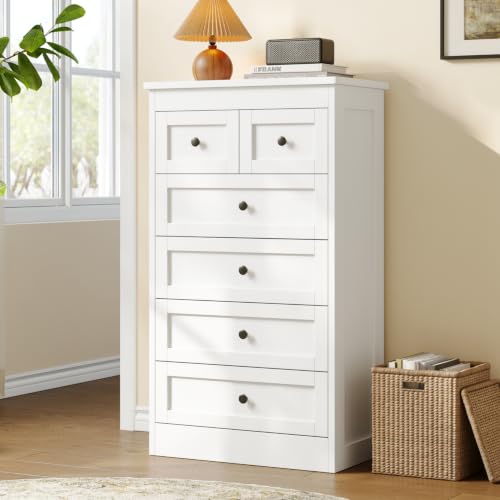
Solid Wood White 6 Drawer Dresser: The Complete Guide
A solid wood white 6 drawer dresser combines timeless elegance with practical storage. Whether you are furnishing a master bedroom, a guest room, or a nursery, this guide walks you through every detail — from wood species and drawer mechanics to style matching and long-term care — so you can choose with confidence.
Why Choose a Solid Wood White 6 Drawer Dresser
A solid wood white 6 drawer dresser is more than a piece of furniture — it is a long-term investment in your bedroom's organization and aesthetic. Solid wood construction offers structural integrity that engineered alternatives often struggle to match over years of daily use. The white finish, meanwhile, brings a sense of brightness and calm that works across virtually every interior style, from farmhouse to contemporary minimalism.
The six-drawer configuration hits a sweet spot between capacity and footprint. It provides enough room for clothing, linens, and accessories without demanding the floor space of a larger eight- or nine-drawer unit. For many households, this makes it the ideal primary bedroom storage piece or a generous secondary dresser in a guest room.
Key takeaway: A white solid wood 6 drawer dresser offers a rare combination — durable natural material, versatile color, and a drawer count that suits most bedrooms without overwhelming the room.
If you are still comparing broad categories, our guide to solid wood chests explains how chests differ from dressers in height and drawer orientation. And if your bedroom is on the smaller side, the solid wood small chest of drawers guide covers compact alternatives that still deliver solid wood construction.
Solid Wood Species and White Finishes
Not all solid wood is created equal. The species used in a white 6 drawer dresser affects weight, grain visibility, dimensional stability, and how well the white finish adheres over time. Here are the most common options you will encounter:
Maple
Dense, fine-grained, and exceptionally durable. Maple takes paint beautifully, making it a top choice for a crisp white finish. It resists dents well and holds hardware securely.
Pine
Lighter in weight with a pronounced grain that can telegraph through paint over time. Entry-level to mid-range in the solid wood category, pine is easy to work with but softer than hardwoods.
Oak
Heavy, open-grained, and very strong. White-painted oak often shows a subtle texture through the finish, giving it a tactile, natural character. A premium choice for long-term durability.
Birch
A balanced mid-tier hardwood with tight grain and good stability. Birch is a common substrate for white finishes because it paints cleanly and resists warping.
Rubberwood
An entry-level hardwood frequently used in solid wood furniture. It is uniform in color and accepts paint well, though it is softer than maple or oak.
Poplar
A softer hardwood often used for painted pieces. Poplar is stable and takes white paint smoothly, though it dents more easily than denser species.
Understanding White Finishes
The white finish itself matters as much as the wood beneath it. You will typically see three approaches:
- Painted white: An opaque coat that fully covers the grain. This is the most common look for a crisp, modern white dresser. Quality painted finishes use multiple coats and a protective topcoat.
- Whitewashed: A semi-transparent treatment that lets the wood grain show through. This suits farmhouse, coastal, and Scandinavian interiors.
- Lacquered white: A high-gloss or satin lacquer that provides a smooth, reflective surface. Lacquer finishes are durable but can show scratches more readily than matte paint.
If you are weighing material trade-offs more broadly, our solid wood vs engineered wood comparison breaks down the long-term differences in durability, repairability, and resale appeal.
Understanding the 6-Drawer Layout
A six-drawer dresser typically follows one of two layouts, and the choice affects how you organize your clothing:
| Layout | Typical Configuration | Best For | Organizational Strength |
|---|---|---|---|
| 3 × 2 (Two Columns) | Three rows of two drawers each | Balanced storage for singles or couples | Even drawer sizes suit folded tops, bottoms, and accessories |
| 2 × 3 (Three Columns) | Two rows of three drawers each | Wider rooms and shared bedrooms | More narrow drawers encourage category separation |
| Mixed Depth | Deep bottom drawers with shallower upper drawers | Storing bulky items alongside small accessories | Flexible — deep drawers for knitwear, shallow for socks and underwear |
The drawer count itself is a practical consideration. A six-drawer unit offers more segmentation than a four-drawer dresser, which helps if you like to separate categories strictly. At the same time, it remains more compact than a nine-drawer model. For a deeper look at how drawer count affects organization, see our guide to white 6 drawer chests and the white 6 drawer dresser with gold hardware for a hardware-focused perspective.
Drawer Glides and Mechanisms
The quality of the drawer glides often separates an entry-level dresser from a premium one. Look for these indicators:
- Metal ball-bearing slides: Smooth, quiet, and durable. These are the standard in mid-range and premium solid wood dressers.
- Wood-on-wood runners: Found in some traditional and luxury pieces. They require waxing but can last decades with care.
- Soft-close mechanisms: A premium feature that prevents slamming and protects the drawer fronts over time.
- Full-extension slides: Allow you to reach the back of the drawer easily — a significant usability upgrade over three-quarter extension.
Buying tip: When comparing models, test the drawer action mentally by reading reviews that mention glide smoothness. A solid wood dresser with poor glides will frustrate you daily, while a well-built drawer mechanism transforms the experience.
Quality Signals to Look For
Beyond the wood species, several construction details reveal whether a solid wood white 6 drawer dresser is built to last:
Joinery
Examine how the drawer boxes and the main frame are joined. Dovetail joints on drawer boxes are a hallmark of traditional craftsmanship and resist pulling apart under load. Box joints and reinforced rabbet joints are also acceptable at mid-range. Staples and glue alone signal entry-level construction.
Drawer Bottoms and Sides
Solid wood drawer sides that are at least 1/2 inch thick glide more smoothly and resist warping. Plywood drawer bottoms are normal and often preferable to solid wood bottoms because they resist humidity changes. A center support rail under wide drawers prevents sagging.
Finish Durability
A quality white finish should include a protective topcoat — lacquer, polyurethane, or conversion varnish. Ask whether the finish is water-resistant and whether it has been tested for yellowing. Low-grade white finishes can yellow over time, especially in rooms with strong sunlight.
Stability Features
Look for an anti-tip kit included with the dresser, especially if you have children. A solid wood dresser is heavy, and proper wall anchoring is essential. Also check whether the piece has adjustable leveling glides to compensate for uneven floors.
For a broader checklist that applies across dresser categories, our solid wood chest of drawers for bedroom guide expands on construction and safety considerations.
Style Matching for Your Bedroom
White is famously versatile, but the style of a solid wood white 6 drawer dresser still shapes the room's character. Here is how different design languages interpret the same color:
Modern and Contemporary
Clean lines, minimal hardware, and a satin or matte white finish. Modern white dressers often feature handleless drawers or slim metal pulls. Pair with neutral bedding and streamlined lighting. If this is your direction, the white modern dresser for bedroom guide offers further inspiration.
Farmhouse and Cottage
Beadboard detailing, cup pulls or crystal knobs, and a slightly distressed or whitewashed finish. Farmhouse white dressers feel warm and lived-in. The white farmhouse chest of drawers guide covers this style in depth.
Mid-Century Modern
Tapered legs, angled drawer fronts, and a smooth white finish over solid wood. Mid-century white dressers work well in smaller rooms because the legs create visual lightness. Explore the solid wood mid-century dresser and solid wood dresser mid-century modern guides for more.
Scandinavian and Minimalist
Light wood tones, white finishes, and functional simplicity. A white solid wood dresser with simple round knobs and tapered legs fits naturally into Scandinavian interiors. Pair with light wood nightstands and soft textiles.
Nursery and Kids' Rooms
White dressers are a nursery staple because they feel fresh and gender-neutral. A six-drawer model provides ample storage for baby clothes, blankets, and supplies. See the white chest of drawers nursery guide and consider a solid wood changing table dresser if you want to combine functions.
Solid Wood vs Engineered Wood: What You Need to Know
Before committing to a solid wood white 6 drawer dresser, it helps to understand how it differs from engineered alternatives:
| Factor | Solid Wood | Engineered Wood (MDF/Particleboard) |
|---|---|---|
| Durability | High — can be repaired and refinished | Moderate — damaged surfaces are difficult to repair |
| Weight | Heavy and stable | Lighter but can feel less grounded |
| Longevity | Decades with proper care | Typically a shorter service life |
| Refinishing | Can be sanded and repainted multiple times | Limited refinishing potential |
| Moisture Resistance | Good when sealed; expands and contracts naturally | Susceptible to swelling if moisture penetrates edges |
| Tier | Mid-range to luxury | Entry-level to mid-range |
For a full breakdown of the trade-offs, read our solid wood vs engineered wood comparison. The short version: solid wood is a long-term investment that rewards care with longevity, while engineered wood is a practical option when the priority is initial outlay and lighter weight.
Organizing Your 6-Drawer Dresser
Six drawers give you enough compartments to create a logical system. A common approach is to assign each drawer a category:
- Top drawers: Undergarments, socks, and small accessories. Consider drawer dividers to keep items tidy.
- Middle drawers: Folded tops — t-shirts, sweaters, and casual shirts.
- Lower drawers: Bottoms — jeans, trousers, and bulky knitwear. Deeper lower drawers handle heavier items well.
- Flex drawer: Keep one drawer for seasonal rotation or overflow, so the system adapts as your wardrobe changes.
Folding techniques matter too. Vertical folding — often called file folding — lets you see every item at a glance and prevents the pile-and-dig cycle that leads to clutter. For more drawer-specific ideas, see our guide to stackable dresser drawer organizers.
Organization principle: The goal is not just to store clothes but to make every item visible and reachable. A well-organized six-drawer dresser can hold more usable clothing than a poorly organized eight-drawer unit.
If your closet is the primary storage space, a small chest of drawers for closet can supplement a dresser. And for living spaces that need storage, the small chest of drawers for living room guide covers multi-purpose use.
Care and Maintenance for a White Solid Wood Dresser
Solid wood furniture responds to its environment. Here is how to keep a white finish looking crisp:
Cleaning
- Dust regularly with a soft, dry microfiber cloth. Avoid abrasive sponges that can dull the finish.
- For deeper cleaning, use a damp cloth with a mild soap solution, then dry immediately. Standing water is the enemy of any wood finish.
- Avoid ammonia-based cleaners, which can break down lacquer over time.
Protecting the Finish
- Keep the dresser out of direct sunlight or use window treatments to prevent yellowing and uneven fading.
- Use coasters or felt pads under decorative items on top of the dresser.
- Maintain indoor humidity between 30% and 50% to minimize wood movement and finish cracking.
- Wipe up spills immediately — white finishes show stains less than dark ones, but moisture can still damage the topcoat.
Long-Term Care
- Check and tighten hardware periodically. Knobs and pulls can loosen with daily use.
- Lubricate metal drawer glides annually with a silicone-based spray if they begin to feel stiff.
- If the finish develops minor scratches, a touch-up pen matched to the white tone can blend them. Deeper scratches may require professional refinishing.
For related care guidance, our white wood dresser overview touches on finish-specific maintenance tips.
Frequently Asked Questions
Ready to Choose Your Solid Wood White 6 Drawer Dresser?
Browse recommended models and explore detailed specs, construction notes, and user feedback in our curated selection below.
Explore Top Picks