White Cabinet with Sliding Doors: The Complete Buying Guide
Everything you need to know before choosing a white sliding door cabinet for your bedroom, closet, or entryway — including size guidance, material options, and smart storage tips.
Explore the GuideWhy a White Cabinet with Sliding Doors Deserves Your Attention
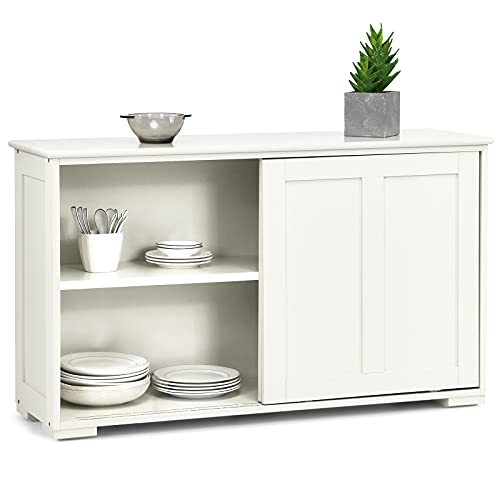
A white cabinet with sliding doors is one of the most practical storage investments you can make for a bedroom or compact living space. Unlike a traditional dresser or armoire with hinged doors, a sliding door cabinet moves horizontally along a track system — which means you never need to reserve clearance space in front of it for doors to swing open. The white finish adds a bright, clean, and airy feel to the room, while the sliding mechanism delivers generous interior storage without the footprint penalty.
If you are researching this category, you are likely comparing options and want clarity on which configuration actually fits your room. This guide breaks down the essentials: how sliding door cabinets differ from other storage types, the materials that hold up over time, how to size one correctly, and what to look for in hardware quality. By the end, you will have a confident shortlist of features to prioritize before you buy.
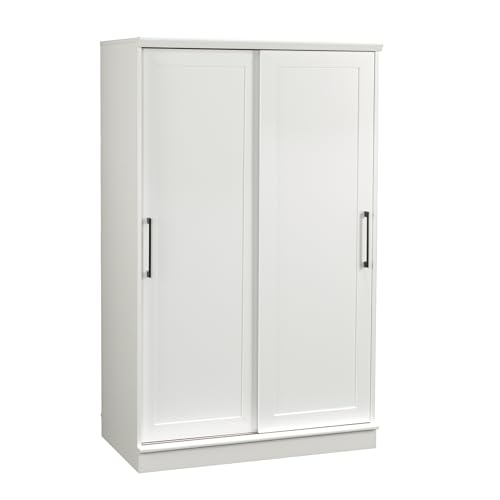
Quick definition: A white cabinet with sliding doors combines a tall or wide storage body — typically with hanging rails, adjustable shelves, and sometimes drawers — behind one or more white door panels that glide on top-mounted or bottom-mounted tracks. It is a hybrid between a wardrobe and a storage cabinet, and it is especially popular in bedrooms where floor space is limited.
How Sliding Doors Work — and Why That Matters for Your Room
Sliding door systems rely on rollers or glides that travel inside a track. There are two main configurations: top-hung systems, where the door weight is carried by a reinforced top track, and bottom-rolling systems, where the door rests on bottom rollers with a top guide for alignment. Top-hung systems tend to offer smoother operation and a cleaner floor line, while bottom-rolling systems are generally more straightforward to install and service.
The practical benefit is consistent across both designs: the cabinet can sit flush against a wall, beside a bed, or in a narrow alcove without needing a door-swing zone. This is why a white sliding door cabinet is frequently recommended for small bedrooms with limited floor area and for closets where every inch of clearance counts. It also makes the cabinet safer in high-traffic areas — there is no door edge swinging outward at hip height.
Space Efficiency
No swing clearance required, so the cabinet can be placed close to beds, walls, and other furniture. Ideal for compact rooms and alcoves.
Clean Visual Line
White door panels create a calm, uninterrupted surface that helps small rooms feel larger and more open.
Concealed Storage
Hanging rails, shelves, and drawers stay hidden behind smooth-gliding panels, keeping clutter out of sight.
Flexible Placement
Suitable for bedrooms, closets, entryways, home offices, and laundry areas — anywhere concealed storage is needed.
Types of White Cabinets with Sliding Doors
Not all sliding door cabinets are built for the same purpose. The right configuration depends on what you need to store — clothing, linens, paperwork, or a mix — and on the dimensions of your room. Here are the main categories to consider.
1. Full Wardrobe-Style Cabinets
These are the tallest and deepest options, typically featuring a full-width hanging rail plus shelving. They function as a primary clothing storage unit and are a direct alternative to a hinged wardrobe. If you need a complete closet replacement, this is the category to focus on. For related space-saving alternatives, you can also explore dresser and closet combo solutions.
2. Storage Cabinet with Shelves
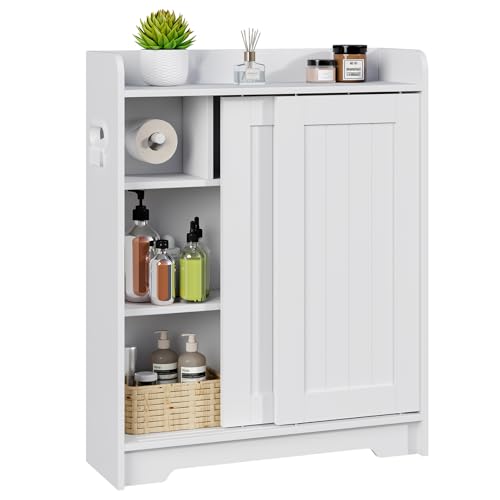
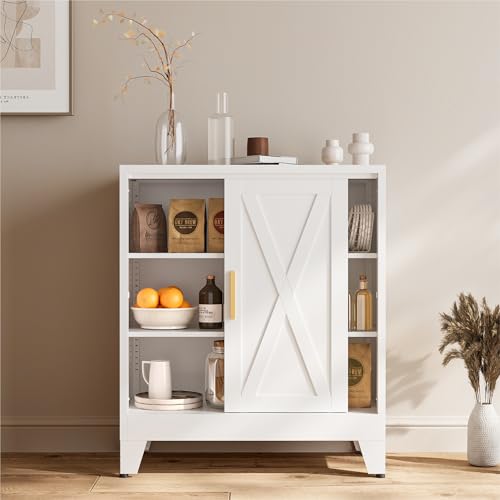
A shelf-focused sliding door cabinet works well for folded clothing, linens, books, and household items. It is shallower than a wardrobe and often fits comfortably in a hallway or entryway. If shelf-based organization is your priority, compare this format with a chest of drawers with shelves to see which layout suits your routine better.
3. Hybrid Dresser-Cabinet Designs
Some models combine a drawer stack on one side with a sliding-door compartment on the other. This hybrid approach is useful in bedrooms where you want both folded and hanging storage in a single footprint. It pairs naturally with a dresser cabinet setup if you prefer a coordinated storage wall.
4. Narrow and Tall Sliding Cabinets
For tight alcoves, a narrow tall cabinet with sliding doors can deliver significant vertical storage without consuming much floor width. These are especially effective in small bedrooms and walk-in closets. You can browse similar slim-format ideas in our tall skinny dresser for closet guide.
Materials and Finishes: What Holds Up Over Time
The white finish is the visual headline, but the underlying material determines durability, weight capacity, and how the sliding mechanism performs over years of use. Here is a practical breakdown using quality tiers rather than specific figures.
| Tier | Typical Construction | Best For | Durability Notes |
|---|---|---|---|
| Entry-level | Engineered wood panels with laminated white finish | Guest rooms, rentals, light-use storage | Good for the tier; keep away from prolonged moisture |
| Mid-range | MDF or particleboard core with painted or lacquered white finish | Primary bedrooms, daily-use closets | Balanced tier — smoother finish and better screw retention |
| Premium | Solid wood frame with veneered or painted panels | Long-term bedroom storage, heavier clothing loads | Solid build; reinforced tracks recommended |
| Luxury / high-end tier | Solid hardwood construction with premium hardware | Primary suites, design-led interiors | Heavy-duty construction and refined track systems |
In humid climates, prioritize a moisture-resistant finish and sealed edges. For a broader comparison of wood options, our high-quality solid wood dresser guide covers grain, density, and finish considerations that apply equally to sliding door cabinets.
How to Size a White Sliding Door Cabinet Correctly
Sizing mistakes are the most common reason people regret a cabinet purchase. Before you compare models, measure three things: the available wall width, the available depth, and the ceiling height if you are considering a tall unit. Then match those measurements to the cabinet's exterior dimensions — not the interior.
Width and Door Count
Two-door sliding cabinets generally need roughly the width of two overlapping panels, so the usable opening is slightly less than half the total width per door. Three-door and four-door configurations distribute the overlap differently and can offer a wider clear opening. If you are working with a tight wall, measure the clear opening you need, not just the cabinet's outer width.
Depth
Standard wardrobe-depth sliding cabinets are designed to accommodate hanging clothes, while shallower units are intended for folded items and shelving. If your room is narrow, a shallow-depth design may be the better fit — see our shallow-depth dressers for small spaces for related guidance on depth trade-offs.
Height
Tall cabinets maximize vertical storage but require secure wall anchoring, especially in households with children. Always check whether the model includes an anti-tip kit or recommends one. For bedroom-specific height guidance, the tall bedroom cabinet with drawers guide is a useful companion read.
- Measure wall width, depth, and height before comparing any models.
- Confirm the clear door opening, not just the overall cabinet width.
- Check that the cabinet depth suits hanging versus folded storage.
- Verify wall-anchoring hardware is included for tall units.
- Allow a small gap for track alignment and door glide clearance.
Pros and Cons of Sliding Door Cabinets
Advantages
- No door-swing clearance needed, saving floor space.
- Clean, uninterrupted white surface suits modern and minimalist interiors.
- Large interior volume for hanging and shelving in one unit.
- Safer in high-traffic areas — no outward-swinging door edges.
- Works well in alcoves, beside beds, and in narrow closets.
Considerations
- Only one side of the interior is accessible at a time with two-door designs.
- Tracks need periodic cleaning and lubrication.
- Heavier doors require reinforced hardware for smooth operation.
- Repairs to track systems can be more involved than hinge adjustments.
- Interior layout is usually fixed rather than fully modular.
These trade-offs are manageable with the right model. If track maintenance sounds like a hassle, prioritize cabinets with accessible top tracks and sealed roller housings, which are easier to clean and less prone to debris buildup.
Styling and Placement Ideas
A white sliding door cabinet is visually versatile. In a bedroom, place it opposite or adjacent to the bed to create a balanced storage wall, and use the top surface for a lamp, tray, or decorative objects. In an entryway, a mid-height sliding cabinet can serve as a concealed coat and shoe station. In a home office, it hides paperwork and supplies behind a calm white facade.
Because the doors glide rather than swing, you can place the cabinet closer to a doorway or bedside table than you could with a hinged unit. If you are coordinating a full bedroom set, our solid wood bedroom dresser set guide covers how to match finishes and proportions across pieces.
Final Buying Checklist
Use this checklist to evaluate any white cabinet with sliding doors before you commit. It is designed to catch the details that product photos often hide.
- Confirm the material tier matches your expected daily use.
- Inspect the track and roller specification — metal over plastic.
- Check whether doors are top-hung or bottom-rolling and how they are serviced.
- Verify interior layout: hanging rail, adjustable shelves, drawer count.
- Measure clear opening width, not just overall cabinet width.
- Confirm anti-tip anchoring hardware is included for tall models.
- Review the white finish for edge sealing and moisture resistance.
- Check that replacement rollers or track parts are available.
- Ensure the door glide is smooth and quiet in both directions.
- Compare interior depth against the length of your hanging garments.
Frequently Asked Questions
What is a white cabinet with sliding doors?
A white cabinet with sliding doors is a storage furniture piece featuring doors that slide horizontally along tracks instead of swinging open. It typically combines hanging space, shelving, and drawer compartments, making it a space-efficient solution for bedrooms, closets, and small rooms.
Are sliding door cabinets good for small bedrooms?
Yes, sliding door cabinets are excellent for small bedrooms because the doors move horizontally rather than swinging outward. This means you can place the cabinet close to your bed, wall, or other furniture without needing clearance space for door swing, maximizing usable floor area.
What materials are best for a white sliding door cabinet?
Solid wood and engineered wood with a high-quality white finish are the most durable options. Solid pine, oak, and MDF with a lacquered or painted finish are common. Look for moisture-resistant finishes and reinforced door tracks for long-term reliability, especially in humid climates.
How do I maintain sliding door tracks?
Clean the tracks monthly with a vacuum brush attachment or a damp cloth to remove dust and debris. Apply a silicone-based lubricant to the rollers and tracks every few months to ensure smooth operation. Avoid harsh chemicals that can damage the finish or attract dust.
Can a white cabinet with sliding doors be used outside the bedroom?
Absolutely. While commonly used in bedrooms, these cabinets work well in entryways, home offices, laundry rooms, and even living rooms. Their clean white appearance and space-saving design make them versatile for any room where concealed storage is needed.
Ready to Compare White Sliding Door Cabinets?
Use the recommended products below to explore options by configuration, material tier, and interior layout. Each listing links to current availability so you can verify dimensions and finish details before deciding.
View Recommended Options