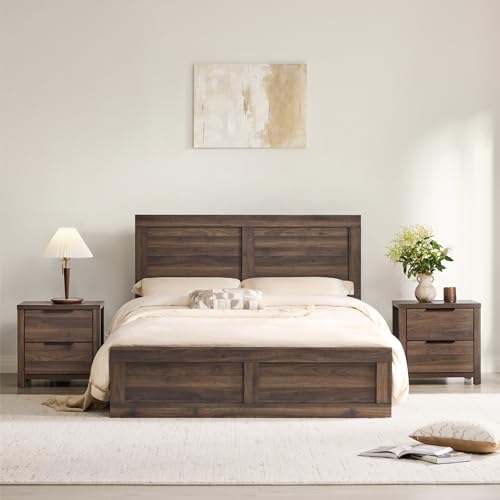
Nightstands & Headboards: The Complete Guide
Your bed is the centerpiece of the bedroom, but the pieces beside and behind it shape how the room feels every single day. This guide walks you through sizing, styles, materials, and pairing strategies so you can choose nightstands and headboards that work as beautifully as they look.
Why these two pieces matter: A well-chosen headboard anchors the bed visually and adds comfort for reading or watching television. A well-chosen nightstand keeps essentials within arm's reach and balances the bed's proportions. Together, they turn a mattress on a frame into a finished bedroom. This guide covers both pieces in detail, including how to pair them with your existing dresser and storage furniture.
Understanding the Role of Each Piece
Before shopping, it helps to separate the two pieces by function. A headboard is primarily a visual anchor and a comfort feature. A nightstand is primarily a functional surface and a storage solution. Each has its own sizing rules and material considerations.
Headboard: The Anchor
The headboard defines the bed's presence in the room. It frames the sleeping area, protects the wall from scuffs, and provides back support for sitting up in bed. Height, shape, and material all influence how tall the room feels. A tall, upholstered headboard adds drama and softness, while a low, slim wooden headboard keeps a small room open and airy.
Nightstand: The Workhorse
The nightstand is the most-used surface in the bedroom. It holds a lamp, a book, a phone, glasses, and a glass of water. Drawer count and depth matter more than most shoppers expect. A single drawer holds essentials; two or three drawers add room for chargers, medications, and reading materials. Open shelves suit baskets and larger items.
How They Work Together
The headboard sets the visual tone, and the nightstands echo or complement it. Matching wood tones, repeated hardware finishes, or coordinated upholstery create cohesion. When the pieces are deliberately mismatched, the headboard usually leads and the nightstands follow in a quieter role. Either approach works as long as the relationship feels intentional.
Headboard Styles and What They Suit
Headboard style drives the bedroom's overall look. The categories below cover the most common options, along with the rooms and design schemes where each performs best.
| Style | Best For | What to Know |
|---|---|---|
| Upholstered | Reading in bed, soft and cozy bedrooms | Choose firm padding and tightly woven fabric for durability. Button tufting adds traditional character; clean lines suit modern rooms. |
| Wood Panel | Versatile, long-lasting bedrooms | Solid wood panels in oak, walnut, or maple age well. Slatted designs feel lighter; solid panels feel more substantial. |
| Slatted or Spindle | Airy rooms, coastal and farmhouse styles | Open slats let light and air pass through, which helps small rooms feel less enclosed. Check that the slats are securely joined. |
| Wall-Mounted | Small bedrooms, floating furniture looks | Saves floor space and works with adjustable bed frames. Installation requires secure wall anchoring. |
| Bookcase or Storage | Bedrooms short on shelving | Built-in shelves add display and storage. Confirm the depth matches your mattress and pillows comfortably. |
| Metal Frame | Industrial, minimalist, and modern rooms | Powder-coated steel resists wear. Look for reinforced joints and a stable base connection. |
If your bedroom leans toward a specific design language, let that guide the choice. A modern dresser for the bedroom pairs naturally with a clean-lined upholstered or metal headboard. A farmhouse dresser works well with slatted or wood-panel headboards in natural finishes.
Headboard Sizing: Height, Width, and Proportion
Headboard dimensions should follow the mattress size and the height of the ceiling. A headboard that is too short looks undersized; one that is too tall can overwhelm a room with standard ceilings.
- Width: Match the headboard width to the mattress width for a flush fit, or choose a headboard a few inches wider for a framed, substantial look. A headboard narrower than the mattress looks unfinished.
- Height above the mattress: A headboard that rises thirty to forty-eight inches above the mattress top suits most bedrooms. Taller headboards work in rooms with high ceilings; lower profiles suit small rooms.
- Floor clearance: Headboards that reach the floor feel grounded and formal. Legs that lift the headboard slightly off the floor feel lighter and make cleaning easier.
- Pillow clearance: Leave enough room above the mattress so pillows do not cover the headboard's details. A few inches of visible headboard above the pillows is a good target.
Nightstand Sizing: Height, Width, and Clearance
Nightstand sizing is mostly about ergonomics. The top surface should sit at or slightly below the mattress top so that reaching for a lamp or phone feels natural when lying in bed.
| Dimension | Recommended Range | Notes |
|---|---|---|
| Height | Level with or 2–4 inches below mattress top | Too tall forces an awkward reach; too low feels disconnected from the bed. |
| Width | 18–24 inches | Wider stands suit larger lamps and books; narrower stands suit tight rooms. |
| Depth | 14–20 inches | Deeper stands hold more but can crowd walkways. |
| Clearance from bed | At least 2 inches | Keeps drawers and doors operable and prevents scuffing. |
| Drawer count | 1–3 drawers | One drawer holds essentials; three drawers add room for reading materials and chargers. |
For small bedrooms, a narrow dresser for a small bedroom and a slim nightstand share the same space-saving logic: measure the walkway first, then choose the piece. A white nightstand and dresser set is a straightforward way to keep proportions and finish consistent across a compact room.
Materials: What Holds Up Over Time
Nightstands and headboards take daily contact, so material choice matters as much as style. The short version: solid wood and high-grade metal last longest, upholstered pieces need fabric care, and engineered wood is a reasonable choice when construction is solid.
Solid Wood
Oak, walnut, maple, and pine are the most common headboard and nightstand woods. Solid wood accepts refinishing, resists dents better than thin veneers, and develops character over time. Joint quality matters more than species: look for dovetailed drawers and reinforced corners.
Engineered Wood
MDF and particleboard cores with quality veneers offer consistent surfaces and stable construction. Entry-level pieces in this category can be durable when the hardware and joinery are reinforced. Check that drawer bottoms are supported and that edges are sealed.
Metal
Powder-coated steel and aluminum are common for modern and industrial headboards. Metal resists moisture and pests, and reinforced joints handle daily use. Look for rust-proof finishes on nightstands placed near windows.
Upholstery
Linen, cotton blends, velvet, and performance fabrics are common headboard covers. Performance fabrics resist stains and wear, which matters for a surface that pillows and hands touch daily. Removable covers simplify cleaning.
Matching materials across the room keeps the bedroom cohesive. A natural wood dresser and nightstand set pairs well with a wood-panel headboard in the same species or a complementary tone. A modern wood dresser can anchor a room where the headboard is upholstered, with wood tones echoed in the nightstands instead.
Matching Sets vs. Mixed Pieces
Both approaches work, but they suit different priorities. Matching sets simplify decisions and guarantee proportional harmony. Mixed pieces allow personality and can work better when you are adding to furniture you already own.
- Choose a matching set when: you are furnishing a room from scratch, you want a consistent finish and hardware story, or you prefer a traditional, coordinated look.
- Mix pieces when: you already own a dresser or bed frame you love, you want an eclectic or collected look, or you need specific dimensions that no set provides.
- How to mix well: repeat one element across pieces — wood tone, hardware finish, or upholstery texture. Two of three is usually enough to feel intentional.
Sets extend beyond the bed area. A modern dresser and nightstand set or a navy blue dresser and nightstand set keeps the finish consistent across the room. If the bed frame is the anchor, a nightstand and chest of drawers set can complete the storage side without duplicating the headboard style.
Style Directions by Bedroom Type
The same two pieces can read very differently depending on finish, scale, and detailing. Below are common bedroom directions and the nightstand and headboard choices that support each one.
Modern and Minimalist
Clean lines, low profiles, and restrained hardware. A wall-mounted or slim panel headboard keeps the sightline low. Nightstands with finger pulls or integrated handles reduce visual clutter. Pair with a modern tall dresser when vertical storage is needed.
Farmhouse and Rustic
Slatted or plank-style headboards in natural or painted finishes. Nightstands with turned legs and a single drawer feel authentic. A modern farmhouse dresser and nightstand set bridges the traditional farmhouse look with cleaner lines.
Traditional and Classic
Upholstered or shaped wood headboards with nailhead trim or molding. Nightstands with two or three drawers and classic hardware complete the look. A mirrored dresser and nightstand set adds a formal, reflective finish.
Small and Apartment Bedrooms
Wall-mounted headboards and narrow nightstands preserve floor space. Light finishes and open slats keep the room from feeling closed in. A narrow chest of drawers for small spaces can replace a full dresser when the room is tight.
Nursery and Guest Rooms
Lower headboards and nightstands with rounded edges suit shared and transitional spaces. A nursery dresser with a changing top pairs with a simple, low headboard so the room grows with the child.
Statement and Luxe
Tall upholstered headboards, tufted panels, and metallic accents create a focal point. Nightstands with stone tops or mirrored fronts add polish. A mirrored nightstand with three drawers adds storage without visual weight.
A Practical Buying Checklist
Use this checklist before finalizing any purchase. Each item corresponds to a common source of buyer regret.
- Measure the mattress top height first. Nightstand height is relative to the mattress, not the floor.
- Measure the walkway. Leave at least twenty-four inches between the nightstand and any wall or closet door.
- Confirm the headboard attachment method. Some headboards attach to the bed frame; others mount to the wall. Check compatibility with your frame.
- Check drawer operation in person or in reviews. Smooth glides and stops matter more than drawer count.
- Verify weight capacity. Nightstands hold lamps, books, and electronics; check the stated load limit for the top and drawers.
- Plan cord access. A cutout or gap at the back of the nightstand keeps chargers and lamp cords tidy.
- Consider future needs. A nightstand with an extra drawer or a headboard with adjustable height accommodates changes in the room over time.
If you are building the room around an existing storage piece, start there. A modern white dresser and nightstand set or a navy blue dresser for the bedroom can dictate the finish story, with the headboard and second nightstand following that lead.
Frequently Asked Questions
What height should a nightstand be relative to the bed?
A nightstand top should sit level with or slightly below the mattress top, typically within two to four inches. This keeps essentials within easy reach while lying in bed.
Should the headboard and nightstands match?
Matching sets create a cohesive look, but complementary pieces can work just as well. Coordinating wood tones, hardware finishes, or upholstery textures ties mismatched pieces together.
How wide should a nightstand be?
A nightstand between eighteen and twenty-four inches wide fits most bedrooms. Allow at least two inches of clearance from the bed and wall for comfortable movement.
Are upholstered headboards a good choice?
Upholstered headboards add warmth and comfort for reading in bed. Choose tightly woven fabrics for durability and check that the padding is firm enough to hold its shape.
How do I choose a headboard for a small bedroom?
In small bedrooms, choose a low-profile or slim headboard in a light finish. Wall-mounted designs save floor space and keep the room feeling open.
Putting It Together
Nightstands and headboards are small pieces with an outsized effect on how a bedroom feels. Get the sizing right, choose materials that suit daily use, and decide early whether you want a matched set or a collected look. From there, the style decision becomes straightforward. If you are still refining the rest of the room, our guides to dresser types and bedroom storage cover the storage side in the same detail.