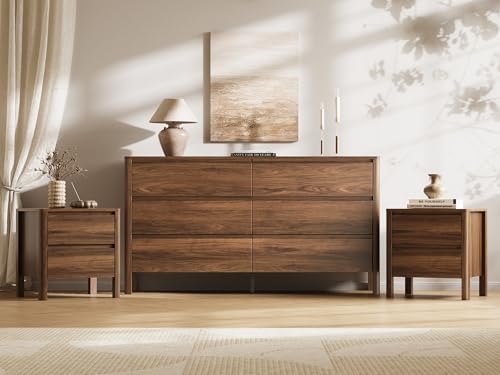
Nightstand and Chest of Drawers Set: The Complete Buying Guide
Everything you need to choose a coordinated bedroom storage set — matching nightstands, chest of drawers, sizing rules, material tiers, and styling. Research thoroughly, then buy with confidence.
EXPLORE RECOMMENDED SETSWhy a matching set? A nightstand and chest of drawers set delivers a cohesive bedroom in one decision. Instead of hunting for pieces that share a finish, hardware, and proportion, a coordinated set guarantees visual harmony from day one. This guide explains what to look for, how to size a set correctly, and which quality tier matches your needs — so you can shortlist with clarity and purchase with confidence.
What a Nightstand and Chest of Drawers Set Includes
A typical set pairs one chest of drawers — usually five or six drawers — with one or two matching nightstands. Some collections expand to include a mirror, a bed frame, or a changing table for nursery use. Because every piece shares the same wood species, finish, and hardware family, the set reads as a single intentional design rather than a collection of mismatched furniture.
- Chest of drawers: the primary clothing storage piece, often 30–60 inches wide and 30–50 inches tall.
- Nightstands: compact bedside units, typically 18–28 inches wide with two or three drawers.
- Optional mirror: attaches to the chest for a dressing-station look — see mirrored dresser and nightstand sets for a reflective finish example.
- Optional bed: some collections bundle a headboard or full bed frame in the same finish.
How to Choose the Right Set for Your Bedroom
1. Start With Room Measurements
Measure the wall where the chest will sit and the space on each side of the bed for nightstands. Leave at least 24 inches of walkway clearance in front of drawers so they can open fully. In compact rooms, a narrow chest of drawers for small spaces paired with slim nightstands preserves circulation without sacrificing storage.
2. Match Drawer Count to Your Wardrobe
Count how many categories of clothing you fold versus hang. A five- or six-drawer chest suits most adults; couples sharing a room often prefer six or more. If the set is for a guest room, a three- or four-drawer chest is plenty. Nightstands with two or three drawers handle bedside essentials — books, chargers, reading glasses.
3. Decide on Style Direction
The set should echo the room's existing architecture. Clean-lined modern interiors pair well with a modern dresser and nightstand set; farmhouse spaces suit a farmhouse dresser and nightstand set; warm natural tones work with a natural wood dresser and nightstand set. If you prefer white finishes, a modern white dresser and nightstand set keeps the palette light and airy.
4. Choose a Material Tier
Material quality determines how the set ages. Solid wood offers the most durable construction and long-term investment value. Engineered wood with quality veneers is a balanced mid-range choice. Entry-level sets often use particle board with laminate, which is fine for light use and guest rooms. For a deeper comparison, see our guide on solid wood vs engineered wood.
| Tier | Typical Materials | Best For | Durability Outlook |
|---|---|---|---|
| Entry-level | Particle board, laminate finish | Guest rooms, starter apartments, light use | Moderate; best for low-traffic rooms |
| Mid-range | Engineered wood with veneer, solid wood fronts | Primary bedrooms, daily use | Good; holds up well with care |
| Premium | Solid hardwood, dovetail joinery | Long-term primary bedroom investment | Excellent; refinishable and repairable |
| Luxury | Hardwood with hand-finished details, premium hardware | Design-led interiors, heirloom intent | Exceptional; built to last generations |
5. Inspect Hardware and Drawer Mechanics
Drawer glides matter as much as the wood. Entry-level sets often use basic side-mounted runners; mid-range sets typically offer smoother ball-bearing glides; premium sets add soft-close mechanisms and dovetail joints. If quiet, smooth closing matters to you, look for a dresser with soft-close drawers. Matching hardware finish — brushed nickel, matte black, or brass — ties the set together visually.
Quick Sizing Rule
Chest width should be roughly half the wall it sits against, and each nightstand should leave at least 2 inches of clearance from the bed frame. Always confirm drawer extension depth against your walkway before committing.
Coordinated Sets vs. Buying Separately
A coordinated set removes guesswork: finish, hardware, and proportions are pre-matched, so the bedroom looks intentional without styling effort. Buying separately offers flexibility for irregular layouts — for example, a nightstand set of 2 and dresser combination that fits a specific wall length, or a nightstand with matching dresser where you pick each piece from the same collection. If cohesion is the priority, start with a set; if fit is the priority, mix within a collection.
Style Pairings That Work
The right pairing depends on the room's dominant material and color. A few reliable combinations:
- Light and airy: a white nightstand and dresser set brightens small rooms and pairs with almost any bedding.
- Bold and moody: a navy blue dresser and nightstand set anchors a statement bedroom wall.
- Warm and organic: a natural wood nightstand and dresser pairing suits Scandinavian and Japandi interiors.
- Classic and tailored: a mission dresser style brings craftsman lines and sturdy joinery.
Placement and Styling Tips
Place the chest opposite or adjacent to the bed, not directly in the walking path. Keep the top surface to three objects or fewer — a lamp, a tray, and one decorative piece — to preserve visual calm. Nightstand height should sit within 2 inches of the mattress top for comfortable reach. If the room is tight, a narrow dresser for a small bedroom keeps storage without crowding.
Frequently Asked Questions
What is included in a nightstand and chest of drawers set?
A typical set includes one chest of drawers (often five or six drawers) and one or two matching nightstands. Some sets also add a mirror or a bed frame. All pieces share the same finish, hardware, and design language for a cohesive bedroom look.
How do I choose the right size set for my bedroom?
Measure your available wall space and leave at least 24 inches of walkway clearance. A standard chest of drawers measures 30 to 60 inches wide, while nightstands are typically 18 to 28 inches wide. For small rooms, choose a narrow chest with compact nightstands.
Are matching sets better than buying pieces separately?
Matching sets guarantee consistent finish, hardware, and proportions, which saves time and reduces styling risk. Buying separately offers more flexibility for odd room layouts. If cohesion matters most, a set is the efficient choice.
What materials are best for a bedroom furniture set?
Solid wood (oak, maple, walnut, pine) offers the most durable construction and long-term investment value. Engineered wood with quality veneers is a solid mid-range option. Entry-level sets often use particle board with laminate, which suits light use.
How many drawers should a chest of drawers have for two people?
For two adults sharing a bedroom, a six-drawer chest is the practical baseline. Couples with extensive folded clothing may prefer a nine-drawer chest or a combined set with a larger chest plus a separate tall dresser.
Final Checklist Before You Buy
- Measure wall space, walkway clearance, and bed-to-nightstand gaps.
- Confirm drawer count against your folded-clothing categories.
- Choose a material tier that matches daily-use expectations.
- Check drawer glide type and hardware finish consistency.
- Verify delivery dimensions — assembled sets may need doorway clearance checks.
- Review the return policy before ordering large furniture.
With these steps complete, you are ready to compare recommended sets below and choose the configuration that fits your room, your storage needs, and your style direction.