Modern Wood Dresser: The Complete Guide
Clean lines, honest materials, and smart storage. Learn how to choose a modern wood dresser that fits your space, your style, and the way you actually live.
Explore Buying FactorsWhy a modern wood dresser? A wood dresser anchors a modern bedroom. It brings warmth, texture, and order without visual noise. Whether you are furnishing a first apartment or upgrading a primary suite, understanding wood species, construction, and drawer layout helps you choose a piece that looks intentional and works hard for years.
What Defines a Modern Wood Dresser
A modern wood dresser is not simply an old dresser painted in a neutral tone. It is a design approach built around restraint. The best examples share a few recognizable traits: flat or slightly recessed drawer fronts, a low or linear profile, and hardware that is either hidden or deliberately minimal. Wood grain is treated as the main decoration, so the finish is usually clear, matte, or low-sheen rather than heavily lacquered.
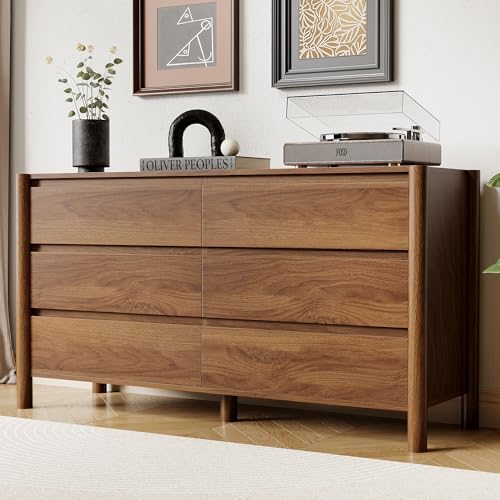
In practice, modern wood dressers fall into a few recognizable directions. Scandinavian-influenced pieces favor light oak and tapered legs. Mid-century-leaning designs use walnut and angled frames. Contemporary designs lean toward wide, low silhouettes with integrated pulls. A modern wood chest often shares the same language, just with a taller, narrower footprint.
One useful distinction is between a modern dresser for bedroom use and a modern chest of drawers. The first prioritizes a wide top surface for styling and a low profile; the second prioritizes vertical storage in tighter floor space. Neither is inherently better. The right answer depends on your room and your habits.
Key Buying Factors
Wood Species and Finish
Wood choice affects appearance, durability, and long-term performance. Oak is hard, open-grained, and forgiving. Walnut is rich, dense, and darker, which suits low-sheen modern finishes. Maple and birch give a clean, uniform surface that pairs well with painted or whitewashed modern rooms. Ash has a bold, linear grain that reads as graphic and contemporary.
Finish matters as much as species. A matte or satin finish keeps the grain readable and is easier to touch up than high-gloss lacquer. Oil finishes feel natural but require more maintenance. A protective topcoat is the better choice for busy households, especially if the dresser doubles as a changing station or a surface for daily items.
Construction Quality
Modern does not automatically mean well-made. Look for dovetail or box-joint drawer construction, metal drawer glides with a smooth full-extension action, and a solid frame that does not flex when you open a loaded drawer. Engineered wood can work well in an entry-level or starter-tier dresser, but solid hardwood is the more durable long-term investment.
Also check the back panel and drawer bottoms. A thin, stapled back panel and flimsy drawer bottoms are signs of a lightweight build. A reinforced back and thicker drawer bottoms signal a piece built for daily use.
Drawer Count and Layout
The right layout depends on what you store. A modern 3 drawer dresser suits a guest room, a child's room, or a compact apartment. A modern 4 drawer dresser is a common middle ground. A modern 6 drawer dresser handles a full wardrobe for one person or shared use in a primary bedroom.
Think about drawer depth as well as count. Deep drawers suit folded knitwear and jeans. Shallow drawers work better for socks, undergarments, and accessories. A mix of both is often the most practical modern layout.
Size and Proportion
A dresser that is too tall for its wall feels cramped; one that is too small leaves unused wall space. Measure the wall, the depth of the room, and the clearance needed to open drawers fully. In a narrow bedroom, a narrow dresser or a narrow dresser for small bedroom can be a smarter fit than a wide low piece.
For a spacious primary suite, a wide low dresser with a generous top surface is often the better choice. It doubles as a styling surface and keeps sightlines low, which makes the room feel larger.
Comparing Modern Wood Dresser Tiers
Modern wood dressers vary widely in construction and material. The table below groups them into quality tiers so you can compare features without relying on fluctuating figures. Use it as a decision framework, not a ranking of brands.
| Tier | Typical Materials | Construction Signals | Best For |
|---|---|---|---|
| Entry-Level | Engineered wood with veneer, some solid wood trim | Basic metal glides, stapled back panel, simple drawer bottoms | Guest rooms, starter apartments, low-traffic spaces |
| Mid-Range | Solid wood frame with engineered panels, quality veneers | Full-extension glides, dovetail or reinforced joints, thicker drawer bottoms | Primary bedrooms, daily use, family homes |
| Premium | Solid hardwood throughout, select grain matching | Soft-close glides, dovetail drawers, reinforced frame, hand-finished surfaces | Long-term ownership, design-focused interiors |
| Luxury | Premium solid hardwoods, custom finishes, specialized joinery | Custom hardware, hand-selected boards, precision joinery, low-sheen natural finishes | High-end interiors, collector-grade furniture |
Modern Wood Dresser Styles to Consider
Scandinavian Minimal
Light oak, tapered legs, and a low profile define this direction. Hardware is often absent or reduced to a simple cutout pull. It pairs well with white walls and natural textiles.
- Best wood: oak, ash, birch
- Finish: matte clear or whitewashed
- Pairs with: natural wood dresser
Mid-Century Modern
Walnut or teak tones, angled legs, and a slightly warmer palette. Drawer fronts may be slightly recessed or feature integrated pulls. This style has a strong vintage-adjacent feel without being ornate.
- Best wood: walnut, teak, cherry
- Finish: satin or oiled
- Pairs with: modern wood chest
Contemporary Linear
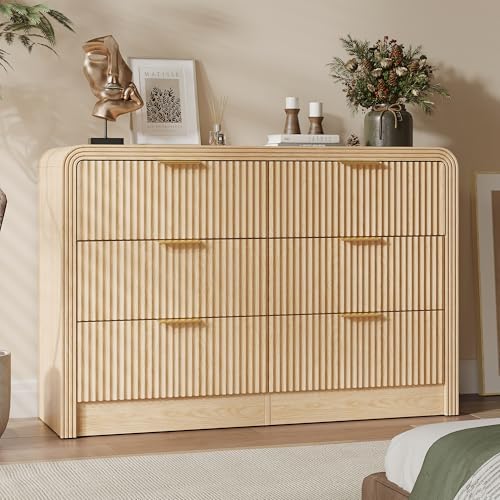
Wide, low silhouettes with flat fronts and concealed hardware. The emphasis is on proportion and surface area. This style works especially well in larger bedrooms where the dresser can anchor a wall.
- Best wood: oak, maple, ash veneer
- Finish: low-sheen lacquer or matte
- Pairs with: modern dresser for bedroom
Modern Farmhouse
A softer, warmer take on modern wood. Think clean lines with subtle rustic grain, often in natural or whitewashed oak. It bridges contemporary and traditional rooms without looking dated.
- Best wood: oak, pine, reclaimed-style wood
- Finish: natural, whitewash, or gentle stain
- Pairs with: modern farmhouse bedroom dresser
Wood Materials: What to Know Before You Choose
Oak
Oak is a hard, dense wood with a pronounced grain. It takes stain well but also looks excellent in a clear matte finish. White oak has a cooler, more modern tone, while red oak leans warmer. An natural oak dresser is a versatile choice for modern bedrooms because it ages gracefully and pairs with almost any color palette.
Walnut
Walnut is darker and richer, with a fine, straight grain. It is often used in mid-century and premium modern designs because it reads as sophisticated without ornament. Walnut is more prone to showing scratches than oak, so a protective finish is important in high-use rooms.
Maple and Birch
Maple and birch offer a clean, uniform surface with subtle grain. They are excellent for modern rooms that favor a calm, monochromatic look. Both take paint and light stains well, which makes them a popular choice for white or light-toned modern dressers.
Engineered Wood and Veneer
Engineered wood with a quality veneer can look convincing and perform well, especially in the entry-level and mid-range tiers. The key is the quality of the veneer and the core board. A thick, well-bonded veneer over a stable core is far more durable than a thin veneer over particleboard. If you are furnishing a low-traffic room or a rental, a well-made veneer piece can be a sensible choice.
Drawer Layout and Hardware
Modern dressers often hide their function behind clean fronts. That makes the drawer experience even more important. A smooth glide and a well-sized drawer are what separate a beautiful piece from a frustrating one.
Drawer Glides
Metal ball-bearing glides with full extension are the standard for mid-range and premium modern dressers. Soft-close glides are a premium feature that reduces noise and wear. Basic friction glides appear in entry-level pieces and are acceptable in low-use rooms, but they are the first component to feel dated.
Joinery
Dovetail joints are the traditional benchmark for drawer durability. Box joints and reinforced stapled joints are common in mid-range construction. The joint type matters less than the overall fit and finish, but dovetail construction is a reliable signal of a longer-lasting piece.
Hardware
Modern hardware is often minimal. Integrated pulls, cutout handles, and slim bar pulls keep the front clean. If you prefer visible hardware, choose a finish that matches the wood tone rather than contrasting aggressively. A modern drawer pull in a matte finish can update a plain dresser without changing the piece itself.
Choosing the Right Size for Your Room
Size is where most dresser purchases go wrong. A dresser needs enough wall space, enough clearance for drawers, and a proportion that feels balanced with the bed and other furniture.
In a small bedroom, prioritize depth and height over width. A narrow dresser for small bedroom can fit between a door and a bed without blocking circulation. In a larger room, a wide low dresser can serve as a visual anchor and a styling surface.
If the dresser will sit opposite the bed, leave at least 24 inches of walking clearance. If it will sit beside the bed, consider a modern dresser and nightstand set to keep the proportions consistent. Matching sets are not required, but consistent wood tones and hardware finishes make a room feel intentional.
Modern Wood Dresser Buying Checklist
Before you commit to a modern wood dresser, run through this checklist. It is designed to catch the details that product photos tend to hide.
- Measure twice: wall width, room depth, and drawer clearance. Confirm the dresser can be delivered through your door and hallway.
- Check the wood species: solid hardwood versus veneer over engineered wood. Both can work, but know what you are buying.
- Inspect the drawer glides: full-extension metal glides are the practical standard for daily use.
- Look at the back panel: a reinforced back panel signals a more stable frame.
- Confirm the finish: matte or satin finishes are easier to maintain and keep the wood grain readable.
- Plan the layout: drawer count and depth should match what you store, not just the wall size.
- Check stability: a dresser should feel solid when a drawer is fully open and loaded. Anti-tip hardware is essential in homes with children.
- Consider the long term: a mid-range solid wood dresser is often the most efficient long-term investment compared with replacing an entry-level piece.
Frequently Asked Questions
A modern wood dresser typically features clean lines, minimal ornamentation, geometric forms, and a focus on function over decoration. It often incorporates sleek hardware, flat drawer fronts, and a natural or monochromatic finish that highlights the wood grain.
Oak, walnut, maple, and ash are excellent choices for modern wood dressers. Oak offers durability and visible grain, walnut provides a rich dark tone, maple delivers a clean uniform look, and ash combines strength with a bold grain pattern. The best choice depends on your design preference and the rest of your bedroom furniture.
The ideal drawer count depends on your storage needs and available space. A modern 3 drawer dresser works well in compact rooms, a modern 6 drawer dresser suits most master bedrooms, and a wide 8- or 9-drawer dresser is ideal for shared use or larger wardrobes. Consider what you plan to store and how you like to organize clothing.
Yes, modern wood dressers made from solid hardwood are highly durable and can last for decades with proper care. Look for dovetail drawer joints, metal drawer glides, and a protective finish. Engineered wood options are more entry-level but can still offer solid performance when well-constructed.
Next Steps
A modern wood dresser is a long-term piece. The right choice balances material honesty, smart drawer design, and a proportion that fits your room. Use the tier framework and checklist above to narrow your options, then compare specific features rather than surface appearance alone.
If you are still deciding between a wide low dresser and a taller chest, the modern chest of drawers guide can help clarify the trade-offs. And if your space is tight, the narrow dresser for small bedroom guide covers layouts that keep a small room functional.
Ready to browse specific pieces? The curated selection below highlights modern wood dressers across tiers and configurations.