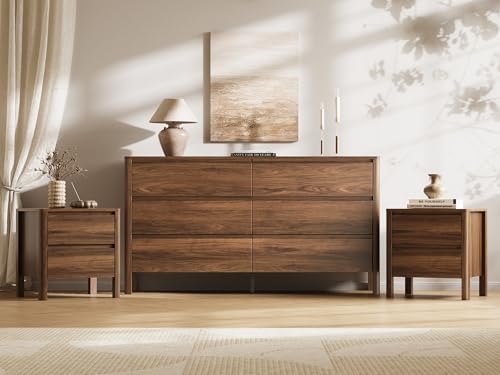
1. The Nightstand Set of 2 and Dresser Buying Framework
A nightstand set of 2 and dresser is more than three pieces of furniture — it is a coordinated storage system that defines how your bedroom functions. Before browsing styles, anchor your decision in four practical questions:
- How much floor space can the set occupy? Measure wall lengths and walking paths before anything else.
- How many people share the room? Two sleepers usually need a nightstand each; a single occupant may prefer one larger nightstand with extra surface area.
- What is stored where? Folded clothing, linens, and accessories belong in the dresser; bedside essentials belong in the nightstands.
- How long should the set last? A long-term investment calls for solid joinery and durable glides; a short-term or rental setup may justify an entry-level tier.
Answering these four questions narrows the market to a handful of viable configurations before you ever compare a finish swatch. If you are still weighing whether you need a full matching set at all, our overview of a nightstand with matching dresser explains how the pieces complement each other functionally and visually.
Editorial tip
Write down the maximum width, depth, and height you can accept for each piece. Take those numbers shopping with you — product listings rarely show a set in a room with realistic clearances.
2. Room Layout and Spacing Rules
Layout determines whether your new set feels like a cohesive bedroom or a cluttered showroom. These guidelines apply to almost every bedroom size:
- Nightstand-to-bed spacing: Leave at least 2–3 inches between the mattress edge and each nightstand so bedding does not bunch.
- Walking clearance: Keep 24–36 inches of clear floor space between the foot of the bed and the dresser front.
- Drawer extension: Add the full drawer travel distance to the dresser depth when checking clearance — a 20-inch-deep dresser with 15-inch drawers needs 35 inches of open floor.
- Door swings: Do not place a dresser where opening closet or room doors will collide with drawers pulled open.
- Visual balance: Center the dresser on the wall opposite the bed, or anchor it beside a window if the opposite wall is short.
Layout by room type
Primary bedroom
A dresser against the wall opposite the bed with nightstands flanking the headboard is the classic arrangement. In larger rooms, a wide dresser plus two full-size nightstands balances the visual weight of a king bed.
Guest or secondary bedroom
A narrow dresser for a small bedroom paired with two compact nightstands keeps circulation open without sacrificing bedside storage.
Shared or kids’ bedroom
Two nightstands serve two occupants; choose a mid-height dresser with child-safe hardware and anti-tip anchoring.
3. Sizing the Dresser and Nightstands
Proportion is the most common failure point in matched bedroom sets. A tall, narrow dresser can dwarf compact nightstands; an oversized dresser can make a small bedroom feel cramped. Use these reference ranges as a starting point, then adjust to your room.
| Piece | Typical Width | Typical Height | Best For |
|---|---|---|---|
| Compact nightstand | 18–22 in | 22–26 in | Small bedrooms, tight bed-to-wall gaps |
| Standard nightstand | 22–28 in | 24–28 in | Most primary bedrooms, queen and king beds |
| Large nightstand / bedside chest | 28–36 in | 28–32 in | Rooms with space for generous bedside storage |
| Dresser (standard) | 50–64 in | 30–38 in | Primary bedrooms with two sleepers |
| Dresser (wide) | 64–72 in | 30–36 in | Large bedrooms, rooms needing maximum drawer count |
| Dresser (narrow) | 30–44 in | 36–48 in | Small bedrooms, apartments, guest rooms |
Height relationships to respect
The top of each nightstand should sit level with or within 2–3 inches of the mattress top. If the dresser doubles as a TV stand or a display surface, its height should suit seated viewing and comfortable reach. A modern tall dresser can be a strong choice for small rooms because it trades width for vertical storage without crowding the floor.
Proportion rule: The combined width of both nightstands should not exceed roughly two-thirds of the dresser width. If the nightstands are wider than that, the dresser visually disappears between them.
4. Coordinating Styles and Finishes
A coordinated set does not have to mean identical pieces. There are three reliable approaches:
Exact matching
Identical finish, hardware, and drawer fronts across the dresser and both nightstands. This creates a formal, tailored look and is the easiest route to visual cohesion. It suits traditional, transitional, and polished modern bedrooms.
Complementary matching
Shared materials or finishes with slight variation — for example, a wood dresser with painted nightstands, or matching drawer pulls on different silhouettes. This works well in farmhouse, eclectic, and boho rooms.
Style family matching
Different finishes within the same design language. A mission dresser with mission-inspired nightstands creates cohesion through form rather than color. Similarly, a modern dresser and nightstand set can mix matte and natural tones while keeping the same geometric profile.
Finish coordination quick guide
- White and gold: soft, light, and slightly glamorous — see a modern white and gold dresser for reference.
- Black and warm wood: contrast-driven and contemporary; a modern black bedroom furniture set shows the effect across a full room.
- Natural wood and matte hardware: calm and versatile; a natural wood dresser and nightstand set demonstrates the tone-on-tone approach.
- Navy and gold: rich and grounded — a navy dresser with gold hardware pairs well with lighter nightstands for contrast.
- Mirrored finishes: reflective and space-expanding; a mirrored dresser and nightstand set suits smaller rooms that need light.
Hardware as the coordinating thread
If the dresser and nightstands differ in finish, unify them with consistent hardware. A modern drawer pull profile used across all three pieces ties the set together more effectively than paint or stain.
5. Materials and Construction Tiers
Nightstands and dressers are subjected to different stresses, but they should share a similar quality tier. Here is how materials map to the tiers you will encounter.
| Tier | Typical Construction | Best For |
|---|---|---|
| Entry-level | Engineered wood with laminate or veneer, stapled or cam-lock joinery | Guest rooms, dorm rooms, short-term setups |
| Mid-range | Veneered panels with solid wood trim, reinforced corners, metal glides | Primary bedrooms, everyday use |
| Premium | Solid wood or high-grade veneer, dovetail drawers, soft-close glides | Long-term ownership, rooms with heavy daily use |
| Luxury | Kiln-dried hardwood, hand-finished joinery, premium hardware, extended drawer glides | Heirloom-quality setups, design-forward bedrooms |
Within the premium and luxury tiers, wood species affects both durability and visual character. A natural oak dresser offers a hard, tight grain that resists wear, while a natural wood dresser finish highlights the grain across the full set. If you want a painted look without sacrificing durability, a modern farmhouse bedroom dresser often combines a painted exterior with solid wood drawer boxes.
What to inspect on arrival
Open and close every drawer on both nightstands and the dresser. A well-built set glides smoothly on first use; rough movement on day one rarely improves with time.
6. Drawer Mechanics and Hardware
Drawer mechanics separate a set that lasts a decade from one that rattles within a year. Focus on four elements:
- Glides: Metal ball-bearing or soft-close mechanisms are the standard from the mid-range tier upward. Entry-level sets may use stapled wood runners that wear quickly.
- Joinery: Dovetail or box joints signal durable drawer boxes; stapled or glued butt joints are a warning sign.
- Drawer bottoms: A solid drawer bottom reinforced with a center support resists bowing under heavy loads like jeans and linens.
- Hardware: Pulls and knobs should be attached with machine screws into metal inserts, not driven straight into the drawer front.
Hardware style coordination
Because both nightstands and the dresser share hardware, choosing a coherent profile matters. A modern cabinet pull with a clean bar profile gives a contemporary set a unified look. If you prefer a softer traditional feel, a modern cabinet pull with backplate adds a decorative frame to each drawer front.
When to upgrade hardware
If the set’s structure is sound but the hardware feels dated, replacing pulls is a low-effort way to refresh the whole grouping. Changing a modern black cabinet pull, 3-inch pattern to a satin finish can shift the set from heavy to airy without replacing furniture.
7. Functional Features to Prioritize
Beyond style, certain features make a nightstand set of 2 and dresser measurably more useful:
- Drawer count and depth: Dressers with 5–6 drawers balance folded clothing and linen storage; nightstands with 2–3 drawers cover bedside essentials.
- Soft-close glides: Quiet closing matters in shared bedrooms and nurseries.
- Dust panels: A dust panel between the top drawer and the dresser surface keeps stored items clean.
- Cable management: Nightstands with a rear cutout or open back make charger routing simple.
- Felt-lined top drawers: Useful for jewelry, glasses, and small accessories.
If the dresser will store clothing for one person rather than a household, a modern chest of drawers may offer a more efficient footprint. For a set that complements a larger bed, a modern 6-drawer dresser provides the drawer volume a two-person bedroom needs.
8. Safety and Stability Essentials
Nightstands and dressers are among the most commonly tipped furniture pieces in the home. Safety should be part of the purchase decision, not an afterthought.
- Anti-tip anchoring: Every dresser and nightstand should be secured to the wall with the provided bracket or strap.
- Interlock or sequential drawer mechanisms: Some drawers open only one at a time, reducing the risk of the unit tipping forward.
- Sturdy base: A wide, stable footprint and leveling feet prevent wobble on uneven floors.
- Child-safe hardware: Rounded edges and recessed pulls reduce injury risk in kids’ rooms and nurseries.
Nursery note
If the set goes into a nursery, choose a dresser with a changing-top option and anchor both nightstands to the wall. A nursery dresser and changing table combination can pair with compact nightstands to create a complete infant-care storage system.
9. Bundled Set vs. Buying Pieces Separately
Retailers sell coordinated bedroom storage two ways: as a bundled set or as individual pieces. Each has trade-offs.
| Approach | Advantages | Considerations |
|---|---|---|
| Bundled set | Guaranteed finish match, single delivery, coordinated proportions | Less flexibility if your room needs asymmetric storage |
| Buying separately | Scale each piece to the room, upgrade over time, mix finishes | Requires careful finish matching and more research |
Most shoppers do best with a hybrid approach: choose a bundled dresser and nightstand set when the room is symmetric, and buy separately when one side of the bed sits against a wall. A nightstand and chest of drawers set works well for rooms that need more drawer depth than width.
If you are furnishing an entire bedroom at once, coordinated bundles such as a modern white dresser and nightstand set reduce decision fatigue while keeping the finish and hardware consistent across pieces.
10. Final Pre-Purchase Checklist
- Measured wall space, walking clearances, and full drawer extension distance.
- Confirmed nightstand height aligns within 2–3 inches of the mattress top.
- Checked the combined nightstand width against the dresser width for proportion.
- Verified material tier matches intended lifespan and use.
- Tested drawer glide quality and joinery in person or via detailed listing photos.
- Confirmed anti-tip hardware is included and installation is planned.
- Decided between exact matching, complementary matching, or style-family matching.
- Checked that hardware across all three pieces uses the same finish and profile.
- Reviewed delivery logistics and assembly requirements before ordering.
- Confirmed the retailer’s return window and warranty coverage for the full set.
11. Frequently Asked Questions
Should nightstands match the dresser exactly?
Exact matching creates a cohesive, formal look and is easiest to shop for as a bundled set. Complementary matching — where materials or finishes echo each other without being identical — offers more flexibility and suits eclectic or transitional bedrooms. There is no single correct answer; the goal is visual balance across all three pieces.
What is a good height for nightstands next to a bed?
The top of each nightstand should sit level with or within two to three inches of the mattress top. This keeps lamps, books, and glasses within easy reach and maintains a balanced silhouette in the bedroom.
Can I buy the dresser and nightstands separately?
Yes. Many retailers sell dressers and nightstands individually, which lets you scale storage to your room. Bundled sets are convenient, but buying separately gives you room to upgrade one piece at a time and to fit asymmetric layouts.
What drawer features should I look for in a matched set?
Look for metal ball-bearing or soft-close glides, dovetail or reinforced joints, and drawer bottoms that feel solid when loaded. Consistent hardware and glide quality across all three pieces matters more than the number of drawers.
How many drawers should the dresser have?
For a two-person primary bedroom, a 5- or 6-drawer dresser is a practical baseline. Single occupants may prefer a 4-drawer dresser with deeper drawers, while families often benefit from a wide 6-drawer or 8-drawer configuration.