
Natural Wood Chest of Drawers for Sale
Your complete research guide to buying a natural wood chest of drawers. Understand wood species, drawer construction, finish options, sizing, and safety so you can choose a piece that lasts for years.
Explore Recommended OptionsWhat You Will Find on This Page
Why Choose a Natural Wood Chest of Drawers?
A natural wood chest of drawers is one of the few bedroom furniture pieces that combines everyday utility with long-term character. Unlike engineered panels wrapped in a printed veneer, a natural wood piece reveals genuine grain patterns, and that grain continues beneath the surface. Each board is slightly different, which means your chest will not look identical to any other unit on the market.
From a practical standpoint, natural wood chests offer several advantages that matter during the research stage:
- Repairability. Solid wood can be sanded and refinished if it picks up scratches or dents over time, extending the useful life of the piece considerably.
- Structural integrity. Hardwood frames and drawer boxes hold screws and joinery more reliably than particleboard, especially in high-use drawers that open and close many times a day.
- Timeless appearance. Natural grain works across decor styles, from rustic and farmhouse interiors to minimalist and Scandinavian bedrooms. This flexibility means you can repaint walls or change bedding without the chest feeling out of place.
- Long-term investment. A well-built solid wood chest is often described as a long-term investment because it can serve multiple rooms and even multiple homes across its lifespan.
If you are still comparing furniture categories, our guide to the natural wood chest of drawers explains how a chest differs from a wider dresser in both proportion and storage layout. For a broader perspective on bedroom storage planning, see our bedroom-focused natural wood chest guide.
Wood Species and What Each Offers
The species of wood determines hardness, grain character, color, and how the piece responds to humidity changes. Understanding these differences helps you match the chest to your climate and daily use.
| Species | Grain Character | Durability Tier | Best For |
|---|---|---|---|
| Oak | Pronounced, open grain with visible rays | High-end tier for hardness | High-traffic bedrooms and family homes |
| Walnut | Rich, flowing grain with warm chocolate tones | Premium tier | Statement pieces in modern or mid-century rooms |
| Maple | Fine, closed grain with a pale, even surface | Mid-range to premium | Clean, minimalist interiors |
| Pine | Knotty, soft grain with rustic appeal | Entry-level to mid-range | Farmhouse and cottage-style bedrooms |
| Mahogany | Dense, straight grain with deep reddish-brown tones | Luxury tier | Traditional and formal bedroom settings |
| Rubberwood | Subtle, uniform grain | Essential tier | Starter furniture where budget matters most |
Hardwoods such as oak, maple, and walnut resist dents better than softer species, which matters if your chest will sit in a busy household. Softer woods like pine are easier to repair and often carry a more relaxed, cottage aesthetic. For a closer look at oak specifically, our natural oak dresser guide covers grain patterns, finishes, and matching furniture.
If you prefer a modern silhouette in a natural finish, the modern wood chest overview is a useful companion read. And if your room leans toward clean lines, see the modern wood dresser guide for styling and proportion advice.
Drawer Construction and Joinery
The drawer boxes and runners are where a chest of drawers succeeds or fails in daily use. Two chests may look identical from the front and feel completely different after a year of use.
Dovetail vs. Stapled Joinery
Dovetail joints interlock the drawer sides and front in a way that resists pulling apart under load. They are the traditional mark of quality and are usually found on mid-tier and high-end pieces. Stapled or nailed drawer boxes are common in entry-level furniture; they can work fine for light items but may loosen sooner under heavy clothing loads.
Drawer Glides
Three glide types dominate the market:
- Wood-on-wood runners. Traditional, quiet, and repairable with wax, but they require occasional maintenance.
- Side-mounted metal slides. Smooth and consistent, with a visible track on the drawer side.
- Undermount soft-close slides. Hidden beneath the drawer box, they offer the smoothest operation and quiet closing, typically found on premium and luxury tiers.
Soft-close hardware is a worthwhile feature in bedrooms because it prevents drawers from slamming during early mornings or late nights. Our soft-close drawer guide explains how the mechanism works and what to check before buying.
Drawer Bottoms and Back Panels
A sturdy chest uses drawer bottoms of at least a quarter inch in thickness, set into a groove rather than stapled to the bottom edge. Back panels should be attached with screws rather than brads so the piece can be tightened over time. Dust panels between drawers are a premium feature that keeps clothing cleaner and adds rigidity to the case.
Sizing Your Chest for the Room
Chests of drawers generally stand taller and narrower than dressers, which makes them a strong fit for smaller bedrooms or for adding vertical storage without eating floor space.
| Category | Typical Height Range | Typical Width Range | Best For |
|---|---|---|---|
| Bachelor chest | 30 to 36 inches | 28 to 36 inches | Doubling as a nightstand or bedside surface |
| Standard chest | 40 to 50 inches | 30 to 40 inches | Primary clothing storage in a single-adult bedroom |
| Tall chest / tallboy | 50 to 60 inches | 30 to 42 inches | Compact footprints with generous vertical capacity |
| Lingerie chest | 48 to 60 inches | 18 to 24 inches | Narrow walls and small accessories storage |
Allow at least 30 inches of clear floor space in front of the chest so drawers can open fully. In tight rooms, a narrow chest of drawers or a narrow wooden chest can fit into gaps between doorways and beds without blocking circulation.
Room layout matters as much as dimensions. Leave a comfortable walking path between the chest and the bed, and confirm that the top drawer sits below eye level so you can see inside without bending. Our natural wood chest for bedroom guide walks through placement options in detail.
Finishes and How Natural Wood Ages
A natural finish is not one single look. The same species can appear pale and matte, warm and amber, or deep and glossy depending on how the wood is treated.
- Clear lacquer or water-based sealer. Keeps the wood close to its raw color and offers a low-sheen, contemporary look.
- Oil finish. Soaks into the grain, deepens the tone slightly, and can be refreshed by the owner. It feels more tactile but requires occasional re-oiling.
- Tinted or washed finish. Adds a subtle gray, white, or brown cast while still showing grain, useful for matching existing furniture.
- Natural stain with topcoat. Warms the tone and evens out color variation, common on walnut and mahogany pieces.
Natural wood changes with light exposure. Many species, especially cherry and maple, deepen in color over the first year. Pine may develop a warmer amber hue, while walnut tends to lighten very slightly. This is not a defect; it is part of the character of a solid wood piece.
Hardware also shapes the final look. If you like contrast, a natural wood dresser with black hardware shows how dark pulls can modernize a warm grain. For a softer, coastal feel, browse the natural wood dresser collection for finish pairings.
Safety and Stability Essentials
Chests of drawers are tall by design, which makes anti-tip anchoring non-negotiable, especially in homes with children or pets. Most quality manufacturers include a wall-anchoring kit. If a kit is not included, purchase one before assembly; the hardware is inexpensive and simple to install.
- Anchor to a stud. Drywall anchors alone may not hold under a sudden load. Locate a wall stud or use a heavy-duty toggle anchor rated for the weight of the chest.
- Check drawer stops. Drawer stops prevent a fully loaded drawer from pulling completely out and shifting the center of gravity.
- Avoid overloading top drawers. Heavy items in the highest drawer raise the risk of tipping. Store dense clothing in lower drawers.
- Consider the base. A wide, level base with felt pads protects flooring and reduces wobble.
Nursery and kids' rooms deserve extra attention. Our natural wood nursery dresser guide and nursery dresser selection tips cover anchoring, drawer height, and finish considerations for family spaces.
Recommended Natural Wood Chest of Drawers
⚠️ AFFILIATE DISCLOSURE: This website contains affiliate links. As an Amazon Associate, we earn from qualifying purchases. If you make a purchase through these links, we may receive a small commission at no additional cost to you. Read our full affiliate policy.

Garvee 5 Dresser for Bedroom, 43.3" Tall Dresser, Freestanding Horizontal Drawer with Storage, Wooden Closet Chest Storage for Living Room, Hallway, Entryway, Natural Oak
Check price on Amazon
VINGLI Unfinished 6 Drawer Dresser, Natural Solid Wood Dresser Color DIY, Upgraged Rustic Farmhouse Tall Dresser with Spacious Storage Chests of Drawers with Full Extension Drawer Slides
Check price on Amazon
Zenflare Dresser for Bedroom 8 Drawer Wood Dresser 56.3" Wide, Large Storage Chest of Drawers for Bedroom, Living Room, Hallway, Entryway, Modern TV Stand Drawer Organizer, Natural Oak
Check price on Amazon
Garvee 4 Dresser for Bedroom, 39.3" Tall Dresser, Freestanding Vertical Drawer with Storage, Wooden Closet Chest Storage for Living Room, Hallway, Entryway, Natural Oak
Check price on Amazon
TEENFON 56.3'' Dresser for Bedroom with 6 Drawers, Dressers & Chest of Drawers with Curved Profile Design, 6 Drawer Dresser, Fluted Dressers, Wood Dressers for Bedroom, Living Room, Natural
Check price on Amazon
SOOWERY Farmhouse Dresser for Bedroom, Tall Chest of Drawers, Natural Oak | 5-Drawer Wood Dresser, Barn Door Style Storage Cabinet, Multiple Storage Options, 48" Height
Check price on Amazon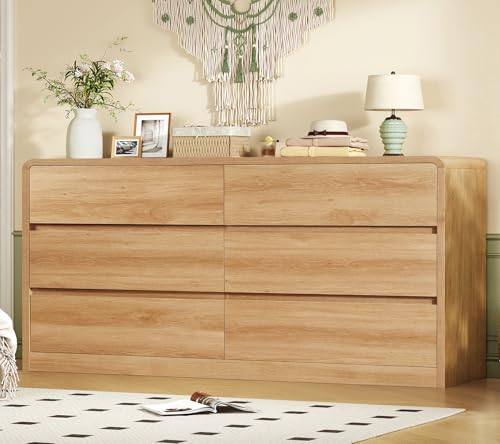
TEENFON 55" Dresser for Bedroom with 6 Drawers, Dressers & Chests of Drawers with Curved Profile Design, 6 Drawer Dresser, Bedroom Dressers, Wood Dressers for Bedroom, Hallway, Natural
Check price on Amazon
Jocoevol Fluted 5 Drawer Dresser, 43" Tall Dresser Chest of Drawers Curved Profile Design, Wood Mid Century Vertical Dresser Natural Texture for Bedroom, Natural Dresser
Check price on AmazonFrequently Asked Questions
What does "natural wood" actually mean on a product listing?
In most listings, "natural wood" means the piece is made from a wood species and finished without a heavy painted coat, so the grain remains visible. However, the term can describe both solid wood and engineered wood with a real wood veneer. Check the product details for phrases like "solid wood construction" or "solid hardwood frame" to confirm what you are buying.
Is a chest of drawers or a dresser better for a small bedroom?
A chest of drawers is usually the better choice for a small bedroom because it stores the same volume of clothing in a taller, narrower footprint. A dresser is wider and shorter, which suits rooms with long empty walls. If floor space is limited, a tallboy chest or a lingerie chest uses vertical space efficiently.
How many drawers do I need for one person's clothing?
For a single adult, a five-drawer chest is a common starting point: one drawer for undergarments, one for shirts or folded tops, one for trousers or jeans, one for knitwear, and one for seasonal or occasional items. Couples often combine a chest with a closet or a wider dresser to avoid crowding.
Do natural wood chests need special care?
Dust regularly with a soft, slightly damp cloth and avoid harsh chemical cleaners. Keep the piece out of direct sunlight to slow uneven color change, and maintain indoor humidity within a moderate range to reduce seasonal expansion and contraction. Oiled finishes may need re-oiling every year or two, while lacquered finishes generally only need wiping.
Can I paint a natural wood chest later?
Yes. Solid wood accepts paint well after light sanding and priming, which is one of the advantages of natural wood over veneered panels. Keep in mind that painting covers the grain permanently, so it is worth living with the natural finish for a while before committing to a color change.
What should I check in customer reviews before buying?
Look for comments about drawer smoothness after several months of use, whether the piece arrived with damage, how well the finish matches the listing photos, and whether the assembly instructions were clear. Reviews mentioning wobble, sticking drawers, or strong odors are worth taking seriously.
Final Thoughts Before You Buy
A natural wood chest of drawers is a practical, long-lasting addition to a bedroom when you match the species and construction to how you actually live. Prioritize dovetail drawer boxes, smooth glides, and a finish that suits your room's light. Confirm the dimensions against your floor plan, and treat wall anchoring as a required step rather than an optional extra.
If you are still narrowing down the right configuration, compare a natural wood chest of drawers with a three-drawer natural wood dresser to see which storage layout fits your clothing volume. For coordinated bedroom sets, the natural wood dresser and nightstand set guide shows how to build a cohesive look across matching pieces.