Matching Night Stand and Dresser: The Complete Guide
Discover how to pair a nightstand with a dresser for a coordinated bedroom. Learn about proportions, finishes, drawer counts, and design pairings that bring harmony to your space.
Explore the GuideWhy a coordinated pair matters: A matching night stand and dresser set creates visual rhythm in the bedroom. The two pieces work together as the primary storage anchors, so their scale, finish, and hardware should feel intentional. This guide walks you through the decisions that make that pairing successful.
Why Pair a Nightstand With a Dresser
The nightstand and dresser are the two most-used storage pieces in most bedrooms. The nightstand holds the items you reach for daily, while the dresser manages folded clothing and larger accessories. When these two pieces share a design language, the bedroom feels considered rather than pieced together. That does not mean they must be identical. Matching can mean identical finishes and hardware, or it can mean a shared wood tone, a similar drawer profile, or a coordinated metal accent.
Beyond aesthetics, a coordinated pair simplifies furnishing decisions. You avoid the trial-and-error of mixing unrelated pieces and reduce the risk of a bedroom that feels visually scattered. A well-matched pair also tends to hold resale and relocation value better because the set reads as a complete bedroom collection rather than isolated furniture.
Key Factors When Matching a Nightstand and Dresser
1. Proportion and Height
Height relationships drive the visual balance of the bedroom. The nightstand should sit close to the mattress top, usually between 24 and 28 inches tall. The dresser can be taller or shorter depending on its placement. If the dresser sits beside the bed as a second surface, its top should align roughly with the nightstand top for a clean horizontal line. A mid-century modern tallboy dresser paired with a compact nightstand creates a deliberate height contrast that works in small bedrooms.
Width matters too. A nightstand that is too wide for the bed-to-wall gap looks cramped. Aim for at least two inches of clearance on each side of the nightstand so drawers open without obstruction.
2. Finish and Wood Tone
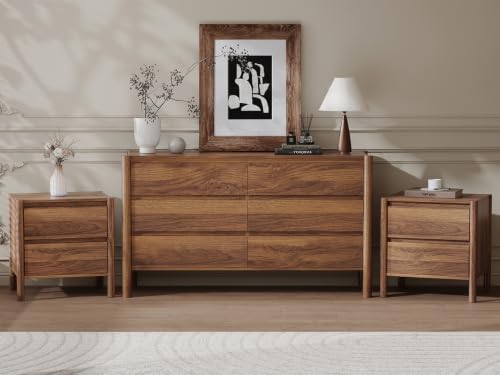
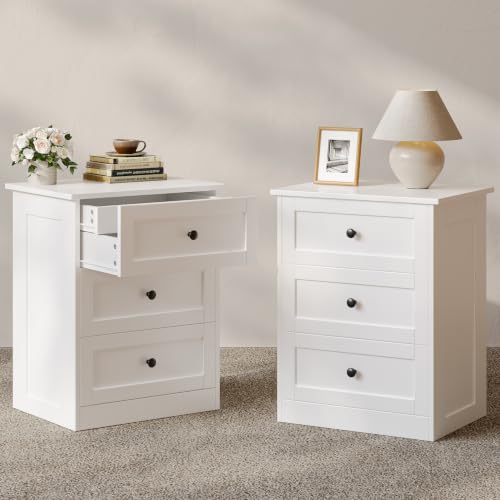
The most common matching strategy is to repeat the finish. A walnut dresser paired with walnut nightstands gives a formal, hotel-like consistency. A white dresser with white nightstands brightens a compact bedroom. If you prefer a curated look, choose a shared undertone rather than an exact match. A warm oak dresser can pair with a slightly darker nightstand as long as both share a honey undertone. A matte black dresser works well with black metal nightstands for an industrial pairing.
3. Style and Design Language
Style coordination is more forgiving than finish matching. A mid-century dresser pairs naturally with a mid-century nightstand featuring tapered legs and a similarly angled profile. A farmhouse dresser with recessed panels pairs well with a nightstand that repeats shaker-style framing. The goal is to repeat one or two design cues—leg shape, drawer front profile, or hardware style—rather than every detail.
4. Drawer Count and Function
The dresser typically carries the bulk of bedroom storage, so a 6 drawer dresser or larger is common for couples. The nightstand should complement that storage rather than compete with it. A two-drawer nightstand handles bedside essentials, while a three-drawer design adds room for small clothing items. If the dresser is a compact 3 drawer dresser, a nightstand with open shelving can add accessible storage without duplicating drawer capacity.
5. Hardware Consistency
Hardware is the simplest way to tie two different pieces together. Swapping knobs on a nightstand to match the dresser pulls takes minutes and creates instant cohesion. A gold hardware dresser paired with a nightstand refitted with matching gold pulls reads as a set even if the wood tones differ slightly. Hardware swaps are also reversible, which helps if your design preferences shift.
Matching Strategies by Bedroom Style
Traditional and Formal Bedrooms
Traditional bedrooms favor exact matching sets. A mahogany dresser with a coordinating mahogany nightstand, both featuring classic brass hardware, creates the formal cohesion this style expects. Add a marble top dresser if you want a more elevated traditional look, and pair it with a smaller marble-top nightstand to repeat the stone accent.
Modern and Minimalist Bedrooms
Modern bedrooms often prefer a cleaner, more restrained pairing. A minimalist dresser with flush drawer fronts pairs well with a simple, low-profile nightstand in the same finish. Avoid ornate hardware and instead let the geometry of the pieces do the coordinating. A low-profile dresser paired with a low nightstand keeps sightlines open.
Mid-Century and Retro Bedrooms
Mid-century design rewards a matched set with tapered legs and warm wood tones. A mid-century modern dresser and nightstand pairing is a classic choice. If you prefer to mix, pair a mid-century modern 6 drawer dresser with a slightly different nightstand that repeats the tapered leg and warm finish.
Small and Apartment Bedrooms
Compact bedrooms benefit from a scaled-down pair. A small dresser with a matching compact nightstand keeps the room from feeling crowded. Look for nightstands with a single drawer and an open shelf to preserve floor space. A narrow dresser paired with a slim nightstand fits tight wall runs without blocking walkways.
Comparing Nightstand and Dresser Tiers
The table below uses quality tiers rather than numeric figures. Use it to understand what each tier typically delivers in terms of construction and longevity.
| Tier | Typical Construction | Best For |
|---|---|---|
| Entry-level | Engineered wood with laminate or veneer, basic drawer glides | Guest rooms, starter apartments, and temporary setups |
| Mid-range | Solid wood frame with veneer panels, side-mounted or ball-bearing glides | Primary bedrooms and daily-use family homes |
| Premium | Solid hardwood throughout, dovetail joinery, soft-close glides | Long-term primary bedrooms and design-focused spaces |
| Luxury | Hand-finished hardwood, mortise-and-tenon joinery, premium hardware | Statement bedrooms and collectors of fine furniture |
Mid-range pieces usually offer the best balance of durability and design flexibility for a matching night stand and dresser pair. Entry-level sets work for low-traffic rooms, while premium and luxury tiers justify themselves through joinery quality and finish longevity.
Design Pairings That Work
Some pairings are reliably successful across bedroom styles. The following combinations are worth considering:
- Wood dresser with metal nightstand: A warm wood dresser paired with a black metal nightstand creates contrast without visual conflict. The metal repeats in drawer pulls or lamp bases to tie the room together.
- White dresser with natural wood nightstand: A white dresser lightens the room while a natural wood nightstand adds warmth. This pairing works well in coastal and Scandinavian bedrooms.
- Tall dresser with low nightstand: A tall dresser paired with a low nightstand establishes a clear height hierarchy. Use this when the dresser sits away from the bed.
- Wide dresser with two nightstands: A wide dresser flanked by two matching nightstands creates a symmetrical arrangement often used in primary bedrooms. This layout works best when the dresser sits opposite the bed.
- Mirrored dresser with glass-accent nightstand: A mirrored chest of drawers paired with a nightstand featuring glass or mirrored accents extends the reflective theme.
Common Mistakes to Avoid
- Ignoring scale: A tiny nightstand next to a large dresser looks unbalanced. Match visual weight, not just style.
- Over-matching: Identical pieces in every detail can feel showroom-like. Leave room for one contrasting element, such as a different hardware finish.
- Mismatched hardware finishes: Mixing brushed nickel and brass without a bridging material can look accidental. Stick to one metal family or deliberately contrast with a third material.
- Skipping measurements: Always measure the wall space, the gap beside the bed, and the drawer clearance before ordering. A nightstand that blocks a closet door or radiator is a functional failure regardless of style.
- Forgetting the bed height: The nightstand top should sit within a few inches of the mattress top. A nightstand that is too low forces you to reach down; one that is too high feels awkward.
Frequently Asked Questions
Should the nightstand and dresser match exactly?
Exact matching is a traditional approach that creates a formal, coordinated bedroom. However, many designers prefer complementary pairings where the pieces share a finish or wood tone but differ in size or style. The best choice depends on your personal preference and the overall design direction of your bedroom.
What size nightstand should I pair with my dresser?
The nightstand should be proportional to your bed and dresser. A good rule is to choose a nightstand that sits at roughly the same height as your mattress top, typically between 24 and 28 inches tall. If your dresser is tall and narrow, a slightly shorter nightstand creates visual balance. For wide dressers, larger nightstands help anchor the room.
Can I mix wood tones between a dresser and nightstand?
Yes, mixing wood tones is a widely accepted design technique. The key is to choose tones that share an undertone or to introduce a third material like metal or painted wood to bridge the difference. Blending a walnut dresser with oak nightstands works when the grain patterns and finish sheen are harmonious.
Are matching bedroom sets still in style?
Matching sets remain popular for their convenience and cohesive appearance, especially in traditional and transitional bedrooms. Contemporary design often favors curated pairings that share a design language without being identical. Both approaches are valid, and the right choice depends on the aesthetic you want to achieve.
How many drawers should a matching nightstand have?
A nightstand with two or three drawers is the most versatile choice. Two drawers handle bedside essentials like books, glasses, and chargers, while a third drawer adds room for pajamas or small accessories. Single-drawer nightstands work well in compact spaces, while open-shelf designs suit those who prefer easy access.
Bringing It Together
A matching night stand and dresser pairing is ultimately about intentionality. Decide whether you want an exact match, a complementary pair, or a curated contrast, then commit to that direction through finish, hardware, and proportion. Measure your space carefully, consider the drawer capacity each piece needs to deliver, and choose a quality tier that matches how heavily the furniture will be used. For more pairing options, explore our guides on matching dresser and nightstand combinations and matching chest of drawers and dresser layouts. If you are furnishing a full bedroom, the master bedroom dresser guide covers larger-scale storage planning.
Ready to find your pair? Browse recommended nightstand and dresser combinations selected for coordination and build quality.
View Recommended Sets