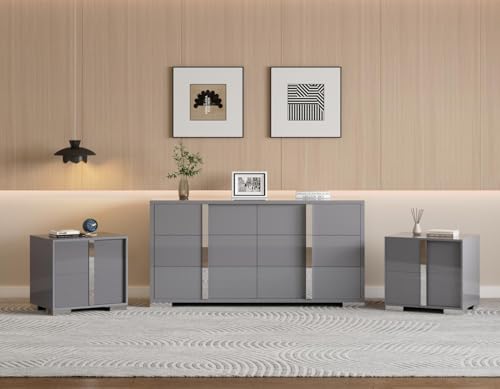
Dark Gray Dresser and Nightstand Set: The Complete Guide
Everything you need to know before choosing a matched dark gray bedroom storage set — from finish and material selection to drawer layout, proportion, and room integration.
Why a matched dark gray set works: A dark gray dresser and nightstand set brings instant visual cohesion to a bedroom. The muted charcoal-to-slate palette pairs naturally with warm woods, crisp whites, and metallic accents, making it one of the most versatile neutral foundations in modern bedroom design. This guide walks you through every decision point so you can choose a set that fits your space, your storage habits, and your long-term expectations.
What Defines a Quality Dark Gray Dresser and Nightstand Set
Before browsing product listings, understand that "dark gray" covers a wide spectrum — from soft graphite and charcoal to deep slate and gunmetal-tinged gray. The finish tone, material construction, and hardware pairing collectively determine how the set reads in a room and how well it will hold up over years of daily use. Below are the core factors that separate a well-built set from an average one.
Finish Depth and Sheen
Dark gray finishes range from matte chalk to satin lacquer to high-gloss. Matte and satin finishes hide fingerprints and dust better, making them practical for daily use. High-gloss finishes create a more contemporary, reflective look but require more frequent wiping. Look for finishes described as water-based, low-VOC, or catalyzed lacquer for better durability and indoor air quality.
Material Construction
Solid wood frames with plywood drawer boxes offer the best balance of stability and longevity. Engineered wood with quality veneer is a solid choice for mid-range sets when the joinery is sound. Examine drawer bottoms — a reinforced bottom panel prevents sagging under heavier loads like jeans and linens. Dovetail or box joints outperform stapled construction over time.
Hardware Coordination
Dark gray sets commonly feature brushed nickel, matte black, brass, or gunmetal hardware. Brass and gold tones warm the cool gray and suit transitional and glam styles. Matte black and gunmetal reinforce a modern or industrial aesthetic. Ensure the nightstand hardware exactly matches the dresser — mismatched pulls are a common quality tell in lower-tier sets.
Drawer Glide Quality
Ball-bearing full-extension glides are the benchmark for smooth, quiet operation and full access to drawer contents. Side-mounted roller glides are common in entry-level sets and are serviceable but less smooth. Soft-close mechanisms reduce slam noise and wear. Test the glide rating — a higher load rating indicates sturdier construction suited to heavier clothing storage.
Dresser and Nightstand Set Tiers: What to Expect at Each Level
To help you calibrate expectations without referencing fluctuating market figures, here is a tier-based framework. Each tier describes relative construction quality, material grade, and feature set — not absolute figures. Use this to match your priorities: a starter-tier set suits a guest room or first apartment, while a high-end tier set is a long-term investment for a primary bedroom.
| Tier | Typical Construction | Drawer System | Best For |
|---|---|---|---|
| Entry-level / Starter tier | Engineered wood panels with laminated or painted finish; stapled or cam-lock assembly | Side-mounted roller glides; drawer bottoms may need reinforcement for heavy loads | Guest rooms, dorm spaces, first apartments, seasonal use |
| Mid-range / Balanced tier | Engineered wood core with veneer or solid wood face frames; dowel-and-cam joinery with corner blocks | Ball-bearing glides with partial or full extension; some soft-close options | Primary bedrooms, daily-use family homes, transitional styling |
| Premium / High-end tier | Solid wood frames (oak, maple, or ash) with plywood drawer boxes; dovetail or box joints; catalyzed finish | Full-extension ball-bearing glides with soft-close; higher load ratings | Long-term primary bedroom use, design-focused spaces, heavy storage needs |
| Luxury / Flagship tier | Hardwood solids with hand-finished detailing; mortise-and-tenon joinery; premium hardware | Premium full-extension glides; felt-lined top drawers; integrated organization | Designer interiors, heirloom-quality expectations, master suites |
Within each tier, "good value for its tier" means the set delivers the expected construction and features without cutting corners on structural elements like drawer bottoms or back panels. A mid-range set with full-extension soft-close glides and dovetail joinery is feature-rich for its class and represents a worthwhile investment for a primary bedroom.
Sizing the Set to Your Room
Proportion is the most common mistake in bedroom furniture selection. A dresser that is too tall can overpower a nightstand; a nightstand that is too low relative to the mattress height looks unbalanced. Use these guidelines:
- Dresser width: Allow at least 30 inches of clearance in front of the dresser for drawer extension and comfortable standing room. For a queen bed in a standard bedroom, a dresser between 54 and 66 inches wide typically balances the room without crowding.
- Dresser height: 30 to 36 inches suits most adults for comfortable top-surface use. Taller chest-style units (40 to 50 inches) work well in narrow rooms where vertical storage is prioritized.
- Nightstand height: The nightstand top should sit within 2 to 4 inches of the mattress top for easy reach from bed. Standard nightstand heights range from 22 to 28 inches.
- Nightstand width: 18 to 24 inches is typical for a single-drawer or two-drawer nightstand. Ensure the nightstand does not block closet doors or walkways.
- Visual weight: A dark gray finish reads heavier than white or light wood. In small rooms, choose a set with tapered legs or a lighter interior drawer finish to reduce visual bulk.
Drawer Layout and Storage Capacity
A matched set usually pairs a six- or seven-drawer dresser with a one- or two-drawer nightstand. The internal layout matters as much as the exterior dimensions:
- Top drawers: Shallow drawers (4 to 6 inches deep) are ideal for socks, undergarments, and accessories. Felt lining protects delicate items and reduces sliding noise.
- Middle drawers: Medium-depth drawers (6 to 8 inches) suit folded shirts, sweaters, and activewear.
- Bottom drawers: Deep drawers (8 to 10 inches) accommodate jeans, linens, and bulky items. A reinforced bottom panel is essential here.
- Nightstand drawers: A two-drawer nightstand offers a shallow top drawer for personal items and a deeper lower drawer for books or a tablet. Consider a nightstand with an open shelf or cubby if you prefer easy access to reading material.
- Organization add-ons: Consider compatible clothes drawer dividers and a clothing drawer organizer to keep the dark gray set functional long after the initial setup.
Styling a Dark Gray Set in the Bedroom
Dark gray is a grounding color — it anchors a room and allows accent colors and textures to stand out. Here is how to style the set for a cohesive look:
- Warm the palette: Pair the cool gray with warm wood tones, tan leather, or amber lighting. A dark brown dresser and nightstand pairing offers a warmer alternative if you are comparing finishes.
- Add contrast: White bedding, light curtains, and a pale rug prevent the set from making the room feel heavy. Metallic accents in brass or brushed nickel bridge the cool and warm elements.
- Keep the nightstand top curated: A lamp, a small tray, and one or two books are enough. Clutter on a dark surface is visually amplified.
- Coordinate the mirror: If your dresser includes or pairs with a mirror, a simple framed mirror in a matching or contrasting metal finish keeps the focal point clean. Explore dark gray dresser and nightstand pairing options for a complete look.
- Consider the room's light: North-facing rooms with cool light can make dark gray feel colder; add warm-toned bulbs and textured fabrics to balance.
Material and Finish Considerations for Longevity
A dark gray finish shows dust and scratches more readily than mid-tone wood, so finish quality matters. Look for these indicators of durable construction:
- Catalyzed or conversion varnish finishes resist moisture and abrasion better than basic lacquer or paint.
- Sealed drawer interiors reduce moisture absorption and make cleaning easier.
- Solid wood edge banding on engineered wood panels protects against chipping at drawer and door edges.
- Reinforced back panels prevent racking (side-to-side wobble) in taller dressers.
- Anti-tip hardware is essential for any dresser over 30 inches tall, particularly in homes with children. Check that the set includes or supports wall-anchoring.
If you are comparing this set against solid wood options, our guide to dark oak dresser finishes explains how wood grain and tone differ from painted or laminate gray surfaces. For a broader look at paint-based finishes, see the dark grey dresser overview.
Common Mistakes to Avoid
- Buying the nightstand without measuring mattress height. A nightstand that sits well below the mattress line feels disconnected from the bed.
- Ignoring drawer extension. Partial-extension glides limit access to the back of the drawer — check for full-extension on the dresser's main drawers.
- Assuming the gray tones match. Verify that the dresser and nightstand share the same finish lot or are explicitly sold as a matched set; dye lots and paint batches can vary.
- Skipping the wall anchor. Even a well-built dresser can tip if drawers are left open. Anchor the dresser to a stud.
- Overlooking the room's traffic flow. Mark the footprint with painter's tape before assembly to confirm clearance around doors and the bed.
Frequently Asked Questions
Do dark gray dresser and nightstand sets make a small bedroom feel smaller?
Not necessarily. Dark colors recede visually when paired with light walls and bedding, and they can make a room feel grounded rather than cramped. The key is proportion — choose a compact dresser and a slim nightstand, and keep the top surfaces uncluttered. A set with tapered legs or a floating base also reduces visual weight.
What color bedding works best with a dark gray set?
Crisp white, cream, and soft oatmeal bedding provide clean contrast. For a moodier look, layer charcoal and slate bedding with texture — linen, waffle weave, or chunky knits — to prevent a flat, monochrome appearance. Accent pillows in mustard, rust, or sage green add warmth without competing with the gray.
Is it better to buy a matched set or mix and match?
A matched set guarantees consistent finish, hardware, and proportion, which simplifies styling and usually reads as more intentional. Mixing and matching offers more flexibility but requires careful attention to tone matching. If you choose a set, confirm that the nightstand height aligns with your mattress and that the dresser width fits your wall without crowding.
How do I keep a dark gray finish looking clean?
Dust weekly with a microfiber cloth. For matte finishes, use a slightly damp cloth and dry immediately — avoid silicone-based polishes that can leave streaks. For satin or gloss finishes, a mild soap-and-water solution is sufficient. Avoid abrasive cleaners, which can dull the sheen and expose the substrate beneath the finish.
Should the dresser and nightstand be the same height?
No — they serve different functions. The dresser should sit at a comfortable standing height (30 to 36 inches), while the nightstand should align with the mattress top (22 to 28 inches). The set should share a consistent design language, but matching heights are neither expected nor functional.
Ready to Compare Dark Gray Sets?
Browse curated dark gray dresser and nightstand sets selected for construction quality and finish consistency.
View Recommended Sets