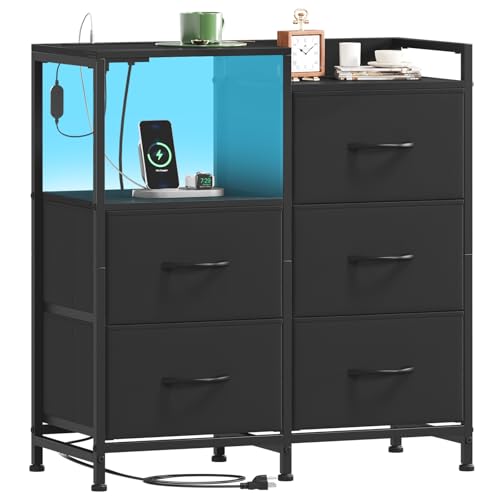
Chest of Drawers and Night Stand: The Complete Pairing Guide
Learn how to choose a chest of drawers and night stand that work together beautifully. From sizing and materials to style coordination and storage planning, this guide gives you everything needed to furnish a cohesive, organized bedroom.
START WITH THE FRAMEWORKWhy Pair a Chest of Drawers with a Night Stand
A chest of drawers and a night stand are the two most-used storage pieces in a bedroom. The chest handles folded clothing, linens, and overflow items, while the night stand keeps essentials within arm's reach of the bed. When these two pieces are chosen together, the result is a bedroom that feels intentional rather than assembled piece by piece.
Pairing them thoughtfully solves several common bedroom problems at once. It creates visual balance on either side of the bed, prevents the mismatched-furniture look that often results from buying items separately, and ensures that storage capacity matches real daily routines. A coordinated pair also makes better use of wall space because you can plan heights and widths as a single composition.
For shoppers in the research stage, this guide assumes you already know you want both pieces. The goal is to help you compare options confidently, understand what separates an entry-level set from a premium one, and recognize which construction details actually matter in daily use. If you are still deciding between furniture categories, the broader buying guides section covers foundational comparisons.
Key insight: The chest of drawers anchors the room's storage capacity, while the night stand supports the bed's immediate needs. Treat the chest as the primary investment and the night stand as the supporting piece that ties the arrangement together.
The Buying Framework: Five Decision Points
Before comparing individual products, work through five decision points. Each one narrows the field and prevents the most common buying mistakes, such as choosing a chest that is too deep for the room or a night stand that is too tall for the mattress height.
1. Measure the Room and the Bed
Record the wall length available for the chest, the clearance on each side of the bed, and the height of your mattress top. Night stand height should sit within a few inches of the mattress top for comfortable reach. The chest should leave at least 24 inches of walking clearance in front of the drawers when they are open.
2. Decide on Drawer Count and Configuration
A chest of drawers typically offers four to six drawers, while a night stand usually has one to three. Think about what you fold versus what you store upright. Deep drawers suit bulky items, while shallow drawers work better for accessories and delicate clothing.
3. Choose a Construction Tier
Construction quality separates the tiers more than any visual feature. Entry-level pieces use stapled joints and particle board. Mid-range pieces add screwed or doweled joints and better drawer slides. Premium and luxury tiers use dovetail joints, solid wood drawer boxes, and full-extension slides with soft-close mechanisms.
4. Select Materials and Finish
Solid wood, engineered wood with veneer, and metal each have distinct advantages. Solid wood is repairable and develops character over time. Quality veneers resist warping and offer consistent color. Metal frames suit modern and industrial styles and are often lighter to move.
5. Coordinate the Style
Decide whether you want a matching set or a coordinated pairing. Matching sets share identical finishes and hardware. Coordinated pairings share design language, such as similar leg shapes or hardware finishes, while allowing variation in size and silhouette.
| Decision Point | What to Measure or Decide | Common Mistake to Avoid |
|---|---|---|
| Room and bed measurements | Wall length, walking clearance, mattress height | Buying a chest too deep for the walking path |
| Drawer configuration | Deep vs. shallow drawers, total drawer count | Choosing drawer count without planning contents |
| Construction tier | Joint type, drawer slide quality, drawer box material | Judging quality by finish alone |
| Materials and finish | Solid wood, veneer, metal, painted finish | Mixing more than two wood tones in a small room |
| Style coordination | Matching set vs. coordinated pairing | Ignoring hardware and leg style compatibility |
Sizing Your Chest and Night Stand
Sizing is where most bedroom furniture plans succeed or fail. A chest of drawers that looks reasonable in a showroom can overwhelm a small bedroom, and a night stand that seems appropriately sized can end up too tall or too short once the mattress and bedding are in place.
Chest of Drawers Size Categories
Tall chests, often called tallboy chests, typically stand between 40 and 60 inches high with a footprint of roughly 30 to 40 inches wide. They suit compact rooms because they use vertical space. Wide chests, sometimes called lowboy chests, run 50 to 70 inches wide and 30 to 36 inches high, offering generous top surface area and a horizontal profile that works well under windows. Standard chests fall between these extremes.
Depth matters as much as width. Most chests are 16 to 20 inches deep. In narrow rooms, a shallow chest preserves walking space. If you are furnishing a compact bedroom, the guidance on tall chests of drawers explains how vertical storage can replace a wider footprint.
Night Stand Size Categories
Standard night stands measure 18 to 24 inches wide, 16 to 20 inches deep, and 22 to 28 inches high. The top surface should align within two to four inches of the mattress top. Taller night stands suit platform beds and thicker mattresses, while lower night stands pair with low-profile bed frames.
If space beside the bed is limited, a narrow night stand under 18 inches wide preserves clearance. For rooms where the bed sits close to a wall on one side, a single night stand paired with a larger chest on the opposite wall is a practical arrangement.
Proportion Between the Two Pieces
The chest should be visibly taller or wider than the night stand so the arrangement has a clear hierarchy. A common guideline is for the chest to be at least 12 inches taller than the night stand, or substantially wider if the chest is a low, wide design. This prevents the two pieces from competing visually.
| Piece | Typical Width | Typical Height | Best For |
|---|---|---|---|
| Tall chest of drawers | 30–40 in | 40–60 in | Compact bedrooms, vertical storage |
| Standard chest of drawers | 40–50 in | 32–44 in | Primary bedrooms, balanced storage |
| Wide chest of drawers | 50–70 in | 30–36 in | Large bedrooms, top surface display |
| Standard night stand | 18–24 in | 22–28 in | Most bed heights, bedside essentials |
| Narrow night stand | 12–18 in | 22–26 in | Small bedrooms, tight bedside clearance |
Materials and Construction Tiers
Material choice affects durability, maintenance, and how the two pieces relate to each other visually. Construction quality determines how the drawers feel every day and how long the furniture lasts.
Solid Wood
Solid wood chests and night stands are the most durable option and can be refinished if the surface wears. Oak and maple offer hardness and resistance to denting. Walnut and mahogany bring richer color and are common in premium and luxury tiers. Solid wood expands and contracts with humidity, so well-made pieces use floating panels and reinforced frames to accommodate movement.
Engineered Wood with Veneer
Engineered wood cores with quality veneers provide stability and a consistent finish. This construction is common in mid-range pieces and can be very durable when the veneer is thick and the edges are properly banded. Check that drawer boxes are solid wood or high-density engineered wood rather than thin particle board.
Metal and Mixed Materials
Metal frames and metal drawer fronts suit modern and industrial interiors. Metal night stands are often lighter and easier to reposition. Mixed-material designs combine wood bodies with metal legs or handles, which can help coordinate a wood chest with a metal night stand without making the room feel disjointed.
Construction Tier Descriptors
Use these tiers to compare products on construction rather than surface appearance.
- Entry-level Stapled or cam-lock joints, particle board drawer boxes, single-extension slides. Suitable for guest rooms and low-traffic use.
- Mid-range Screwed or doweled joints, engineered wood drawer boxes, ball-bearing slides. A solid choice for daily use in primary bedrooms.
- Premium Dovetail or reinforced joints, solid wood drawer boxes, full-extension soft-close slides. Built for long-term daily use.
- Luxury Hand-finished solid hardwood, traditional joinery, premium hardware, and often customizable sizing or finish. A long-term investment piece.
Drawer slides deserve special attention because they define the daily experience. Full-extension slides let you reach the back of the drawer, and soft-close mechanisms prevent slamming. For heavy contents, look for slides rated for higher loads. The guide to heavy-duty cabinet drawer slides explains load ratings and mounting options in more detail.
Practical check: Open and close every drawer on the floor model. A well-built drawer glides smoothly with one hand, closes flush, and shows no wobble when pulled fully open. This single test reveals more about construction tier than any label.
Style Coordination Strategies
Style coordination is about creating a relationship between the chest and the night stand, not about making them identical. There are three reliable approaches.
Matching Sets
A matching set shares the same finish, hardware, and design details. This is the simplest route to a cohesive bedroom and works especially well in traditional, transitional, and modern interiors. Matching sets are also easier to plan because the manufacturer has already balanced proportions between the chest and night stand.
Coordinated Pairings
A coordinated pairing uses two different pieces that share design language. Examples include a wood chest with a night stand in the same wood tone but a different silhouette, or two pieces with the same hardware finish but different body colors. This approach offers more flexibility and often produces a more collected, designer-style look.
Contrast Pairings
Contrast pairings deliberately mix materials or colors, such as a dark wood chest with a light upholstered or metal night stand. This works best in larger rooms where the two pieces are not immediately adjacent. In small bedrooms, limit contrast to one variable, such as hardware finish, to keep the room from feeling busy.
Hardware is the easiest coordination tool. Replacing knobs or pulls on one piece to match the other is a low-effort way to unify mismatched furniture. The guide to mid-century modern cabinet pulls covers hardware styles that suit a range of dresser and night stand designs.
| Approach | Best For | What to Match |
|---|---|---|
| Matching set | Streamlined, traditional, and modern bedrooms | Finish, hardware, and drawer front style |
| Coordinated pairing | Collected, designer-style interiors | Wood tone, hardware finish, or leg shape |
| Contrast pairing | Larger rooms with space between pieces | One shared element, such as metal accents |
Storage Planning for Both Pieces
Storage planning should start with an inventory of what you actually keep in the bedroom. List clothing categories, linens, accessories, and bedside items, then assign each category to the chest or the night stand.
What Belongs in the Chest of Drawers
The chest is the primary clothing store. Folded shirts, sweaters, jeans, and workout clothing belong in the larger drawers. Delicates and accessories work better in shallow drawers near the top. Bedding and linens can go in deep bottom drawers if the chest is the only storage piece in the room.
What Belongs in the Night Stand
The night stand holds items needed during the night and in the morning: a reading lamp, glasses, a phone charger, medication, and a book. The top drawer often works best for small personal items, while lower drawers or shelves hold books and extra bedding. Keep the top surface as clear as possible so it remains functional.
Drawer Organization
Drawer dividers and liners make both pieces easier to use. Dividers keep folded clothing upright and prevent accessories from sliding. Liners protect the drawer bottom and make cleaning easier. The guide to bureau drawer liners explains materials and fitting options. For a full system, see the dresser organization guide.
If you are furnishing a walk-in closet or a bedroom with limited floor space, a chest of drawers designed to fit inside a closet can supplement the bedroom pieces. The guide to chests of drawers for walk-in closets covers depth and height considerations for closet installations.
Storage rule of thumb: Assign the chest to long-term and seasonal storage, and the night stand to daily-use items. This division keeps the bedside area functional and prevents the chest from becoming a catch-all for small items.
Safety and Placement Checks
Both pieces should be stable and securely placed. Chests of drawers, especially tall models, must be anchored to the wall with anti-tip hardware. This is non-negotiable in homes with children or pets. Night stands should sit level on the floor and should not obstruct access to the bed.
Check that drawers open without hitting the bed frame, a door, or a wall. Leave clearance behind the chest for ventilation and for the anti-tip strap. Avoid placing a chest directly in front of a heating vent or radiator, because heat can dry out wood and cause veneer to lift over time.
For rooms with heavy use, confirm that drawer slides are rated for the contents you plan to store. Heavy bedding in a deep drawer puts more load on the slides than folded shirts. If you notice sagging or difficulty closing, redistribute weight rather than forcing the drawer.
- Anchor every chest over 30 inches tall to a wall stud.
- Keep the night stand top free of clutter so lamps and chargers sit securely.
- Check that drawer fronts do not collide with bed frames or furniture when opened.
- Leave at least two inches of clearance behind both pieces for air circulation.
Ready to Compare Your Options?
Use the framework above to shortlist chests of drawers and night stands that match your room, storage needs, and construction preferences. The recommended products below are organized to help you compare across tiers.
VIEW RECOMMENDED PRODUCTSFrequently Asked Questions
Should a chest of drawers and night stand match exactly?
They do not need to match exactly. Complementary finishes, coordinated wood tones, or a shared design language such as hardware style or leg shape can create cohesion while allowing each piece to serve its function. Matching sets are ideal for a streamlined look, while coordinated pieces offer more flexibility.
What size chest of drawers works best with a night stand in a standard bedroom?
A mid-range chest of drawers between 30 and 44 inches wide pairs well with a standard 18 to 24 inch night stand in most bedrooms. Measure your available wall space and leave at least 24 inches of clearance for walking paths. Tall chests suit compact rooms, while wide chests work well in primary bedrooms.
What materials are best for a chest of drawers and night stand set?
Solid wood such as oak, maple, or walnut offers the most durable construction and ages well. Engineered wood with quality veneers provides a stable, consistent finish at a mid-range tier. For premium and luxury tiers, look for dovetail joints, full-extension drawer slides, and kiln-dried hardwood frames.
How do I coordinate a chest of drawers with a night stand?
Coordinate through shared hardware finishes, similar wood tones, or consistent leg styles. You can also use the chest as the anchor piece and choose a night stand that echoes its drawer front design or silhouette. Avoid mixing more than two wood tones in a small bedroom.
Continue Your Research
These related guides cover specific topics that complement the chest and night stand pairing:
- Chest of drawers and matching nightstand sets for a fully coordinated look.
- Chest of drawers and nightstand set overview for set buying considerations.
- Champagne dresser and nightstand pairing for a specific finish example.
- Cherry wood dresser and nightstand set for wood tone coordination.
- Chest of drawers for bedroom for room-specific sizing advice.
- Tall chest of drawers for vertical storage strategies.
- Low and wide chest of drawers for horizontal storage and display surfaces.
- Chest of drawers with large drawers for bulky item storage.
- Chest of drawers to fit in a closet for closet-based storage planning.