Mid Century Modern Cabinet Pulls: The Complete Buying Guide
Mid century modern cabinet pulls are the quiet detail that brings a dresser to life. A clean bar pull or tapered handle can turn an ordinary chest into a statement piece. This guide explains the forms, materials, finishes, and sizing rules you need to choose hardware that looks intentional and works for years.
Explore Recommended PullsWhy cabinet pulls matter for mid century modern furniture: Mid century modern design is built on restraint. Ornament disappears, and proportions take over. Hardware becomes one of the few places where a maker can add personality, so the shape, finish, and scale of a pull carry far more visual weight than in traditional furniture. Getting this detail right makes a dresser feel cohesive; getting it wrong makes even a well-built piece feel unfinished.
What Makes a Cabinet Pull Mid Century Modern
Mid century modern hardware shares a recognizable visual language. It is geometric, low-profile, and free of scrollwork or ornate engraving. The design philosophy favors function made visible: a pull should show how it is gripped, and the transition between metal and wood should feel deliberate. In practice, most mid century modern pulls fall into a handful of families.
Bar Pulls
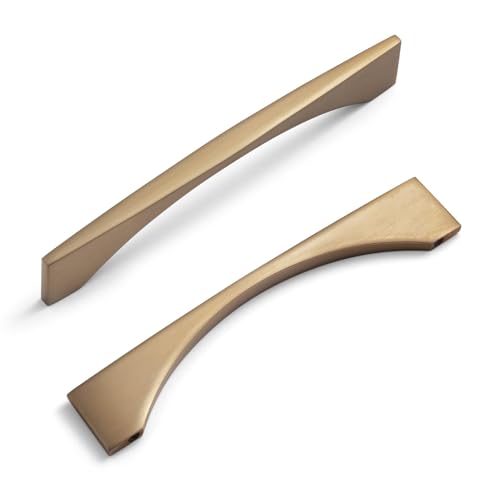
A straight or slightly arched bar anchored by two posts. The form is angular and architectural, and it works especially well on wide dresser drawers where a long horizontal line reinforces the cabinet's proportions.
Tapered Handles
A handle that narrows toward one end or both, echoing the tapered legs common in the era. This shape adds gentle movement without ornament and reads well on narrower drawers.
Recessed Finger Pulls
An integrated recess or routed lip rather than a protruding handle. This is the most minimalist option and suits flush-front dressers where the drawer face itself is the design feature.
Rounded Knobs
A simple knob with a flattened top or a slightly domed profile. Knobs are common on smaller drawers and nightstands, where a full handle would feel too heavy.
Half-Moon Pulls
A semicircular cup or half-moon shape mounted flush to the drawer face. It bridges the gap between knob and bar, adding a soft curve while staying visually light.
Edge Pulls
A slim lip mounted at the top edge of a drawer, often in a continuous profile. Edge pulls keep the drawer front clean and are a natural fit for minimalist interiors.
Materials and Finishes That Define the Look
The material and finish of a pull determine how it sits against wood grain and paint. Mid century modern furniture is most often paired with walnut, teak, oak, and painted finishes, and each pairs differently with metal tones.
| Material / Finish | Best For | Character |
|---|---|---|
| Brushed brass | Walnut, teak, and warm wood tones | Warm, understated sheen that ages gracefully |
| Antique brass | Vintage-inspired and restored pieces | Deeper tone with subtle patina and depth |
| Matte black steel | Light wood, white, and painted drawer fronts | Crisp contrast and a strong graphic line |
| Warm bronze | Mid-tone woods and muted palettes | Soft, earthy warmth that blends with grain |
| Walnut-toned wood | Walnut and teak furniture | Seamless, integrated look that hides hardware |
| Chrome or polished nickel | Cooler palettes and lighter woods | Bright, reflective, and more contemporary |
Solid metal pulls with a plated or lacquered finish tend to hold up better than thin stamped hardware, especially on drawers that are opened frequently. If you are restoring an older dresser, matching the original metal tone is often the most visually harmonious choice, even if the exact style is no longer produced.
How to Size Cabinet Pulls for a Dresser
Scale is the most common mistake in hardware selection. A pull that looks balanced on a small sample board can feel undersized or oversized once mounted on a full drawer front. The rules below are practical starting points rather than rigid formulas.
- Wide drawers: A bar pull spanning roughly one-third to one-half of the drawer width usually looks balanced. Longer pulls emphasize the horizontal line of a wide dresser.
- Narrow drawers: Short bar pulls or single knobs prevent visual clutter. Two small pulls on a narrow drawer can look crowded.
- Drawer height: Tall drawers can carry a slightly larger pull without feeling top-heavy. Shallow drawers benefit from slim profiles.
- Center-to-center spacing: Always measure the distance between the existing mounting holes before ordering. For new installations, confirm the pull's center-to-center measurement and drill accordingly.
- Screw length: Drawer front thickness varies. Choose screws that pass through the front without protruding inside the drawer box.
Pairing Pulls with Different Furniture Types
Hardware does not exist in isolation. The same pull can look at home on a low dresser and out of place on a tall chest if the scale is wrong. Consider how the piece is used and where it sits in the room.
Low Dressers and Sideboards
Long bar pulls reinforce the horizontal orientation of a low dresser. Keep the finish consistent across all drawers, and consider a continuous line of pulls for a more architectural look.
Tall Chests
Tall chests benefit from pulls that do not dominate. Slightly shorter bar pulls or matched knobs keep the vertical stack from feeling busy, especially when the chest has many drawers.
Nightstands
Smaller pieces call for smaller hardware. A single knob or a short pull is usually enough. Matching the finish to the dresser keeps the bedroom set cohesive without repeating the exact shape.
Nursery Dressers
Choose pulls with rounded edges and no sharp protrusions. Knobs should be firmly attached and free of loose parts. Hardware safety matters as much as style in a child's room.
Coordinating Pulls Across a Room
A bedroom rarely contains a single piece of furniture. Dressers, nightstands, and closet systems all need hardware, and the choices should feel related rather than identical. The most reliable approach is to fix one element, such as the finish or the geometric language, and vary the other.
- Keep the metal finish consistent across dressers and nightstands, but vary the pull shape by scale.
- Use bar pulls on large drawer banks and knobs on small drawers to create a natural visual hierarchy.
- If the room mixes wood tones, choose hardware that bridges them, such as brushed brass or warm bronze.
- Avoid mixing more than two metal tones in one room unless the palette is deliberately eclectic.
Replacing Existing Hardware
Swapping cabinet pulls is one of the highest-impact, lowest-effort updates for a dresser. Before ordering, confirm the center-to-center spacing of the current holes. If the new pull has a different spacing, the old holes will need to be filled and the drawer front refinished, which is a larger job than a direct swap.
For drawers with a single knob, replacing it with another single-mount knob is straightforward. For drawers with a two-point pull, matching the existing spacing keeps the installation simple. If you are changing the spacing, plan for wood filler, sanding, and a color-matched touch-up, especially on painted or veneered fronts.
Related DresserAdvisor Guides
Frequently Asked Questions
What defines a mid century modern cabinet pull?
Clean geometric lines, minimal ornamentation, and balanced proportions. Common forms include simple bar pulls, tapered handles, recessed finger pulls, and rounded knobs with a flat profile. Brushed brass, matte black steel, and walnut-toned wood are typical materials.
How do I choose the right pull size for my dresser?
Match the pull size to the drawer width and visual weight. Narrow drawers often suit small knobs or short pulls, while wide drawers benefit from longer bar pulls that span roughly one-third to one-half of the drawer width. Always measure center-to-center hole spacing before ordering replacement hardware.
Can I mix cabinet pull styles in one room?
Yes, mixing styles works when there is a unifying element such as finish, material, or geometric language. For a cohesive mid century modern look, use bar pulls on dressers and coordinated knobs on nightstands, keeping the finish and metal tone consistent.
What finish works best for a mid century modern dresser?
Brushed brass, antique brass, matte black, and warm bronze are the most versatile finishes. Brushed brass pairs well with walnut and teak, while matte black offers crisp contrast against lighter wood tones and painted finishes.
Do mid century modern pulls require special installation?
Installation is straightforward for most pulls. Confirm center-to-center spacing, use a template or jig for accurate drilling, and choose screws of the correct length for your drawer front thickness. Some bar pulls require two mounting points, so precise measurement matters.