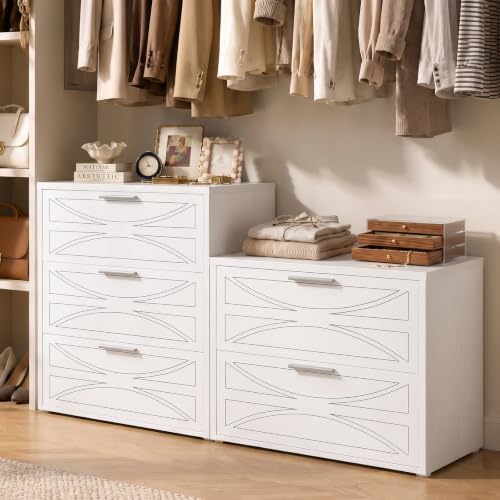
Why Choose a Chest of Drawers for Your Closet?
Closets are often the most underused storage space in a home. A chest of drawers to fit in closet layouts transforms that dead space into a functional wardrobe extension. Instead of cramming folded clothing onto shelves or stacking bins, you get smooth-gliding drawers that protect fabrics and keep items visible at a glance.
For small bedrooms, moving the chest into the closet can reclaim valuable floor area for a reading chair, a larger bed, or simply a more open feel. For walk-in closets, a freestanding chest adds a boutique-style dressing station. Either way, the right unit should match the closet's footprint, not the other way around.
Reach-In vs. Walk-In Closet Considerations
Reach-in closets usually demand slim, tall chests with shallow drawers. You need enough clearance to open drawers without backing into the door frame. Walk-in closets offer more flexibility — you can place a wider chest against a side wall or even a low-and-wide unit in the center as an island. Before shopping, identify your closet type and sketch a simple floor plan with measurements marked.
How to Measure Your Closet for a Chest of Drawers
Accurate measurements are the difference between a chest that glides into place and one that blocks your hanging rail. Follow these steps before you browse any product listings.
| Measurement | What to Measure | Clearance Needed |
|---|---|---|
| Width | Wall-to-wall space where the chest will sit | At least 2 inches on each side |
| Depth | Front-to-back space from wall to door swing | Drawer extension plus 2 inches |
| Height | Floor to lowest hanging rod or shelf | At least 6 inches above chest top |
| Door Swing | Arc of the closet door when fully open | Chest must not obstruct the arc |
Write these numbers down and bring them to the store or keep them handy while shopping online. A narrow chest of drawers with a depth under 18 inches is usually the safest bet for reach-in closets. For walk-in closets, you have more room to consider wider footprints.
Types of Chests That Fit Closet Spaces
Not every chest is designed for tight quarters. Here are the styles that consistently work well in closets, along with the tier of construction you can expect in each category.
Tall & Narrow Chests
Ideal for reach-in closets with limited floor area. Vertical storage maximizes drawer count without consuming width. Look for models under 24 inches wide.
Low & Wide Chests
Best for walk-in closets where you can spare horizontal space. A low profile keeps sightlines open and doubles as a folding surface.
Slim Lingerie Chests
Very shallow depth with many small drawers. Excellent for jewelry, accessories, and folded delicates in narrow closet nooks.
Corner Chests
Angled fronts fit into unused closet corners. A smart choice for odd-shaped walk-in layouts where straight walls are scarce.
If your closet has a dedicated alcove, a chest of drawers for walk-in closet placement can be built into the layout more permanently. For homes with limited closet room overall, explore low and wide chest of drawers options that sit beneath hanging sections.
Materials and Construction to Prioritize
Closets can be humid, especially in bathrooms or basements. Choose a chest with a solid build and moisture-resistant finish. Mid-range models typically use engineered wood with veneer, while premium and luxury tiers often feature solid hardwood frames and dovetail joints. For closets that see daily use, reinforced drawer runners and a rust-proof finish on hardware are worthwhile features.
Consider the weight of the clothing you plan to store. Heavy denim and winter layers demand thicker drawer bottoms and heavy-duty slides. Lighter items like shirts and accessories can work fine with standard side-mounted runners. A feature-rich unit in its class often includes soft-close mechanisms and adjustable levelers for uneven closet floors.
Placement and Safety Inside the Closet
Placement matters as much as size. Avoid blocking the closet door's swing path, and never position a chest directly under a low-hanging rod. If your closet has shelving, leave at least a few inches between the chest top and the lowest shelf for ventilation and easy access.
Safety is non-negotiable. Tall, narrow chests can tip if several drawers are opened at once. Anchor the unit to a wall stud using anti-tip straps or brackets. This is especially important in households with children or pets. Also check that the closet floor is level — adjustable feet or leveling glides can correct minor slopes.
Closet Chest Placement Checklist
- Verify drawer extension clearance before final placement.
- Keep the closet door swing arc completely clear.
- Anchor the chest to a wall stud for tip-over safety.
- Leave ventilation gaps around the unit and above the top.
- Confirm hanging rods do not interfere with drawer access.
Organizing Your Closet Chest for Maximum Efficiency
Once the chest is in place, assign drawers by category: top drawers for accessories and delicates, middle drawers for folded shirts and loungewear, bottom drawers for heavier items like jeans and sweaters. Drawer dividers keep small items from sliding around, while labeled bins on top of the chest can hold seasonal items or out-of-season shoes.
If your closet is especially tight, consider a chest dresser with deep drawers to consolidate bulky items into fewer drawers. Pair the chest with a chest of drawers and matching nightstand set if you want coordinated storage that extends beyond the closet.
Frequently Asked Questions
How do I measure my closet for a chest of drawers?
Measure the width, depth, and height of the available space inside your closet. Account for door swing, baseboards, and any hanging rails. Leave at least two inches of clearance on all sides for ventilation and easy drawer access.
What is the best depth for a closet chest of drawers?
A depth between 15 and 18 inches works best for most closets. This allows comfortable drawer extension without blocking walkways or hanging clothes. Shallower designs suit narrow reach-in closets, while deeper units work in walk-in spaces.
Can a chest of drawers fit inside a walk-in closet?
Yes, walk-in closets often accommodate mid-range or premium chests with wider footprints. Choose a unit that leaves clear walkways and does not obstruct shelving or hanging sections. Island-style placement works well in larger walk-in closets.
Should I anchor a chest of drawers inside a closet?
Yes, anchoring is strongly recommended for safety, especially with tall or narrow units. Use anti-tip straps or wall brackets to secure the chest to a stud. This prevents tipping when drawers are fully extended.
Final Selection Advice
Choosing a chest of drawers to fit in closet spaces comes down to three things: accurate measurements, the right depth, and safe placement. Prioritize slim or tall profiles for reach-in closets and wider low units for walk-ins. Select a construction tier that matches how heavily the chest will be used — entry-level works for light seasonal storage, while mid-range and premium tiers suit daily wardrobe access.
Before you commit, review our broader buying guides for construction details, and if you are also furnishing a bedroom, explore chest of drawers and matching wardrobe combinations that create a cohesive closet system.