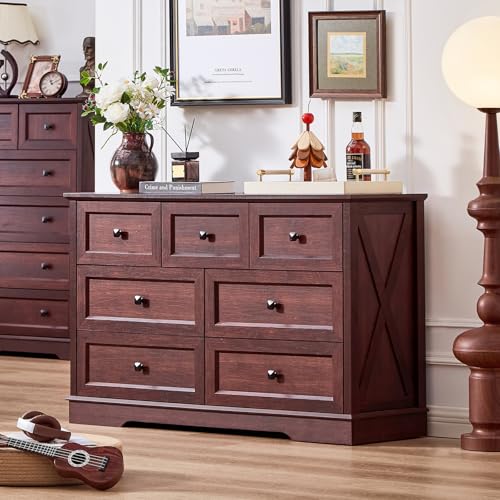
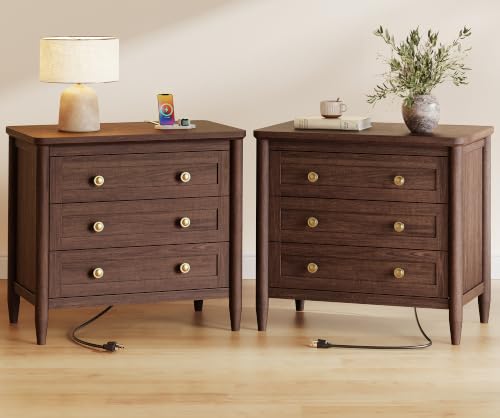
If you are researching a cherry wood dresser and nightstand set, you are likely past the browsing stage. You know you want matched bedroom furniture, and you want to confirm the details before you commit. This guide walks through what makes cherry wood distinctive, how coordinated sets are constructed, and which features separate an entry-level set from premium and luxury tiers — so you can judge any set you find against clear criteria.
Cherry has a devoted following in bedroom furniture because of its fine, tight grain and its rich reddish-brown heartwood. Unlike many woods that fade, cherry deepens in color over time — a quality buyers either love or need to plan around. A coordinated set keeps that patina consistent across both pieces, which is one of the strongest arguments for buying the dresser and nightstand together rather than assembling a mismatched pair over time.
Quick orientation: A cherry dresser is the anchor piece for clothing storage, while the nightstand handles bedside essentials. When sold as a set, the two pieces share wood species, stain tone, hardware finish, and drawer-front detailing — giving the room a deliberate, finished look that mix-and-match buying rarely achieves.
Why Choose Cherry Wood for a Matched Bedroom Set?
Cherry (often American black cherry) is classified as a hardwood and ranks among the more stable furniture woods when properly kiln-dried. That stability matters for a two-piece set, because the dresser and nightstand need to expand and contract at similar rates through seasonal humidity shifts. If one piece is solid cherry and the other is cherry-veneered engineered wood, they can age differently — a subtle mismatch you may not notice on day one but will notice after a few years.
Working characteristics that affect the finished piece
- Fine, closed grain: Cherry machines and finishes to a smooth surface, so it accepts stain evenly and shows minimal open-pore texture compared to oak or ash.
- Natural color depth: Heartwood carries the characteristic warm red-brown tone, while sapwood is lighter and creamier. Quality sets use heartwood on visible surfaces.
- Color evolution: Cherry darkens with light and oxygen exposure. New pieces can look noticeably lighter than aged ones, so plan for the patina if you add pieces over time.
- Janka hardness: Cherry sits in a middle-hardness band — harder and more dent-resistant than pine, softer than hard maple or hickory. It handles normal bedroom use comfortably without being difficult to repair.
If you are still weighing wood species broadly, the broader chest of drawers overview is a useful companion read before you narrow to cherry specifically.
Solid Cherry vs. Cherry Veneer: What the Set Actually Contains
Very few furniture pieces are solid cherry throughout — and that is not automatically a negative. Well-made veneered construction is common in mid-range and premium tiers because it resists warping on large flat panels like dresser sides and drawer faces. What matters is how the construction is specified and how honestly it is described.
| Construction Approach | What It Means | Typical Tier |
|---|---|---|
| Solid cherry (case, drawer fronts, top) | Full hardwood construction; heaviest and most repairable | Premium / Luxury |
| Solid cherry frame with veneered panels | Hardwood structural parts with stable veneered side panels | Mid-range / Premium |
| Cherry veneer over engineered wood core | Real wood surface layer over plywood or MDF core | Entry-level / Mid-range |
| "Cherry finish" on another wood species | Not cherry wood — a stain color only; verify the species | Not a true cherry set |
The last row is where many shoppers get caught. A listing described as a "cherry dresser and nightstand set" may mean cherry-colored stain on pine or rubberwood. If genuine cherry matters to you, confirm the wood species in the product specification, not just the finish name.
Drawer Construction: The Detail That Defines Longevity
Drawers are the most-used moving parts in a bedroom set, and their construction tells you more about long-term durability than the exterior finish. When comparing sets, inspect these four elements:
1. Joinery
- Dovetail joinery — interlocking wedge-shaped joints at drawer corners; the benchmark for premium and luxury tiers.
- Box joint / finger joint — strong and common in mid-range construction.
- Stapled or nailed butt joints — typical of entry-level pieces; adequate for light use but the first point of failure under heavy loads.
2. Drawer slides
Look for side-mounted or under-mounted metal slides with a stated load rating. Mid-range sets usually offer smooth, full-extension slides; premium and top-tier sets often add soft-close mechanisms. Wood-on-wood runners are traditional and can last, but they need waxing and feel less refined.
3. Drawer bottoms and boxes
A sturdy drawer box uses thicker sides and a bottom that sits in a groove rather than being stapled to the underside. Deep drawers on a wide dresser carry real weight — reinforced bottoms prevent sagging over time.
4. Dust panels and dividers
Better case goods include dust panels between drawer banks and sometimes felt-lined top drawers for jewelry or delicates. These are quiet quality signals that separate tiers.
Practical check: Open and close every drawer on both the dresser and nightstand before buying. They should glide without wobble, close flush without force, and show no daylight gaps at the corners. On a matched set, the drawer feel on both pieces should be identical — a discrepancy often signals different construction inside the two pieces.
Finish and Color Matching Across the Set
The whole point of buying a set is visual cohesion, and finish is where cohesion succeeds or fails. Cherry is typically finished with a clear or lightly tinted topcoat that lets the natural color show, though some lines use a reddish stain to push the tone. A few considerations:
- Consistency between pieces: In a factory-matched set, the dresser and nightstand are finished in the same batch and will match closely. If you buy the nightstand later as an open-stock item, expect slight tone variation.
- Sheen level: Satin finishes dominate bedroom furniture because they hide minor wear better than gloss. Confirm both pieces share the same sheen.
- Topcoat durability: Catalyzed lacquer and conversion varnish offer better moisture and scratch resistance than basic lacquer — worth noting on a dresser top that may hold a lamp, tray, or water glass.
- Hardware finish: Antique brass, brushed nickel, and matte black are the common pairings. Matching hardware across both pieces is a basic quality check.
If you are curious how cherry compares to other warm-toned wood options, the cherry chest of drawers guide covers tone differences against walnut and mahogany.
Sizing a Cherry Dresser and Nightstand Set for Your Bedroom
Proportion is the most common source of buyer regret with matched sets. A wide dresser paired with oversized nightstands makes a room feel crowded; undersized nightstands look stranded beside a large bed. Use these guidelines as a starting framework:
Dresser sizing
- Wide dresser (roughly 60–72 inches): Best as a standalone anchor on the main wall; suits queen and king bedrooms.
- Standard dresser (roughly 48–58 inches): A flexible middle ground for most primary bedrooms.
- Compact dresser (roughly 36–44 inches): Suits small bedrooms, guest rooms, and apartments.
Nightstand sizing
- Nightstand height should sit close to your mattress top, typically within a couple of inches, so items are reachable from bed.
- In a matched set, nightstands often sit slightly lower than the dresser top — this is intentional and keeps the dresser as the visual anchor.
- Leave a minimum walking clearance of about 24 inches between the bed and the dresser front so drawers can open fully.
For rooms where floor space is tight, sizing discipline matters more than drawer count. If you need to compress, a low and wide chest of drawers paired with slim nightstands often fits better than a tall dresser and bulky nightstands.
Entry-Level vs. Mid-Range vs. Premium vs. Luxury: Setting Expectations by Tier
Rather than comparing sets by currency figures, compare them by what each tier realistically delivers. This framing stays useful no matter where or when you shop.
| Tier | Typical Construction | Best For |
|---|---|---|
| Entry-level | Cherry veneer or cherry-finished engineered wood; stapled drawer boxes; basic side slides | Guest rooms, first apartments, short-term setups |
| Mid-range | Solid cherry frame with veneered panels; box-jointed drawers; smooth full-extension slides | Primary bedrooms with everyday use |
| Premium | Largely solid cherry; dovetail joinery; soft-close slides; dust panels; felt-lined top drawers | Long-term family bedrooms; buyers who plan to keep the set for years |
| Luxury | Fully solid hardwood case goods; hand-finished details; premium hardware; heirloom-grade joinery | Heirloom furniture buyers; formal or custom bedrooms |
A useful rule of thumb: the jump from entry-level to mid-range usually brings the biggest practical improvement in drawer feel and structural stability. Beyond mid-range, you are paying for joinery refinement, materials purity, and finish longevity — meaningful if you intend to keep the set for a decade or more.
How to Evaluate a Matched Set Before You Commit
Use this checklist whether you are shopping a set described as coordinated or assembling one yourself:
- Confirm the wood species. "Cherry finish" is not cherry wood. Check the product specification for solid cherry or cherry veneer language.
- Compare drawer internals. Dovetail or box joints, metal slides with a load rating, and reinforced bottoms are the durability markers.
- Check finish consistency. On a true factory set, color, sheen, and hardware should match exactly between dresser and nightstand.
- Verify dimensions and clearance. Measure your wall space, bed height, and walking clearance before ordering.
- Look for safety features. Anti-tip straps are essential for dressers — especially taller models — and should be included or available.
- Review assembly requirements. Some sets ship fully assembled; others require significant assembly. Factor the effort into your decision.
If you plan to build the set over time instead of buying together, the cherry wood dresser with mirror guide discusses how to source companion pieces that match an existing finish.
Is a Cherry Wood Dresser and Nightstand Set Right for You?
A matched cherry set is a strong choice if:
- You want a bedroom with a coordinated, intentional look without styling effort.
- You value a wood that gains character with age rather than staying static.
- You are prepared to buy at mid-range or above to get genuine cherry construction and durable drawers.
- You are furnishing a primary bedroom you plan to keep furnished for several years.
It may be a weaker fit if you are furnishing a temporary space, need maximum storage per square foot, or prefer a painted or highly contemporary look where cherry's warm grain is not the focal point.
Frequently Asked Questions
Is cherry wood good for a dresser and nightstand set?
Yes. Cherry is a durable hardwood with fine grain and a warm tone, and it holds up well under daily bedroom use. Its main considerations are color darkening over time and the need to confirm whether a set is solid cherry or veneered.
How do I match a cherry wood dresser with a nightstand?
Buying both pieces from the same collection is the simplest route. If sourcing separately, match wood species, stain tone, hardware finish, and drawer-front style, and keep the nightstand slightly lower than the dresser top for balance.
Does cherry wood change color over time?
Yes. Cherry deepens and reddens with light and air exposure. If you add a nightstand later, expect a slightly lighter tone that will gradually catch up to the dresser.
What size nightstand pairs best with a large cherry dresser?
Choose nightstands that sit slightly below the dresser top and relate proportionally to your bed size. Ensure at least 24 inches of clearance between the bed and dresser front for comfortable drawer access.