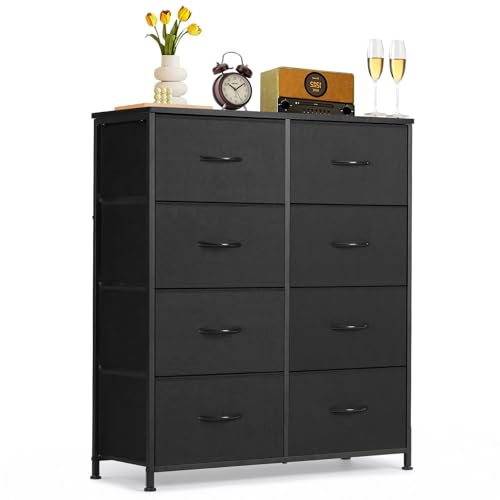
Chest of Drawers with Large Drawers: The Complete Guide
When standard drawers no longer keep up with your wardrobe, a chest with large drawers delivers the deep, generous storage your bedroom truly needs. This guide explains sizing, materials, organization, and how to choose the right configuration for your space and routine.
Explore the GuideWhy large drawers matter: A chest of drawers with large drawers is not simply a bigger piece of furniture. It is a storage system built around the reality of how people actually live — folded sweaters, stacked jeans, bedding sets, and seasonal layers all fit without crowding. The right configuration reduces overflow, protects clothing from compression, and keeps your bedroom visually calm.
What Defines a Chest of Drawers with Large Drawers?
The term describes a vertical or semi-vertical storage piece where at least two — and often all — of the drawers are sized for bulky or high-volume items. Unlike a standard dresser with shallow drawers meant for folded shirts and accessories, a large-drawer chest prioritizes depth and width. Interior drawer widths commonly range from roughly 28 to 36 inches, while drawer depths of 6 to 10 inches accommodate folded knitwear, denim stacks, linens, and off-season clothing.
These pieces sit at the intersection of form and function. They are typically taller than they are wide, with a footprint that suits bedrooms of nearly any size. If you are still comparing broad furniture categories, our overview of tall chest of drawers explains how vertical storage differs from low, wide dressers and why height often matters more than footprint.
Large Drawers vs. Standard Drawers: A Practical Comparison
The difference is not cosmetic. Standard drawers, often 4 to 5 inches deep, are designed for thin folds and small accessories. Large drawers add usable depth and width, which changes what you can store and how you organize it. Deep drawers also reduce the number of separate compartments needed, simplifying the way you sort clothing.
| Feature | Standard Drawers | Large Drawers | Best For |
|---|---|---|---|
| Typical depth | 4–5 inches | 6–10 inches | Bulky folded items and bedding |
| Typical interior width | 18–24 inches | 28–36 inches | Wide stacks and side-by-side organization |
| Ideal contents | Shirts, socks, accessories | Sweaters, jeans, linens, seasonal wear | High-volume wardrobes |
| Number per chest | 5–7 | 3–5 | Fewer, deeper compartments |
For a broader context on how these pieces fit into a full bedroom storage plan, see our chest of drawers hub, which covers drawer counts, heights, and room-specific recommendations.
Why Choose a Chest with Large Drawers?
Generous Volume
Deep drawers hold thick sweaters, folded jeans, and bedding sets without compression, so garments keep their shape longer.
Fewer Compartments
Large drawers simplify sorting. Instead of spreading items across many shallow compartments, you organize by category in fewer, roomier spaces.
Space-Efficient Footprint
A tall chest with deep drawers uses vertical space, making it a strong choice for smaller bedrooms that still need serious storage capacity.
Seasonal Flexibility
Deep drawers accommodate seasonal rotation, so off-season layers can be stored without moving to another room or a separate container.
Cleaner Visual Lines
Fewer drawer fronts and a compact silhouette create a more streamlined look than a wide dresser with many small drawers.
Durable Load Handling
Well-built large-drawer chests use reinforced joinery and heavy-duty glides, which are essential for the greater weight these drawers carry.
Sizing Guide: Matching Large Drawers to Your Room
Size is the single most important decision. A chest with large drawers must fit your room, your walkway, and your wardrobe habits. Before you commit, measure the available wall space, the height of the piece relative to your bed, and the clearance needed to open each drawer fully.
Key Dimensions to Measure
- Footprint width and depth: Confirm the chest fits your intended wall and leaves comfortable walking clearance.
- Drawer extension: Large drawers need room to pull out fully. Leave at least 24 to 30 inches of clear space in front.
- Height: A tall chest is efficient, but the top drawer should remain reachable for everyday use.
- Ceiling and trim: Check that the piece clears baseboards, window sills, and any wall decor.
For a deeper breakdown of dimensions by room type, our chest of drawers with deep drawers guide pairs depth measurements with practical placement advice. If you are working with a compact room, the low and wide chest of drawers alternative may better suit your layout, trading height for a longer horizontal footprint.
Choosing Drawer Count
A chest with large drawers typically has three to five drawers. Three-drawer models are ideal for couples who each need a deep drawer for folded clothing, while four- and five-drawer configurations offer separation for bedding, off-season wear, and everyday items. The tradeoff is straightforward: more drawers means more categories, but each drawer is shallower. Fewer drawers means deeper storage and less sorting flexibility.
Editorial Tip
If you frequently store bulky items, prioritize depth over count. A four-drawer chest with 8-inch drawers often serves a wardrobe better than a six-drawer chest with 4-inch drawers, because it reduces compression and eliminates the need for overflow bins.
Materials and Construction: What to Look For
Large drawers carry more weight, so construction quality matters more than it does on a shallow dresser. The frame, joints, and glides all need to handle repeated load without sagging or binding.
Frame and Drawer Box Materials
- Solid wood: Oak, maple, and walnut offer the most durable frames for deep drawers. Solid wood resists sagging under sustained load and can be refinished over time.
- High-grade engineered wood: A balanced mid-tier choice. Look for dense cores and moisture-resistant finishes, especially in humid climates.
- Entry-level composites: Acceptable for lighter use, but deep drawers in thinner composite boxes may flex under the weight of heavy textiles.
Our guide to solid wood chests explains how grain direction and joinery affect long-term stability, while the materials and finishes section covers finish durability and maintenance across wood types.
Joints, Glides, and Hardware
Dovetail joints remain the benchmark for drawer boxes, particularly on large drawers that carry significant weight. Box joints and reinforced stapled joints are common at entry level, while doweled and glued joints appear in mid-range and premium construction. For the glides, look for metal runners rated for heavy-duty use; large drawers should open smoothly even when fully loaded. If you are upgrading existing furniture, our notes on heavy-duty cabinet drawer slides translate directly to chest-of-drawers upgrades.
| Tier | Frame Material | Joinery | Glides | Best For |
|---|---|---|---|---|
| Entry-level | Engineered wood | Box or stapled joints | Basic metal runners | Light use, occasional storage |
| Mid-range | Engineered wood with solid wood fronts | Doweled or reinforced joints | Heavy-duty metal glides | Daily use for couples |
| Premium | Solid wood | Dovetail joints | Soft-close heavy-duty glides | High-volume wardrobes |
| Luxury | Hardwood with fine veneers | Hand-cut dovetails | Premium soft-close systems | Long-term investment pieces |
How to Organize Large Drawers Effectively
Deep drawers can become disorganized quickly if they are treated as single large bins. The key is to create zones within each drawer so items remain visible and reachable. Our complete dresser organization guide expands on these principles, but the essentials for large drawers are straightforward.
Zoning and Dividers
- Use modular dividers to separate categories such as knitwear, denim, and activewear.
- Place frequently used items toward the front and heavier items toward the back to keep the drawer balanced.
- Fold bulky items in vertical stacks so each piece is visible without disturbing the rest.
Seasonal Rotation
Large drawers are ideal for seasonal storage. Dedicate one deep drawer to off-season clothing and rotate contents at the start of each season. This keeps everyday drawers lighter and preserves the structure of the chest over time. For more ideas, see our seasonal clothing storage recommendations and the clothing storage overview.
Protecting the Drawer Interior
Line deep drawers with a breathable drawer liner to reduce friction, protect the finish, and make cleaning easier. The bureau drawer liners guide covers materials that work well with solid wood and engineered interiors.
Matching Large-Drawer Chests to Your Room and Style
A chest with large drawers should balance the room rather than dominate it. In a primary bedroom, a tall chest placed beside or opposite the bed adds vertical presence without crowding the floor. In a guest room or smaller bedroom, a compact large-drawer chest offers hotel-style storage without requiring a full dresser footprint.
Style Considerations
- Modern and minimalist: Clean lines, flush fronts, and low-profile hardware keep deep drawers visually light.
- Farmhouse and rustic: Planked fronts and warm wood tones soften the visual weight of large drawers.
- Mid-century and vintage: Tapered legs and angled fronts make a tall chest feel less blocky.
- Nursery and kids' rooms: Large drawers are valuable for bedding and clothing rotation, but anchor the piece to the wall for safety.
If you are furnishing a nursery, the chest of drawers for children's room guide covers safety anchoring and height considerations. For broader style inspiration, browse our room ideas collection and the buying guides hub.
Pros and Cons of Large-Drawer Chests
Advantages
- Deep storage handles bulky clothing, bedding, and seasonal items.
- Fewer compartments simplify organization and reduce visual clutter.
- Tall, compact footprints suit smaller bedrooms and apartments.
- Well-built models with reinforced joints and heavy-duty glides last for years.
- Flexible for couples, families, and guest rooms alike.
Considerations
- Deep drawers can become disorganized without dividers and zoning.
- Large drawers require more open floor space in front for full extension.
- Weight distribution demands stronger construction than standard dressers.
- Fewer drawers means less separation for small accessories.
- Tall chests must be anchored to the wall for safety.
Buyer's Checklist Before You Decide
- Measure your wall space, drawer extension clearance, and ceiling height.
- Decide whether depth or drawer count better fits your wardrobe.
- Confirm the drawer box material and joint type, especially for deep drawers.
- Check the glide rating and look for soft-close or full-extension options.
- Verify safety anchoring hardware is included.
- Review return policies and assembly requirements before ordering.
- Compare finishes and hardware to your existing bedroom furniture.
For a full comparison of chest and dresser formats, including how drawer depth affects storage planning, the dresser vs chest of drawers guide is a useful next step. You can also explore our chest of drawers and nightstand set recommendations if you are furnishing a complete bedroom.
Frequently Asked Questions
What is considered a large drawer on a chest of drawers?
A large drawer on a chest of drawers typically measures at least 30 inches wide and 6 inches deep, though many deep drawer models reach 8 to 10 inches in depth. These dimensions accommodate bulky items like sweaters, bedding, and jeans with ease.
Are chests with large drawers suitable for small bedrooms?
Yes, when chosen carefully. A tall chest with large drawers uses vertical space efficiently, offering substantial storage without consuming much floor area. Narrow and tall configurations are especially effective for compact rooms.
What materials are best for a chest with deep drawers?
Solid wood such as oak, maple, or walnut offers the most durable construction for deep drawers, as the weight load is greater. High-grade engineered wood with reinforced joinery is a solid mid-tier option. Look for dovetail joints and metal drawer glides rated for heavy-duty use.
How do I organize large drawers effectively?
Use drawer dividers to separate categories, fold bulky items in vertical stacks for visibility, and reserve the deepest drawers for seasonal clothing or bedding. Modular drawer organizers help maintain order and maximize the usable depth of each drawer.
How many large drawers should a chest of drawers have?
The ideal number depends on your storage needs. A 4-drawer chest with large drawers suits couples or individuals with moderate wardrobes, while a 5- or 6-drawer configuration offers more separation for families or those storing bedding and seasonal items.
Ready to Find Your Perfect Chest?
Browse curated recommendations for chest of drawers with large drawers, selected for construction quality, drawer depth, and long-term durability. Compare configurations that match your room and wardrobe.
Explore Recommended Options