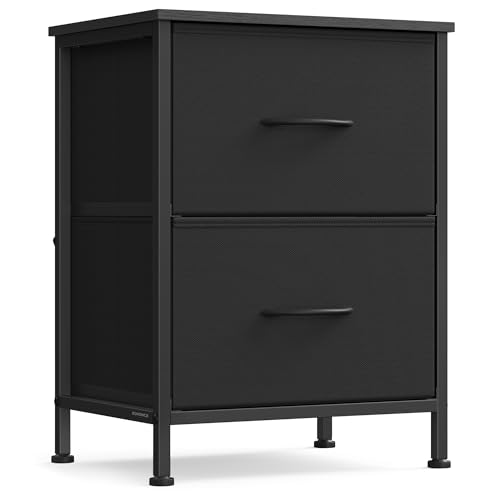
Black Bedside Dresser: The Complete Guide to Compact Bedroom Storage
Discover how a black bedside dresser combines bold style with practical storage. Learn sizes, materials, drawer configurations, and organization strategies to make the most of your bedside space.
START YOUR RESEARCHWhy a Black Bedside Dresser? A black bedside dresser bridges the gap between a traditional nightstand and a full-sized dresser. It offers more drawer capacity than a standard nightstand while remaining compact enough to sit beside your bed. The black finish adds a grounding, sophisticated presence that works across modern, industrial, farmhouse, and transitional bedroom styles.
What Exactly Is a Black Bedside Dresser?
A black bedside dresser is a compact chest of drawers designed to sit directly beside your bed, typically standing between 24 and 32 inches tall and measuring 18 to 30 inches wide. Unlike a standard nightstand, which often has just one or two drawers, a bedside dresser offers three to five drawers — giving you meaningful storage for clothing, accessories, and personal items without requiring a separate piece of furniture. The black finish is a deliberate design choice: it anchors the bedside area visually, hides minor scuffs better than white finishes, and pairs naturally with both light and dark color palettes.
If you are comparing furniture categories, our guide to dresser and nightstand combos explains how these hybrid pieces fit into a bedroom layout. For a broader overview of compact options, the complete dresser collection covers everything from small chests to full bedroom sets.
Why Choose a Black Bedside Dresser?
Black is one of the most versatile finishes in bedroom furniture, but it is not simply a neutral default. A black bedside dresser serves several practical and aesthetic purposes:
- Visual grounding: A dark piece beside the bed creates a visual anchor that makes the sleeping area feel intentional and composed.
- Hides wear: Black finishes disguise fingerprints, minor scratches, and dust better than light-colored surfaces, which is useful in a high-touch area.
- Style flexibility: Black works with modern, industrial, farmhouse, Scandinavian, and traditional décors — the hardware and silhouette determine the style direction.
- Contrast: Against light bedding and walls, a black bedside dresser provides crisp contrast that photographs well and reads as deliberate design.
- Space efficiency: Because the piece is compact, it delivers storage without crowding the bed area — especially valuable in smaller bedrooms.
For readers planning a broader bedroom refresh, our black bedroom furniture sets guide shows how bedside pieces coordinate with larger black furnishings. If you are matching hardware, the dresser with black hardware overview covers handle and pull options.
Black Bedside Dresser Buying Guide
Before choosing a black bedside dresser, work through the following criteria. Each one affects how well the piece will function in your specific bedroom.
1. Size and Clearance
Measure the space between your bed and the nearest wall or doorway. A bedside dresser should leave at least 2 to 3 inches of clearance on each side so drawers can open fully and the piece does not feel crammed into the corner. Height matters too: the top surface should sit roughly level with or slightly below your mattress top for comfortable reach. If your space is tight, the small dresser for bedroom guide offers additional layout strategies that apply regardless of finish.
2. Drawer Count and Configuration
Most black bedside dressers offer three to five drawers. A three-drawer configuration suits basic bedside needs — one drawer for sleep essentials, one for clothing, one for miscellaneous items. Four- and five-drawer models add capacity for socks, undergarments, and folded shirts. Consider drawer depth as well: shallow top drawers work well for accessories and chargers, while deeper lower drawers handle bulkier clothing. Our four-drawer dressers and five-drawer dressers guides explain how drawer count affects usable storage.
3. Material and Build Quality
Bedside dressers are available in solid wood, engineered wood, and metal. Solid wood offers the most durable construction and can be refinished over time. Engineered wood — including MDF and particleboard with veneer — is common in mid-range and entry-level pieces and can perform well when the build is reinforced. The engineered wood dressers guide explains what to look for in construction quality. Drawer slides are equally important: soft-close and full-extension slides make daily use smoother and reduce wear. For heavy-duty options, see the heavy-duty full-extension drawer slides reference.
4. Style and Hardware
The black finish is only half the style story — hardware and silhouette determine whether the piece reads modern, rustic, or traditional. Sleek metal pulls and a clean rectangular profile lean modern. Round knobs and turned legs read traditional or farmhouse. Mixed-metal accents, such as gold or brass, add a transitional touch. If you are considering a coordinated look, the black and gold dresser and nightstand set illustrates how hardware finishes can tie a room together.
5. Safety and Stability
Any chest of drawers — including a bedside dresser — should be anchored to the wall, especially in households with children or pets. Look for pieces that include anti-tip hardware or that are designed with a stable, wide base. Drawer stops, which prevent drawers from pulling all the way out, are another safety feature worth checking.
Black Bedside Dresser Tiers at a Glance
The table below compares typical black bedside dresser categories using quality tiers rather than specific figures. Use it to align your expectations with the build quality and features each tier generally provides.
| Tier | Typical Construction | Drawer Hardware | Best For |
|---|---|---|---|
| Entry-level | Engineered wood with laminated finish | Standard side-mounted slides | Guest rooms, first apartments, temporary setups |
| Mid-range | Engineered wood with veneer or mixed solid-wood construction | Ball-bearing slides, some soft-close | Primary bedrooms, everyday use |
| Premium | Solid wood frames with durable painted or stained finish | Full-extension soft-close slides | Long-term primary bedroom use |
| Luxury | Hardwood construction, hand-finished details | Premium soft-close, dovetail joinery | Design-focused bedrooms, statement pieces |
Within each tier, a well-specified model can offer good value for its class. The key is matching the tier to how intensively the piece will be used. A guest room bedside dresser may only see occasional use, while a primary bedroom piece will be opened daily.
How to Organize a Black Bedside Dresser
A bedside dresser works best when its contents are organized by frequency of use. The items you reach for most often — reading glasses, chargers, tissues, and sleep aids — belong in the top drawer. Clothing and personal items go in the lower drawers. The following strategies help you get more from the compact footprint:
- Use drawer dividers: Dividers keep small items from sliding around and make the drawer easier to scan. Our drawer dividers guide covers sizing and placement.
- Add a drawer organizer: A dedicated organizer tray is useful for jewelry, watches, and cables. See the dresser with organizer overview for options that fit compact drawers.
- Rotate seasonal items: Store off-season clothing elsewhere and reserve bedside drawers for current essentials.
- Keep the top surface minimal: A lamp, a small tray, and one or two personal items are enough — clutter on top undermines the tidy look a black finish provides.
- Label or categorize drawers: Even without visible labels, assigning a purpose to each drawer prevents the piece from becoming a catch-all.
For a deeper system, the clothes drawer organizer reference explains how to fold and compartmentalize clothing in shallow bedside drawers.
Placement Ideas for a Black Bedside Dresser
Placement affects both function and visual balance. A black bedside dresser can serve several roles depending on the room layout:
- Symmetrical bedside pairing: Two matching black bedside dressers flanking the bed create a balanced, hotel-like arrangement.
- Single-side storage: If one side of the bed is against a wall, a single bedside dresser on the open side maximizes storage without crowding.
- Reading nook support: Placed beside an accent chair, a black bedside dresser can hold books and reading accessories.
- Small-space dresser: In compact bedrooms, a bedside dresser can replace a full-sized dresser entirely, especially when paired with closet storage.
If you are coordinating the wider room, the black dresser and two nightstands guide explains how a matching trio can unify the bedroom. For a full furniture set approach, see the black bedroom furniture sets overview.
Materials, Finishes, and Care
Black finishes vary considerably. Painted finishes sit on the surface and can chip at edges over time; stained and lacquered finishes penetrate or coat the wood differently. When caring for a black bedside dresser:
- Dust with a soft, dry cloth — microfiber works well and avoids scratching.
- Avoid harsh chemical cleaners that can dull or streak the finish.
- Use coasters for drinks and a protective pad under lamps to prevent heat marks.
- Check drawer slides periodically and tighten hardware as needed.
- For painted or lacquered surfaces, touch-up markers matched to the finish can address small chips.
Readers considering a refinishing project can review the dresser with painted finish guide for insights into how painted surfaces behave over time.
Common Mistakes to Avoid
Even a well-made black bedside dresser can disappoint if it is the wrong fit for the room. Watch for these common pitfalls:
- Skipping the measurements: Buying before measuring the gap between bed and wall is the most frequent error. Account for drawer pull-out space, not just the footprint.
- Overlooking drawer depth: A bedside dresser with shallow drawers may not hold folded clothing; a piece with deep drawers may waste vertical space. Match depth to contents.
- Ignoring hardware quality: Cheap slides wear out quickly. Soft-close and full-extension slides are worth prioritizing in a daily-use piece.
- Forgetting wall anchoring: Any drawer chest should be secured to the wall for safety.
- Mismatched scale: A tall bedside dresser beside a low platform bed can look unbalanced. Consider height relative to the mattress.
Frequently Asked Questions
Is a bedside dresser the same as a nightstand?
Not exactly. A nightstand typically has one or two drawers and is designed primarily as a surface for a lamp and personal items. A bedside dresser is taller and wider, with three to five drawers, and functions as both a bedside surface and a compact clothing storage piece.
How tall should a black bedside dresser be?
Aim for a height that places the top surface level with or slightly below your mattress top — commonly between 24 and 32 inches. This makes items easy to reach while lying in bed and keeps the piece visually balanced beside the bed frame.
Can a black bedside dresser work in a small bedroom?
Yes — it is one of the most space-efficient storage options for small bedrooms. A single bedside dresser can replace a full-sized dresser when paired with closet storage, and its compact footprint leaves more floor space around the bed.
What should I look for in drawer hardware?
Prioritize full-extension slides, which let you access the entire drawer, and soft-close mechanisms, which reduce wear and noise. Ball-bearing slides are a solid mid-tier choice, while dovetail joinery and premium soft-close slides appear in high-end and luxury tiers.
Does a black finish make a small bedroom feel darker?
It can, but the effect depends on surrounding colors and lighting. Black furniture paired with light walls, bedding, and adequate lighting reads as contrast rather than gloom. In darker rooms, a black bedside dresser can add depth and cohesion rather than shrinking the space.
How do I coordinate a black bedside dresser with other furniture?
Repeat the black finish in one or two other pieces — a dresser, bed frame, or nightstand — for cohesion, or use it as a single accent against wood tones. Matching hardware finishes across pieces is an easy way to unify the look without buying a full set.