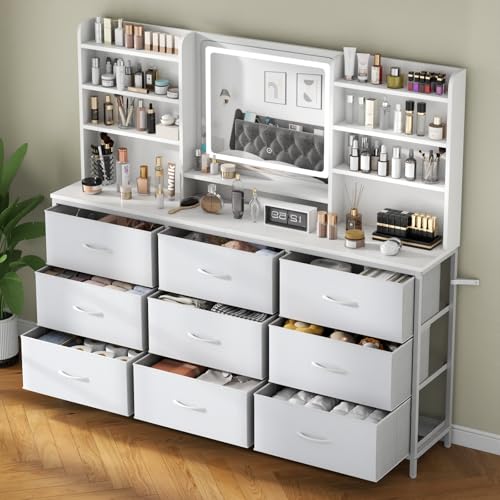
Bedroom Dresser Sets with Mirror: The Complete Guide to a Coordinated Bedroom
Everything you need to evaluate size, materials, mirror types, and safety before choosing a matched dresser and mirror set for your bedroom.
Why a matched set matters: A dresser and mirror that were designed together share proportions, finish, and hardware — which is exactly why coordinated sets look more polished than pieces assembled one by one. This guide walks you through the practical decisions so you can shortlist with confidence.
1. What a Bedroom Dresser Set with Mirror Actually Includes
A bedroom dresser set with mirror is more than a dresser with glass bolted to the back. Retailers use the phrase in slightly different ways, so read the product description carefully before you commit. In most cases, you will find one of three configurations:
- Two-piece set: the dresser base plus a matching mirror, either attached with a support frame or designed to sit or hang above the dresser.
- Three-piece set: the dresser, the mirror, and one matching nightstand — the most common arrangement for a primary bedroom.
- Expanded collection: dresser, mirror, two nightstands, and sometimes a chest of drawers or bed frame. These are sold as a suite and are the easiest way to achieve a fully coordinated room.
If you want the flexibility to add pieces later, look at collections that are sold both as bundles and as individual components. That way you can start with the core set and expand into a matching dresser and nightstand set when your room layout changes.
2. Why a Coordinated Set Beats Mixing and Matching
Buying furniture piece by piece is a legitimate approach, but it demands a strong eye for proportion and finish. A coordinated set removes that risk. The benefits are practical as well as visual:
- Proportional harmony: the mirror was designed to sit on or above that specific dresser, so the width, height, and visual weight are already balanced.
- Finish consistency: wood tone, paint sheen, and edge detailing match exactly — no subtle mismatches that only become obvious in daylight.
- Hardware continuity: drawer pulls and mirror brackets share the same design language, which makes the room feel intentional.
- Simpler purchasing: one decision instead of five, with fewer delivery windows and fewer returns.
Sets also tend to be more efficient for small rooms, because the manufacturer has already resolved how the mirror and dresser relate in depth and height. If you are furnishing from scratch, a complete bedroom dresser and nightstand set can anchor the whole room's design direction.
3. Mirror Types and Mounting Options
The mirror is the defining feature of these sets, and the mounting style affects both the look and how you use the dresser top. There are four common arrangements.
Attached Mirror with Support Frame
The mirror is fixed to the dresser back with wooden or metal uprights. This is the classic arrangement and the most stable. The trade-off is that the mirror cannot be repositioned, and the frame adds height — measure ceiling clearance and consider whether a wall-mounted light or artwork above the dresser will still fit.
Standalone Mirror with Dresser Backing
Some sets ship with a freestanding mirror designed to sit on the dresser top and lean or rest against a low back rail. This gives you the option to move the mirror to a different wall later. Confirm that the set includes a safety strap or tether, because a leaning mirror must be secured.
Wall-Hung Mirror Above the Dresser
The dresser and mirror are sold together but the mirror hangs independently on the wall. This is the most flexible option for renters and for rooms where the dresser must sit under a window or sloped ceiling. It also frees the entire dresser top for storage and display.
Mirrored Dresser Fronts
Some contemporary sets use mirror-finish drawer fronts rather than a separate mirror panel. These read as glamorous and reflective but show fingerprints more readily than wood or painted fronts. If you choose this style, plan on regular glass cleaner and a microfiber cloth.
If your taste leans traditional, the mirror style is worth studying closely — the frame shape and bevel treatment in a antique dresser with mirror can inform what you look for in a new set. For a lighter, airier look, a white dresser with mirror demonstrates how finish choice changes the feel of the same silhouette.
4. Sizing and Proportion Rules That Actually Work
Proportion is where most dresser purchases go wrong. The mirror should feel like a natural extension of the dresser, not an afterthought. Use these guidelines as a starting point.
| Dresser Width | Suggested Mirror Width | Typical Bedroom Fit |
|---|---|---|
| Narrow (under 40 in) | 28–34 in | Small bedrooms, apartments, guest rooms |
| Standard (40–60 in) | 32–48 in | Primary bedrooms, most layouts |
| Wide (60–72 in) | 48–60 in | Large primary suites, shared bedrooms |
| Extra-wide (over 72 in) | 60–70 in or split pair | Spacious suites, dressing areas |
A useful rule of thumb is that the mirror should span roughly 70 to 80 percent of the dresser's width. Beyond width, check three dimensions before ordering:
- Drawer clearance: leave at least 24 inches of open floor in front of the dresser so drawers can fully extend without hitting a bed or door swing.
- Total height: an attached mirror adds 30 to 40 inches to the dresser height. Confirm the combined height works with your ceiling and any wall decor.
- Viewing height: the mirror center should sit roughly at eye level for the tallest regular user. If the set is for a child's room, a wall-hung mirror is easier to adjust as they grow.
Practical tip: Tape the dresser and mirror footprint onto your floor and wall with painter's tape before ordering. It takes ten minutes and prevents the most common return reason — a set that is visually too large for the room.
5. Materials and Finishes
The material determines durability, weight, and how the set ages. Most bedroom dresser sets with mirror fall into four material families.
Solid Wood
Solid wood construction — oak, maple, walnut, mahogany, or pine — offers the longest service life and can be refinished if the surface is damaged. It is heavier, which actually helps stability, but it also makes moving the set a two-person job. Solid wood sets sit in the premium and luxury tiers and represent a long-term investment in bedroom furniture.
Wood Veneer over Engineered Core
A thin layer of real wood over plywood or MDF gives the appearance of solid wood with better dimensional stability and lower weight. Quality veneer sets are a strong mid-range choice and resist the seasonal movement that can affect solid panels. Check the edge banding — well-made veneer furniture has clean, tight edges.
Engineered Wood with Laminate or Foil
Particleboard or MDF with a printed laminate is the most common construction in entry-level sets. Modern laminates are far more convincing than older versions, but they cannot be sanded or refinished. Inspect the drawer box and hardware mounting points, since these are where entry-level construction shows its limits first.
Metal and Mixed Materials
Metal frames with wood or glass panels suit industrial and contemporary bedrooms. They are typically lighter and easier to move, and the open frames make small rooms feel less crowded. Look for powder-coated finishes and reinforced drawer glides.
Finish choice matters as much as material. Painted finishes hide minor wear and suit farmhouse and cottage styles. Natural wood tones show grain and character but need more careful dusting. For a traditional bedroom, a mahogany dresser with mirror shows how a rich wood finish anchors a room, while a pine dresser illustrates the lighter, more casual end of the spectrum.
6. Styles That Work in Bedrooms
Style is personal, but some silhouettes consistently work well in bedrooms because they balance storage capacity with visual calm.
- Traditional: shaped aprons, bracket feet, and framed mirrors. Pairs well with upholstered headboards and warm wood tones.
- Transitional: clean lines with a softened edge, often in white or soft gray. The most versatile choice for mixed interiors.
- Modern and contemporary: flat fronts, minimal hardware, and large rectangular mirrors. Works best in rooms with limited visual clutter.
- Farmhouse and cottage: beadboard detailing, distressed finishes, and simple framed mirrors. Suits relaxed, textured bedrooms.
- Art Deco and vintage-inspired: stepped fronts, fluted details, and dramatic mirror shapes. A strong statement piece that should be the focal point of the room.
If you are drawn to period details, browsing antique dresser styles is a useful exercise even if you ultimately buy new — it trains your eye for proportion and hardware. The same applies to antique-style chest of drawers collections, which often include matching mirrors.
7. Quality Tiers Without the Guesswork
Rather than comparing listings by number, compare them by construction tier. The descriptors below describe relative market position and build quality, not specific figures.
| Tier | Typical Construction | Best For |
|---|---|---|
| Entry-level | Engineered wood, laminate finish, basic side-mounted glides | Guest rooms, first apartments, temporary setups |
| Mid-range | Veneer over engineered core, ball-bearing glides, dovetail or stapled drawer boxes | Primary bedrooms, family homes, long-term daily use |
| Premium | Solid wood or high-grade veneer, dovetail joinery, soft-close glides | Rooms where the set is a focal point and should last decades |
| Luxury | Solid hardwood throughout, hand-finished surfaces, custom hardware, beveled or antiqued glass | Statement bedrooms, heirloom-quality furniture |
Within any tier, look for the details that separate good construction from merely adequate construction: metal drawer glide runners rather than plastic, reinforced corner blocks, dust panels between drawers, and mirror brackets that are bolted rather than stapled. A mid-range set with excellent hardware will usually outlast an entry-level set with decorative extras.
8. Safety and Anti-Tip Essentials
Dressers with mirrors are taller and heavier than plain dressers, which makes tip-over prevention non-negotiable — especially in homes with children or pets.
- Always use the anti-tip kit. Anchor the dresser to a wall stud with the manufacturer-supplied strap or bracket. If the kit is missing, buy a rated furniture strap before assembly.
- Choose tempered or laminated glass where available. These are far more resistant to shattering than standard annealed glass.
- Check the mirror mounting. Attached mirrors should be secured with metal brackets, not adhesive alone. Freestanding mirrors need a tether.
- Keep heavy items in lower drawers. Distributing weight low reduces the chance of forward tipping if a drawer is left open.
- Re-check anchors annually. Wood dries and screws loosen over time, particularly in dry climates.
For nursery and child-focused rooms, apply the same standards used for a baby dresser — anchoring and drawer-stop mechanisms matter more than finish.
9. Sets for Small Bedrooms
A mirror is one of the most effective space-expanding tools in a small bedroom, because it reflects light and adds perceived depth. To make a set work in a compact room:
- Choose a narrow dresser with a tall, slim mirror rather than a wide dresser with a low mirror — vertical emphasis makes ceilings feel higher.
- Opt for a wall-hung mirror if the dresser must sit beneath a window or on a wall with limited height.
- Prefer light finishes — white, natural wood, pale gray — to reduce visual weight.
- Measure door swings and closet clearance before placing the set; a mirror that reflects an open doorway looks cluttered.
If floor space is genuinely tight, a narrow chest of drawers paired with a vertical mirror can deliver the same storage and visual lift as a full-width set.
10. Care and Maintenance
A matched set rewards a small amount of routine care with years of good appearance.
- Dust weekly with a microfiber cloth. On wood, use a slightly damp cloth and dry immediately; avoid silicone polishes that build up.
- Clean mirrors with glass cleaner and a microfiber cloth, spraying the cloth rather than the glass to avoid liquid seeping behind the frame.
- Keep the set out of direct sun where possible — UV exposure fades finishes and can delaminate veneer over time.
- Lubricate drawer glides annually with a dry silicone spray; avoid oil-based lubricants that attract dust.
- Tighten hardware every six months, especially mirror brackets and drawer pulls.
Ready to Shortlist Your Set?
Use the criteria above — mirror type, proportion, material tier, and safety — to compare the recommended sets below. Each listing includes the construction details you need to make a confident decision.
Compare Recommended SetsFrequently Asked Questions
What is included in a bedroom dresser set with mirror?
A typical set includes the dresser base, an attached or standalone mirror, and often one matching nightstand. Expanded collections may add a second nightstand, a chest of drawers, or a bed frame. Always confirm the exact component list before ordering, since the phrase is used loosely by different retailers.
How do I choose the right mirror size for my dresser?
The mirror should be roughly 70 to 80 percent of the dresser's total width. A mirror that is too wide overpowers the dresser, while one that is too narrow looks unbalanced. Also check the combined height against your ceiling and any wall decor, and confirm the mirror center sits near eye level for the main user.
Are mirrored dresser sets safe for a nursery?
Yes, provided the set meets current safety standards. Look for anti-tip straps, tempered or shatter-resistant glass, and secure mirror mounting. Anchor the dresser to a wall stud regardless of the room, and keep heavy items in the lower drawers.
How should I anchor a dresser with a mirror to the wall?
Use the manufacturer-supplied anti-tip kit or a heavy-duty wall strap rated for the combined weight of the dresser and mirror. Anchor into wall studs or use appropriate masonry anchors for solid walls. Check the fitting periodically, especially in dry climates where wood and screws can loosen.
Can a dresser set with mirror work in a small bedroom?
Absolutely. A narrow dresser paired with a tall, slim mirror visually lifts a small room without consuming floor space. Measure your wall, leave at least 24 inches of clearance for drawer pull-out, and prefer light finishes to reduce visual weight.