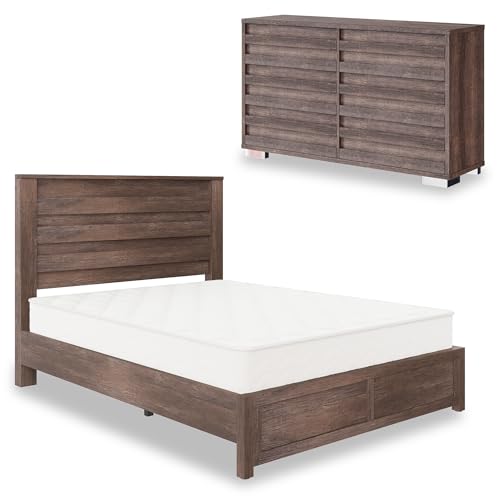
Bed Frame with Matching Dresser: The Complete Guide to a Cohesive Bedroom
A coordinated bed frame and dresser set transforms a bedroom from a collection of furniture into a unified retreat. Learn how to choose the right pairing for your space, style, and storage needs.
Why a matching set matters: A bed frame with a matching dresser creates visual harmony that individual pieces rarely achieve. Beyond aesthetics, coordinated sets are designed with proportional dimensions, consistent finishes, and complementary hardware, so every piece feels intentional rather than assembled by chance.
This guide walks you through the key decisions: how to match styles and finishes, what bed frame and dresser dimensions work together, storage-focused pairings, material considerations, and the practical checks that prevent an expensive mistake.
What Makes a Bed Frame and Dresser "Match"?
Matching does not always mean buying from the same collection. A true match rests on four visual anchors that tie two pieces together:
- Finish and tone: The wood tone or painted finish should echo across both pieces. A warm walnut bed frame pairs naturally with a walnut dresser, while a white painted bed frame calls for a white or light-toned dresser.
- Wood grain direction and scale: Consistent grain patterns and similar grain scale keep the eye moving smoothly between pieces.
- Hardware language: Drawer pulls, knobs, and bed frame accents should share a finish and shape family. Mixed metals can work, but they need a deliberate design reason.
- Silhouette and proportion: A low-profile platform bed suits a low, wide dresser; a tall panel bed pairs better with a taller chest or highboy style.
If you are exploring antique options, a curated pairing can be just as cohesive as a new set. Browse bed frame and matching dresser ideas alongside antique dresser references to see how period pieces can be harmonized through finish and scale.
Bed Frame Styles and Their Ideal Dresser Partners
The bed frame is usually the visual anchor of the room, so the dresser should follow its lead. Here is how common bed frame styles pair with dresser types:
Platform and Low-Profile Beds
Modern platform beds sit low and lean. Pair them with a wide, low dresser that keeps sightlines open. A bedroom dresser with a clean, handle-free front and a matching wood tone reinforces the minimalist line.
Panel and Upholstered Beds
Tall headboards create vertical presence. A bedroom dresser and nightstand set in a similar finish balances the height without competing. Upholstered beds pair well with painted dressers in soft neutral tones.
Storage Beds
If the bed already includes drawers, the dresser can take a complementary role rather than duplicating storage. Explore bed frame with built-in dresser configurations and pair them with a slimmer dresser or a bedroom chest of drawers for folded items.
Canopy and Four-Poster Beds
These statement frames suit a dresser with traditional detailing, such as a bedroom dresser with marble top or a classic bedroom dresser set with mirror. Keep hardware finishes consistent to avoid visual clutter.
Market Tiers: What to Expect at Each Level
Use these universal tier descriptors to set expectations for construction quality, hardware smoothness, and finish durability. Tiers describe relative market position, not absolute figures.
Entry-Level Tier
Engineered wood construction with laminate or veneer finishes. Drawer glides are basic and may lack soft-close. Suitable for guest rooms, first apartments, and short-term setups. Expect assembly and lighter hardware.
Mid-Range Tier
Solid wood frames with veneered panels, smoother metal glides, and more consistent finishing. Hardware feels substantial. A solid choice for daily use and long-term bedroom setups.
Premium Tier
Solid hardwood construction, dovetail drawer joints, soft-close mechanisms, and hand-finished surfaces. These sets are built as long-term investments with repair-friendly joinery and refined detailing.
Getting the Proportions Right: Bed and Dresser Dimensions
Scale mismatch is the most common reason a matching set looks off. Use these proportion rules as a starting point:
- Height balance: The top of the dresser should sit at or below the top of the bed's headboard, ideally within 10–20 cm. A dresser that towers over a low platform bed feels top-heavy.
- Width relationship: For a queen or king bed, a dresser between 150–180 cm wide reads as proportional. For a twin or full bed, a dresser around 100–130 cm keeps the room from feeling crowded.
- Walkway clearance: Leave at least 60–75 cm between the foot of the bed and the dresser front so drawers open fully and movement stays comfortable.
- Drawer depth: If you store bulky items like sweaters or bedding, a bedroom dresser with deep drawers pairs well with a storage bed, splitting the load between concealed and accessible storage.
For rooms with tight footprints, a bed frame with dresser underneath or a bed with dresser underneath can consolidate storage without adding floor footprint.
Comparing Matching Set Configurations
| Configuration | Best For | Storage Profile | Considerations |
|---|---|---|---|
| Bed frame + standard dresser | Most bedrooms, balanced storage | Moderate folded and general storage | Verify walkway clearance and drawer swing |
| Bed frame + dresser and nightstand set | Coordinated full-room look | Moderate with bedside convenience | Ensure nightstand height aligns with mattress top |
| Storage bed + slim dresser | Small rooms, apartments | High concealed plus moderate open storage | Check lift mechanism or drawer clearance |
| Bed frame + tall chest | Rooms with limited wall length | Vertical storage for folded items | Secure anti-tip hardware for safety |
| Bed frame + dresser with mirror | Traditional and transitional rooms | Standard storage plus grooming zone | Allow mirror projection and lighting access |
Materials and Finishes That Hold a Set Together
Material consistency matters as much as color. If the bed frame is solid oak, a veneered oak dresser can still match if the grain and tone are close. If the bed is painted, a painted dresser in the same sheen keeps the pairing intentional.
For warm, traditional rooms, a bedroom dresser and end tables arrangement in matching wood tones creates a layered look. For cleaner modern spaces, a bedroom dresser and night stands pairing with matte finishes and minimal hardware keeps the room calm. If you prefer a softer palette, a antique white dresser and nightstands combination can bridge vintage charm with a matching bed frame.
Pre-Purchase Checklist for a Bed Frame and Dresser Set
- Measure the room and confirm walkway clearance between the bed and dresser.
- Confirm the dresser top height sits within 10–20 cm of the headboard top.
- Check that drawer fronts clear the bed frame and any rug edges.
- Verify hardware finish consistency between bed accents and drawer pulls.
- Confirm anti-tip straps are included or available for the dresser.
- Check assembly requirements and whether the set ships as separate pieces.
- Review drawer glide type and weight capacity for your intended storage.
- Confirm the finish is sealed and suitable for your room's humidity level.
Matching Sets for Small Bedrooms
Small rooms benefit most from intentional pairing. A bedroom dresser and nightstand set in a compact footprint keeps the visual language tight. If floor space is limited, consider a bed frame dresser nightstand set that is engineered as a coordinated trio with matched proportions.
For studio apartments or multi-use rooms, a bedroom dresser entertainment center can pair with a low platform bed to serve double duty without breaking the cohesive look. Pairing a compact dresser with a bedroom black set finish keeps a small room visually grounded.
Frequently Asked Questions
Should the bed frame and dresser be the exact same finish?
Exact matches are ideal in traditional and formal bedrooms. In modern or eclectic rooms, a close tonal match or a deliberate contrast (such as a dark bed frame with a light dresser) can work as long as hardware and proportions align.
Can I pair a storage bed with a matching dresser?
Yes. Storage beds reduce the need for a large dresser, so a slim or medium dresser is usually enough. Explore bed frame with dresser underneath layouts to avoid duplicating drawer storage.
How do I match a dresser to a bed frame I already own?
Photograph the bed frame in natural light and note its finish tone and hardware. Use a bedroom dresser sets reference to find pieces with similar grain and silhouette, then compare swatches or finish samples before committing.
Is a matching set better than mixing individual pieces?
A matching set reduces decision fatigue and guarantees proportional and finish consistency. Mixing individual pieces offers more personality but requires more careful coordination of scale, tone, and hardware.
What is the ideal dresser width for a queen bed?
For a queen bed, a dresser between 150–180 cm wide usually reads as proportional. In smaller rooms, a narrower dresser paired with a tall chest can preserve floor space without weakening the visual match.
Ready to Complete Your Bedroom Set?
Browse coordinated bed frame and dresser pairings, compare configurations by storage profile, and find the set that fits your room's proportions and style.
Explore Matching Sets