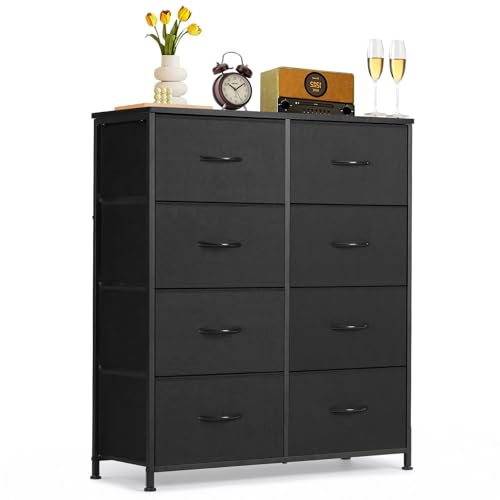
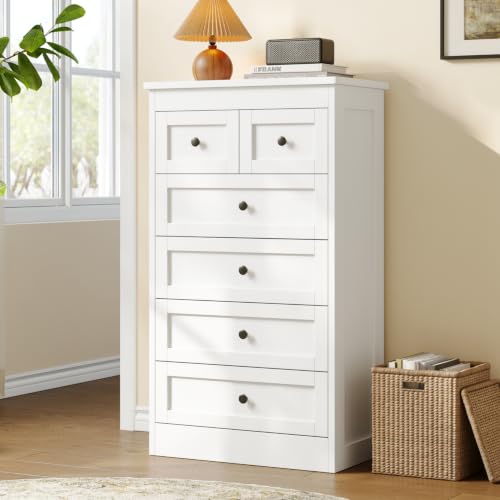
Bedroom Chest of Drawers: The Complete Guide
Everything you need to know before choosing a bedroom chest of drawers — sizes, materials, drawer counts, organization strategies, and safety tips from the DresserAdvisor research team.
Start the Buying GuideWhy a chest of drawers belongs in every bedroom: A bedroom chest of drawers is one of the most efficient storage pieces you can own. Unlike a wide dresser, a vertical chest channels drawers upward, freeing floor space in narrow rooms and small apartments. This guide explains how to match drawer count to your wardrobe, compare construction tiers, and avoid the most common buying mistakes.
What Is a Bedroom Chest of Drawers?
A bedroom chest of drawers is a vertical storage cabinet made up of stacked drawers, typically taller than it is wide. It is designed to hold folded clothing, linens, accessories, and personal items within arm's reach of the bed. While the terms are often used interchangeably, there is a practical distinction worth understanding before you shop.
A chest generally features four to nine drawers stacked in a single column, making it ideal for compact footprints. A dresser is usually wider and lower, often paired with a mirror and used as a display surface. If you are comparing the two formats in detail, our guide on bedroom chest of drawers explains the trade-offs in depth. For a direct side-by-side breakdown, read our article on the difference between a dresser and a chest of drawers.
The best choice depends on your room layout. A narrow wall between a door and a window favors a tall chest. A long, open wall favors a wide dresser or a low chest paired with a mirror. If you need storage for a growing wardrobe, a wooden bedroom chest of drawers in a tall configuration typically stores more folded volume per square foot of floor space.
Why Choose a Chest of Drawers for Your Bedroom?
- Vertical storage efficiency: Tall chests use wall height rather than floor area, which is a major advantage in small bedrooms, guest rooms, and apartments.
- Organized access: Separate drawers let you sort clothing by category — socks, undergarments, knitwear, activewear — so morning routines stay fast and calm.
- Concealed clutter: Closed drawers keep a bedroom visually quiet, which matters if your bedroom doubles as a home office or reading space.
- Design flexibility: From antique chests with hand-cut joinery to clean-lined modern pieces, a chest adapts to nearly any interior style.
- Long-term durability: A well-built chest in solid wood is a long-term investment that can be refinished and handed down rather than replaced.
Bedrooms are also the room where storage pressure is highest. If your closet is already full, a chest of drawers becomes the overflow solution — a dedicated home for folded items that never quite fit on hangers. For a broader look at storage planning, browse our bedroom storage guides.
Types of Bedroom Chest of Drawers
Chests vary most by height and drawer configuration. Understanding the standard categories helps you match a piece to your space and habits.
- Tall chest (tallboy): Five to nine drawers stacked in a single column, often 48 to 60 inches tall. The best option for narrow footprints and small rooms. See our tallboy chests guide for sizing details.
- Low chest (lowboy): Three to four drawers with a wider, lower profile, often used beneath a window or as a secondary surface. Explore lowboy chests if you prefer a horizontal layout.
- Lingerie chest: A slim, tall chest with many shallow drawers, designed for folded delicates and accessories. Learn more in our lingerie chests overview.
- Bachelor chest: A compact three-drawer chest traditionally used beside a bed or in a dressing area. See bachelor chests for placement ideas.
- Highboy: A tall chest on legs, often with a larger upper section — a classic silhouette that suits traditional bedrooms.
Style families matter just as much as form. Modern chests favor flat fronts and minimal hardware; farmhouse pieces use plank detailing and warm painted finishes; French provincial designs add curved legs and decorative molding. If you are furnishing a traditional bedroom, a French provincial chest delivers instant character. For a relaxed, coastal feel, boho chests in rattan or light wood work well. And for a crisp, versatile look, modern chests in neutral finishes adapt to changing decor.
Bedroom Chest of Drawers Size Guide
Measure your space before you shop — not after. A chest that blocks a door swing or crowds a walking path will feel wrong every day, regardless of how well it is built.
| Category | Typical Height | Typical Width | Best For |
|---|---|---|---|
| Small / bachelor chest | 30–38 in | 28–36 in | Guest rooms, bedsides, tight corners |
| Standard chest | 40–48 in | 32–40 in | Single adults, medium bedrooms |
| Tall chest / tallboy | 48–60 in | 30–42 in | Small bedrooms, narrow walls |
| Wide chest | 36–44 in | 44–60 in | Couples, rooms with long wall space |
Leave at least 24 to 30 inches of clearance in front of open drawers so you can stand comfortably while sorting laundry. In a small bedroom, aim for a chest no wider than 36 inches and no deeper than 18 inches. Our dresser size guide covers measuring techniques in more detail.
Height also affects usability. The top drawer should sit between waist and shoulder height for easy access without bending or stretching. Deep lower drawers are best reserved for bulky items like sweaters and bedding, while shallow upper drawers suit small accessories.
How Many Drawers Do You Need?
Drawer count is the single most practical decision in the buying process. Think in terms of categories rather than a number:
- 3–4 drawers: A starter configuration for one person with a small wardrobe or a guest room. Often the essential tier choice.
- 5–6 drawers: The most versatile range. A 5-drawer chest with deep bottom drawers covers most single-adult needs and is the balanced tier sweet spot.
- 7–9 drawers: Designed for couples or large wardrobes. Many shallow drawers support fine sorting; deep drawers hold bulkier items.
Consider drawer depth alongside count. A six-drawer chest with three shallow and three deep drawers usually organizes better than six uniform drawers. If you are sorting clothing across a chest and a closet, our drawer organization ideas article shows practical layouts by drawer type.
Our guide on 4 drawer dressers and 6 drawer dressers expands on which counts suit which lifestyles.
Materials and Construction Quality
Two chests can look identical on a showroom floor and behave very differently after two years of daily use. Construction quality lives in the joints, drawer glides, and back panels. We classify bedroom chests into three universal quality tiers to help you compare without reference to any retailer's lineup.
Entry-Level Tier
Engineered wood with printed or thin veneer finishes, stapled or cam-lock joinery, and basic side-mounted drawer glides. Suitable for guest rooms and short-term setups. Expect a solid build for light use, but less longevity under daily load.
Mid-Range Tier
Solid wood frames with quality veneer panels, doweled or mortise-and-tenon joints, and smooth metal ball-bearing glides. This is the balanced tier for most primary bedrooms — durable construction that handles daily use well.
Premium / Luxury Tier
Solid oak, walnut, or mahogany throughout, dovetailed drawer boxes, soft-close under-mount glides, and hand-finished surfaces. A long-term investment piece built for decades of use and refinishing.
Wood species carry their own character. Oak dressers and oak chests are known for dense grain and durability. Walnut chests offer a darker, elegant tone. Pine chests bring a softer, rustic warmth that suits farmhouse interiors. For a full material comparison, visit our materials and finishes section.
Always check the drawer box itself, not just the front. Dovetailed joints and a finished back panel signal higher-grade construction. Drawers that wobble when pulled, or glide on thin plastic runners, are a warning sign even if the exterior looks polished.
Organizing Your Bedroom Chest of Drawers
A chest only solves storage problems if it is organized intentionally. A simple zone system works for most bedrooms:
- Top drawer: Daily essentials — socks, undergarments, and small accessories. Shallow drawers work best here.
- Middle drawers: Folded shirts, t-shirts, and knitwear. Use vertical folding so every item is visible.
- Lower deep drawers: Jeans, bulky sweaters, and off-season clothing. Consider drawer dividers to keep stacks upright.
- Bottom drawer: Bedding, extra linens, or storage boxes for seasonal rotation.
Drawer dividers and shallow trays dramatically improve how much a chest actually holds. For step-by-step methods, read our full dresser organization guide. If you rotate seasonal wardrobes, our seasonal clothing storage article explains how to swap contents without losing track of items.
Small bedrooms benefit from an additional trick: place a chest inside a closet as an island or against the back wall. Our guide on chests for closet explains how to measure clearance for this setup.
Placement and Safety Tips
Placement affects both how a chest functions and how safe it is. Follow these guidelines:
- Anchor every chest over 30 inches tall to the wall with the anti-tip kit supplied by the manufacturer. This is non-negotiable in homes with children or pets.
- Avoid blocking heat sources — radiators, vents, and baseboard heaters — to prevent warping and finish damage.
- Keep a clear walking path of at least 24 inches in front of the chest so open drawers do not become a tripping hazard.
- Use felt pads under legs on hardwood floors to prevent scratching during loading and unloading.
- Balance the load — place heavier items in lower drawers to keep the center of gravity low.
In nurseries and children's rooms, a chest must be anchored and placed away from the crib. Browse our nursery chests guide for safe configurations and height recommendations for little ones.
Bedroom Chest of Drawers Buying Checklist
Before you order, confirm:
- Measured width, depth, and height of your intended wall space
- Door and hallway clearance for delivery and assembly
- Drawer count matches your folding and sorting habits
- Construction tier matches your expected years of use
- Drawer glides are smooth and rated for daily loads
- Anti-tip kit included, especially for tall chests
- Finish coordinates with existing bedroom furniture
- Assembly requirements and tools are clear before checkout
If you are buying a matching bedroom set — chest, nightstand, and bed — a coordinated collection saves time on styling and finish matching. Explore bedroom dresser and nightstand sets for complete options. If you need a chest that arrives ready to use, see bedroom dressers already assembled.
Common Buying Mistakes to Avoid
- Buying by looks alone: Photographs rarely reveal drawer glide quality or joint construction. Read specifications carefully.
- Ignoring drawer depth: A chest with many shallow drawers may not hold bulky sweaters comfortably.
- Overlooking delivery access: A tall chest that will not fit through your stairwell is a problem no return policy solves gracefully.
- Skipping the anti-tip kit: Tall furniture must be anchored. This is a safety issue, not a preference.
- Choosing a size that is too small: If your wardrobe is growing, plan for one drawer more than you think you need.
Comparing alternatives also helps. Our guides on the difference between dresser and chest and on solid wood versus engineered wood answer the two most common questions buyers ask before committing.
Frequently Asked Questions
What is the difference between a bedroom chest of drawers and a dresser?
A chest of drawers is typically taller than it is wide, with drawers stacked vertically, while a dresser is usually wider and lower, often with a mirror. Chests are ideal for narrow spaces; dressers work well with more wall space and as a display surface.
How many drawers should a bedroom chest of drawers have?
For a single adult, a 4 to 6 drawer chest usually covers folded clothing needs. Couples often benefit from 6 to 9 drawers, while a tall 5-drawer chest with deep lower drawers is a versatile balanced choice for most bedrooms.
What material is best for a bedroom chest of drawers?
Solid wood such as oak, maple, or walnut offers the most durable construction and long-term investment value. Engineered wood with quality veneers is a practical mid-tier option, while metal and bamboo suit specific styles and lighter loads.
How tall should a bedroom chest of drawers be?
A standard bedroom chest ranges from 40 to 60 inches tall. Taller chests above 50 inches maximize vertical storage in small rooms, but any chest over 30 inches should be anchored to the wall for safety.
Can a chest of drawers replace a wardrobe?
Only for folded clothing. A chest cannot hang shirts, dresses, or coats. If your wardrobe includes hanging garments, pair a chest with an armoire or a closet, or choose a wide dresser with a mirror.
Ready to Choose Your Bedroom Chest of Drawers?
Use the checklist above, confirm your measurements, and compare construction tiers before you decide. The right chest should serve you comfortably for years.
View Recommended Options