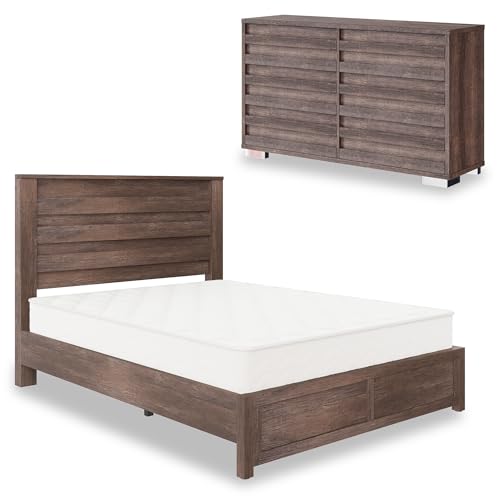
Bed Frame and Matching Dresser: A Complete Buyer's Guide
Build a bedroom that feels intentional from the floor up. Learn how to pair a bed frame with a matching dresser, balance proportions, choose durable materials, and plan storage that actually works.
Start With the Buying FrameworkWhy this pairing matters: A bed frame and matching dresser are the two anchor pieces of most bedrooms. When they share a style language, finish undertone, and hardware family, the room reads as designed rather than assembled. This guide walks you through the decisions that matter most before you buy.
Why Choose a Bed Frame and Matching Dresser Set
A coordinated set removes the guesswork from bedroom design. Manufacturers design the bed frame, dresser, and often a nightstand to share proportions, drawer pull styles, and finish tones. That alignment is especially valuable if you are furnishing a room from scratch or upgrading a mismatched collection.
Beyond aesthetics, a matching set simplifies logistics. Pieces from the same collection typically ship with compatible assembly hardware and consistent wood finishes, which reduces the risk of visible tone clashes under bedroom lighting. If you are also planning a wider refresh, exploring bedroom dresser sets and bed frame, dresser, and nightstand sets can show you how full collections are structured.
That said, a set is not mandatory. Many well-designed bedrooms mix a statement bed frame with a complementary dresser in a different wood or painted finish. The key is intentional contrast, not accidental mismatch.
The Buying Framework: Five Decisions That Shape the Pairing
Before browsing individual products, work through these five decisions. They determine which bed frame and matching dresser combinations will actually fit your room and your daily routine.
1. Measure the Room and the Walking Paths
Start with the bed footprint, not the dresser. A queen bed frame typically occupies roughly 60 by 80 inches, and a king closer to 76 by 80 inches, before you add clearance for making the bed and opening drawers. Leave at least 24 inches of walking space between the foot of the bed and the dresser, and more if the dresser has deep drawers that pull out toward the bed.
If the room is tight, consider a bed frame with dresser underneath or a bed frame with a built-in dresser. These integrated designs consolidate storage and remove the need for a separate freestanding piece. For rooms where floor space is the main constraint, deep-drawer dressers can hold more in a smaller footprint.
2. Match Proportions, Not Just Style
A dresser that is too tall next to a low platform bed can make the room feel unbalanced. As a general rule, the top of the dresser should sit at or slightly below the top of the mattress for a harmonious visual line. A tall chest pairs better with a taller headboard, while a long, low dresser works well beside a low-profile frame.
Width matters too. A dresser roughly the same width as the bed, or slightly narrower, tends to look proportionate. In narrow rooms, a bedroom dresser and nightstand set can help you coordinate scale across the smaller pieces.
3. Choose a Material Tier You Can Live With
Material choice affects durability, weight, and how the finish ages. Use the tier framework below to compare options without relying on numeric figures.
| Tier | Typical Construction | Best For | Durability Notes |
|---|---|---|---|
| Entry-Level | Engineered wood panels with laminated or veneered finishes | Guest rooms, first apartments, temporary setups | Lighter weight; check connector hardware and drawer glides |
| Mid-Range | Engineered wood core with thicker veneers; some solid wood components | Primary bedrooms with everyday use | Better screw retention; look for reinforced corner blocks |
| Premium | Solid hardwood frames and drawer fronts; dovetail or doweled joinery | Long-term family bedrooms | Heavier and more stable; refinishable surfaces |
| Luxury | Kiln-dried hardwood, hand-finished details, premium hardware | Statement bedrooms and heirloom pieces | Exceptional longevity; may require professional moving |
Solid wood is not the only good answer. A well-built engineered wood dresser with quality glides can serve a guest room for years. The more important check is joinery and hardware quality within whichever tier you choose. If you are comparing specific wood species, wooden bedroom chests of drawers offer a useful reference point for finish and grain expectations.
4. Decide How Much Drawer Storage You Need
Count the categories of clothing you store folded: tops, bottoms, undergarments, sleepwear, and seasonal items. A four-drawer dresser suits a single adult with a closet for hanging clothes. Couples often need six drawers or a combination of a wide dresser plus a tall chest.
If you prefer an all-in-one approach, a bed frame with matching dresser bundle is a practical starting point. For rooms with limited wall space, a bedroom dresser with deep drawers can replace two shallower units.
5. Align Finish and Hardware
Finish undertone is where matching sets succeed or fail. A warm oak bed frame paired with a cool gray dresser can look accidental even if the styles are similar. Stay within the same undertone family—warm browns with warm browns, cool grays with cool grays—or use a deliberately contrasting painted piece as an accent.
Hardware is the easiest alignment check. If the bed frame has matte black metal accents, a dresser with black pulls will feel intentional. If the bed has brass details, a dresser with brass or gold-toned knobs will echo it. For inspiration on pulls and handles, see bedroom furniture drawer handles.
Style Pairings That Work
Certain bed frame and dresser combinations are reliably cohesive because they share design DNA. These pairings are starting points, not rigid rules.
Modern and Minimalist
Low-profile platform beds with clean lines pair well with wide, handleless dressers or dressers with slim recessed pulls. Keep finishes matte and consistent. A modern dresser with a floating top or tapered legs reinforces the airy look.
Farmhouse and Rustic
Slatted or paneled headboards in distressed wood pair naturally with farmhouse dressers featuring cup pulls and planked drawer fronts. Whitewashed or natural wood finishes keep the look bright; darker stains lean more cabin-like.
Mid-Century Modern
Tapered legs, warm walnut tones, and angled drawer pulls define this pairing. A mid-century dresser with a matching walnut bed frame creates a cohesive retro-inspired room without feeling like a showroom set.
Traditional and Antique-Inspired
If you love carved details and turned posts, an antique-style chest of drawers can pair with a sleigh or four-poster bed. Keep hardware consistent—bail pulls and keyhole escutcheons reinforce the period look.
Quick Alignment Check
- Do the bed frame and dresser share the same finish undertone?
- Is the dresser top at or below mattress height?
- Does the hardware family repeat across both pieces?
- Is there at least 24 inches of clearance for drawer pull-out?
- Does the dresser width feel proportionate to the bed width?
Storage Planning: Making the Set Work Daily
A matching set looks good in a showroom, but daily usability depends on drawer layout. Before committing, think through how you fold and store clothes. Wide drawers suit folded tops and jeans; narrow drawers suit undergarments and accessories; deep drawers suit bulky knitwear and bedding.
If the bed frame includes under-bed storage, coordinate it with the dresser rather than duplicating categories. Reserve under-bed space for out-of-season items and use the dresser for daily clothing. For rooms where closet space is limited, bedroom dressers and chests can be combined to create a complete storage wall.
Couples often benefit from a split layout: one wide dresser shared between partners, plus a bedroom dresser and night stands arrangement for personal items on each side of the bed. This keeps shared and personal storage clearly separated.
Assembly, Placement, and Long-Term Care
Most bed frames and dressers ship flat-packed. Assembly difficulty varies by tier: entry-level pieces often use cam locks and particleboard, while premium sets use heavier hardware and may benefit from two people. If assembly is not something you want to handle, assembled dressers for sale and bedroom dressers with no assembly required are worth exploring.
Placement matters for longevity. Keep wood furniture away from direct heating vents and prolonged sunlight, which can dry or fade finishes. Use felt pads under legs to protect flooring, and check drawer glides periodically for loose screws.
If you are matching a new dresser to an existing bed frame, bring a drawer pull or a photo of the finish to the store, or order finish samples when available. Small tone differences that look fine online can become obvious under bedroom lighting.
Who Should Buy a Matching Set—and Who Should Mix
A matching set is the right choice if you are furnishing a room from scratch, want a predictable visual result, or prefer shopping a single collection. It is also helpful for guest rooms and rental properties where consistency matters more than individual expression.
Mixing is better if you already own a bed frame you love, if you want a statement dresser as a focal point, or if your room has architectural constraints that a uniform set cannot accommodate. In those cases, use the same alignment checks above to keep the pairing intentional.
Ready to compare specific bed frame and dresser combinations? Browse curated options with detailed specifications and matching guidance.
View Recommended Sets