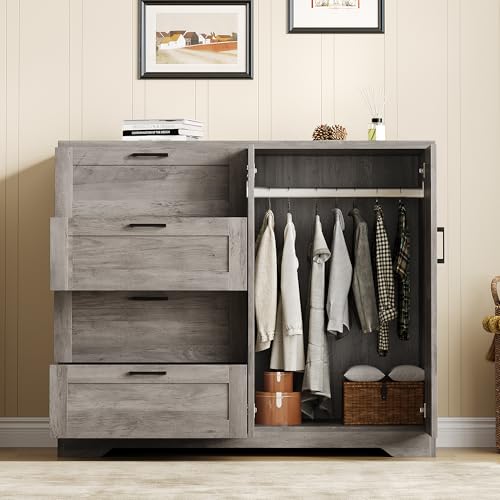
Armoire Dresser Guide: Storage Meets Style
Discover the perfect armoire dresser—a versatile piece that combines hanging space, shelves, and drawers. Whether you need extra wardrobe storage or a statement piece, our guide helps you choose wisely.
Explore Armoire DressersWhat is an Armoire Dresser? An armoire dresser is a tall, freestanding cabinet that blends the functionality of a wardrobe with the storage of a dresser. Typically featuring doors that open to reveal hanging rods, shelves, and drawers, it's an all-in-one storage solution for bedrooms, entryways, or even living spaces.
Unlike a standard chest dresser, an armoire offers vertical storage that maximizes floor space while adding a touch of elegance. It's ideal for rooms where you need both folded and hanging storage without committing to a full closet system.
Why Choose an Armoire Dresser?
Versatile Storage
Combine hanging rods for dresses and shirts, shelves for folded items, and drawers for accessories—all in one footprint.
Space-Saving Design
Ideal for small bedrooms, apartments, or nurseries where a full closet isn't available. Maximize vertical space without clutter.
Style Statement
From modern minimalist to rustic farmhouse, armoires are available in a wide range of finishes and materials to complement your decor.
Armoire Dresser Buying Guide
1. Determine Your Storage Needs – Consider what you'll store. If you have many hanging garments, prioritize an armoire with a generous hanging rod. For folded items like sweaters or linens, look for deep shelves or multiple drawers. Some armoires even include a built-in mirror or jewelry tray.
2. Measure Your Space – Armoire dressers are tall, typically 60–80 inches high. Measure your ceiling height and the floor space where it will sit. Leave room for the doors to swing open fully. A tall dresser might be a better fit for very low ceilings.
3. Choose the Right Material – Solid wood (solid wood dresser) offers durability and timeless beauty, while engineered wood is more budget-friendly. For a lighter look, consider white dresser or natural wood finishes. Check the interior finish too—some armoires have unfinished interiors that can snag delicate fabrics.
4. Door Style & Hardware – Hinged doors are classic, but sliding doors can save space in tight areas. Pay attention to handles and knobs—they should be sturdy and easy to grip. For a modern touch, look for black dresser hardware or sleek bar pulls.
5. Assembly & Delivery – Armoires are large and heavy. Check if assembly is included or if you need to hire help. Some brands offer white-glove delivery for an additional fee. If you're planning a DIY project, our guide on how to assemble a dresser can help.
Popular Armoire Dresser Styles
- Modern Minimalist – Clean lines, neutral tones, and sleek hardware. Ideal for contemporary bedrooms.
- Rustic Farmhouse – Distressed wood, barn-style doors, and wrought-iron accents. Perfect for cozy, country-inspired spaces.
- Mid-Century Modern – Tapered legs, warm wood tones, and geometric shapes. A timeless choice that pairs well with mid-century dresser aesthetics.
- French Provincial – Ornate carvings, curved feet, and elegant finishes like white or soft gray.
- Industrial – Metal frames, exposed hardware, and reclaimed wood. Great for loft apartments and urban settings.
- Scandinavian – Light wood, simple silhouettes, and functional design. Often includes natural wood dresser elements.
Armoire Dresser Sizing & Dimensions
Armoire dressers come in various sizes to fit different room layouts. Here’s a quick reference guide:
- Small Armoire: 24–30″ wide, 60–65″ tall, 16–18″ deep – ideal for narrow dresser spaces or entryways.
- Medium Armoire: 32–40″ wide, 66–72″ tall, 18–22″ deep – fits most bedrooms with standard ceiling heights.
- Large Armoire: 42–50″ wide, 75–80″ tall, 22–26″ deep – offers maximum storage, perfect for master suites.
- Extra Tall: 80″+ tall – great for vaulted ceilings or rooms with high walls.
Always leave at least 3–4 inches of clearance above the armoire for easy opening, and about 24 inches in front for door clearance. If you're working with a smaller bedroom, consider a small dresser or a tall narrow dresser as an alternative.
Materials & Finishes
Solid Wood – Oak, walnut, pine, and mahogany are common choices. Solid wood is durable, repairable, and ages beautifully. A oak dresser or walnut dresser adds warmth and character.
Engineered Wood – MDF, particleboard, and plywood are more affordable and often come with a laminate or veneer finish. They are lightweight and easy to clean, but less durable than solid wood.
Finishes – Choose from painted finishes like white dressers for bedroom, black, or gray, or go for a natural stain that highlights the wood grain. Distressed or antique finishes add a vintage feel.
Hardware – Knobs and pulls come in brass, nickel, black, or ceramic. Match them to your room's overall aesthetic. For a cohesive look, consider a dresser and nightstand set that includes matching hardware.
Where to Place Your Armoire Dresser
Bedroom – Place it against a large wall, preferably opposite the bed, to create a focal point. Use the top surface for dresser top decor like lamps, plants, or framed photos.
Nursery – An armoire with a changing table top is a smart investment. It doubles as a changing table dresser and clothing storage. Make sure to anchor it to the wall for safety.
Entryway – Use a narrow armoire to store coats, bags, and shoes. Add a small bench or mirror nearby for a functional drop zone.
Living Room – A stylish armoire can serve as a media console or a bar cabinet. Look for designs with adjustable shelves to accommodate electronics or glassware.
For more inspiration, explore our room ideas and bedroom dresser ideas for creative ways to integrate an armoire into your home.
Caring for Your Armoire Dresser
To keep your armoire looking its best:
- Dust regularly – Use a soft, dry cloth or a microfiber duster.
- Clean spills immediately – Wipe with a damp cloth and dry thoroughly.
- Polish occasionally – Use a high-quality furniture polish suitable for your wood type.
- Check hardware – Tighten knobs and hinges periodically to prevent wobbling.
- Avoid direct sunlight – Prolonged exposure can fade finishes and warp wood.
If your armoire needs a refresh, consider how to refinish a dresser or how to paint a dresser for a new look.
Ready to find your perfect armoire dresser? Whether you're looking for a large dresser with ample storage or a modern dresser with sleek lines, the right armoire can transform your space. Use the buying guide above to narrow down your choices, and don't forget to measure your space and think about your storage habits.
For more detailed comparisons, check out our guides on dresser vs chest of drawers and dresser vs armoire to see which piece best suits your needs. Happy shopping!