Walnut Dresser: The Complete Buyer's Guide
A walnut dresser brings deep, warm grain and enduring character to any bedroom. This guide explains walnut wood, compares mid-century and modern styles, covers solid wood versus veneer construction, and helps you choose the right size and drawer configuration for your space.
Jump to Buying ChecklistWhy walnut? Walnut is prized for its rich chocolate-to-honey tones, straight-to-wavy grain, and natural resistance to wear. A well-built walnut dresser is a long-term investment that ages gracefully and pairs easily with both neutral and bold bedroom palettes.
What Makes Walnut Wood Special
Walnut — most commonly American black walnut — is a hardwood known for its dimensional stability and striking figure. Compared with oak or maple, walnut has a denser, more closed grain that takes a fine finish beautifully and develops a mellow patina over time. The heartwood ranges from dark chocolate to reddish-brown, while the sapwood is pale, so quality makers either use all-heartwood stock or deliberately incorporate the contrast as a design feature.
Because walnut is slower-growing and less abundant than many domestic hardwoods, it typically occupies the premium tier of bedroom furniture. That positioning reflects its visual depth and workability rather than any single attribute: walnut machines cleanly, holds joinery well, and accepts both oil and lacquer finishes. For buyers comparing materials, our guide to walnut wood dressers explores grain patterns, color variation, and finishing options in more depth.
One practical note: walnut darkens slightly with exposure to light, especially in the first months. This is normal and part of its appeal. Rotate decorative items on the top surface occasionally so the color develops evenly.
Mid-Century vs Modern Walnut Dressers
Walnut is the signature wood of mid-century modern design, but it works equally well in contemporary settings. Understanding the stylistic split helps you match a piece to your existing bedroom furniture.
Mid-Century Walnut Dressers
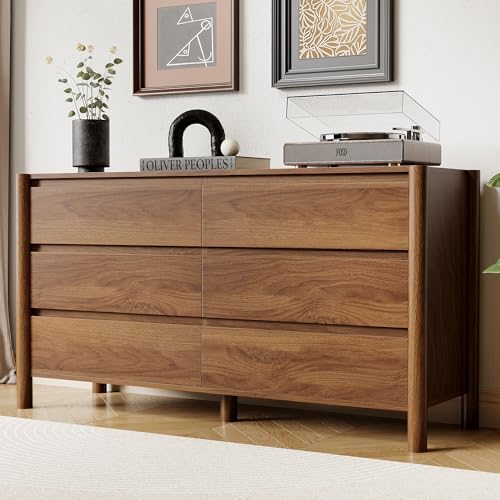
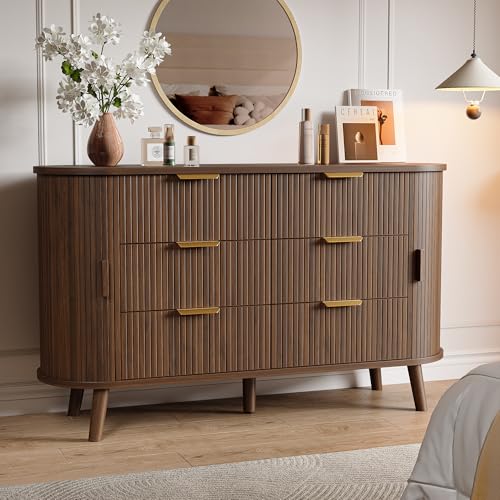
Tapered legs, splayed angles, horizontal emphasis, and warm oiled finishes. Often six drawers in a low, wide profile with recessed or sculpted pulls. These pieces lean retro and pair well with vintage-inspired bedrooms.
Modern Walnut Dressers
Cleaner geometry, flush drawer fronts, integrated or minimal hardware, and sharper edges. Finishes may be matte lacquer for a sleeker look. Suited to minimalist and contemporary interiors.
Transitional & Rustic Walnut
Planked tops, visible joinery, and darker stains bridge traditional and rustic rooms. Often paired with metal pulls or a mix of wood tones for a collected look.
If you are drawn to the mid-century silhouette specifically, see our dedicated guide to the mid-century walnut dresser for period-accurate details and leg profiles. For a sleeker contemporary read, the modern walnut dresser overview covers flush fronts, handle options, and finish choices.
Solid Walnut vs Walnut Veneer
This is the single most important construction decision, and it directly affects durability, repairability, and the tier of the piece.
| Construction | What It Means | Best For |
|---|---|---|
| Solid walnut | Thick walnut boards throughout the carcass, drawer fronts, and often the top. Can be sanded and refinished repeatedly. | Long-term investment pieces; buyers who expect to keep the dresser for decades. |
| Walnut veneer over engineered wood | A thin layer of real walnut bonded to plywood or MDF. Excellent visual consistency and resists warping in humid rooms. | Balanced tier for consistent grain matching and stable construction in variable climates. |
| Walnut-look laminate or print | A photographic or printed surface over particleboard. Not real walnut grain. | Entry-level pieces where walnut appearance is the priority over material authenticity. |
Solid walnut is not automatically superior in every context: a high-grade veneer on a stable engineered core can be more dimensionally reliable than a solid top in a very dry or very humid room. The key is the quality of the substrate and the bonding. Look for furniture that describes its core material clearly, and check that drawer boxes are solid wood or high-grade plywood rather than thin particleboard. Our walnut chest of drawers guide compares construction methods across price-free tiers in more detail.
Drawer Quality: The Details That Matter
A walnut dresser can look beautiful and still disappoint if the drawers bind, sag, or rattle. Focus on these five elements:
Drawer Quality Checklist
- Joinery: Dovetail joints at drawer corners signal durability; stapled or nailed boxes are entry-level.
- Glides: Full-extension metal slides with soft-close are standard on mid-range and above; wood-on-wood runners appear on traditional and some mid-century pieces and need wax maintenance.
- Box material: Solid wood or high-grade plywood sides resist sagging better than thin composite panels.
- Bottom support: A drawer bottom set into a groove with a center support rail handles heavier clothing loads without bowing.
- Stops: Drawer stops prevent accidental pull-out and protect both the drawer and the dresser face.
Choosing the Right Walnut Dresser Size
Walnut dressers are available in three broad size families. Match the footprint to your wall length and to how much you need to store.
- Wide (roughly six drawers, long horizontal profile): ideal for primary bedrooms with generous wall space. Best for couples sharing storage.
- Tall (five drawers, vertical profile): suits smaller rooms where floor space is limited but wall height is available. Pair with a mirror above.
- Compact (three to four drawers): works in guest rooms, apartments, and as a secondary piece. Our walnut 6-drawer dresser page covers the most common wide configuration.
As a rule, allow at least 30 inches of clearance in front of the dresser so drawers can open fully, and leave a few inches on each side for visual breathing room. If you are furnishing a matched set, the walnut dresser and nightstand set overview explains how to coordinate proportions. For a general sizing framework, our walnut dressers collection page groups pieces by configuration.
Walnut Finishes and Care
Finish choice changes both the look and the maintenance routine:
- Oiled finish: emphasizes natural grain and warmth; requires periodic re-oiling but is easy to spot-repair.
- Matte lacquer: protective and low-sheen; suits modern styles. Clean with a damp cloth only.
- Satin or gloss: more reflective and traditional; shows dust more readily but wipes clean easily.
In all cases, keep walnut away from direct sunlight, radiators, and humidifiers. Dust with a soft cloth, wipe spills promptly, and apply a walnut-appropriate wax or oil once or twice yearly. Avoid silicone polishes, which can build up and dull the surface. If you are restoring an older piece, our notes on vintage walnut chest of drawers cover common refinishing decisions.
Walnut Dresser Buying Checklist
Before You Commit
- Confirm whether the piece is solid walnut, walnut veneer, or walnut-look laminate.
- Check drawer joinery and glide type — dovetails and full-extension soft-close slides are preferred.
- Measure wall length and clearance; verify the drawer count matches your storage volume.
- Confirm the finish type and whether touch-up materials are available.
- Verify the dresser includes anti-tip hardware, especially for taller models.
- Ask about the origin and grade of the walnut if grain consistency matters to you.
Ready to Compare Walnut Dresser Options?
Browse curated walnut dressers and chests, filtered by style and configuration, in the recommended section below.
View Recommended OptionsFrequently Asked Questions
Is a solid walnut dresser better than a walnut veneer dresser?
Solid walnut offers superior durability and can be refinished multiple times over its lifespan. High-quality walnut veneer over engineered wood delivers a similar visual appeal at a lower tier and resists warping in humid conditions, but has a thinner surface layer. Solid walnut is the preferred choice for a long-term investment piece.
What is the difference between mid-century and modern walnut dressers?
Mid-century walnut dressers typically feature tapered legs, clean horizontal lines, and a warm, retro aesthetic inspired by 1950s and 1960s design. Modern walnut dressers tend to use geometric forms, flush fronts, integrated handles, and a more minimal silhouette with sharper edges.
How do I maintain a walnut dresser?
Dust regularly with a soft cloth, keep the piece away from direct sunlight and heat sources, and apply a furniture wax or oil suitable for walnut once or twice a year. Avoid silicone-based polishes and clean spills immediately with a slightly damp cloth.
What size walnut dresser is right for a bedroom?
A wide six-drawer walnut dresser suits larger primary bedrooms with ample wall space, while a tall five-drawer or a compact three-drawer model works well in smaller rooms and apartments. Measure the available wall length and leave at least 30 inches of clearance in front of the dresser for comfortable access.