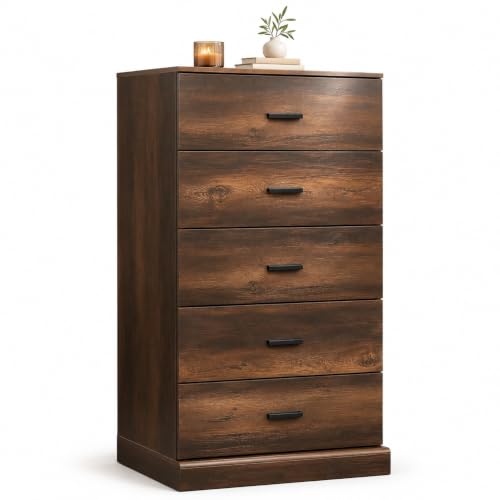
5 Drawer Wood Chest of Drawers: The Complete Buyer's Guide
A five-drawer wooden chest is one of the most versatile storage pieces you can add to a bedroom. Learn how to evaluate wood species, drawer construction, dimensions, and safety features before you choose.
View Recommended ModelsQuick summary: A 5 drawer wood chest of drawers sits at the sweet spot between compact nightstand storage and full-size dressers. It typically offers a mix of deep and shallow drawers, works well in mid-sized bedrooms, and is available in solid wood, wood veneer, and engineered wood builds. The best choice depends on your room dimensions, the volume of clothing you store, and whether you prefer a traditional or modern silhouette.
Why Choose a 5 Drawer Wood Chest of Drawers?
Five-drawer wooden chests are popular for good reason. They provide noticeably more capacity than a three- or four-drawer unit without taking up the floor space of a wide double dresser. For many bedrooms, this middle-ground format is the most efficient way to organize folded clothing, knitwear, and accessories.
Compared with taller seven-drawer tall chests, a five-drawer model usually has a lower profile, which keeps sightlines open and makes the top surface easier to use. Compared with a six-drawer chest of drawers, it often fits more comfortably against shorter wall runs or between windows. If your room is on the smaller side, our guide to 5 drawer chest of drawers options explains how to maximize storage without crowding the space.
Who Is This Format Best For?
- Couples with moderate wardrobes: Five drawers can be split between two people when the wardrobe handles hanging garments.
- Guest bedrooms: Enough capacity for linens and spare clothing without dominating the room.
- Teen and young adult bedrooms: A practical step up from a small nightstand or three-drawer unit.
- Apartments and condos: A narrower footprint than a wide dresser makes it easier to place.
- Anyone upgrading from a smaller unit: If you have outgrown a 5 drawer dresser, a dedicated wooden chest adds structure and capacity.
Wood Types: What to Look For
The phrase "wood chest of drawers" covers a wide spectrum of construction. Understanding the difference between solid wood, veneer, and engineered wood helps you judge durability and longevity before you commit.
Solid Wood
Cut from a single timber source throughout the main frame and drawer fronts. Durable, repairable, and ages well. Oak, maple, walnut, and pine are common choices. Solid wood sits at the premium and high-end tiers of construction.
Wood Veneer
A thin layer of real wood bonded over a stable core. Offers the look of solid wood with greater resistance to seasonal movement. Mid-range to premium tiers depending on the core material and veneer thickness.
Engineered Wood
Particleboard or MDF with a wood-look finish. Consistent and stable, but less repairable. Commonly found in entry-level and mid-tier models. Look for reinforced joinery and quality hardware.
Mixed Construction
Solid wood frame with veneer panels or engineered drawer boxes. A balanced approach that keeps structural strength where it matters most while managing weight and movement.
If you prefer a specific species, explore dedicated guides such as 5 drawer oak chest of drawers and 5 drawer pine chest of drawers. Both walk through grain patterns, hardness, and typical finishing approaches. For a broader overview of solid timber builds, see our solid wood 5 drawer chest guide.
Drawer Construction and Hardware
Drawer boxes are where quality differences show up most clearly. On a five-drawer chest, each drawer is used daily, so the joinery and glide mechanism matter as much as the exterior finish.
- Dovetail joinery: Interlocking pins and tails at the drawer corners. A hallmark of traditional, long-lasting construction and typically found on premium and luxury tier pieces.
- French dovetail: Angled dovetails on the drawer front, straight joints at the back. Common in mid-range to high-end furniture.
- Stapled or nailed boxes: Faster to produce and common at the entry level. Acceptable for light use but less resistant to repeated loading.
- Metal drawer runners: Ball-bearing slides with full extension make the bottom drawer fully accessible. Look for smooth, quiet operation.
- Wood-on-wood runners: Traditional and durable when waxed, but usually limited to partial extension.
- Drawer stops: A small but important feature that prevents drawers from pulling out completely and falling.
Hardware finishes also affect the overall look. Brushed brass, matte black, and nickel pulls are the most common options on wooden chests. Replacing knobs is one of the simplest ways to refresh a piece later, which is worth keeping in mind if you plan to keep the chest for many years.
Sizing and Placement
Five-drawer wooden chests vary widely in dimensions. Most fall somewhere between compact narrow chests and wider formats, so measuring your room before shopping is essential.
| Configuration | Typical Width Range | Best For | Tier Notes |
|---|---|---|---|
| Narrow five-drawer chest | Compact wall runs | Small bedrooms, alcoves, apartments | Often entry-level to mid-range |
| Standard five-drawer chest | Medium wall segments | Primary bedrooms, guest rooms | Mid-range to premium |
| Wide five-drawer chest | Longer wall segments | Master bedrooms, shared rooms | Premium and high-end tiers |
| Tall five-drawer chest | Limited floor space | Small footprints with vertical capacity | Mid-range and above |
Leave at least 24 inches of clearance in front of the chest so drawers can open fully. If you plan to place a mirror or lamp on top, confirm the top surface depth is sufficient. For rooms with tight layouts, the 5 drawer dresser wood guide covers placement strategies in more detail.
Safety Features You Should Not Overlook
Any chest of drawers taller than it is wide should be secured to the wall. This is especially important in homes with children or pets. When evaluating a five-drawer wooden chest, check for:
- An anti-tip kit included in the box, or clearly marked anchor points on the back panel.
- Drawer interlock systems that prevent multiple drawers from opening at once on taller models.
- Sturdy back panels that add rigidity to the overall frame.
- Compliance with recognized furniture stability standards for your region.
Placement tip: Avoid placing a tall five-drawer chest where a child could climb on open drawers. Anchor it to a wall stud whenever possible, and keep heavy items in the lower drawers to improve stability.
How to Evaluate a Wooden Chest Before Buying
When shopping online or in a showroom, a short checklist helps you compare models on equal terms.
Check the Drawer Box
Ask about joinery type, drawer bottom thickness, and whether the bottom is set in a groove rather than stapled. These details signal long-term durability.
Test the Glides
Full-extension ball-bearing slides are the most convenient. Confirm the weight rating per drawer if you plan to store heavy items like denim or linens.
Inspect the Finish
A consistent, sealed finish protects against moisture and wear. Matte and satin finishes are more forgiving than high gloss in daily use.
Read the Specs
Look for stated wood species, core material, and hardware brand. Vague descriptions like "wood finish" without a species are a warning sign.
If you are building a coordinated bedroom, a 5 drawer dresser and nightstand set simplifies the matching process and keeps finishes consistent. For rooms that need more capacity later, it helps to know how a five-drawer chest compares with a 6 drawer wood chest of drawers before you commit to a layout.
Frequently Asked Questions
Is a 5 drawer chest big enough for one person?
For most people, yes. A five-drawer chest comfortably holds folded tops, knitwear, undergarments, and accessories. If you also store bedding or seasonal clothing in it, consider a six- or seven-drawer model instead.
What is the difference between a chest of drawers and a dresser?
Traditionally, a chest of drawers is taller than it is wide and is designed for folded clothing, while a dresser is wider and often includes a mirror. In practice, retailers use the terms loosely. Our 5 drawer dressers overview explains the distinctions in more depth.
Which wood is best for a five-drawer chest?
Oak and maple are excellent for durability and grain character. Walnut offers a rich, darker tone at the premium tier. Pine is softer and better suited to lighter-use rooms or painted finishes. Each has trade-offs in hardness and movement, so match the species to how heavily the drawers will be used.
How do I stop a tall chest from tipping?
Always use the anti-tip kit provided and anchor the chest to a wall stud. Keep heavier items in lower drawers, avoid leaving multiple drawers open, and never let children climb on the furniture.
Can a five-drawer wooden chest work in a small bedroom?
Yes, especially in a narrow or tall configuration. Measure the wall run, confirm drawer clearance, and choose a model with full-extension glides so you can reach the back of each drawer without needing extra floor space.
Ready to Compare Five-Drawer Wooden Chests?
Browse recommended models below, then use the selection criteria in this guide to narrow down the right fit for your bedroom.
See Recommended Models