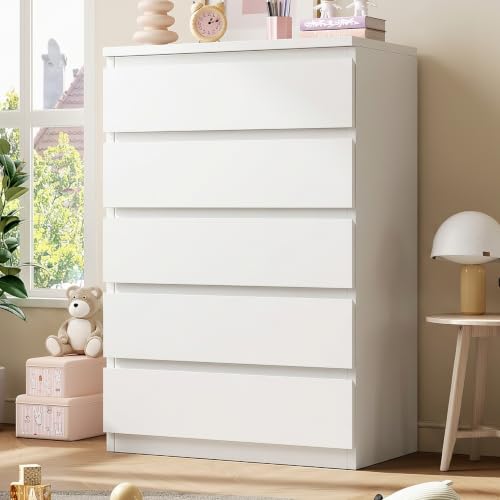
5 Drawer Dresser Wood: The Complete Buyer's Guide
A five-drawer wood dresser sits at the sweet spot between compact footprint and generous storage. This guide breaks down wood types, drawer mechanisms, sizing, and design tiers so you can choose with confidence.
SEE TOP PICKSWhy a 5 drawer wood dresser? Five drawers provide enough capacity for a full wardrobe rotation without demanding the floor space of a six- or eight-drawer unit. In wood, the piece adds warmth and longevity that engineered alternatives struggle to match. Whether you are furnishing a main bedroom, a guest room, or a nursery, understanding construction details is the difference between a dresser that lasts a decade and one that wobbles within a year.
What Makes a Wood 5 Drawer Dresser Worth Choosing
A wood five-drawer dresser combines natural aesthetics with structural integrity. Unlike veneer-over-particleboard units, a well-built solid wood dresser can be sanded, refinished, and repaired. The drawer count itself is deliberate: five drawers typically include two or three shallow drawers for folded tops and undergarments, plus two deeper drawers for jeans, sweaters, or linens. That ratio suits most adults better than a four-drawer chest, which often forces overflow into closets.
Wood selection matters as much as drawer count. Oak and maple offer hardness and resistance to dings, making them ideal for high-traffic bedrooms. Pine is softer and develops character marks over time, which many buyers find charming but others consider a drawback. Walnut and mahogany sit at the premium end, prized for rich grain and dimensional stability. If you are weighing a five-drawer configuration against alternatives, our guide to 5 drawer chest of drawers solid wood explores the chest silhouette in more depth, while the broader 5 drawer dresser overview covers non-wood options.
Key Benefits of a Five-Drawer Wood Dresser
Balanced Storage Ratio
Five drawers usually split into shallow and deep compartments, letting you separate delicates from bulky knitwear without wasting vertical space.
Long-Term Durability
Solid wood construction resists sagging and warping far better than composite panels, especially when the dresser carries heavy clothing loads over years of daily use.
Refinishable Surface
A wood dresser can be sanded and re-stained or painted when your decor changes, extending its usable life and reducing replacement waste.
Compact Footprint
Most five-drawer models fit comfortably in rooms where a six- or eight-drawer unit would crowd the walking path or block a closet door.
Style Versatility
Wood accepts stains, paints, and hardware swaps, so a single five-drawer piece can shift from mid-century to farmhouse to modern with modest effort.
Resale and Heirloom Potential
Quality wood furniture holds desirability far longer than composite pieces, making a well-made five-drawer dresser a candidate for passing down rather than discarding.
Wood Types Compared for a 5 Drawer Dresser
| Wood Type | Market Tier | Best For | Considerations |
|---|---|---|---|
| Pine | Entry-Level | Rustic, farmhouse, and cottage interiors | Softer surface; dents more readily but ages with character |
| Oak | Mid-Range | High-traffic bedrooms and family homes | Hard and durable; heavier piece that may need two people to move |
| Maple | Mid-Range | Clean, contemporary, and transitional rooms | Fine grain takes stain evenly; can show scratches on light finishes |
| Walnut | Premium | Mid-century modern and upscale bedroom suites | Rich color and grain; requires consistent humidity to avoid movement |
| Mahogany | Luxury | Traditional and formal bedroom settings | Deep reddish tone; often paired with carved details and premium hardware |
If oak appeals to you, the 5 drawer oak chest of drawers page covers grain patterns and finish options. For a lighter, more rustic look, see the 5 drawer pine chest of drawers breakdown. Buyers comparing silhouettes may also want the 5 drawer wood chest of drawers guide, which contrasts chest height with dresser width.
Drawer Glides and Hardware: What to Expect by Tier
Drawer performance is where entry-level and premium five-drawer wood dressers diverge most sharply. The table below maps common glide types to market tiers so you know what to look for when comparing listings.
| Glide Type | Tier | Performance Notes |
|---|---|---|
| Wood-on-wood runners | Entry-Level | Functional but require occasional waxing; may stick in humid climates |
| Metal side-mount ball-bearing | Mid-Range | Smooth operation and good load capacity; usually three-quarter extension |
| Undermount soft-close | Premium | Full-extension access with quiet closing; hidden mechanism keeps interior clean |
| Heavy-duty full-extension | Luxury | Rated for high drawer loads; often paired with dovetail joinery and solid wood boxes |
Beyond glides, check drawer-box joinery. Dovetail joints signal a top-tier build, while stapled or glued boxes are common at entry level. A five-drawer wood dresser with dovetailed drawers and soft-close glides is a long-term investment that will outlast two or three composite replacements.
Sizing a 5 Drawer Wood Dresser for Your Room
Five-drawer dressers come in two broad footprints: the wide lowboy and the taller chest-style. A wide configuration typically measures 48 to 60 inches across and 30 to 36 inches tall, making it a natural fit under a window or opposite the bed. A tall configuration usually runs 30 to 40 inches wide and 40 to 50 inches tall, which suits narrow walls and smaller bedrooms.
Before ordering, measure three things: the wall segment you intend to fill, the clearance needed for drawer extension (add roughly 20 inches in front), and the path from your door to the placement spot. A 50-inch-wide model is a common compromise; our 50 inch wide dresser guide covers that size class in detail. If your room is tighter, the 5 drawer dresser and nightstand set option pairs a compact dresser with a matching bedside piece for a cohesive layout.
Buying Checklist for a Wood Five-Drawer Dresser
- Confirm solid wood vs. veneer. Check product specs for "solid wood" or "wood veneer over engineered core" and decide which aligns with your longevity expectations.
- Test the glide type. Ball-bearing or undermount soft-close glides are worth prioritizing over basic wood runners for daily-use dressers.
- Verify drawer-box joinery. Dovetail joints indicate a higher-tier build; stapled boxes are acceptable at entry level but less durable.
- Measure your space twice. Account for drawer extension clearance and door swing before committing to width.
- Check anti-tip hardware. A five-drawer wood dresser is tall enough to require wall anchoring, especially in homes with children.
- Review finish and hardware. Stain, paint, and knobs are easy to change later, but a finish you love from day one saves effort.
- Plan for humidity. Solid wood expands and contracts; keep the dresser away from direct heat sources and consider a dehumidifier in damp climates.
Ready to Compare Five-Drawer Wood Dressers?
Our curated selection below highlights wood five-drawer dressers across entry-level, mid-range, and premium tiers. Use the feature details to match construction and sizing to your bedroom.
EXPLORE OPTIONSFrequently Asked Questions
Is a 5 drawer wood dresser big enough for one person?
Yes, a five-drawer wood dresser is generally sufficient for a single adult's clothing storage. It typically offers a balanced mix of shallow and deep drawers that can accommodate folded shirts, pants, undergarments, and seasonal items. For couples, it works best as a secondary storage piece or for shared items.
What is the difference between solid wood and engineered wood for a 5 drawer dresser?
Solid wood dressers are made from lumber such as oak, maple, or pine, offering durability and the ability to be refinished. Engineered wood uses composite materials like MDF or particleboard with a veneer, which is more consistent and resistant to warping but cannot be sanded and refinished in the same way. Mid-range to premium solid wood options typically outlast engineered wood counterparts.
Which drawer glide type is best for a wood 5 drawer dresser?
Metal ball-bearing side-mount or undermount glides are the most reliable for daily use. Entry-level dressers often use simple wood-on-wood runners, which work but require occasional waxing. Mid-range models usually feature metal ball-bearing glides, while premium and luxury tiers offer soft-close undermount glides with full-extension capability.
How tall is a typical 5 drawer wood dresser?
A standard five-drawer wood dresser ranges between 30 and 44 inches in height, depending on whether it is a wide lowboy configuration or a taller chest-style design. Width typically falls between 30 and 60 inches, and depth is usually 16 to 20 inches. Always measure your bedroom space and consider ceiling height before ordering.
Can a 5 drawer wood dresser be used in a nursery?
Yes, provided it meets safety standards. Look for dressers with anti-tip straps included or available, drawers that stop when pulled, and a sturdy build. Many parents choose a five-drawer wood dresser for nursery use because it doubles as a changing table surface when paired with a contoured pad, and it transitions easily to a child's room as they grow. For broader nursery storage ideas, browse our 5 drawer dressers category.